In the vibrant landscapes of Los Santos and Blaine County, mastering the use of tow trucks can be a game-changer for diverse entities ranging from auto repair shops to commercial fleet operators. The ability to tow vehicles efficiently presents an array of opportunities for boosting business operations, managing property, and enhancing customer service. Each element of towing in GTA 5—from locating the right tow truck to unhooking the vehicle—is grounded in gameplay mechanics that can mirror real-world practices. This comprehensive guide will navigate you through the essential steps: finding the right tow truck, successfully navigating and positioning it, securely towing vehicles, and ensuring safe delivery. Each chapter is designed to empower you with the knowledge required to enhance your towing experience and maximize the benefits for your business.
Tow Lines in Los Santos: Mastering GTA 5’s Tow Truck from Spawn to Safe Haul
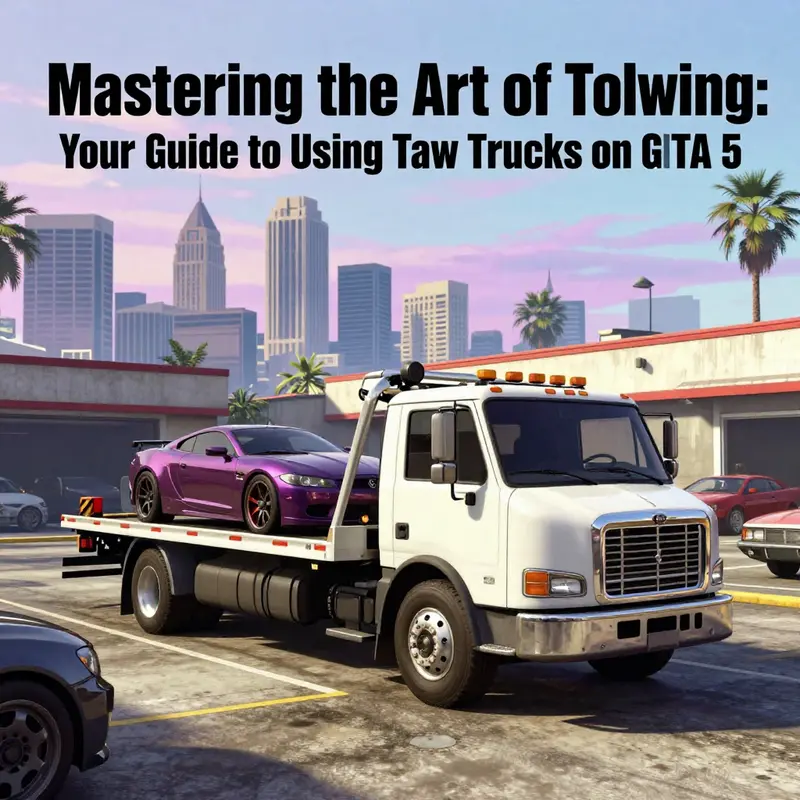
In Los Santos, the tow truck is more than a tool for moving stranded wheels; it is a disciplined craft, a rigid line between mayhem and order that players learn to respect as much as the pistol or parachute. The moment you decide to take on the tow, you step into a role that blends patience with precision. The vehicle you need can arrive in a handful of ways, and knowing where to look is half the skill. Tow trucks are not perched on one fixed curb like a prize waiting to be claimed. They appear in a musical, irregular pattern, a reminder that in this world, routine must be earned. You’ll find them in abandoned lots and scrapyards near the desert sprawls, where rust and sun have already started their long, slow negotiation with metal. You may also encounter them near car dealerships or repair shops, with one of the more notable anchors located around a place locals refer to by its social bustle and its chrome-charm facade. If you keep your eyes open, you’ll notice tow trucks slipping through street shadows during certain missions or as you stroll through the city’s industrial nooks. There are even moments when a tow truck shows up as a supporting character in a mission, a reminder that every mechanic has a story and every tow a reason to exist beyond simple transport. And in between these moments of chance, there is the practical route: summon the tow truck by game design rather than by pure luck, then lean into the control scheme that makes this vehicle feel almost alive in your hands. The first step is almost ceremonial: entering the cab and taking the wheel. On PC, you approach the vehicle and press F to slide into the driver’s seat. On consoles, X or a similarly mapped button serves the same function. The moment you sit behind the wheel, you sense the weight of the crane arm, a tool that will become your extension and, at times, your test of nerve. The tow truck is a vehicle that asks you to think ahead as you drive, not simply to arrive. The posture you adopt, the way you grip the wheel, and even the tempo of your gear changes will influence how cleanly you hook and pull a car. The process begins with positioning. You want to approach from behind the target vehicle so that the crane, like a careful clamshell, can cradle the bumper or hitch it to the rear axle. The alignment matters more than speed because the hook won’t connect if your angle is off. This is the moment where patience earns its keep. You don’t rush the alignment for the sake of speed; you adjust the crane’s height to match the vehicle you intend to tow. The crane arm moves in two directions that you must coordinate: height and angle. Raising the arm gives you more clearance to line up with the rear bumper, while lowering it brings the hook to the target. In practice, use Shift to raise the crane and Ctrl to lower it. On consoles, the equivalents are R1 (to raise) and R2 (to lower). You want the hook to descend into a position where it can comfortably latch onto the tow point—typically the rear bumper or the rear axle area—without tugging at side panels or exhausts. When you’ve achieved a clean alignment, the moment of truth arrives. The hook is extended with a single action, usually E on PC or Square on PlayStation. A subtle mechanical sound confirms the hook has latched. In that instant, you feel the weight transfer, a signal that the tow is now real and not just potential. The vehicle behind will begin to follow along. This is where the real discipline begins: your driving must be measured and smooth. Quick acceleration, sudden braking, or sharp steering can stress the towing rig or even break the connection. The tow vehicle is not a race car; it is a tool for controlled movement. You’ll navigate by map, plotting a course that minimizes abrupt turns and keeps the towed car aligned behind you. The towed vehicle trails in your wake like a shadow that refuses to quit, its tires following in your tire marks with a stubborn loyalty. If you’ve ever tried to haul a stubborn companion in real life, the sensation is similar: the towed car wants to stay on its own path, but your grip on the crane and your pace behind the wheel must convince it to stay in line. The moment you arrive at your destination, you shift your attention from momentum to release. You must unhook the car in a controlled manner. Stop safely, then reposition the crane if needed, and press H on PC or Triangle on PlayStation to lower the hook and release the chain. The car you’ve towed will settle into its new place, freed from the mechanical hold that once bound it to your tow truck. This sequence—approach, hook, tow, unhook—is the spine of the tow truck mechanic in GTA 5, but you do not perform it mindlessly. You bring intention. You bring a sense of timing that makes your movements efficient and repeatable. Practicing the flow is part of the craft, whether you are chasing a story mission or simply clearing a lane to allow traffic to move more smoothly in a congested city. A helpful layer of context comes from the game’s episodic storytelling. During the Franklin storyline, a mission titled Tow Truck exists in which you must transport a vehicle under challenging conditions. The goal is not merely to complete the objective but to do so with a sense of precision: no damage to the towed vehicle, no unnecessary acceleration, and consistent control as you speed toward the goal. This mission is a practical primer on the balance between speed and care, a reminder that towing requires a calm, almost surgical approach when you are pushing toward a deadline or a tight time window. As you practice, you should cultivate a few core habits that keep you on the right track. First, visualize the tow as a short, predictable tether rather than a long, dangerous rope. A straight path and steady hands matter more than raw speed. Second, think ahead about the terrain. Towing on uneven terrain, like a rough road or a rocky shoulder, invites surprises; you’re better off sticking to open, clean lanes that give you room to maneuver without the fear of the hook coming undone. Third, use the map as your ally. In a mission scenario, navigation isn’t only about reaching a destination; it’s about choosing routes that reduce the risk of damage and increase your time efficiency. The better you become at reading the map under pressure, the more agency you have in how you complete tasks with reliability and a sense of control. The act of towing might seem straightforward, but it rewards patience and practiced finesse. It rewards the player who learns to read the cues—the subtle tighten of the crane when the hook makes contact, the slight drag when a car begins to align, the gentle ease with which you accelerate to keep the towed vehicle in line behind you. With time, you’ll discover a rhythm: a smooth hinge between movement and restraint, a dance where the hook holds its grip and the vehicle follows like a well-trained partner. You’ll also learn to anticipate the occasional unpredictability: a loose bumper, a sudden gust of wind in the form of a road dip, or a sharp turn that invites a temporary misalignment. In truth, the game tests your composure more than your reflexes. The more you practice, the more you’ll trust your hands to guide the crane without overcorrection, the more you’ll understand that this is a skill built on observation, not mere repetition. If you are curious about broader contexts that echo the same logic of recovery and mobility in real-world operations, you can explore industry-focused insights that resemble this mesmerizing balance between control and chaos. The Island Tow Truck Blog offers a perspective on fleet resilience and practical operations that, while not a direct GTA parallel, shares the same spirit of keeping wheels turning under pressure. For a deeper dive into official mechanics and supported procedures that govern GTA 5’s tow actions, the game’s help resources provide a reliable anchor. The official tonal guide and troubleshooting pages explain the standard controls and confirm the sequences described here, including how to hook, tow, and release a vehicle without unintended detours. If you want to confirm the exact button mappings for your platform, or to explore mission-specific tips that expand on the tow mechanic, the Rockstar support pages remain the definitive reference. To deepen your understanding from an authoritative source, you can consult the official GTA 5 help center that outlines the required steps and common pitfalls around tow operations, including how to deploy and release the crane, align for hooks, and transport vehicles with care. This chapter aims to map the practical feel of towing in the game to a broader sense of mobility, balance, and precision that any operator learns through repetition and deliberate practice. External resources can provide a complementary frame of reference, reinforcing the sense that driving with a crane is as much about poise as it is about power. For official guidance and updates, see https://support.rockstargames.com/hc/en-us/articles/360053988252-How-to-use-a-tow-truck-in-GTA-5
Hooked on Precision: Mastering the Tow Truck in GTA 5 for Realistic Control and Creative Play
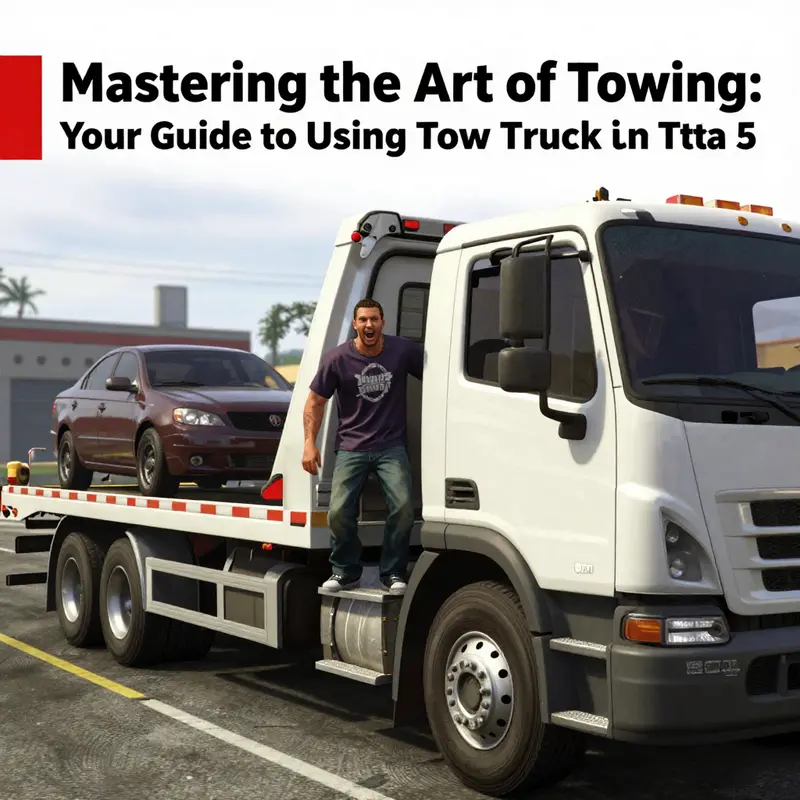
In the sprawling, sunlit streets of Los Santos and the dusty stretches of Blaine County, the tow truck is more than a utility vehicle. It is a tool that invites careful planning, precise control, and a touch of creativity. Mastering its use in GTA 5 turns what could feel like a simple mechanical task into a set of deliberate actions that open up new ways to move, manage, or stage vehicles across the map. The beauty lies not in speed but in the flow of execution: how you approach a target car, align your crane, and guide a towed companion to its destination without losing control or damaging the asset. This chapter moves through the process as a single, cohesive practice—a rhythm you can feel in the wheel, the crane, and the moment when the hook finally catches and the vehicle obediently follows behind you through traffic, around corners, and into a designated drop zone.
To begin, you need to find a tow truck. They are not rare, but their distribution across Los Santos and Blaine County rewards patience and observation. Commonly spotted near auto shops and repair garages, you’ll also encounter tow trucks parked along back alleys, at service yards, or appearing in the course of certain story tasks and side missions. In the world of GTA 5, nothing is random for long; a tow truck can appear when a mission nudges you toward a logistical challenge, or when the city’s rhythm slows enough for you to notice a vehicle designed to haul, lift, and tow. Once you spot one, approach with a calm pace and press the appropriate button to enter—the exact control depends on your platform. On PC, that means pressing Enter; on consoles, it’s usually X on Xbox or Square on PlayStation. The moment you take the wheel, a quiet awareness settles in: the crane arm above your head, the long reach in front of you, and the road ahead beckoning with possibilities.
Positioning behind the target car is the first and perhaps the most crucial step. The crane is not a tool you wield with brute force. It demands alignment, timing, and a sense for the vehicle’s dimensions. You want the crane arm to line up with the bumper—front or rear—of the car you intend to lift. The tricky part is the angle. If you approach at a poor angle, the hook will slide past the bumper or miss entirely, and you’ll waste precious seconds, maybe even lose your connection. Take your time to back up and read the line of sight from your cockpit. You’ll learn to gauge the distance and the perspective from the driver’s seat, and you’ll instinctively know when you’re close enough for the next step. Once the bumper feels within reach, begin the height adjustment of the crane.
Raising and lowering the crane is controlled with simple, purposeful inputs. On PC, Shift raises the crane arm, while Ctrl moves it down. On consoles, those actions translate to the equivalent shoulder-level commands—R1 and L1 or their combinations to fine-tune height. The goal is to match the arm to the vehicle’s height at the point you intend to hook. If the car sits higher, you raise the arm; if it sits lower, you lower it. Practice is the only teacher here. It’s not enough to know the numbers; you must feel the line between your tow truck and the target. Once the height is right, the next step is the moment of contact—the hook that will secure the vehicle for the journey.
To hook the vehicle, you extend the hook with the designated button—E on PC or Square on PlayStation. A satisfying mechanical sound confirms that the connection is secure. If you hear nothing, or if the hook slides off, you reset: reposition, adjust height again, and try once more. The success cue is not only the auditory feedback but also the visual cue of the vehicle being lifted slightly and then commanded to follow. The moment the hook catches, the towed car becomes an extension of your drive rather than a passive payload. The crane’s lift is a quiet reminder that you are orchestrating a controlled relationship between machines, not simply dragging metal along a road.
To move with a hooked vehicle, speed must be controlled with discipline. The towed car will follow behind, but it does not forgive aggressive acceleration or sharp, sudden turns. Your driving must reflect the added weight and the altered center of gravity caused by the attached vehicle. Gentle turns, gradual lane changes, and careful navigation of uneven surfaces are your tools for a smooth journey. The map becomes a compass, guiding you to your destination while your eye remains fixed on the towed vehicle and its possible sways. If you need to navigate around congested zones, take a slower route and anticipate traffic flow; the last thing you want is to pop the hook loose because of a miscalculated turn. The game rewards the effort of maintaining a steady pace and a clean line through intersections, a practice that translates well into real-world logistics where precision becomes a safety factor.
When you reach your destination, unhooking is a deliberate, two-part action. First, you position the tow truck safely and stop. Then you lower and release the hook, a step governed by a simple input—H on PC or Triangle on PlayStation. The towed car remains connected until you lower the arm and detach the hook, leaving the vehicle in place. This moment is often underappreciated in playthroughs; it is the culmination of careful alignment and steady driving. Once released, you resume the same careful driving style to return to normal operation or to move another vehicle along the chain of tasks you’ve set for the session.
The GTA 5 tow truck also offers a chance to internalize a practical mindset that pairs well with both gameplay and real-world fleet operations. In the story mission named Tow Truck, Franklin’s arc emphasizes precision and restraint—transporting the tow truck without damage, maintaining speed within safe ranges, and completing tasks that stress accuracy over showmanship. This mission teaches a broader lesson about how the tools of towing are not just about getting from point A to point B; they are about maintaining control, respecting the load, and anticipating the road ahead. For those who want to explore further mechanics beyond the mission, the broader gameplay loop of the tow truck invites experimentation. You can tow a sports car along a desert highway, drag a motorcycle across a tunnel, or even stage a small convoy of vehicles if you plan carefully and move with patience. The joy lies in translating a simple mechanical task into a choreography that respects space, momentum, and the limits of the equipment at hand.
There is value in recognizing how these small, precise movements mirror real-world practices. Even though the environment is virtual, the discipline of hooking, lifting, and towing translates to how you think about vehicle recovery, roadside assistance, or salvage operations in the real world. It is not necessary to treat this as mere diversion; instead, let it become a mental rehearsal for how you manage risk, plan routes, and execute delicate maneuvers in busy spaces. If you want to bridge the gap between the virtual exercise and practical, real-world insights, you can explore resources that discuss fleet readiness, response strategies, and emergency planning. For readers who want to connect the GTA 5 experience with broader operational awareness, a relevant discussion about fleet strategies and emergency response can provide a broader lens through which to view the mechanics you practice on-screen. Essential Fleet Emergency Response Strategies offers a structured way to think about timing, coordination, and risk management in any towing or recovery scenario. This link serves as a bridge to real-world considerations without pulling focus away from the fun and challenge of mastering the game’s tow truck.
As you gain familiarity, you’ll notice the way the tow truck becomes a vehicle of mobility rather than a tool of mere transport. The act of hooking and towing transforms the map, revealing layers of strategy in the way you choose routes, manage space, and decide when to detach and when to persist. You’ll learn to read the world’s topography—the dips and rises of the terrain, the tightness of turns in urban canyons, the long sightlines of highway stretches—and you’ll begin to anticipate how the weight of a towed vehicle changes your acceleration, braking, and cornering. This is not a quick-sketch task; it’s a practice in controlled motion, a synthesis of mechanical feedback, map navigation, and the feel of a crane arm responding to your inputs.
In the spirit of so much of GTA 5’s sandbox design, the tow truck also invites experimentation. If you’re feeling bold, you can test the limits of speed while towing in open areas, or you can explore how far you can push off-road segments while maintaining the hook. You’ll discover that the more you respect the physics of the vehicle and the subtle cues from the crane, the more you’ll be rewarded with stable attachments and predictable behavior. The tow truck becomes a conduit for a form of play that respects physics enough to feel real but remains forgiving enough to encourage creative exploration. The experience is a reminder that even in a virtual world built on chaos and spectacle, there is a discipline to the craft—one that makes every tow a chance to practice focus, finesse, and foresight.
For readers who want to extend their GTA 5 tow truck practice into a broader practical mindset, the connection to real-world fleet operations begins with the simple idea that precision beats speed. When you plan a tow, you plan a route, you anticipate obstacles, and you monitor the load with a steady hand. The game’s feedback—the sound of the hook, the crane’s rising hum, the way the towed vehicle follows in your wake—offers a tactile sense that mirrors how real operators move through complex environments. And if you ever want to see more gameplay demonstrations and tips, official resources and tutorials can provide additional perspectives on crane control, hook management, and safe towing practices in the game’s virtual world. For a practical reference on GTA 5 mechanics and gameplay nuances, you can consult the official Rockstar support pages. External resources like the GTA 5 FAQs can provide deeper explanations and solutions for common mechanical questions that arise during tow truck tasks.
External materials and real-world considerations aside, the core experience remains clear: towing in GTA 5 rewards thoughtful, incremental progress. The moment you successfully align, hook, and haul a vehicle with confidence is not just a technical win; it is a small triumph of control in a world that constantly tests your judgment and precision. The next time you find yourself behind the wheel of a tow truck, remember that the hook’s bite, the crane’s reach, and your measured pace are the main tools you’ll carry forward. They are the same tools that make a complex recovery operation feel like a guided sequence rather than a chaotic scramble. By embracing the method, you’ll unlock a more satisfying, more creative, and more responsible way to use the tow truck in GTA 5—and, who knows, perhaps the mindset will translate into your real-world thinking about vehicle recovery, staging, and fleet management as well.
External reference: https://support.rockstargames.com/hc/en-us/articles/360048979231-GTA-5-FAQs
Lock, Align, Tow: Mastering the Positioning Game with a Tow Truck in GTA 5
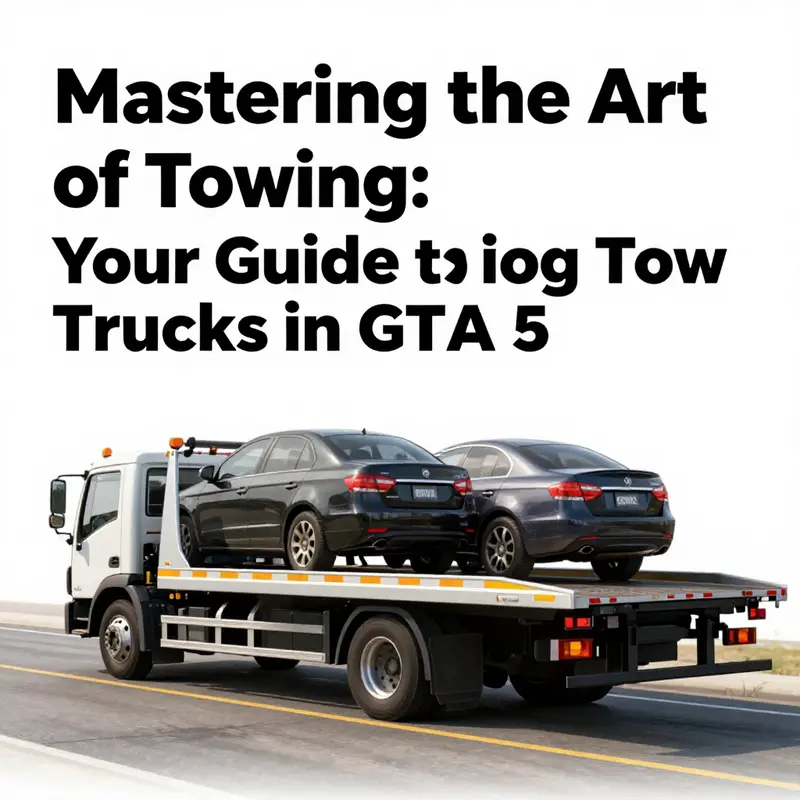
In the sprawling streets and sickly-lit alleys of Los Santos and Blaine County, the tow truck is more than a vehicle; it is a tool of precision, a small station of control amid chaos. To wield it effectively in GTA 5, you must master a single, crucial sequence: where you stand, how you reach, and the exact moment you commit to the hook. The act of towing, when done with calm calculation, reveals a kind of quiet artistry. It is not just about dragging a car from point A to point B; it is about designing a path through space, about translating real-world mechanics into the game’s physical rules, about ensuring that every inch of movement preserves momentum and minimizes risk. The first step is locating a tow truck, and while the map is generous with spawns, the most reliable lanes often funnel you toward the familiar corners of Paleto Bay and the industrial pockets dotting the countryside. The Classic Tow Truck, a common sight in ready-to-roll condition, sits stubbornly near workshop fronts and service yards, its hook glinting under the neon of a late-night city. If you approach a tow truck with purpose, you’ll notice the same thing you notice in any well-rehearsed task: the tool is only as reliable as the operator’s positioning. A drift of movement, a slight misalignment, and the hook will miss, or worse, the target vehicle will slip away, pulling the tow truck out of its own balance as if the process had an opinion of its own. It’s not magic; it’s geometry dressed in metal and gas, and the difference between a clean hook and a failed attempt comes down to one instinctive, almost invisible action: positioning the truck directly behind the vehicle you intend to tow.
You begin by approaching with steady purpose, letting the tow truck merge into the right lane of your intention. The crane’s arm is a visible line of intent, and aligning it with the front or rear bumper is the tactile equivalent of threading a needle. The tricky part is not the hook itself but the angle from which you approach. If your truck’s frame is crooked or the bumper sits at an awkward tilt, the hook will refuse to latch, and you’ll be forced to back up, readjust, and re-sequence the approach. This is where patience becomes your most reliable ally. In these moments you’ll learn to treat the space around the vehicle as a three-dimensional clock: you watch the position of the target car, you monitor the tow truck’s line, and you time your movement so that the hook meets its mark at the exact moment the front of the crane arm finds the bumper. It’s a small window, but missing it is easy and costly. The game rewards quiet, deliberate action more than bold, reckless sprints, especially when roads twist and the other world’s traffic adds a layer of unpredictability.
Once you’ve achieved alignment, the crane’s height becomes your next dial. The crane arm sits in a vertical range that you must match to the vehicle’s height, ensuring the hook can latch without scraping paint, bending metal, or causing the towed car to shift in a way that strains the connection. On PC, you’ll use Shift to raise the arm and Ctrl to lower it; on console, corresponding controls apply, with the goal remaining the same: a seamless, level connection. This step, though seemingly minor, is the difference between a secure tow and a messy, temporary hold that ends in a snapped line or an accidental release. The moment you feel the alignment click into place—the hook extending smoothly to kiss the bumper—you’ll hear the telltale mechanical sigh, a sound that marks success and invites you to begin the actual tow.
With the vehicle connected, you transition from positioning to motion. The towed car will follow behind you, but your responsibility to it grows. Drive with a measured calm, keeping the towed vehicle within a predictable arc as you navigate corners, speeds, and grade changes. Sharp turns, sudden accelerations, or harsh stops can stress the hook and the hitch, potentially breaking the connection or altering the towed car’s orientation in ways that complicate your next steps. The map becomes more than a navigation tool; it’s a guide to spatial relationships, reminding you to pick routes that minimize turns and elevation changes, especially in urban corridors where pedestrians and other drivers might intrude on your carefully arranged line. If a vehicle’s alignment shifts during the pull, you can compensate by small, gentle steering adjustments and a slow, deliberate throttle. The objective is to keep the towed car aligned and stable, not to rush toward the destination with the confidence of brute force.
Practice turns into habit as you move from one mission waypoint to another, from a simple pickup to the longer, more demanding transports the game sometimes asks of you. The process remains the same: approach, align, height-match, hook, tow, unhook, and repeat. The unhook is equally important and equally delicate. When you reach your destination, you’ll stop in a safe, level area and press the unhook command to release the hook and lower the crane arm. A clean disengagement comes when the crane retracts smoothly, the hooked chain slackens, and the towed car settles into its post-transport stance without a tremor. It’s easy to become complacent here, especially after you’ve completed a handful of successful tows, but the discipline of the move remains unchanged: you treat the operation as a precise chain of decisions rather than a single, loud leap of action.
Beyond the immediate mechanics, there are practical considerations that mature your towing technique. A tow is not a tool for raw power; it is a balance of modest speed and careful control. The towed vehicle should not be forced through tight turns at high velocity, because the force transmitted through the hook can create instability, or worse, a complete detachment if the trailer line encounters a sudden resistance. Small, steady inputs — gradual acceleration, restrained deceleration, careful lane changes — keep the cycle of towing smooth and repeatable. It’s this kind of repetition that prepares you for the moment a mission requires you to tow a vehicle at speed through challenging terrain, a scenario Franklin faces in the story-driven segment where precision handling is tested against time. The game nods to this, and you benefit from treating it as more than a routine mechanic. You begin to sense, almost intuitively, how much angle you can tolerate, how much height you need, and what the vehicle’s weight distribution implies about your path and your limits.
The practical boundaries of the tow truck are not merely about what you can physically accomplish, but about what you can do safely within the game’s physics. The tow truck cannot drag oversized or armored vehicles, and you learn to respect that limitation as you plan a route that uses the tool for routine tasks rather than heroic feats. You also learn to manage the environment: the urban grid can offer generous space in some blocks while forcing you into narrow channels in others, and you must adapt your approach accordingly. The best tow operators in GTA 5 do not chase speed; they curate routes, choreograph lines, and let the hook do the heavy lifting. This is a practice grounded in patience. It rewards a careful eye for alignment, a steady hand on the controls, and a mindset that values precision over spectacle.
For those who want to connect this in-world skill to broader strategy, consider the workflow’s fit within larger fleet or mission planning. The thought process behind a successful tow—locating the vehicle, synchronizing the crane, securing the hook, and executing a controlled transport—mirrors the planning needed in any mission where obstacles must be moved or resources relocated. The sequence becomes a microcosm of strategic thinking: assess the space, anticipate the response of your tool, and respond with measured, incremental actions. If you’re looking for additional context on fleet-minded strategies that extend beyond a single task, you may explore resources like essential fleet emergency response strategies. This material is designed to fortify your understanding of how careful preparation and calibrated operation translate into reliable outcomes, both in game and in the more abstract sense of project-like tasks. See the linked guide for ideas on how to apply this sort of disciplined approach across different scenarios in the game’s expansive world.
As you gain confidence, you’ll find the act of towing becomes less about chasing a perfect setup and more about recognizing the right moment to make a move. There is a rhythm to it, a cadence of alignment, height adjustment, hook engagement, and deliberate movement. The difference between a smooth tow and a frustrating miscue often lies in a single decision: stopping to re-align before making the hook, rather than forcing a connection that you know won’t hold. In the end, mastering this skill is about the quiet confidence that comes from controlling your environment with restraint and care. The road you travel with a towed vehicle is not just a path from destination to destination; it’s a passage through a set of practiced instincts that turn a potentially chaotic task into a reliable, repeatable operation. The final habit you cultivate is the most important of all: the readiness to pause, assess, and reset when the moment demands it. When you tow again, you’ll feel the difference that comes from treating positioning as the core mechanic, and you’ll understand why, in GTA 5, the art of the tow truck is as much about calm calculation as it is about force or speed.
External reference: For an in-depth official guide that outlines the latest controls and sequences for towing, refer to the official GTA 5 tow truck guide: https://www.rockstargames.com/gta5/pc/tow-truck
Securing, Hooking, and Hauling: Mastering the Tow Truck in GTA V
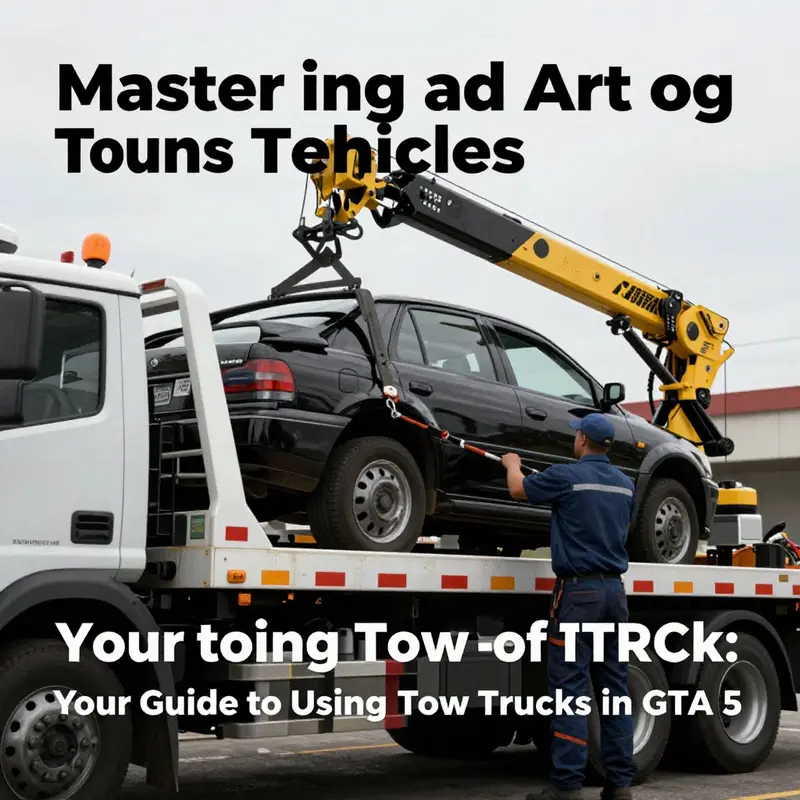
In GTA V, the tow truck is more than a tool; it’s a moving instrument for storytelling, a test of map-reading and throttle control, and a small choreography of patience under pressure. The mechanic hinges on a magnetic winch or hook system that, when used with calm precision, can turn a chaotic street moment into a clean, controlled recovery. The process unfolds as a sequence of deliberate moves, each step building on the last, and the reward for getting it right is a sense of mastery that extends beyond the moment you attach a car and drive away.
Locating a tow truck in the sprawling world of Los Santos and Blaine County is less a quest and more a matter of awareness. Tow trucks pop up in a few reliable places: near auto shops and industrial sites where work happens, in scrapyards tucked away on the backsides of the map, and sometimes as part of story-driven tasks that require vehicle recovery. They can appear on the street as you drive, making the search a part of the game’s rhythm rather than a separate objective. When you spot one, the entry is straightforward: approach and enter the driver’s seat using the PC key F or the appropriate button on your console. The moment you sit behind the wheel, you feel the weight of the crane and the responsibility that comes with controlling a heavy, uncooperative payload through busy streets.
The core skill begins with positioning. You back the tow truck up behind the target car, then bring the crane forward and align it with a bumper—front or rear—as you plan to hook. The angle matters more than you might expect. A clean line between the hook and the bumper makes the latch easy; a slight misalignment can mean wrestling with the crane for minutes, trying to coax a secure grip without scraping paint or bending metal. This is where the practice of slow, measured movements pays off. The aiming precision is not unlike docking a vessel in a tight harbor: tiny nudges, a steady hand, and a sense of where the hook will connect when you’re ready.
Height adjustment is the next crucial lever. The crane arm must be at a height that matches the vehicle’s underside and bumper height so the hook can latch cleanly. On PC, Shift raises the arm and Ctrl lowers it; on consoles, the equivalents are the shoulder buttons that control the same mechanism. While you fine-tune the height, you watch the hook’s tip approach the bumper or chassis with a quiet, almost anticipatory momentum. When the system finds its grip, you hear a precise mechanical click—the sign that the connection is secure and the tow can begin in earnest. From that moment, the towed car is not merely an object but a weight that will pull gently, or with some resistance, as you move.
Hooking is the decisive moment. Press the hook command—E on PC or Square on PlayStation—and the winch extends to engage the car. The sound and feel of the latch are a tangible reward, a reinforcement that you’ve aligned the trajectory and secured a solid anchor. The towed vehicle begins to track behind you, its wheels rolling with a stubborn but predictable inertia. Here your job is to maintain control: feed the throttle slowly, steer with intention, and anticipate how the weight shifts as you negotiate corners, speed changes, and traffic. Excessive speed or abrupt turns can strain the line, loosen the grip, or even detach the vehicle from the hook. The game rewards a light touch as you guide the pair along a route you’ve mapped in your head before you even shift into gear.
Driving with a vehicle in tow changes the feeling of the road. The towed car follows with its own momentum, almost like a second rider on the back of your rig. Sharp turns become a test of geometry and timing, and you learn to approach intersections with extra space and slower acceleration. The map becomes an essential ally, not just for navigation but for plotting the most forgiving route—one that minimizes abrupt velocity shifts and keeps the tow aligned with your chosen path. You’ll also grow to respect the physics more than you expected: a misjudged bend or too-quick lane change can push the line to its limit and rupture the hold. The thrill is in the control you gain, not the speed with which you travel.
There comes a moment you will need to unhook and end the operation. You’ll find a moment of relief when you stop safely, ensure there is ample space, and press the unhook command—H on PC or Triangle on PlayStation. The crane arm lowers, the hook retracts, and the towed vehicle remains where you left it, ready for the next step of your plan. The satisfaction here is procedural; you have executed a procedure with calm, predictable results, and you’re free to move on to the next task without drama or rework.
In the context of the game’s broader missions, you’ll encounter scenarios that test your tow skills beyond the basic procedure. The story mission centered on the Tow Truck arc puts a premium on damage-free hauling and speed management, pushing you to blend precision control with efficient routing. The more you practice the core sequence—locate, enter, position, adjust, hook, tow, unhook—the more fluid the operation becomes. The subtle art lies in maintaining a steady rhythm, recognizing when to pause and re-aim, and accepting that some spaces require a slower pace and more patience than you might expect. The vehicle’s weight and the environment’s constraints demand a careful approach that respects the physics of the tow line and the limits of your truck’s maneuverability.
To place the technique within a wider frame, consider a broader perspective on fleet operations and recovery practices. For readers who want a deeper understanding of asset recovery and emergency-response planning as it translates into gaming contexts, a resource like The Island Tow Truck Blog offers a useful, context-rich lens. It presents a practitioner’s view of handling heavy loads, coordinating safe movement within constrained spaces, and thinking through emergency scenarios in a way that resonates with the in-game towing experience. This internal reference provides a bridge between the mechanics you master in GTA V and the larger world of fleet operations, illustrating how careful planning and patient execution translate into reliable performance, both in virtual environments and in real-life planning conversations. The Island Tow Truck Blog serves as a practical anchor for readers who want to see towing as more than a momentary mechanic and as part of a broader, disciplined approach to asset movement.
For those who want to supplement their practice with official guidance, the Rockstar support page on towing offers clear, platform-specific instructions, control clarifications, and troubleshooting tips. This external resource helps you align in-game actions with the canonical controls and interface expectations across different hardware configurations, ensuring you can reproduce the technique consistently whether you’re playing solo or streaming to an audience. The official guidance complements the in-game feel and provides a reliable reference point as you refine your approach to hooking, towing, and unhooking, especially when you need to reproduce a precise sequence under time pressure.
The arc of towing in GTA V is not just about picking up a car and moving it; it is a study in precision, planning, and the quiet confidence that comes from repeated, deliberate practice. The technique rewards you with smoother operations, fewer mistakes, and a greater sense of control in unpredictable environments. As you continue to evolve your approach, you’ll find that the same core steps—locate, enter, position, adjust, hook, tow, unhook—can be adapted to increasingly complex tasks, whether you’re rescuing a mission-critical vehicle, clearing the street to create space for a moment of narrative, or simply performing a routine transport with a steady, almost ritual pace. The chapter above is designed to be a flowing narrative that captures the essence of the tow truck operation while keeping you oriented toward the larger goals of patient skill development and dependable execution.
External resource: For a documented, game-focused overview of the towing process and cross-platform controls, see Rockstar Support here: How to Tow a Car in GTA 5 – Rockstar Support. Also, for broader reading on fleet operations and emergency-response planning that complements in-game towing, you can explore The Island Tow Truck Blog.
Hook, Haul, Deliver: The Precision Art of Tow Truck Mastery in GTA 5
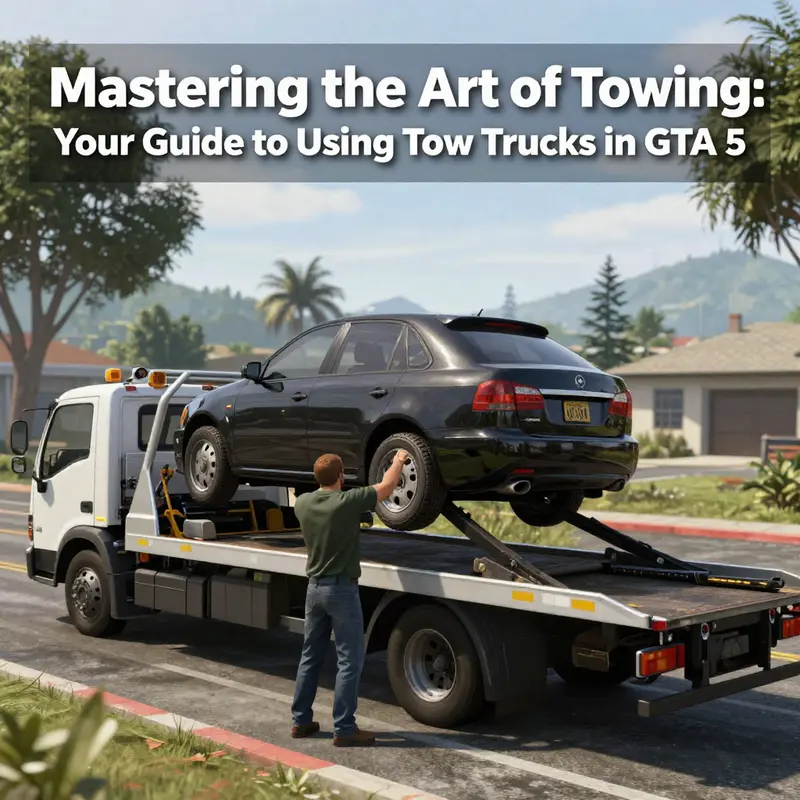
The thrill of GTA 5 isn’t simply in aggression or speed; it’s in the precision of small, mechanical interactions that feel almost tactile. One of the most satisfying, if underappreciated, aspects of the game is mastering the tow truck. It’s not just about driving; it’s about positioning, timing, and understanding the tiny physics that govern how a vehicle behaves once it’s hooked and being towed. When you pull off a clean hook, keep the towed car on a steady path, and deliver it without a scrape, you feel a quiet satisfaction that mirrors the best driving moments in the game. The process starts with locating the tow truck itself. You’ll find them scattered across Los Santos and Blaine County, often in plain sight near auto shops, sometimes tucked into deserted lots or scrapyards in the desert stretches. You’ll even catch them as part of random street spawns, making the tow truck a challenge in timing as much as a tool. The game doesn’t always hand you a tow truck on a silver platter; sometimes you need to complete a story beat or wander a bit to catch a rare spawn. In many missions, especially those that underscore the more procedural tasks of Franklin’s world, a tow truck becomes central to the objective. When you finally spot one, approach and climb into the driver’s seat by pressing the action key. In many setups this is the E key on PC or the X button on consoles. The moment you settle behind the wheel, a sense of control returns. You are not simply transporting a car; you are choreographing a careful sequence that blends driving skill with mechanical precision. The first real challenge is the approach: you must position the tow truck behind or beside the target vehicle in a way that aligns the crane with the bumper. It’s a subtle art—the angle matters as much as your distance. If your first attempt feels off, don’t force it. Back away, adjust your stance, and retry. The crane’s height is another critical variable. You raise or lower the crane to match the vehicle’s height, enabling a clean hook. On PC, Shift is your friend for lifting the arm, while Ctrl helps lower it. On consoles, those duties map to analogous controls that can take a little practice to line up just right. The ancillaries aren’t glamorous, but they are essential: if the crane is even a hair too high or low, the hook may miss, or the line might snag on a bumper corner, and you’ll end up wasting precious time that your mission might not afford. Once the alignment feels right, you extend the hook. A crisp mechanical sound confirms that the connection is secure. You’ll know you’ve hooked the target vehicle when the towed car begins to follow, trundling dutifully along behind your own. The real test now is your driving. You’ll want to keep things smooth. The towed vehicle will respond to your steering, gas, and brake, but there’s a lag and a weight behind you that you must accommodate. Take corners slowly, anticipate turns, and avoid sudden accelerations that could wrench the line taut and risk detachment. The map becomes a compass of safety: plot a route that avoids tight alleyways, snaking intersections, and places you might be forced to overcorrect or hit a curb with the weight of another car. It helps to anticipate the path rather than react to the road as you go. You might even feel a little like a courier, mindful of timing and the geometry of your path. In a mission like the story-driven Tow Truck arc, you’ll find that a steady hand is not merely a preference but a requirement. The game’s internal logic rewards those who move with measured pace, who avoid the temptation to push the vehicle to unsafe speeds. There is a pro tip that often surfaces in communities that discuss this mechanic: during Franklin’s Tow Truck mission, the objective is to transport the tow truck without damage and to reach the destination at a controlled pace. Practicing precision handling beforehand makes a world of difference when the clock starts ticking and the track becomes a stage for your technique. For readers who want a deeper, more visual guide of the process, there are detailed tutorials that walk you through the exact door-to-door timing of hooking, driving, and delivering. If you’re curious about broader practical insights, a good starting point is the practical write-ups that highlight the importance of “approaching from behind” and the necessity of aligning the crane with a bumper’s height. Those little emphases—the angle, the approach, the height—are what separate a failed hook from a flawless one. When you arrive at your destination, the unhooking moment is just as crucial as the connection. You want to stop fully, ensure the towed car is stable and settled in the correct zone, and then release the hook. On PC, the command is to press the H key; on other setups, there’s a corresponding button, often mapped to a shoulder or face button depending on your control scheme. If you press and hear nothing, stop, verify that you’re in the driver’s seat, and confirm the towed vehicle is not still rolling or in motion. A common pitfall is attempting to unhook while the target vehicle still slides or shifts, which can lead to a topple or misalignment as the car drops. The moment of release is almost ceremonial: the crane arm lowers, the hook retracts, and the towed car settles into its new resting place. Then you can guide it to an impound lot or another destination. The narrative of delivering a towed vehicle is a steady, deliberate one. And the rewards, while not always immediate in each run, accumulate as you master the craft and complete time-sensitive challenges. In some story arcs, such as the “Pulling Another Favor” task, delivering the right car to the right point within a time limit unlocks not just a completion, but a sense of achievement—an almost cinematic satisfaction that you’ve navigated the game’s physics and its rules with a surgeon’s steady hand. The guidance from major guides agrees: keep the vehicle hooked until delivery, plan your route, and avoid temptations to cut corners in ways that could compromise your load. Some players even keep a trusted companion in tow to manage distractions, and in a few missions the presence of another character, like Tonya, can offer practical help in maneuvering the impound lot or keeping an eye on the route. This is not just about getting the car from point A to point B; it is about understanding how the system responds to your choices in real time and how to harmonize your movements with the game’s physics in order to emerge with a clean, efficient delivery. For further practical perspectives and a more expansive depiction of how to approach tow-related tasks, you can explore a dedicated tow truck resource that collects community experiences and tips. It’s a concise way to augment your knowledge with real-world practice cues. If you’re looking to go deeper into this mechanic with a structured, story-driven approach, I would suggest checking a resource hub dedicated to tow operations and fleet management (and you can visit the blog for general towing discussions at The Island Tow Truck Blog). This site offers a broad perspective on load management, route planning, and field technique that translates well into GTA 5’s tow-truck choreography. The Island Tow Truck Blog. For a broader reading on the mechanics, the following external guide provides a comprehensive walkthrough that aligns with the steps described here and offers practical nuance on timing and control: https://www.gamerant.com/gta-5-tow-truck-guide/.
The practice of hooking, towing, and delivering in GTA 5, though sometimes overlooked, is a microcosm of the game’s larger design philosophy: tiny, precise actions create a larger arc of accomplishment. As you refine your technique, you’ll notice a quiet fluency in your play—the sense that you are not merely completing tasks, but decoding and mastering a complex machine you carry with you across the map. The tow truck, with its crane and hook, becomes an instrument through which you express patience, precision, and careful anticipation. It’s a subtle loop of learning: you refine your approach, you improve your timing, you deliver more reliably, and you unlock not just rewards in the mission log but a confidence in your own capacity to manage a complicated tool within the game’s world. In that sense, the tow truck is a perfect metaphor for GTA 5’s broader design: a game built on small, repeatable actions that, when executed well, feel like a craft. It’s not a flashy skill set, and it doesn’t require the brute force of high-speed chases or dramatic gunplay. It requires focus, a calm hand, and the willingness to pause, assess, and adjust. That is how you transform a routine road task into a satisfying arc of play, one properly hooked vehicle at a time. To continue your exploration of towing strategies and to deepen your mastery, consider following more practical guides and community discussions, which often highlight nuanced control adjustments and situational workarounds. The game rewards the patient player who treats each hook as its own small project. And when you finally line up the bumper precisely, extend the hook with confidence, and drive your cargo to its destination with care, you’ll feel not only that you’ve completed a mission, but that you’ve earned a skill you can carry into every scenario the game throws your way.
External reading: How to Tow a Car in GTA 5: Complete Guide. https://www.gamerant.com/gta-5-tow-truck-guide/
Final thoughts
In conclusion, leveraging tow trucks in GTA 5 goes beyond just gameplay; it mirrors legitimate practices useful for various sectors, including auto repair shops and commercial fleet operations. Each step—from finding and entering the tow truck to effectively securing and unhooking vehicles—embodies valuable lessons in precision and operational efficiency. By mastering these skills, players can enhance their in-game experience and apply similar strategies in real-life scenarios, ultimately driving success in their businesses and communities. Whether you are an auto repair shop, property manager, or commercial fleet operator, the techniques outlined in this guide present opportunities for improving service delivery and customer satisfaction.