
In an island community where every vehicle plays a vital role, understanding towing capacity becomes essential for local auto repair shops, car dealerships, property managers, resort operators, and commercial fleet operators. Heavy-duty trucks are the backbone of many businesses, transporting goods, equipment, and even helping with emergency responses. This article explores the top contenders in towing capacity, starting with the Sterling 400 Series, making our way to the emerging Sinotruk HOWO 6X4, and comparing their capabilities with well-established brands like Freightliner, Peterbilt, and Kenworth. We’ll delve into what towing capacity ratings really mean for your business and highlight future innovations set to change the landscape of towing. Each chapter builds your knowledge of these powerful trucks, ensuring you can make informed decisions for your operations.
Leading the Pack in Tow Capacity: Benchmarking Flagship Heavy-Haul Tractors
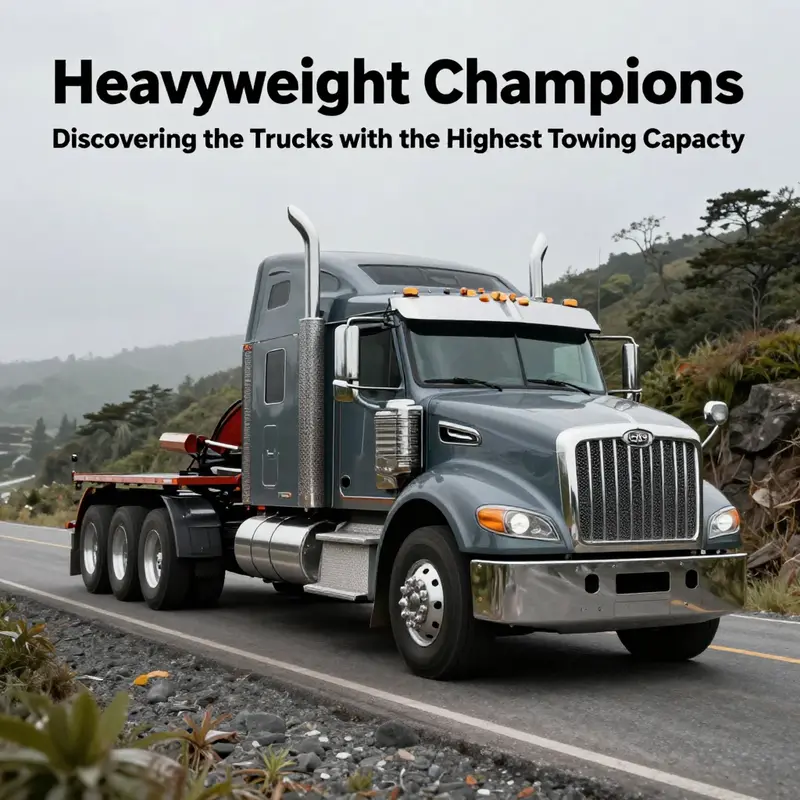
When discussing which truck has the highest towing capacity, the answer is a function of the entire system, not a single number. Engine torque, transmission strategy, axle configuration, frame stiffness, suspension, and weight distribution all interact to determine safe, sustainable towing performance over long distances. In heavy-haul trucking, flagship tractors are designed to maximize uptime and control, not merely to maximize peak horsepower.
A 30-ton-class, six-by-four tractor illustrates this balance. The drivetrain, drive-line geometry, axle strength, and frame stiffness determine how torque is applied to the trailer kingpin or gooseneck. A high-torque engine helps with towing at low engine speeds, while an intelligent suspension and traction system prevents wheel spin and maintains stability. Modern rigs often integrate electronic stability programs, advanced braking controls, and active suspension management to keep four-corner contact with the road, even on grade or uneven surfaces.
Ultimately, the highest towing capacity is about reliable, safe performance over thousands of miles, not a single peak rating. Capacity is influenced by trailer configuration, hitch type, axle limits, and weight distribution, and the best platforms are configurable to meet mission needs while preserving safety margins and uptime. For readers seeking precise specifications, consult manufacturer pages and official performance data for the flagship platform.
Toward the 30-Ton Horizon: How Modern Heavy-Duty Tractors Redefine Towing Capacity
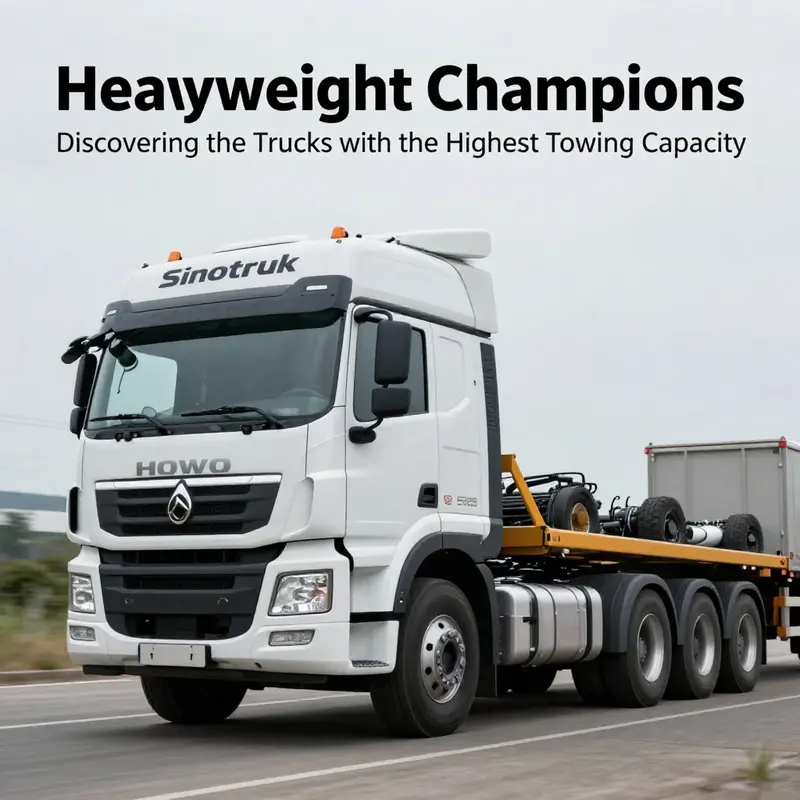
Across the heavy-haul spectrum, there is a practical distinction between nominal towing capacity and what a machine can reliably deliver over thousands of miles. The 30-ton class has emerged as a meaningful benchmark, not just a marketing figure, but a threshold where power, control, and durability converge for sustained heavy lifting. In markets worldwide, fleets weigh this rating against engine torque, driveline design, suspension stiffness, cooling capacity, and operator training. The following narrative follows that logic: it grounds the 30-ton figure in the realities of long-distance hauling, explains how a truck earns that rating, and clarifies why the number matters less than the performance envelope around it. The emphasis is on cohesion of components and the discipline required to keep such a machine productive, safe, and economical on the road.
A real-world warranty on towing weight depends on more than the engine. The drivetrain configuration matters. A 6×4 layout—three driven axles pushing power to the pavement—offers resilience under heavy payloads by spreading traction and reducing axle load per wheel. This design improves grip on slick ramps and iron-rough grade surfaces, and it helps maintain that crucial road feel during braking when the combined weight reaches its peak. Yet, more traction isn’t a license to sprint into mountains. The same system requires careful calibration of braking, steering gear, and suspension to avoid instability during deceleration and cornering. In essence, the transmission of power must be matched by the chassis to preserve line-of-sight and steering response when the truck is towing the maximum mass.
Power remains central but not in isolation. A torque-rich engine can deliver the heavy pull necessary to accelerate from a standstill and maintain momentum on grade, while a refined transmission ensures that that power remains within a usable band. The balance between torque and gearing determines how long a truck can hold a steady speed with a heavy trailer before a downshift becomes necessary. When the engine produces a healthy torque band at low to mid-range speeds, the vehicle avoids stalling or excessive heat buildup during climbs. This control translates into predictable performance for the operator, reducing the need for abrupt throttle changes that would otherwise destabilize the load. In practice, the engines in this class are tuned for a broad torque plateau rather than a narrow peak, allowing drivers to maintain steady velocity under varying road grade without excessive clutch or brake wear.
Chassis and suspension are the quiet partners in a high-capacity pairing. A robust frame, reinforced cross-members, and an adaptive suspension system work together to keep the tractor aligned as the trailer waltzes with heavy mass behind it. The goal is to balance stiffness with the ability to absorb road irregularities so that the weight transfer does not amplify oscillations through the cab. This stabilization reduces tire scrubbing, preserves brake life, and improves steerability during lane changes and slow-speed maneuvers in construction zones or port yards. It also contributes to an operator’s confidence, which—paradoxically—can be as important as raw horsepower when the load routinely tests the limits of the rating. The better the damping and load distribution, the less the driver must chase a stable line, especially during long shipments on uneven infrastructure.
Environmental and fuel considerations further shape decision-making in this space. The same heavy-haul platform that delivers high capacity can be configured with alternative fuel options, including compressed natural gas, which may offer a lower-carbon footprint and different operating economics depending on regional fuel prices and infrastructure. This flexibility is meaningful for fleets looking to diversify their energy mix while maintaining power and reliability. It demonstrates that capacity and sustainability are not mutually exclusive but can be pursued in parallel through thoughtful engineering choices, modular configurations, and support for maintenance and service networks along key routes.
Price and availability are practical realities that temper decision-making around pursuing a 30-ton capacity build. In the market, basic configurations intended for heavy towing can be accessible at relatively modest price points for new units, though the envelope needed for sustained, high-duty operation commands a larger investment in reinforced components and wear parts. Starting prices in this class can be in the tens of thousands of dollars, and total cost climbs with the addition of protective features, cooling upgrades, enhanced braking systems, and specialized suspensions. Availability remains broad, with manufacturers and distributors delivering through networks that connect to major ports and logistics hubs. For buyers, the assurance of a payment guarantee and protections against defects provides a level of security that helps align risk with a complex procurement process.
Beyond the numbers, the decision to pursue a 30-ton-capable configuration hinges on total cost of ownership and lifecycle reliability. A vehicle rated to move 30 tons briefly may seem appealing, but it is the long-term performance—uptime, maintenance intervals, spare parts availability, and driver proficiency—that determines whether the investment pays off. Fleets that prioritize reliability will implement preventive maintenance programs, routine checks on cooling systems and brakes, and driver training focused on load management and safe maneuvering with heavy trailers. The capacity rating then becomes a planning tool rather than a singular objective. It helps managers forecast demand, plan maintenance windows, and schedule capital expenditures with a realistic view of what the equipment can sustain over multiple years and thousands of miles.
For readers seeking practical guidance beyond the technical specification, industry discussions—practical, field-tested, and free of marketing gloss—provide valuable context. For fleet operators who want up-to-date, experience-driven perspectives on heavy-haul operations and emergency response readiness, there is a widely followed resource that offers concise insights on maintenance readiness and incident-free hauling strategies. See the Island Tow Truck blog for ongoing discussion that enriches the theory with field-tested wisdom and situational awareness. The emphasis is on how to stay prepared when unexpected scenarios arise, a reminder that even the most capable machine benefits from careful planning and disciplined operations the Island Tow Truck blog.
Ultimately, the pursuit of the highest towing capacity is part of a broader strategy. It is about matching the machine to the mission: the terrain, the typical payload, the route architecture, the available support, and the drivers who will bring the weight to life every day. The 30-ton benchmark provides a credible floor for planning and a ceiling that signals the upper end of a practical, repeatable, and safe heavy-haul operation. It is not a guarantee of all things across every possible scenario, but it is a robust benchmark that helps fleets plan capacity with greater clarity. By focusing on how the powertrain, driveline, suspension, and cab work together under load, buyers can approach this market with a clearer view of what is realistically possible and what compromises must be accepted in pursuit of scale. The goal remains steady: to ensure that a heavy-haul machine can deliver predictable performance when the weight is at its peak, without sacrificing the reliability that keeps drivers, fleets, and customers aligned over the long haul.
External resource: For a detailed listing of specifications and configurations in this category, see this external resource.
Tow Capacity Showdown: Unraveling the Heavy-Duty Trifecta and the Road to Maximum Tow
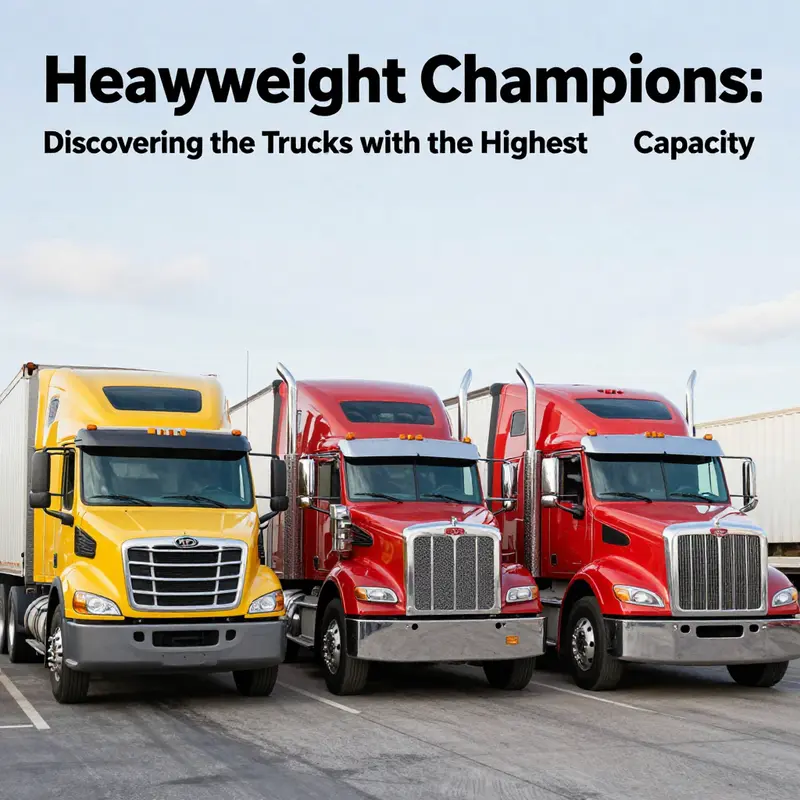
Tow capacity is more than a single number; it is the product of design choices that span the chassis, the drivetrain, and the way a truck negotiates weight at highway speed and on uneven terrain. In the heavy-haul segment, the most dramatic figures come from trucks built to handle aggressive GCWR targets, reinforced frames, and engines tuned for torque over sprint. This is a space where the distinction between “maximum tow” and “best overall performance” becomes subtle but important. Fleet operators are seldom chasing a pure peak number in isolation; they seek reliability across the miles, predictable maintenance costs, and a predictable return on investment when hauling the planet’s heaviest loads. When you look closely at the market, you find the highest towing capacities concentrated in what industry insiders call the heavy-haul platforms—rigs engineered to pull the heaviest combinations with control and composure, rather than simply to lift a static trailer into the air for a quick photo opportunity.
In practical terms, maximum towing capacity hinges on four pillars: the frame and suspension that bear the weight, the powertrain’s torque and responsiveness, the braking system that keeps the rig controllable under load, and the overall weight distribution that keeps the tractor and trailer balanced on climbs and descents. Modern heavy-haul systems are also increasingly guided by intelligent controls, where predictive cruise and telematics optimize throttle application, axle loads, and fuel use during long pulls. The result is a class of trucks that can sustain high trailer ratings without sacrificing driver comfort, fuel efficiency, or on-road stability. For buyers, this means selecting configurations that align with the nature of the work—whether it is continuous long-haul freight, seasonal heavy- equipment transport, or specialized industrial hauling.
The market’s top-end capacity tends to cluster around a few broad design philosophies rather than a single stand-alone model. One design emphasizes a high-strength, long-wheelbase frame, with a ladder-type mainframe and reinforced crossmembers that distribute the load evenly across the drive axles. This approach yields impressive towing numbers, but the trade-off is a heavier base weight, which can affect payload capacity and fuel economy. A second philosophy centers on aerodynamics and efficiency, with low-drag cabs and carefully tuned engines that extract more towing torque per gallon of fuel. The third path prioritizes chassis versatility, offering broad engine and transmission options, a wide range of axle ratios, and advanced stability systems that help keep the heavier rig planted when the trailer is loaded to the limit.
A notable feature of this landscape is the existence of a 30-ton class that is engineered specifically for heavy hauls. In this tier, a tractor with a robust 6×4 drivetrain and a sizable engine—about 371 horsepower in some configurations—exists to meet demanding payloads. While it may not universally outrun every ultra-specialized or custom-built rig, this formula sits among the leaders in commercial heavy-duty towing. The 6×4 layout supplies the traction needed on tough grades and slick surfaces, while the engine’s torque curve is tuned to deliver the decisive pull when the load is just starting to move from a standstill or when the road pitches upward. These specifications are a reminder that true towing capacity is a synthesis of traction, strength, and control rather than a raw horsepower tally alone.
In comparing the broader landscape, it is useful to acknowledge that the standard-production leaders from the large, well-established manufacturers offer similar or slightly higher towing capabilities depending on the exact configuration. Yet price points, maintenance costs, and the depth of service networks also shape the practical decision. A truck that delivers a tad more tow may impose higher ownership costs if the fleet must carry specialized parts inventories or if downtime in remote regions becomes a recurrent issue. Conversely, building a fleet around a more widely supported platform can reduce maintenance headaches and improve uptime, which in turn protects the overall value of the investment. The nuanced takeaway is that the “highest tow” value must be evaluated against the realities of daily operations, route profiles, and long-term budget planning.
For practitioners examining the options, the question often becomes not only which truck can pull the most, but which configuration yields the best balance between tow performance, payload capacity, and total cost of ownership. A heavy-haul operator crossing rugged terrain might prioritize a rugged, high-torque powertrain paired with a frame engineered for extreme loads and a suspension tuned for stability over comfort. A long-haul operator who sometimes encounters steep grades or heavy loads in alternate markets may value a combination of high GCWR, efficient aerodynamics, and a driver-focused interior that reduces fatigue on multi-day missions. In both cases, the choice is shaped by the same core principle: reliable, consistent performance under load yields the greatest value over time.
To bring this discussion into practical terms, the environmental and economic conditions that fleets face in their daily operations cannot be ignored. The per-mile cost of moving heavy loads includes fuel, maintenance, tire wear, and the cost of downtime. If a truck offers a slight edge in raw tow rating but bogs down on fuel or experiences frequent component wear, the long road hours spent towing may erode any short-term advantage. That is why many operators weigh multiple dimensions of performance—torque delivery, fuel economy, braking performance under load, and the predictability of service intervals—before making a purchase decision. The narrative is not about chasing a single top number; it is about choosing a platform whose towing prowess is matched by resilience and overall efficiency across the life of the asset.
For readers seeking ongoing coverage that translates into real-world fleet decisions, resources such as industry discussions hosted on well-regarded automotive and trucking platforms offer continuing insights into load-handling capabilities, maintenance strategies, and technology integration that supports heavy hauling. The Island Tow Truck blog offers a practical perspective on fleet decisions and road-tested approaches to emergency readiness that can complement technical specifications with real-world application. The Island Tow Truck blog is a useful reference point for operators looking to connect vehicle capability with day-to-day operations and safety practices. As with any equipment choice, hands-on evaluation and test- pulling under representative conditions remain the gold standard for determining which platform truly meets the specific demands of a given operation.
Ultimately, the pursuit of the highest towing capacity is part of a broader conversation about how to move the heaviest loads most reliably, efficiently, and safely. The road to maximum tow is paved not just with horsepower and torque, but with a chassis that can carry the load, a drivetrain that can sustain it, and a set of systems that keep both tractor and trailer in harmony through hours of challenging driving. For some fleets, that means leaning into the high-capacity, long-haul-oriented designs that emphasize stability and control. For others, it means embracing a versatile, robust platform that can be tailored with axle ratios, engine options, and braking systems to meet a broader range of hauling needs. In any case, the central truth remains clear: the strongest tow performance must be earned through integration, reliability, and smart, data-informed decision-making that aligns with the realities of the routes, payloads, and maintenance cycles faced by the fleet each day.
External resource: https://www.freightliner.com/trucks/cascadia
Raising the Bar: Decoding Towing Capacity to Identify the Heaviest Hauls
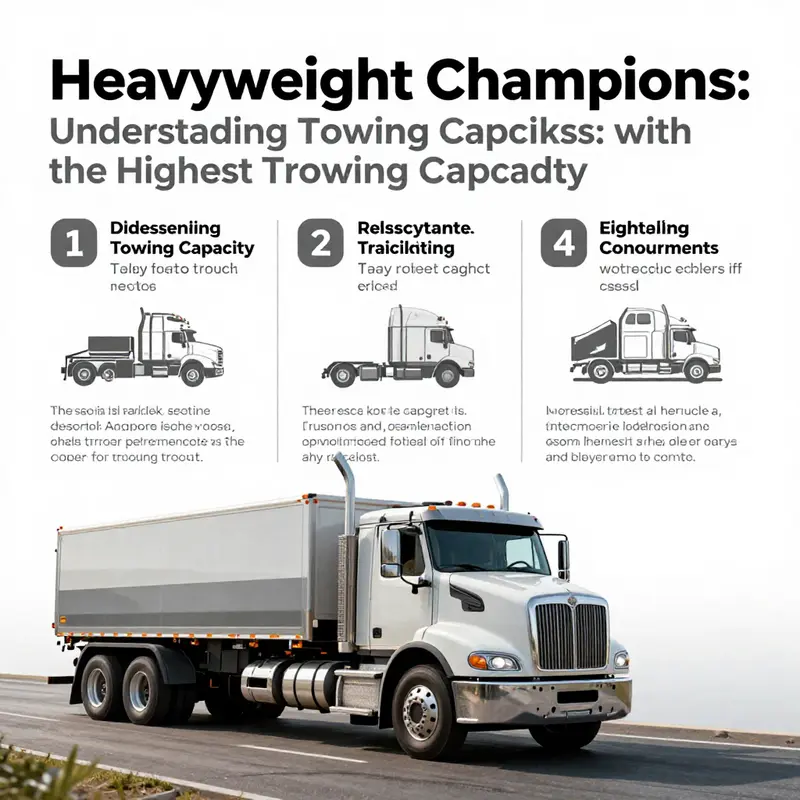
Towing capacity is a safety boundary, not simply the maximum weight a vehicle can legally pull. It represents the upper limit of how much weight can be connected behind a vehicle while maintaining predictable handling, reliable braking, and components that won’t overheat or fail. This distinction matters because many buyers assume a higher horsepower or a bigger engine automatically translates into a higher towing capacity. In truth, capacity emerges from a careful balance of power, drivetrain robustness, suspension strength, and braking capability, all working in concert to manage the extra mass, heat, and dynamic forces imposed by a trailer and its load.
At its core, towing capacity is derived from a straightforward, but powerful, relationship. The practical formula is Towing Capacity = GCWR minus the vehicle’s curb weight. GCWR, or gross combined weight rating, is the maximum allowable weight of the vehicle plus its trailer and load. The curb weight is the weight of the vehicle as built, with fluids and a full tank of fuel. Subtracting one from the other yields the maximum trailer weight you can haul safely. This relationship is more than algebra; it is a reflection of how the engine, transmission, drivetrain configuration, suspension, and braking system all contribute to keeping the entire combo under control when it’s moving at highway speeds, traversing hills, or navigating winding roads.
Engine power matters, but torque matters more for towing. A high-revving engine might deliver impressive horsepower numbers, yet it is the torque curve—how quickly torque is produced at low and mid RPMs—that determines how well a vehicle can start, crawl, and maintain speed when pulling away from a standstill with a heavy trailer. A transmission and a drivetrain designed to keep the engine in its efficient torque band ensure that power translates into usable towing performance rather than wasted energy as heat. The drivetrain configuration, such as rear- or four-wheel drive and the number of driven axles, further influences how that power is distributed, how the weight is managed, and how stability is maintained under braking and during lane changes with a load behind.
Suspension architecture and chassis strength are not mere footnotes in this calculation. They absorb and dissipate the additional forces generated by the trailer, including surge from braking, inertial shifts during acceleration, and the jerks of steering corrections on uneven pavement. A robust suspension minimizes frame flex, preserves steering feel, and ensures a consistent ride height, all of which help maintain tire contact and braking effectiveness. Braking is equally critical; a heavier load behind the truck requires a braking system that can grow its capability without overheating. Without sufficient braking reserve, the risk of fade, reduced control, or tire lockup increases markedly, even if the engine can muster the power to move the load.
One important nuance is that the highest possible towing capacity is often found in heavy-duty tractor configurations rather than in conventional pickup platforms. In the marketplace, there are leaders among the heavyweight categories whose standard configurations, when properly equipped, push toward the upper limits of what is commercially available. These machines typically rely on specialized drivetrains, cooling systems, and axles designed to endure long-haul operation with heavy trailers. However, the exact top value is not universal; it shifts with trim levels, optional towing packages, installed braking improvements, and trailer equipment. The moment you change any component—perhaps upgrading the cooling system, adding an integrated factory towing package, or selecting a different axle ratio—you can alter GCWR and, by extension, the practical towing capacity.
For consumers evaluating what to tow, the takeaway is clear: the number published by a manufacturer is a boundary, not a guarantee for every load. Your actual safe towing limit is specific to your exact vehicle configuration, the trailer you intend to pull, the distribution of weight across the trailer, and the road conditions you encounter. This is why owners manuals and official manufacturer specifications remain the best sources for precise data, and why simply escalating engine power without corresponding improvements to transmission cooling, braking, and suspension can be misleading. When you map your towing plan, you should consider the entire system: how the trailer’s weight is spread, the hitch, the braking requirements, and the route you will travel. A higher GCWR versus a higher curb weight can shift the safe operating window, and in some cases, a marginally lighter trailer with better weight distribution can be safer and more efficient than a heavier load with poor balance.
In practical terms, the market tends to have a tier of leaders among heavy-duty trucks designed for sustained heavy hauling. These vehicles are engineered to pull substantial loads over long distances, often with configurations that optimize torque delivery and traction while safeguarding the drive train and braking system under stress. Yet even within that tier, the actual “best” choice depends on how you plan to use the vehicle. For highway runs that require predictable acceleration with a large trailer, a configuration that enhances low-end torque and provides a robust cooling system can outperform a higher-gear setup intended for fuel economy. For those who frequently navigate grades or require frequent stops, a setup with extra braking capacity and more responsive engine braking can translate into safer and more economical operation.
From a fleet perspective, the implications extend beyond raw numbers. Emergency response teams, remote-site operations, and island fleets face unique challenges that emphasize reliability, ease of maintenance, and predictable performance under load. In such contexts, choosing a vehicle with a high towing capacity matters, but so does the availability of spare parts, the servicing network, and the ability to deploy with a compatible towing package that ensures consistent braking and steering control under load. For operators seeking guidance that bridges consumer understanding and practical fleet needs, the insights from industry resources and field-tested guidance can be invaluable. For a deeper dive into practical, fleet-focused perspectives, consider the The Island Tow Truck Blog, a resource that highlights the realities of heavy-haul operations in real-world settings: The Island Tow Truck Blog.
Ultimately, the pursuit of the highest towing capacity is a nuanced journey. It requires reading the spec sheets not as a single competing metric, but as a map of how power, control, and safety interact under load. It means understanding that a higher number in one dimension may come with trade-offs in another, such as increased curb weight or reduced maneuverability. It requires recognizing that the top capability is often achieved through a combination of a powerful, torque-rich engine, a drivetrain designed to deliver power where it counts, a cooling system capable of sustaining performance, a braking system capable of absorbing energy efficiently, and a chassis that maintains stability and tire contact under stress. For buyers, the best approach is to align capacity with real-world needs: the typical load, the routes, the climate and terrain, and the maintenance readiness of the fleet. When you pair this understanding with accurate sources of specification and careful comparison across configurations, you can identify the vehicle that truly offers the strongest towing performance for your particular use case.
For anyone seeking official, up-to-date specs tailored to a specific make and model, consult the manufacturer’s data pages and technical sheets. These resources provide the most reliable basis for comparison and decision-making as you evaluate how a truck’s towing capacity translates into practical, safe, and economical hauling. Example manufacturer data is available at official automotive information platforms, such as the general overview at https://www.gm.com/.
Tow Power Reimagined: How Heavy-Tractor Designs and Electric Advances Redefine Maximum Towing Capacity
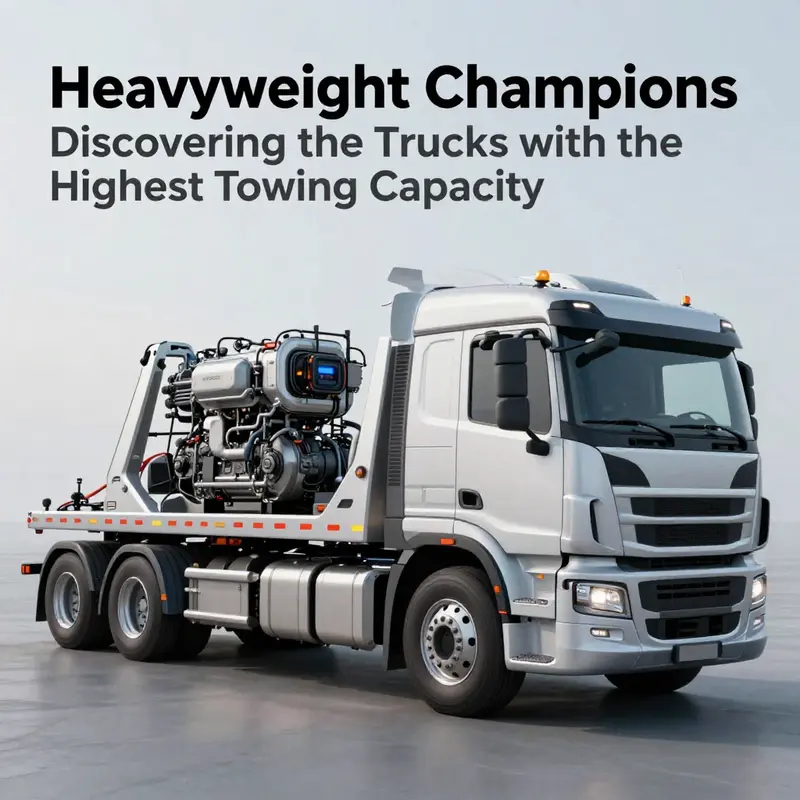
Tow capacity is not a single fixed number but a conversation among chassis, drivetrain, and the road ahead. When people ask which truck has the highest towing capacity, the honest answer is nuanced: the top figure depends on configuration, trailer geometry, and how the load is distributed. In the best-in-class segment, heavy-haul tractors built for long-distance service push the upper envelope by combining robust frames, multi-axle arrangements, and braking systems designed for repeated, high-torque pulls over thousands of miles. A 30-ton class benchmark often represents the upper edge of standard production configurations. That figure is achieved by a tractor with a six-by-four drive layout, substantial engine output, and a drivetrain tuned for maximum traction and controlled weight transfer during launch. Yet even within this class, the precise towing limit shifts with axle count, weight distribution, and how the trailer is engineered. The way weight sits on the rear axle, the height and length of the trailer, and the coupling method all influence whether that rating feels like a ceiling or merely a signpost on a longer climb.
Beyond raw capacity, the reality of towing is shaped by the entire system. Trailers add their own weight, and the coupling method matters. A long, tall, heavy trailer creates a moment about the rear axle that changes steering feel and brake balance. The truck’s braking system must manage not only the weight of the loaded trailer but the inertia of the whole combination. The tires sit at the edge of traction, and the suspension must keep the load stable as wind loads and road undulations tilt the rig. For this reason, the highest possible towing rating is not used in isolation; fleets and operators look for a balance between peak capability and repeatable performance, with control that remains predictable at the end of a long grade or when negotiating a tight turn in a busy yard. In practice, this means engineers and operators prioritize systems that can sustain traction and braking confidence under repeated cycles rather than chase a single peak number that only appears under ideal lab-like conditions.
From a powertrain perspective, the top performers in this class rely on a combination of high-torque delivery and durable, multi-axle frames. Power output in the mid- to upper-three-hundred horsepower range is common in these configurations, paired with torque figures that can hold a high line as the speed climbs slowly under load. This pairing is essential for those long hauls where the engine must maintain momentum with the trailer in tow, often across grades that demand sustained effort rather than a sudden surge. The result is a fleet-friendly mix: capacity that can be tapped at the pace the road demands, with stability built into the chassis and the braking system to prevent shy of the limit behavior that can surprise drivers on steep descents. The timing of shifts, the reliability of the transmission, and the ability of the axles to distribute load evenly across the tires all contribute to how effectively the rated capacity translates into real-world performance.
Nevertheless, the frontier of towing capacity is shifting as technology advances. Electric powertrains, once thought to be a separate track from heavy hauling, are moving up toward the same performance envelopes as their diesel counterparts. Battery energy density and motor efficiency have improved at a pace that reduces the penalty once paid in range to chase payload. The most compelling development is the ability to sustain high-torque output over longer distances without the same fuel economy drag. In practical terms, this means electric trucks can, in some configurations, deliver the same level of towing performance as ICE rivals while offering benefits like zero idle emissions, smoother torque delivery, and clever regenerative braking that helps stabilize momentum and braking heat on long grades. The challenge remains grave for long-haul routes due to the need for substantial energy storage; yet manufacturers and operators are learning to plan routes, charging infrastructure, and battery management strategies that make nightly mileage feasible without compromising schedule reliability. These dynamics also influence maintenance profiles and total cost of ownership, as fleets weigh the cost of higher-capacity batteries against the downtime savings and performance consistency that electrified drivetrains can provide.
To understand why many fleets still hedge toward conventional diesel or gas prototypes, consider the total cost of ownership and the day-to-day realities of heavy-haul work. A 30-ton-capacity tractor is impressive on paper, but the true test is how often that capability can be summoned without compromising uptime, maintenance, or the ability to arrive on time. Fuel economy, maintenance intervals, and parts availability all shape decision making. In regions with dense supply chains, the economics align more quickly with the higher upfront cost of advanced powertrains when the downstream gains in reliability and expected service life are factored in. The same trade-off plays out in repair ecosystems: a rig that spends fewer hours fetching spare parts and fewer days in the shop tends to deliver the most consistent performance, even if its peak rating sits slightly below a competitor’s. A practical operator learns to value repeatable performance and predictable behavior in the worst conditions over a single number that looks impressive in a brochure.
Truly, the question of who has the highest towing capacity depends on context. If the focus is on an all-around heavy-haul workhorse with the broadest possible operating envelope, the leading configurations in the industry lean toward multi-axle, robust-frame designs that tolerate repeated acceleration under load, sustained operation on grade, and stable control during deceleration with a fully loaded trailer. For those pushing the outer limits, custom builds and specialized rigs exist that can exceed standard ratings, but they come with higher price tags, greater maintenance demands, and stricter regulation. That is why, in practice, operators weigh not only the raw rating but the entire system’s ability to maintain safety margins, keep drivers productive, and minimize downtime. The highest towing capacity, then, is less a single trunk line and more a capability curve—one that shifts with road grades, trailer geometry, and the design philosophy of the truck family.
As the market evolves, the frame of reference widens. Electric propulsion promises to push that curve outward further, while advances in materials, aerodynamics, and active suspension technologies refine how much of that power ends up moving the load instead of causing tire spin or wheel hop. Improved energy density unlocks longer towing ranges, and smarter controllers manage torque delivery in ways that preserve stability at the hitch. The transformation is not merely about raw power; it is about coherence—how the powertrain, chassis, brakes, tires, and trailer work in concert to deliver dependable performance under harsh conditions and long duty cycles. For buyers, the shift means that maximum towing capacity is increasingly a design choice balanced with endurance, efficiency, and schedule reliability. Fleet operators can begin to imagine a future where long-haul, heavy-tow routes are not a compromise between payload and range but a coordinated operation that leverages the best features of both ICE and electric powertrains. The next step will be to harmonize heavy-haul capacity with the realities of infrastructure, driver training, and maintenance ecosystems that keep wheels turning across vast corridors of commerce.
To put this evolution into a navigable frame, it helps to consult practical resources that address not just the engineering of towing but the daily realities of managing a heavy towing fleet. For readers seeking actionable insights on fleet availability and emergency response planning across island operations, see the Island Tow Truck blog. This resource offers a grounded perspective on how fleets prepare for extremes, coordinate with support teams, and keep essential services moving when every ton counts. While the focus here is on capacity, the broader ecosystem—training, readiness, and logistics—shapes how soon a higher theoretical limit becomes a dependable everyday capability. And as the industry continues to push the envelope, the dialogue between traditional ICE rigs and emerging electric solutions will remain lively, with each shift in technology offering new ways to move more weight more reliably than before.
For deeper context on EV towing capabilities, see Electric Vehicle Towing: Closing the Gap with ICE Trucks. https://www.electrictrucknews.com/electric-vehicle-towing-closing-the-gap-with-ice-trucks/
Final thoughts
As the demand for powerful towing solutions continues to rise, understanding the capabilities of trucks like the Sterling 400 Series and the 2025 Sinotruk HOWO 6X4 equips businesses in island communities with the knowledge to make informed investments. Comparing these models with traditional favorites ensures that local operators can choose vehicles tailored to their unique challenges. The landscape of heavy-duty trucks will evolve with innovations in towing technology and electric powertrains, promising exciting developments for the future. By staying informed, local auto repair shops, dealerships, and fleet operators can boost their operational efficiency and be well-prepared for the challenges ahead.