In the realm of towing, understanding whether you need a Commercial Driver’s License (CDL) is crucial for various businesses, from auto repair shops to property managers. CDL requirements can dramatically impact how you operate, especially if you’re in the business of towing vehicles or providing roadside assistance. Each chapter in this article delves deeper into specific aspects of CDL regulations, commercial versus non-commercial use, state-specific laws, weight regulations, and best practices for compliance. Together, we’ll ensure that your towing operations are efficient, legal, and safe, providing you with the knowledge necessary to navigate this landscape successfully.
Tow Truck CDL Thresholds: Navigating GVWR, Towed Load, and the Line Between Personal and Commercial Use
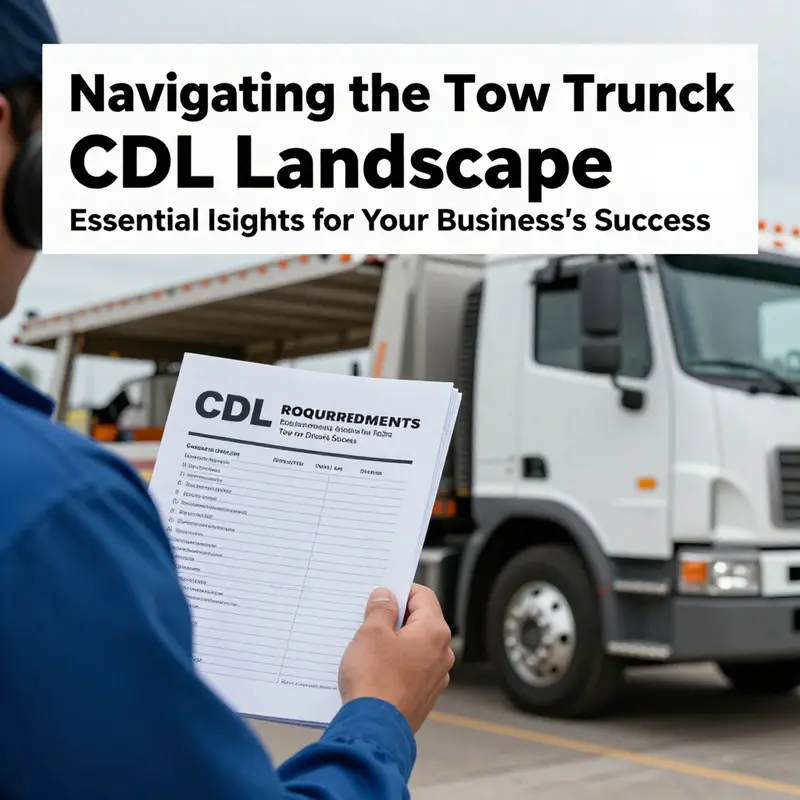
When a tow truck arrives on the scene, regulatory questions begin before any hook is attached. The core issue is whether a Commercial Driver’s License (CDL) is required, and the answer depends on a precise mix of vehicle weight, how the vehicle is used, and the federal and state rules that govern road safety in the United States.
The Federal Motor Carrier Safety Administration (FMCSA) defines a broad threshold around a GVWR of 26,001 pounds or more as generally requiring a CDL. This number reflects the performance, braking, and maneuverability demands of heavier vehicles operating in mixed traffic, and it helps determine whether a driver must meet CDL testing, medical, and qualification requirements.
However, the weight of what is towed matters too. If the towed vehicle weighs more than 10,000 pounds and the operation is for commercial purposes, the combined weight of truck plus payload can push the job into CDL territory, even if the tow truck alone is lighter.
Conversely, a lighter tow truck used strictly for non-commercial purposes may not require a CDL. Yet state law can differ: some states apply CDL-like requirements below 26,001 pounds if the operation is treated as commercial or if payload considerations apply. The result is a mosaic of rules that vary by jurisdiction, so operators must check both the federal framework and the state regulations where they work.
Within this landscape, the DMV in the driver’s home state is the primary source for state-specific interpretations, while the FMCSA site anchors the federal framework. Relying on one source alone can lead to misclassification, so any serious tow-truck program should cross-check both levels of guidance.
A practical way to plan is to inventory the fleet and the types of jobs performed. For a tow truck under 26,000 pounds GVWR, a standard driver’s license may suffice for non-commercial use, but commercial tasks can trigger additional requirements. Some jurisdictions demand a CDL or endorsements for recurring, profit-driven recovery work, even on lighter trucks.
CDL readiness typically involves more than a written test. Expect a knowledge test and a skills test, with a focus on large-vehicle handling, backing, turning in tight spaces, and judging how weight distribution affects braking and stability. Medical clearance and ongoing certifications are common requirements for operators who carry passengers, transport hazardous materials, or perform high-risk duties.
Beyond licensing, the practical implications touch dispatch, pricing, and driver recruiting. Operators weigh the costs and time of CDL training and maintenance against the benefits of handling heavier equipment or offering a broader range of services. Some businesses structure operations to ensure heavy jobs require a CDL, while lighter tasks operate under stricter safety controls with standard licensing.
Because rules differ by state and regularly evolve, the safest course is to verify specifics with the state DMV while cross-referencing the federal framework. The goal is to stay compliant, safe, and prepared for inspections, audits, or fleet reviews. FMCSA resources and state guidelines together provide the full picture, and ongoing training should be treated as a continuous responsibility rather than a one-time hurdle.
For operators seeking deeper understanding, consulting federal and state resources and speaking with experienced peers can be valuable. Keep licensing, endorsements, and medical certifications up to date, monitor changes in regulations, and run periodic reviews of fleet composition and job duties to ensure each assignment is legally and safely staffed.
When Towing Becomes a Business: How Commercial Use Shapes CDL and Compliance
Commercial vs. Non-Commercial Use in Tow Truck Operations
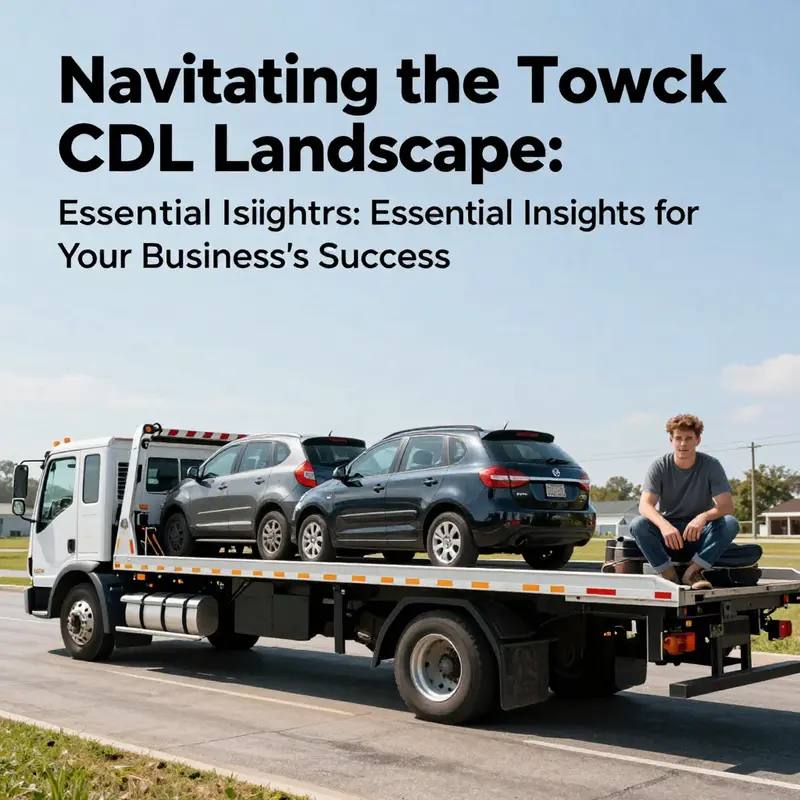
Understanding whether you need a Commercial Driver’s License (CDL) to drive a tow truck hinges largely on one central distinction: is the towing performed as a commercial activity or as a private, non-commercial act? That line determines not only licensing but also registration, insurance, inspections, and the daily responsibilities of the operator. This chapter explores how the commercial label transforms a simple tow into a regulated business activity, and why that matters to drivers, fleet managers, and anyone who might think a heavy-duty truck is automatically tied to a CDL requirement.
At its core, commercial use means the vehicle is used to provide services for hire or to transport goods as part of a business. For tow trucks, that includes routine roadside assistance, accident recovery for third parties, transporting vehicles to storage facilities for a fee, and contracted towing for municipalities or law enforcement. The practical effect of labeling a tow truck commercial is immediate: commercial registration, different tax and fee structures, and a suite of regulations designed to protect other road users and the people whose vehicles are being handled. In contrast, non-commercial use covers private individuals using a tow vehicle for personal reasons, such as recovering a family member’s disabled car or moving a personal vehicle without compensation. Non-commercial towing generally faces fewer formal requirements.
One of the most consequential outcomes of commercial classification is how it interacts with CDL thresholds. Federal guidelines and most state laws look at vehicle weight and the purpose of operation. A tow truck with a Gross Vehicle Weight Rating (GVWR) above 26,000 pounds typically falls into the CDL domain. But even below that weight, the act of towing for profit can trigger CDL requirements when the combined weight of the tow truck and towed vehicle surpasses regulatory limits, or when the towed vehicle itself exceeds defined weight thresholds. In short, commercial intent can make an otherwise exempt vehicle subject to the same rules that govern heavy commercial trucks.
Insurance follows a similar path. Commercial towing exposes operators to higher liability: the vehicle being towed often belongs to others, may be damaged in recovery, or could create secondary incidents during transport. Standard personal auto policies rarely extend coverage to commercial operations. For anyone driving a tow truck for hire, securing specialized commercial insurance is essential. These policies account for increased risk and usually come with higher premiums, stricter coverage terms, and specific requirements for drivers—such as minimum age, driving record standards, and sometimes proof of commercial licensing.
Licensing demands extend beyond the CDL itself. Commercial tow operations often require business licensing, local permits, and, in many jurisdictions, bonding or escrow accounts—especially when vehicles are impounded at the request of law enforcement. Operators may face background checks and must comply with local ordinances governing where and how they may tow vehicles. Safety regulations can mandate particular equipment standards, periodic vehicle inspections, and training for operators on recovery techniques and safe towing practices. Response-time contracts with municipalities or private clients can add another layer of accountability, stipulating how quickly a tow must be rendered and what documentation is required on scene.
Vehicle classification affects more than paperwork. Commercial registration can change inspection cycles, emission testing requirements, and tax treatment. A tow truck listed as a commercial vehicle is often subject to different highway use taxes and may be inspected more frequently. That has operational implications: fleets need maintenance schedules that comply with stricter inspection standards, and managers must track registration renewals and recordkeeping to avoid fines. Non-commercially registered vehicles may avoid some of those burdens, but they cannot legally be used for hired towing without risking regulatory penalties and insurance denials.
States vary widely in how they define commercial activity and in the specific exemptions they allow. Some states carve out exemptions for certain types of towing—such as agricultural vehicles, specific recovery operations, or towing performed by government agencies—while others enforce rigid commercial definitions that leave little room for interpretation. This patchwork means operators who work across state lines, or even across county borders within a state, must be vigilant about where a particular tow is performed and under what contractual terms. For drivers, that often means relying on their employer’s compliance systems or consulting state DMV guidance before accepting work outside their usual area.
Operationally, the commercial label changes standard practice. For example, documenting each job becomes critical: written authorizations, receipts, photographs of vehicle condition before and after towing, and detailed logs of mileage and hours driven can all be required by insurers or regulators. Training shifts from ad-hoc on-the-job learning to formalized programs covering load securement, winching techniques, and accident scene management. Companies may institute mandatory drug and alcohol testing, safety briefings, and formal incident reporting systems to meet regulatory and insurance obligations.
The differences also influence fleet strategy. Commercial fleets must plan for downtime, maintain spare equipment, and invest in recovery gear that meets legal and safety standards. They budget for higher insurance premiums, commercial registration fees, and the administrative overhead of compliance. These costs get passed down into service pricing, contract terms, and decisions about which tows the company will accept. For independent operators, the commercial label can make small-scale towing less profitable unless they clearly define service areas and manage costs tightly.
For individuals weighing whether they need a CDL to drive a tow truck, context matters. A hobbyist who occasionally tows a disabled family vehicle is not the target of commercial towing regulations. But a driver who tows for pay—even sporadically—rapidly moves into a regulated space. The simplest practical advice is to evaluate both the vehicle specifications and the intended use. If there’s any question about paid services, contracted work, or transporting others’ property for remuneration, treat the operation as commercial until confirmed otherwise by the state DMV or a legal advisor.
Resources matter. State DMVs are the primary source of definitive rules for licensing and registration. Industry guidance helps with best practices and operational standards. For fleets wanting to tighten emergency response and compliance, materials on structured strategies and readiness can inform training and equipment decisions; see this article on essential fleet emergency response strategies for practical insights. When researching regulatory definitions and vehicle classification at a national level, comprehensive industry literature provides useful context and comparative analysis. For deeper technical coverage of commercial vehicle classification and regulations, consult authoritative sources like this ScienceDirect overview.
Ultimately, the line between commercial and non-commercial towing is less about the model of the truck and more about how the truck is used. That distinction shapes liability, licensing, and the very question of whether a CDL is required. Treat commercial towing as a business from the outset: secure proper registration, obtain commercial insurance, verify CDL requirements based on vehicle weight and combined loads, and keep meticulous operational records. Doing so protects drivers, clients, and the fleet itself, and it prevents the costly consequences of noncompliance.
External resource: https://www.sciencedirect.com/topics/engineering/commercial-vehicles
Weight, Jurisdiction, and the Tow: How State CDL Rules Shape When You Need a Tow Truck License
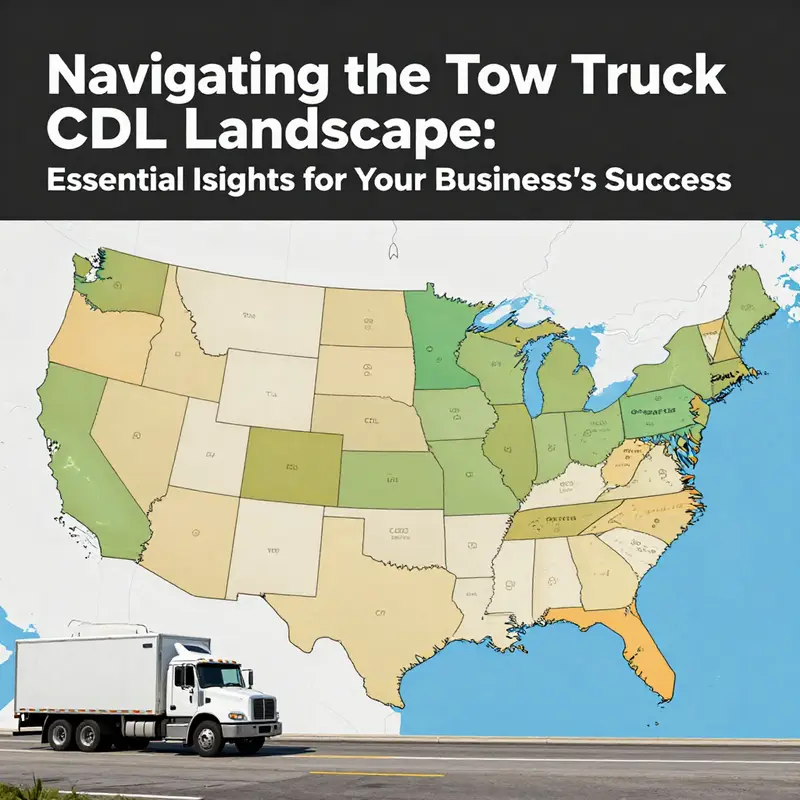
Tow trucks sit at the intersection of federal standards and state-by-state realities. The core question—do you need a CDL to drive a tow truck—depends not on a single number but a careful reading of several weight thresholds and the nature of the work you perform. At the federal level, the baseline is built around the heavy lifting of commercial operation: how much weight your vehicle can move, and whether that operation is conducted for hire. State laws then layer on their own tests—often more stringent, sometimes more forgiving—based on the exact combination of the towing vehicle, the towed vehicle, and the purpose of the towing. The result is a landscape that can change from state to state and even from one day to the next, depending on enforcement priorities or changes in the regulatory text. For operators, that means a practical, ongoing discipline: know the numbers, know the trip, and check the rules before you roll. Several key factors guide the answer in most jurisdictions. First, there is the Gross Vehicle Weight Rating, or GVWR, of the tow truck itself. If the tow truck’s GVWR is over 26,000 pounds, most states will require a CDL. Second, there is the weight of the vehicle being towed. If the towed vehicle exceeds 10,000 pounds, and the operation is commercial—such as towing for hire—the route toward a CDL becomes more likely. Third, and often decisive, is the commercial nature of the operation. If the business uses tow trucks for profit, even when the tow truck falls under the 26,000-pound threshold, some states still require a CDL based on the total combined weight of tow truck plus trailer. These principles are straightforward, but the edges are where confusion tends to begin: non-commercial towing, personal tows, or light, occasional usage can fall outside CDL requirements, even if some numbers flirt with the thresholds on paper. The federal baseline provided by the FMCSA sets the stage, but the final rulebook is written in state capitals, DMVs, and the offices that issue licenses and endorsements. For a professional operator, the discipline of compliance means building a habit of verification—before each operation, not once in a career—because even small mistakes can proliferate into penalties, fleet disruption, or worse, liability in an accident. In practice, that adherence begins with a precise inventory of every vehicle in the fleet: the GVWR of the tow truck, the GVWR of every trailer or towed unit, and the actual combined weight of the two when loaded. This is not a theoretical exercise. It translates directly into whether a CDL is required, whether endorsements are necessary, and which regulations apply to the particular job—interstate or intrastate commerce, passenger transport, or handling hazardous materials. The federal framework speaks to general rules about who may drive a commercial vehicle and what qualifications they must hold to operate large vehicles safely on national highways. Yet state regulators add texture: they specify when a given combination crosses the weight threshold, how the towed vehicle’s GVWR interacts with the towing vehicle’s rating, and what extra endorsements or license classes are demanded for specialized operations. In California, for example, the threshold is explicit: a CDL is required if the towed vehicle has a GVWR exceeding 10,000 pounds, regardless of the towing vehicle’s own weight, and this becomes especially relevant when there is interstate commerce or when the sum of the two vehicles pushes beyond 26,000 pounds. This framework interacts with specialized endorsements designed to address hazardous materials or passenger transport, which can affect CDL eligibility and training requirements. The result is a careful calculus where every woe or win in weight carries potential licensing consequences. In Texas, the logic shifts toward a concentration on total combined weight. If the combined weight of the towing vehicle and trailer exceeds 26,000 pounds, a CDL is mandatory, even if the towing vehicle alone sits well below the 26,000-pound line. Endorsements are likewise precise—transporting passengers or hazardous materials calls for additional qualifications, and penalties for violations can be severe, including fines, license suspension, or criminal charges. Florida presents a comparatively more permissive threshold, though it remains tuned to the same FMCSA framework: a CDL is generally required when the towing vehicle weighs over 26,000 pounds, or when the combination of tow and trailer pushes past 26,000 pounds and the trailer’s GVWR itself exceeds 10,000 pounds. Even here, the structure is clear—commercial driving activity continues to be governed by federal rules, but state thresholds and interpretations determine the exact licensing outcome. These examples illuminate a common truth: state rules are designed to be practical for the fleets most affected by them, yet the details matter. A tow operator who performs routine roadside assistance for friends or family usually operates under non-commercial conditions and might avoid a CDL, while a fleet focused on commercial towing will need to map every vehicle against the state’s weight tests, keep precise weight records, and prepare for endorsement requirements as the job demands. The pragmatic upshot is that the decision about CDL eligibility is not a single yes-or-no answer but a matrix that includes the vehicle’s GVWR, the towed vehicle’s weight, whether the operation is for hire, and whether the state’s rules hinge on combined weight, towed weight, or a mix of both. Fleet managers will tell you that the best practice is to adopt a policy of proactive compliance: weigh each combination, document the results, and verify license requirements with the state DMV whenever a vehicle or a loaded configuration changes. That policy also means recognizing when a change in business model—adding a new line of services, expanding towing beyond local or intrastate boundaries, or purchasing a heavier tow truck—could trigger a CDL upgrade, new endorsements, or both. To manage this, operators should implement a straightforward checklist: determine the GVWR of the tow truck; verify the GVWR of the towed vehicle; calculate the potential combined weight when loaded; assess whether the operation involves interstate commerce; review state-specific thresholds and exemptions; and confirm whether any endorsements are needed for hazardous materials or passenger transport. Because the rules can shift with policy updates, it is essential to treat DMV sites as living references rather than one-off sources. The safest path is to couple this ongoing due diligence with professional training that aligns with the highest standard of fleet operations. A well-informed driver, armed with current state rules and federal guidelines, becomes the anchor of safety and compliance in a field where stakes are measured in safety, insurance, and the right to operate. The practical, on-the-ground reality is that the law’s intention is to ensure graceful, safe, and accountable movement of heavy loads. It is not punitive by design; it is preventative, aimed at reducing accidents and protecting both operators and the public. This is why a robust understanding of weight and licensing is so crucial for tow businesses that aim to grow responsibly. If you want a broader professional perspective that connects this topic to daily fleet decisions, you can explore the island tow truck blog, which discusses practical implications for fleet operations, emergency response readiness, and the realities of island towing life. For more context on federal standards, you can also consult the FMCSA’s overview of CDL requirements and endorsements as you refine your internal policy. the island tow truck blog. In the end, the question of whether you need a CDL to drive a tow truck hinges on precise, documentable facts: the tow truck’s GVWR, the towed vehicle’s weight, whether the operation is for hire, and the state’s specific interpretation of combined versus individual weights. It is a dynamic, state-dependent calculation rather than a single universal rule, and that is why ongoing verification with the DMV is indispensable. The consequences of getting it wrong range from costly fines to license suspensions and increased liability in the event of an accident. Keeping your fleet in compliance means creating a culture of weight-check discipline, staying current with state updates, and building decision processes that advance safety and reliability on every job. As regulations evolve, the best defense is a well-documented, up-to-date understanding of where your operation stands. For those seeking a concise, authoritative reference to federal standards, the FMCSA site remains the definitive resource. It is here that drivers and fleet owners can verify the thresholds that form the backbone of state rules and ensure that their licenses, endorsements, and operational practices reflect the realities of the road.
How Weight Rules Shape Tow Truck Licensing: GVWR, Combined Loads, and CDL Triggers
Weight limits determine whether a tow truck driver needs a Commercial Driver’s License. At the center of this decision sits the Gross Vehicle Weight Rating (GVWR), but the story does not end there. The GVWR, the weight of the towed vehicle, axle loads, and whether the work is commercial all combine to define legal responsibility. This chapter walks through how these limits work, why they matter for safety and licensure, and how operators can stay compliant.
The GVWR is a manufacturer-declared ceiling for a vehicle’s weight when fully loaded. It represents the sum of the chassis, body, fuel, driver, passengers, cargo, and any equipment. For tow trucks, GVWR is especially important because the machine regularly carries or tows heavy vehicles. When a tow truck’s GVWR exceeds regulatory thresholds—often set at 26,000 pounds in many jurisdictions—the vehicle falls into a class that typically requires a CDL to operate. Equally relevant is the weight of the vehicle being towed. If that towed vehicle pushes combined weights above statutory limits, the driver may need a higher class of license, even if the tow truck alone is under the threshold.
These thresholds exist for clear reasons. Heavy loads change a vehicle’s dynamics. Braking distances lengthen. Steering response changes. Axles and tires carry stress that increases the risk of failure if limits are exceeded. Roadways and bridges are designed to standard load values; exceeding axle or gross weights damages infrastructure. Regulators therefore link licensing and operational rules to weight ratings to protect road users and public assets.
Understanding when a CDL is required rests on three linked measurements: the tow truck’s GVWR, the Gross Combination Weight Rating (GCWR) or the combined vehicle and towed weight, and the specific weight of the vehicle being towed. Many federal rules in the United States use 26,001 pounds as the breakpoint. If the tow truck’s GVWR is 26,001 pounds or more, it generally requires the driver to hold a CDL. Similarly, if a vehicle being towed weighs more than 10,000 pounds and the tow truck is engaged in commercial operations, a CDL may be required because the combined operation meets commercial vehicle criteria.
State rules overlay federal standards, and some add their own definitions and exceptions. For example, certain states exempt vehicles used in specific operations or provide waivers for recovery vehicles under emergency conditions. International jurisdictions have different thresholds and regulatory structures, but the principles remain familiar: manufacturer weight ratings, axle limits, and combined gross weights drive the licensing question.
Axle weight limits are another critical piece. Roads are designed to accept specific loads per axle. Even if a vehicle’s GVWR is within legal bounds, uneven loading can concentrate weight on one axle and violate limits. Tow truck operators must pay close attention to where the load sits. A poorly distributed load can make a truck unstable or illegal, even if the total weight is below the GVWR. Practically, this means measuring or estimating axle loads and using equipment such as portable scales or weigh stations when in doubt.
Equipment and coupling systems also influence legal compliance. Tow trucks use different hitching and coupling methods—flatbeds, wheel-lifts, and integrated carriers—that change how weight is transferred. A tilt-tray carrying a disabled vehicle centers the load on the flatbed, while a hook-and-chain or wheel-lift shifts load differently across axles. Regulations often include standards for coupling and securement to ensure safe handling. Failure to meet these requirements can result in penalties or removal from service during enforcement checks.
Operational use—commercial versus non-commercial—further affects licensing needs. Personal towing of a small trailer for family use rarely triggers CDL requirements because it typically involves lower gross weights and non-commercial status. In contrast, towing for hire places the operation squarely in the commercial arena. If the combined weight of the tow truck and the vehicle it tows exceeds regulatory thresholds, the driver must have the appropriate CDL classification. Even when a tow truck’s GVWR is under 26,000 pounds, frequent commercial towing of heavy vehicles can push combined weights into CDL territory. Operators should treat each job as a separate assessment: confirm the tow vehicle’s ratings, estimate the towed vehicle’s weight, and verify the combined weight against applicable thresholds.
Practical compliance demands routine checks and documentation. Manufacturers place GVWR and axle rating information on vehicle placards. Before towing, consult that placard and compare it to the estimated or measured weight of the towed vehicle. If precise weight is unknown, use weight estimates provided by vehicle manufacturers or obtain a quick weigh-in at a public scale. Keep records of weight checks, especially for commercial operators who face audits and inspections.
Regulatory enforcement is not hypothetical. Exceeding weight limits can produce fines, vehicle impoundment, or loss of business privileges. Overweight operations heighten accident risk, and enforcement agencies may remove unsafe vehicles from the road. Beyond immediate penalties, repeated violations can trigger larger investigations and insurance consequences. For these reasons, many towing firms implement internal policies that demand conservative margins under legal weight limits. That conservative approach reduces the likelihood of violations and improves safety.
Some jurisdictions publish detailed rules that illustrate these principles. For example, certain Australian transport authorities explicitly prohibit operating a tow truck unless its GVWR is suitable for the intended load and operation. Local rules include requirements for weight distribution, permissible modifications, and compliance checks. In places with heavy enforcement, fleet managers equip trucks with calibrated scales and train drivers in weight assessment and load securement.
Tow truck drivers and fleet operators can take several practical steps to ensure compliance and avoid surprises. First, maintain clear documentation of each tow truck’s GVWR and axle ratings. Second, build quick reference charts that list common vehicle models and their approximate curb and gross weights. Third, train drivers to assess loads visually and use scales when any doubt exists. Fourth, standardize securement methods and coupling equipment to reduce load-shift risk. Finally, communicate with dispatch so that heavy recoveries are planned and assigned to vehicles that meet the required ratings.
Education matters too. Drivers should understand how towing methods affect load distribution and handling. A heavy rearward tow may reduce front axle load and impair steering. Similarly, an overloaded spread across rear axles can cause tire or suspension failure. Knowing when to request additional equipment, such as a tilt bed or a secondary carrier, prevents unsafe improvisations on the roadside.
For those working on island fleets or in remote areas, planning becomes even more crucial. Limited access to weigh stations or repair services raises the stakes of accurate weight assessment. Resources that focus on fleet preparedness can help managers develop strategies that reduce risk and ensure compliance. Operators serving island communities often adopt formal emergency and fleet response plans to manage heavy tows safely and legally. For more on preparing fleets for remote operations, see this guide on emergency preparedness for island fleets.
Because rules vary, always check your state or territory transport authority for the most current regulations. National guidance provides a framework, but local law defines the specifics and any exemptions. One useful source for detailed regional rules is the Roads and Maritime Services site, which offers official guidance on weight distribution and compliance checks for certain jurisdictions: https://www.rms.nsw.gov.au
Understanding GVWR, combined weights, axle limits, and commercial use is essential for tow truck operators. These elements determine whether a CDL is required and influence safe, legal operations. Adopting conservative practices, documenting weights, and training drivers reduce the risk of violations and accidents. In short, weight rules are not merely paperwork: they are the foundation of safe towing and the practical threshold between ordinary driving and commercial licensing requirements.
Practical Compliance: How Tow Operators Meet CDL Requirements Safely and Legally
Keeping compliance simple and consistent is the best way for tow truck operators to avoid fines, liability, and safety incidents. Compliance depends on a few measurable factors — vehicle ratings, the weight of the towed load, and whether the activity is commercial. But beyond knowing thresholds, practical routines and policies turn rules into safe, repeatable behavior. This chapter lays out those routines, the key documentation and training to maintain, and the operational choices that reduce risk while keeping your fleet within CDL rules.
Start with accurate vehicle classification. Every tow truck must have clear manufacturer plates and paperwork showing Gross Vehicle Weight Rating (GVWR) and Gross Axle Weight Rating (GAWR). These numbers determine whether the vehicle itself pushes you into CDL territory. When a truck’s GVWR exceeds 26,000 pounds, the driver typically needs at least a Class B CDL. If the vehicle being towed weighs more than 10,000 pounds and the combination is used commercially, a Class A or other appropriate endorsement may be required. Make checking those ratings part of every vehicle procurement and every pre-shift inspection. Keep copies of registration and GVWR documentation on file for each unit and available to drivers in the cab.
Weighing practices matter. Estimating a vehicle’s weight by sight is risky. Invest in a reliable scale program—either portable scales or scheduled access to certified public scales—so drivers can verify combined weight before long hauls. Record weights on trip logs and maintenance sheets. That record helps with regulatory audits and protects drivers if there is any question about whether a CDL was required for a particular tow. If your business regularly handles heavy recoveries, mapping typical towed vehicle weights by model and class will speed decisions and reduce reliance on visual estimates.
Endorsements and role-specific qualifications reduce gray areas. Beyond a base CDL, endorsements like Hazardous Materials (H), Tank Vehicles (N), or Passenger (P) may apply in specific scenarios. If your fleet tows wrecked vehicles that leak fuel or contain hazardous cargo, hazmat training and endorsement are mandatory. Where operations involve carrying passengers or transporting vehicles with large fuel tanks, the appropriate endorsements must be obtained and maintained. Assign endorsement requirements to job roles in your operations manual so each driver knows what additional credentials they must hold.
Medical fitness and regular checkups are a legal and practical necessity. Federal rules require periodic medical examinations for CDL holders. Maintain a company policy that mirrors or exceeds federal minimums. Keep medical certificates current in personnel files and require drivers to self-report conditions that could impair driving. Fatigue and physical strain are common in towing work; include fitness-for-duty checks and clear procedures for when a driver must stand down.
Training must be continuous and contextual. Basic CDL training is only the start. Tow-specific training should cover winching and recovery techniques, load securement for different hitch types, rotator crane operation where applicable, and safe procedures for rollovers and heavy recoveries. Train drivers to spot scenarios that change regulatory requirements, such as when a private tow becomes a commercial transport or when a vehicle’s hazardous cargo changes a run’s classification. Simulate complex recoveries and require periodic refresher sessions. Track training completions and tie them to eligibility for advanced assignments.
Maintain clean driving records and an enforceable disciplinary policy. Many states and carriers use driving history to determine continuing eligibility for CDL-required work. Create a transparent policy that explains how moving violations, DUI offenses, or preventable accidents affect assignment and employment status. Pair that with positive reinforcement: reduced premiums, priority for desirable shifts, or other incentives for clean driving records. A predictable policy encourages safer driving and reduces turnover caused by unclear expectations.
Vehicle maintenance and visible compliance markers are daily defenses against violations. Keep a rigorous maintenance schedule tied to mileage and hours in service. Ensure tow mechanisms are inspected for structural integrity, and that winches, chains, hooks, and towing beds are certified and labeled with rated capacities. Labels that clearly state GVWR and towing capacities help drivers make compliant decisions on the spot. When modifications are made — adding rotators or auxiliary lifting gear — update paperwork immediately and, if necessary, reclassify the vehicle and adjust driver qualification requirements.
Documentation and trip logs: make them thorough and habitual. Use trip logs that record vehicle weights, towed vehicle descriptions, driver endorsements, and any special circumstances such as hazardous loads. Digital logs with mandatory fields reduce omissions and create searchable records for audits or incident reviews. Keep a separate incident log for recoveries that required unusual equipment or exceeded normal capacity; these entries help you refine policies and training.
Operational decisions can reduce the need for higher-level CDLs. Match jobs to truck capabilities deliberately. If you mostly tow light passenger cars, a fleet of trucks under the 26,000-pound GVWR threshold keeps many runs outside of CDL territory. For businesses that occasionally handle heavy recoveries, consider partnerships with heavy-recovery specialists or subcontracting those calls. Cross-train personnel so that a properly licensed operator can be dispatched when required, rather than risking a non-compliant run.
Plan for exceptions and state variance. States can have unique exemptions or additional rules. Make state DMV checks a routine part of your onboarding and periodic compliance reviews. If your fleet operates across state lines, require drivers to be familiar with the regulations in the jurisdictions they serve and maintain a central compliance file with each state’s specific requirements.
Audit and continuous improvement are essential. Schedule internal audits of driver files, vehicle classifications, endorsements, medical certificates, and maintenance records. Use audit findings to adjust procurement decisions, refine training curricula, and close procedural gaps. When a regulatory change occurs, update your policies promptly and retrain affected staff. Treat compliance as a living system rather than a one-time checklist.
Finally, embed safety and legality into company culture. Compliance that feels like bureaucracy is fragile. When drivers understand that correct classification, accurate weighing, and proper endorsements protect their livelihoods and the public, compliance becomes a shared value. Communicate regularly about how rules apply in the field and celebrate safe, compliant operations.
For operators looking to expand their emergency response capabilities while staying compliant, incorporate emergency response strategies into your compliance plan. A useful resource on fleet emergency planning is available at Essential Fleet Emergency Response Strategies, which offers practical guidance on aligning readiness with legal requirements: https://theislandtowtruck.com/essential-fleet-emergency-response-strategies/
For authoritative federal guidance on CDL classifications, endorsements, and medical requirements, refer to the Federal Motor Carrier Safety Administration’s CDL resource page: https://www.fmcsa.dot.gov/vehicle-operators/cdl-requirements
Final thoughts
Navigating the complexities of CDL requirements for towing operations is essential for ensuring compliance and safeguarding your business. Understanding the distinctions between commercial and non-commercial use, familiarizing yourself with state-specific laws, and adhering to weight regulations can significantly influence your operational efficiency and legality. By following best practices, you’ll not only stay compliant but also enhance your service delivery, protecting both your business and your customers. Equip yourself with the right knowledge to excel in the towing industry.