Owning a tow truck can serve as a vital asset for local auto repair shops, car dealerships, property managers, resort operators, and commercial fleet operators. However, the ownership of such equipment entails more than just the initial purchase price; it is an intricate weave of ongoing operational costs, insurance liabilities, maintenance expenses, and strategic decisions that impact your bottom line. Each chapter will delve into different facets of tow truck ownership, laying out the total cost of ownership, ongoing expenses, insurance considerations, and practical strategies to mitigate these costs. As we explore these topics, we aim to empower you with the insights necessary for making informed decisions that align perfectly with your business needs.
Sticker Price, Long-Term Reality: How Purchase Costs Shape Tow Truck Ownership
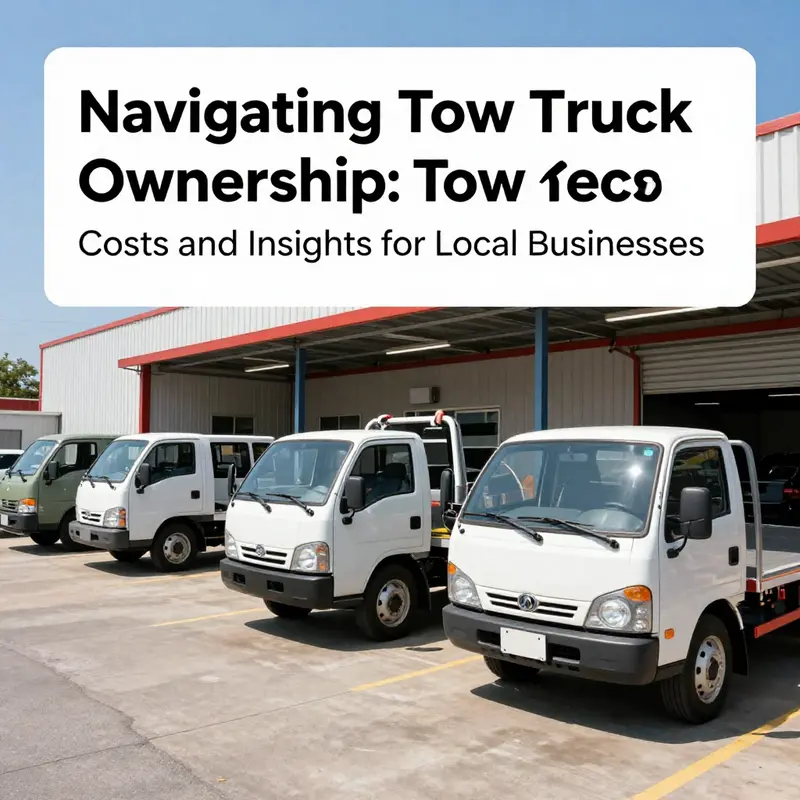
The purchase price of a tow truck is more than a tag on the windshield; it is the opening line of a broader financial story that unfolds over years. When a shop or solo operator starts weighing options, the sticker price often feels like the most immediate hurdle. Yet the early number does not exist in isolation. It threads into every layer of the business, from monthly cash flow to maintenance planning, insurance premiums, and the eventual resale value. In practical terms, the purchase price sets the baseline for total cost of ownership, or TCO, and it inevitably colors every big decision that follows.
Tow trucks come in a few distinct categories, each with its own financial profile. Basic conventional flatbeds carry a lower upfront price, typically in the range of fifty thousand to eighty thousand dollars. These rigs are straightforward, reliable in simpler towing tasks, and cheaper to replace or repair than their more complex cousins. The market for advanced flatbeds—those with hydraulically tilting beds and smarter control systems—tends to cluster around seventy thousand to over one hundred twenty thousand dollars. The added capability translates into faster, more versatile operations and, crucially, higher maintenance demands. Then there are the rotators, the heavy hitters designed for the most challenging recoveries. Rotator tow trucks command the steepest upfront investment, often ranging from about one hundred fifty thousand to three hundred thousand dollars or more. The premium is justified in environments where complex lift-and-rotate procedures are routine, but the initial price tag acts as a barrier for many new entrants or smaller fleets.
Used tow trucks present a different calculus. A secondhand unit can front-load significant savings, with price points that commonly fall between twenty thousand and sixty thousand dollars. The wide spread in used-truck pricing reflects the spectrum of age, mileage, and condition, as well as the presence or absence of modern safety and efficiency features. Older models may deliver a tempting upfront discount, yet they frequently demand more frequent repairs, quicker wear on hydraulic systems, and higher long-term maintenance costs. In other words, the apparent savings on day one can masquerade as a trap door to escalating expenses down the road if the chassis, hydraulics, and lifting gear are not thoroughly evaluated before purchase.
The essential truth is simple: purchase price is only the first rung on a ladder that climbs toward true ownership costs. The initial outlay shapes financing options and monthly obligations, but it also influences depreciation patterns and tax considerations. A newer, more capable vehicle may depreciate quickly in the first few years, yet it can also unlock lower insurance costs, better fuel economy through modern drivetrains, and reduced downtime. Conversely, a lower-upfront-cost unit may come with thinner margins for service and a higher probability of unscheduled repairs, which can erode the savings from the initial bargain.
Beyond the headline numbers, the long horizon of ownership introduces a spectrum of recurring costs that are inseparable from the purchase decision. Fuel consumption, maintenance and repairs, insurance premiums, licensing and permits, and financing fees collectively shape the daily and annual cash flow of the operation. Fuel costs, for example, are not a marginal line item for tow trucks. Heavy-duty models, with their substantial engines and hydraulic systems, burn through fuel more quickly than standard pickups. If a company logs hundreds or thousands of miles monthly across difficult terrain and frequent stop-and-go driving, those fuel numbers accumulate into a few thousand dollars each year and, over a five-year window, can rival the difference between a mid-range and a high-end purchase price.
Maintenance and repairs form another major ongoing obligation. Hydraulics, winches, and suspension components require specialized care. A prudent business owner expects to face routine servicing and periodic overhauls, and in many cases, the maintenance envelope expands as the vehicle ages. A conservative ballpark places annual maintenance in the five-thousand-to-fifteen-thousand-dollar range, depending on model, usage intensity, and inclusivity of warranty coverage or maintenance plans. This budget must be complemented by proactive tire replacements, brake service, and precision alignments—expenses that, while predictable, are not optional, as reliability and safety depend on them.
Insurance is a cost that frequently surprises newcomers with its scale and variability. Commercial insurance for tow trucks reflects the liability exposure of roadside service work, the geographic spread of operations, and the driver pool’s history. Premiums commonly fall within two thousand to six thousand dollars per year, though locations with higher risk profiles or larger fleets can see steeper numbers. It is not unusual for a single incident statistic to drive a noticeable uptick in quotes, underscoring the importance of disciplined fleet management and safety culture as a cost-control strategy.
Licensing and permits add another layer of ongoing expense, varying by jurisdiction but typically including business licenses, vehicle registrations, and, in some regions, special endorsements for commercial towing operations. These costs tend to be predictable year over year yet can escalate if regulatory requirements tighten or if a business expands its service footprint into new counties or states. Depreciation, meanwhile, is often a subtle yet relentless force. Tow trucks lose value quickly, especially in the first three to five years, as newer, more efficient models enter the market and as wear from heavy-duty operations accumulates. For operators planning long-term usage, depreciation is not just an accounting term; it directly shapes resale strategy and the ultimate lifecycle cost of the asset.
With this backdrop, the practical path to responsible financial planning is clear. Prospective owners must evaluate every model not only on its sticker price but on its projected operating costs, residual value, and how its capabilities align with the work the business intends to win. A rotator, for instance, may open doors to high-margin recoveries in certain markets, yet the heavier upfront cost obligates a longer runway to achieve a favorable return on investment. A compact, basic flatbed might perform reliably in everyday towing and light recovery tasks but could demand more frequent expand-on-capacity investments if the business scales up. The decision is a balancing act between capability, reliability, and the humility to forecast how the fleet will function under practical workloads in the years ahead.
Financing choices loom large in shaping the affordability of any purchase. Leasing can be an attractive alternative for new operators or small fleets that want to preserve capital for operations, spares, insurance reserves, or emergency funds. Leasing high-end equipment often reduces upfront capital needs while still delivering access to the latest safety features and efficiency improvements. The choice between buying and leasing should rest on a careful analysis of cash flow, tax considerations, maintenance obligations, and the ease with which the vehicle can be updated as business needs evolve. A thorough comparison between long-term ownership and leasing costs helps avoid falling into a mode of perpetual refinancing or perpetual upgrading without a clear plan for profitability.
For readers seeking a comprehensive financial framework, there is value in a complete ownership-cost guide that outlines step-by-step how to map out total costs from day one through the vehicle’s end of life. Such resources emphasize evaluating not just the sticker price but the expected lifespan, maintenance frequency, fuel economy, and resale value—elements that collectively determine whether the investment remains sound even as market conditions shift. The guidance also points to the reality that many households and small businesses find that total ownership and operating costs tend to stabilize or even decline over time when financing is managed thoughtfully and when maintenance is performed proactively.
In this context, an informed purchase is less about chasing the lowest initial price and more about selecting a vehicle that aligns with workload, uptime requirements, and financial discipline. When a buyer weighs the numbers, it becomes clear that a higher upfront cost can be mitigated by longer service intervals, better fuel efficiency, and stronger resale prospects, while a bargain model requires a buffer for potential downtime and more frequent repairs. The optimal choice is rarely a single, perfect price point but a well-balanced decision that maps to a company’s operating rhythm, risk tolerance, and strategic objectives.
To connect these ideas with practical planning resources, consider exploring related discussions in the industry-focused articles that describe the broader context of fleet management and emergency-response readiness. For a broader view and ongoing conversations, you can visit the Island Tow Truck blog for insights on fleet strategy and operational readiness, which complements the purchase-cost analysis with real-world perspectives. Island Tow Truck blog
Taken as a whole, the purchase price of a tow truck is the most visible, tangible hurdle. Yet it is the least revealing part of the story. The true measure of value lies in the chain of costs that follows: fuel, maintenance, insurance, licensing, financing, and, ultimately, what the vehicle returns in uptime and reliability. A well-planned acquisition blends a realistic appraisal of upfront price with a disciplined forecast of long-term costs, enabling ownership to be both financially sustainable and operationally resilient. This balanced view becomes even more important as the market evolves, technology advances, and the demand for rapid, dependable roadside service expands.
For readers who want to probe the numbers more deeply and compare scenarios side by side, broader analyses emphasize that the right choice is one that supports predictable cash flow and sustainable growth. They remind us that total cost of ownership is a dynamic metric, evolving with usage patterns, maintenance practices, and the effectiveness of a fleet’s risk-management strategy. The broader takeaway is straightforward: do not let a tempting upfront price obscure the ongoing commitments that determine whether a tow truck pays for itself over time. With careful planning, a business can navigate the sticker shock of initial investment and still build a durable, reliable service capable of meeting customers’ needs in any weather or roadway condition.
External resource: Understanding Tow Truck Ownership Costs: A Complete Guide for Prospective Owners, which offers a detailed framework for evaluating long-term costs beyond the sticker price, including depreciation, fuel economy considerations, and financing options: https://www.towtruckowners.com/guide-to-tow-truck-ownership-costs/
Beyond the Upfront Price: The Ongoing Operational Costs of Owning a Tow Truck
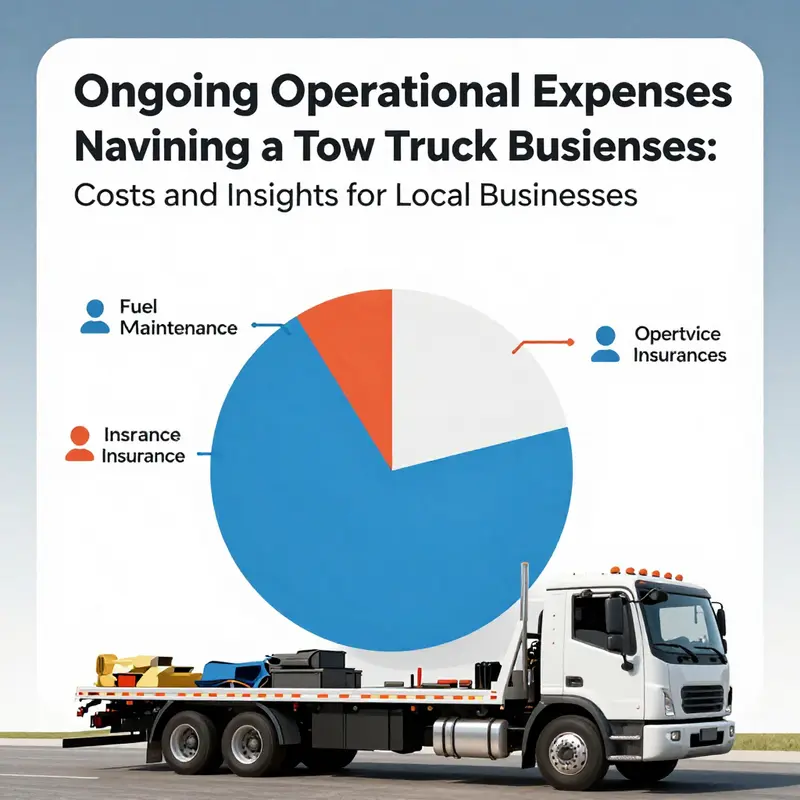
Owning a tow truck is less about the moment of purchase and more about the steady drumbeat of costs that follow. The initial price tag can be a blunt indicator of what you’re committing to, but the ongoing expenses quietly determine whether the business stays viable month after month, year after year. The total cost of ownership is not a single sum but a pattern shaped by the truck’s category, its age or condition, and how intensively it is deployed. To navigate this pattern, you need a clear sense of how fuel, maintenance, insurance, labor, licensing, and equipment wear all layer onto the bottom line, especially when market conditions push fuel and parts prices upward. Even when a plan is built around a used vehicle, the recurring outlays can accumulate quickly, underscoring the need for careful budgeting and ongoing cost monitoring. In mapping these costs, it helps to keep in mind that some expenses are predictable while others are volatile, and both must be anticipated in a realistic financial model. For operators who are expanding fleets or stepping into towing full time, the discipline of forecasting these recurring costs becomes as important as forecasting demand for service calls. When the objective is steady, reliable service, it is not enough to own a truck; you must sustain it with consistent investment in its upkeep and operations. A broader view of planning—one that also considers emergency readiness—can make a meaningful difference over time. For instance, when planning for contingencies, consider the principles outlined in Emergency preparedness for island fleets, which emphasizes preparedness as a cost of doing business rather than merely a risk mitigation exercise. Emergency preparedness for island fleets.
The first and most immediate recurring expense is fuel. Tow trucks are large, heavy vehicles that often run on demanding routes, with powerful winches or rotators that add to the load. Fuel costs rise and fall with market prices, but the more miles you accumulate, the more the expense compounds. Operators who log long shifts, respond to urban night calls, or cover expansive service areas will notice this line item grow noticeably from month to month. Efficient routing, conscientious idling practices, and regular tire maintenance can shave fractions off fuel usage, but the underlying reality remains: fuel is a major, ongoing drain that can swing with external factors such as fuel taxes, regional surcharges, and seasonal demand spikes, especially in markets that see busy towing seasons or weather events. The result is a cost that fluctuates but cannot be ignored in any serious budgeting model.
Maintenance and repairs form the next large block of ongoing expenses. Tow trucks rely on hydraulics, winches, and suspension systems that demand specialized care. A preventive maintenance schedule—oil changes, filter replacements, brake inspections, and tire maintenance—helps protect against unexpected failures, but it also creates predictable costs every year. When a heavy-duty unit like a rotator or a hydraulically tilting flatbed is in service, the frequency of maintenance intervals tends to increase, and the cost of parts and labor climbs accordingly. Components such as hydraulic pumps, control systems, and wear-prone gear assemblies require skilled service, and the price of these services has shown a tendency to outpace inflation in many regions. It is not unusual for annual maintenance to land in a broad band of several thousand dollars, and a single major repair can push yearly totals higher. Even with meticulous care, the reality is that maintenance and repairs will be one of the most persistent line items a tow operation must accommodate.
Insurance, perhaps more than any other single factor, turns into a steady, unavoidable expense. Commercial coverage for tow trucks reflects the inherent risk in the work—vehicles operate on public roads, often at height, carrying heavy loads, with potential exposure to damage, liability, and cargo-related risks. Premiums are shaped by the driver pool, claims history, the type of equipment, the coverage mix, and the jurisdiction. In many markets, the annual insurance outlay begins in the low thousands and can climb into several thousands, depending on the scale of the operation and the risk profile. For a growing business, even modest changes in coverage requirements or adjustments in deductibles can meaningfully affect the bottom line. A proactive risk management approach—emphasizing driver training, incident prevention, and robust safety protocols—can help stabilize premiums over time and protect the enterprise against costly surprises.
Labor costs add another layer of recurring expenses. If you hire drivers or mechanics, their wages, benefits, and payroll taxes become a fixed, ongoing obligation. In small operations, the owner may wear multiple hats, but growth typically necessitates a team. Scheduling, coverage for vacations or illnesses, and the cost of benefits all fold into the monthly payroll. In regions with high living costs or skilled labor shortages, labor expenses can become a dominant share of monthly outlays. Even when working with independent contractors, you must account for the costs of supervision, dispatch, onboarding, and safety training. Labor costs are not just about paychecks; they also reflect the investment in reliability and response time, which in turn influences customer satisfaction and repeat business. When you balance labor costs with utilization, you begin to see how staffing decisions ripple through the entire financial structure of the operation.
Licensing and permits are another recurring obligation that tends to be predictable but nontrivial. Vehicle registrations, business licenses, and any jurisdiction-specific permits required to operate a towing service can appear as annual or multi-year fees. While these costs may not be as large as fuel or insurance, they are essential for staying compliant and legally active in the market. A consistent renewal schedule helps prevent lapses that could disrupt service or lead to fines, and a thoughtful calendar prevents these expenses from slipping through the cracks. Licensing costs also intersect with compliance-related investments, such as keeping records up to date, maintaining inspection readiness, and aligning with local regulatory changes. The administrative commitment behind licensing is easy to underestimate, but it pays off in reduced risk and smoother operations.
Equipment wear and tear deserves specific attention because it translates directly into ongoing purchasing needs. Tow apparatus—winches, straps, wheel lifts, dollies, and axle pads—shows wear through regular use. Replacements occur not only after outright failure but also as part of preventative cycles to maintain performance and safety. The cost of these consumables and replacements can accumulate across a fleet, especially as more units are deployed or as the age of the equipment increases. A disciplined replacement schedule, combined with bulk-buying where feasible, can reduce per-unit costs and minimize downtime. The practical effect is that equipment wear and tear becomes an operating expense that mirrors the daily realities of service demand and the physical toll of heavy-duty handling.
Technology and communication systems form another ongoing expense that reflects the modernization of towing operations. Modern tow trucks commonly rely on GPS tracking, dispatch software, and mobile connectivity to coordinate responses, monitor performance, and keep customers informed. Subscription fees for software, data plans, and the cost of keeping hardware up to date all count toward the monthly or annual budget. While these technologies bring efficiency and reliability, they also introduce a recurring payment stream that operators must manage. A well-chosen technology stack can lower labor costs, improve response times, and streamline invoicing, but it requires ongoing attention to licensing terms and renewal cycles. In the aggregate, technology expenses are a keystone of professional service delivery, reinforcing reliability even as other line items vary with market conditions.
Beyond the direct operating costs, depreciation and financing considerations shape the long-run cost story. Tow trucks, especially newer models, lose value over a relatively short horizon, typically three to five years, and this depreciation can be a significant accounting and cash-flow factor. Financing arrangements—whether through a loan or a lease—introduce interest costs and payment schedules that must be weighed against potential tax benefits, cash flow, and balance-sheet implications. The choice between purchasing outright, financing, or leasing hinges on appetite for capital expenditure, risk tolerance, and the anticipated pace of fleet growth. Leasing high-end equipment, in particular, can be attractive for new operators or smaller businesses seeking to preserve upfront capital and maintain operational flexibility. Such decisions ripple through the cost structure, affecting monthly outlays, maintenance responsibilities, and insurance requirements in ways that deserve careful modeling before any commitment.
In sum, the ongoing expenses of owning a tow truck are multifaceted and interdependent. Fuel, maintenance, insurance, labor, licensing, equipment wear, and technology each contribute to the annual total in meaningful ways. The exact amounts will vary with the truck type—whether a basic flatbed, an advanced hydraulically tilting bed, or a rotator with its formidable lifting and recovery capabilities—the region, and the level of utilization. Crafting a realistic forecast means building a budget that accommodates the volatility of fuel and parts, while establishing disciplined routines for preventive maintenance and safety training. It also means recognizing the strategic value of risk management, compliance, and customer service, which collectively help stabilize revenue in the face of evolving costs. For readers seeking a deeper dive into the full cost picture, consult the detailed external guide on ownership costs, which offers a thorough breakdown of the factors discussed here. https://www.towtruck.com/operational-costs-of-owning-a-tow-truck/
Under the Shield: Navigating Insurance Costs in Tow Truck Ownership
Insurance costs sit at the core of the ongoing expense equation for tow truck ownership. They are not a mere line item but a reflection of risk, exposure, and the practical realities of operating in high-pressure environments. Across models, from basic flatbeds to heavy-duty rotators, premiums are shaped by a handful of interlocking factors. The most immediate truth is simple: tow trucks carry a stigma of risk in the eyes of insurers. They operate on accident scenes, along busy corridors, and in unforgiving weather. That combination elevates liability concerns and, with it, the price of protection.
Price, of course, is not one-size-fits-all. The make and model of the truck matter because both value and performance features factor into underwriting. A heavy-duty wrecker with substantial lifting power and a robust hydraulic system represents more potential exposure than a lighter, conventional tow unit. Insurance carriers quantify that exposure by weighing the equipment’s value, its critical components, and how those components could fail or be misused in the field. In practice, that means a rotator or a high-capacity recovery unit often commands higher premiums than a simple flatbed, even if the latter is newer or has fewer miles on the clock.
Beyond the chassis, equipment on board can push costs upward in meaningful ways. A tow rig’s inventory—hydraulic lifts, wheel dollies, advanced safety lighting, onboard communication gear, and specialized straps—adds both to the vehicle’s value and to its risk profile. Insurers want a clear picture of what’s installed and how it’s maintained. Documentation that demonstrates regular service, calibration of lifting equipment, and adherence to safety standards can influence underwriting. Conversely, gaps in maintenance records or unverified after-market additions can complicate the underwriting process and drive premiums higher.
Age is another decisive factor. New trucks, despite their lower initial maintenance risk, start with higher replacement values. This elevated value translates into higher physical-damage and total-loss exposure, which translates into bigger premiums. Reconditioned or refurbished units, if their modern safety features are intact and their risk profile is well documented, can attract somewhat lower premiums because the insurer is effectively insuring a vehicle with a lower current market value. Yet the quality of refurbishment matters. A well-done rebuild with up-to-date safety features can keep costs reasonable, while a shaky rebuild with questionable components can raise risk and cost.
The driver makes a substantial difference, even when the vehicle itself is well protected. Experience behind the wheel, the driver’s record, and the company’s overall safety program all feed into the premium calculation. A seasoned operator with clean driving history and demonstrable risk management practices often secures more favorable terms than a new operator with limited track record. This is not merely about licensing; it’s about the day-to-day realities of towing on crowded highways, at incident scenes, and in congested urban areas where stop-and-go traffic and unpredictable hazards are routine.
Location matters just as much as hardware. Urban and dense traffic zones correlate with higher claim likelihood and severity, which in turn elevates quotes. Weather patterns, road conditions, and local regulatory environments influence both the cost and availability of coverage. In regions with harsher winters, frequent storms, or elevated burglary risk, insurers will price in additional risk considerations. The geographic footprint of the operation—whether the business runs a single rig or a small fleet—also affects pricing, as fleets can benefit from multi-vehicle policies and bundled discounts, while single-vehicle operators may face higher relative costs for the same level of coverage.
Coverage options and policy structure are the levers operators can tune to manage insurance spend. At a minimum, most tow businesses require liability coverage to protect against damages or injuries caused by the vehicle while in operation. Physical-damage coverage protects the truck itself from collision, rollover, fire, and other perils. Cargo coverage might be necessary if the operation routinely hauls vehicles or other items on the bed. Depending on the business model, hired auto liability—covering vehicles or operators the business rents or borrows to perform its towing work—can be an essential feature. In many jurisdictions, medical payments or personal injury protection, as well as uninsured/underinsured motorist coverage, can be prudent additions given the frequency of roadside interactions and the potential for uninsured drivers.
Deductibles and liability limits are two sides of the same coin. A higher deductible can lower annual premiums, but it also raises the out-of-pocket cost for a covered claim. Conversely, choosing higher liability limits protects a business from catastrophic settlements but increases the premium. Insurers may also offer preferred terms for operators who implement robust loss-control programs. These programs can include driver training, routine maintenance schedules, safety audits, incident reporting systems, and the use of telematics to monitor driving behavior. Each of these components provides a narrative of risk reduction that can translate into more favorable pricing.
Another layer to consider is how the business structure and financing interact with insurance. For operators who opt to lease rather than buy, lenders often require a certain level of coverage, sometimes with lender’s interest as a named insured or additional insured status. Leasing can influence the total cost of ownership by reducing upfront capital needs while also shaping the risk profile insurers evaluate. While leasing can tamp down immediate cash outlays, it can also alter the mix of coverage required and the way premiums are calculated over the term of the lease.
To navigate these complexities, prospective owners should approach insurance as a strategic planning exercise, not a one-off purchase. The first step is to engage with a commercial auto insurer who understands the peculiarities of tow operations. A thoughtful broker or underwriter will want a complete picture: the truck’s model, its age and condition, the equipment on board, the company’s safety program, driver credentials, and the specific routes and hours of operation. Providing a detailed inventory of equipment and a comprehensive history of maintenance can help the insurer calibrate risk more accurately and avoid over- or under-insurance.
When it comes to quoting, it pays to be proactive and thorough. Obtain multiple quotes and compare not just price, but coverage breadth, deductibles, and the terms for any add-ons such as on-hook coverage or cargo protection. Consider how coverage adapts to your operation’s evolution. A one-truck startup may need different protection in year one than a growing fleet with multiple drivers and night-time operations. It is also wise to ask about safety credits or premium reductions tied to specific safety investments, such as improved lighting, camera surveillance, or maintenance tracking systems. A well-documented safety posture can translate into meaningful savings over time.
For operators seeking broader industry context beyond insurance quotes, a well-curated source of insights can be instructive. The Island Tow Truck blog offers articles on risk management, maintenance best practices, and fleet safety strategies that can illuminate how insurers view certain risk factors and how operators can position themselves for better outcomes. the Island Tow Truck blog provides a lens into practical considerations that complement the numbers on a policy page, helping owners translate policy terms into real-world protection and cost control.
Ultimately, understanding insurance costs is inseparable from understanding the total cost of ownership. Insurance does not exist in a vacuum; it interacts with purchase price, ongoing maintenance, fuel, licensing, and financing. Higher premiums today can translate into more predictable protection tomorrow, but only if the coverage is aligned with the operator’s risk profile and business plan. Conversely, skimping on coverage in pursuit of immediate savings can expose a business to catastrophic outlays after a major incident. The balance lies in a nuanced assessment that recognizes the unique risks of tow work while leveraging risk-reduction measures to improve pricing and resilience over the life of the truck.
External resources can broaden that perspective and offer benchmarks for comparing how equipment, fleet size, and operating practices influence insurance costs. For a comprehensive guide that delves into how equipment and vehicle condition affect ownership costs—including insurance—consider Understanding Tow Truck Ownership Costs: A Complete Guide for Prospective Owners. This resource provides deeper exploration into the cost dynamics that shape annual premiums and long-term financial planning for tow operators.
The Ongoing Price of Mobility: Mastering Maintenance, Repairs, and the Real Cost of Tow Truck Ownership
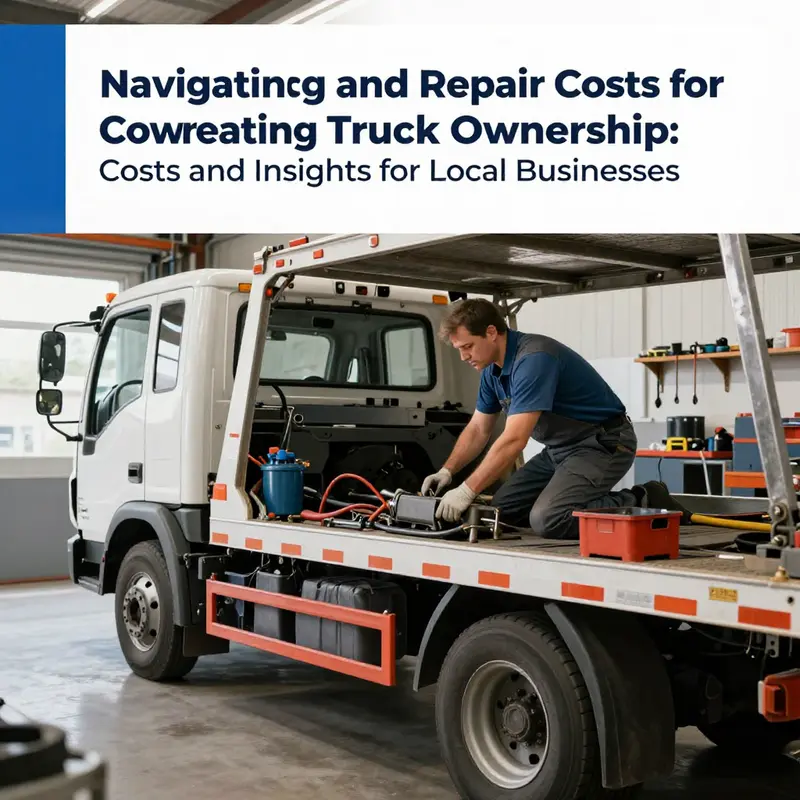
Owning a tow truck is as much a test of budgeting as it is of mechanical robustness. The purchase price is only the opening chapter in a longer story of ongoing costs that peck away at profit when not managed with foresight. The chapter you’re about to read weaves together the threads of routine care, unforeseen repairs, regulatory obligations, and the inevitable depreciation that accompanies heavy-duty work on unpredictable roads. It treats maintenance not as a line item to cross off but as a living, breathing discipline that can determine whether a fleet stays reliable overnight and remains financially viable over months and years.
At the heart of maintenance costs lies the truth that heavy-duty towing equipment endures heavy wear. Routine maintenance—oil changes, brake inspections, tire rotation, coolant checks, and hydraulic system monitoring—appears straightforward, but it compounds quickly when miles accumulate. A 2026 industry analysis for heavy commercial vehicles places maintenance and repair costs in the range of roughly $3,000 to $5,000 per 10,000 miles for standard service. In the world of tow trucks, where duty cycles are high and payloads are demanding, those numbers often skew upward. A single city shift can push maintenance toward the upper end of that spectrum, especially if the operation relies on rotators or hydraulically powered tilting beds, where hydraulic seals, motors, and control valves are under constant stress. Routine servicing becomes less about ticking boxes and more about proactive health management: monitoring hydraulic fluid quality, checking winch integrity, validating suspension alignment, and ensuring electrical systems remain resilient in harsh conditions. The goal is not merely to fix problems after they appear but to anticipate them before they cause downtime that ripples into missed calls and lost revenue.
Beyond the predictable wear-and-tear, unexpected repairs loom as the true profitability question mark. Breakdowns can cascade into costly repairs when a tow truck is pressed into service for the longest shifts or called into action in the aftermath of an accident. Specialized components—hydraulic circuits, winches, and high-load bearings—do not wear evenly, and failures in these areas can trigger a chain of replacements that quickly inflates a maintenance bill. In the worst cases, engine or transmission work becomes necessary, and those are the kind of repairs that stretch into tens of thousands of dollars. The variability here is tied not only to the truck’s age and maintenance history but also to the conditions under which it operates. A fleet that runs relentlessly through urban corridors and long rural runs will accumulate more stress on the drivetrain than one with shorter, subtler routes. The financial implications are clear: the more you depend on the equipment, the more aggressive your preventive maintenance budget needs to be, and the more you need to plan for the costly surprises that can derail a month’s profitability.
Regulatory compliance sweetens the cost picture with its own steady cadence. Most jurisdictions require periodic vehicle inspections and safety certifications that carry fees. These inspections are essential for legal operation but also create recurring expense in the form of testing, documentation, and potential minor repairs identified during the process. The licensing landscape—covering business licenses, vehicle registrations, and any specific tow-truck endorsements—adds another layer of monthly or annual costs that many operators underestimate when projecting a new venture’s cash flow. The result is a maintenance ecosystem where cost control depends not only on the shop’s labor rate and parts availability but also on the pace at which regulatory milestones must be met. When combined with the labor costs of skilled technicians who understand hydraulic systems and towing equipment, the total compliance bill becomes a meaningful contributor to the annual operating expense.
Insurance, a certainty in any commercial venture that involves risk, compounds the ongoing expense in a way that is sometimes difficult for new owners to gauge. Tow trucks carry higher premiums than standard light-duty fleets because of liability exposure—on the road, at job sites, and during loading and loading-related activity. Premiums typically fall in a broad band—from roughly two thousand dollars to well over six thousand dollars per year, depending on location, coverage limits, fleet size, and the operator’s driving history. Insurance is not a fixed expense; it scales with risk management practices, incident history, and how effectively a business demonstrates safety culture and trained personnel. A policy that prioritized comprehensive liability and cargo coverage can pull the annual total upward, but careful driver training, robust maintenance practices, and transparent incident recording can temper the premium to some degree over time.
The purchase decision—whether to buy new, buy used, or lean toward leasing—intersects with maintenance in a meaningful way. Newer units begin their life with the lowest risk of immediate major repairs, yet they carry the steepest depreciation and often higher maintenance expectations for the first few thousand miles as systems settle in. Used trucks bring price relief, but they arrive with unknown maintenance histories and a higher likelihood of predictable and unpredictable repairs as wear advances. Leasing high-end equipment has emerged as a practical strategy for new operators or small fleets seeking to preserve capital. Leasing can transform upfront cash outlays into a steady, plannable operating expense while transferring some maintenance accountability to the lessor’s service philosophy and schedule. The economic calculus is not only about monthly payments but about how maintenance liabilities align with cash flow, loan terms, and the ability to service debt without interrupting service delivery to customers.
A practical way to frame these considerations is through the lens of total cost of ownership (TCO). The purchase price is just the tip of the iceberg. When you map out TCO, you include fuel, routine maintenance, unexpected repairs, parts replacement, labor, insurance, licensing, and depreciation. The heavy-duty nature of tow trucks means fuel costs are not trivial either. Large chassis and heavy-duty drivetrains demand substantial fuel, especially for rotator units that are capable of lifting and maneuvering heavy loads on the move. A fleet that logs high annual mileage or often operates in congested urban settings will see fuel as a meaningful slice of recurring costs. The combination of higher fuel burn, increased maintenance demand, and insurance of a commercial vehicle creates a cost structure that is both front-loaded and long-tailed. Even when a business leverages a lease to minimize the upfront price, maintenance remains a recurring obligation that cannot be outsourced or ignored without compromising reliability and profitability.
From a budgeting perspective, the takeaway is straightforward: cultivate a disciplined maintenance plan that aligns with usage patterns and stays ahead of failures. Build a maintenance calendar that reflects not just oil changes and brake checks but hydraulic system audits, winch inspections, and suspension tolerances. Track miles and hours on equipment and translate those metrics into proactive service schedules. In this framework, the maintenance line item is not a discretionary expense but a forecastable cost that protects revenue by preventing downtime. While the industry recognizes that major repairs can be dramatic, the most sustainable approach is one that treats small, routine tasks as the guardrails preventing large, disruptive failures.
For owners seeking a practical resource on how other operators manage these dynamics, the Island Tow Truck blog offers hands-on guidance and community-tested tips that resonate with day-to-day realities. A quick reference point within the broader landscape of tow-truck economics can be found there whenever a manager wants to compare maintenance rhythms, pricing expectations, or service strategies with peers. The blog’s pragmatic voice often helps translate abstract cost concepts into daily, actionable routines that keep fleets resilient on the road. The Island Tow Truck Blog.
As you plan for ownership or a transition to a leasing arrangement, remember that the financial picture is not static. Maintenance costs evolve with usage, technology, and regulatory changes. A 3–5 year window often provides a realistic frame for depreciation and major component replacements, especially for new units whose value erodes rapidly in the early years. This reality underscores why many operators emphasize preventive maintenance, strategic spare parts inventories, and the cultivation of strong relationships with skilled technicians who can deliver timely service without forcing schedule compromises. The result is a more predictable cash flow, fewer unexpected spikes, and a higher probability that the venture remains profitable across cycles of demand and competition.
For readers who want a deeper dive into the numbers behind ownership, a comprehensive external resource aggregates common scenarios and offers practical budgeting templates. It lays out the logic behind maintenance spend in relation to mileage and usage intensity, helping owners calibrate their expectations against real-world data. Understanding these dynamics equips operators to choose the right mix of ownership, leasing, and preventive maintenance investments that best suit their market and capabilities. External reference: https://www.towtruckowner.com/ownership-costs-guide
Tow Truck Ownership on a Budget: Practical Ways to Reduce the True Cost of Keeping a Fleet Ready
Owning a tow truck is not simply about the sticker price on a lot or the monthly payment a lender quotes. It is a long-term commitment to keeping a vehicle that must perform under pressure, deliver fast recoveries, and stay reliable through months of back-to-back work. The total cost of ownership unfolds far beyond the initial purchase, weaving together purchase price, financing, insurance, licensing, fuel, and routine maintenance into a single, ongoing financial narrative. In this chapter, the focus is on practical, business-minded paths to reduce that total while maintaining readiness and safety for operators and customers alike. When you look at the numbers from the market, you see why many operators start by weighing upfront costs against long-term obligations. New tow trucks carry higher price tags that reflect capability and warranty coverage. Basic flatbeds typically land in the range of fifty to eighty thousand dollars, while more advanced flatbeds with hydraulically tilting beds climb to seventy thousand up to roughly a hundred twenty thousand dollars or more. Rotator tow trucks, the kind with a 360-degree rotating boom for complex recoveries, sit at the top with prices frequently in the one-fifty to three-hundred-thousand-dollar zone. Used trucks, by contrast, can be far more forgiving on upfront cash flow—often between twenty thousand and sixty thousand dollars—yet they enter the cost picture with higher odds of unplanned repairs and faster wear. The point is simple: the sticker price is only the opening chapter of a much longer book. Decisions about the fleet must balance capability with ongoing economics, because a higher-capability truck does not automatically translate into a lower total cost of ownership if it sits idle or breaks down too often. The choice should hinge on actual operating needs and a disciplined approach to maintenance, operations, and risk. In many cases, leasing can offer a compelling alternative to an outright purchase, especially for new operators or small businesses testing the market. Leasing can soften the upfront capital hit and provide a predictable monthly expense, with maintenance packages sometimes bundled or discounted as part of the agreement. This approach aligns with broader industry guidance that favors keeping capital in reserve during early growth periods, while still ensuring the fleet has access to dependable, capable equipment when the demand is there. The math behind leasing is not a mere accounting trick; it can translate into more predictable cash flow, easier budgeting, and a faster path to scale. A well-structured lease can also provide an upgrade path, so when the business needs shift or service patterns change, the fleet can be refreshed with newer technology without a protracted capital campaign. That practical flexibility matters, because ownership costs are not static. They flow from usage patterns, geographic conditions, and the types of calls that define a day’s workload. A rotator, for instance, commands premium capability but also imposes higher fuel consumption, more intensive maintenance, and specialized parts. A basic flatbed, by contrast, may deliver lower ongoing costs but at the risk of insufficient capacity for certain recoveries. The endgame is to match the vehicle to the work with an eye toward total cost of ownership rather than the allure of a shiny new truck. Beyond the purchase decision, the ongoing costs form a continuous loop that must be managed with precision. Fuel is a major line item, especially for heavier platforms. Heavy-duty rotators burn more fuel, and the miles driven to attend incidents add up quickly. The best response is a combination of route efficiency, proactive maintenance, and driver training aimed at reducing idle time and unnecessary revs. Prevention is cheaper than repair—regularly scheduled servicing, hydraulic system checks, winch inspections, and suspension work all contribute to a longer, more predictable service life and fewer unscheduled outages. The numbers behind maintenance are not abstract: many operators report annual maintenance in the five-figure range, with the possibility of rising toward the high end of that band if preventative care is neglected or if the equipment experiences more severe usage. Insurance is another standout cost driver. Commercial coverage is essential due to the liability inherent in roadside work, but premiums vary widely by location, coverage terms, and the driver history of the company. A strategic approach to insurance uses a combination of risk management practices, driver training, immobilization controls, and a robust maintenance program to lower the likelihood of costly claims. Licensing and permits are not optional add-ons; they are recurring costs tied to operation, registration, and sometimes region-specific regulatory compliance. These fees can change with policy shifts, vehicle values, or business structure, so they demand regular review during budgeting cycles. Depreciation is the silent partner in every ownership decision. New trucks depreciate quickly, which pressures accounting and tax planning, especially for fleets that rely on timely asset refresh cycles. A thoughtful depreciation strategy, aligned with cash flow and resale value expectations, can soften the impact and improve long-term profitability. While the path to lower ownership costs is never a single choice, several routes consistently pay off in real terms. Leasing high-end equipment instead of buying outright is one of the most widely recommended strategies for new operators, because it preserves capital for immediate operating needs while still granting access to capable gear. A lease can be paired with preventive maintenance agreements that shift some of the repair risk to the provider, reducing unpredictable outlays and helping budgeting accuracy. When considering any financing decision, it helps to connect the dots between monthly payments, maintenance expectations, downtime costs, and the reliability guarantees offered by manufacturers or financiers. A well-structured financing plan should treat the truck as a business tool with a measurable return, not merely a depreciating asset. In practice, the cost-saving mindset also embraces the detail work of maintenance planning. A disciplined maintenance calendar reduces the chance of expensive, unscheduled repairs and extends the productive life of hydraulic systems, winches, and suspension components. Operators who invest in good diagnostics, readily available spare parts, and a trained in-house or on-call technician team can keep downtime to a minimum. The economic benefits are visible: lower breakdown frequency, shorter incident response times, and higher regular utilization of the fleet. Telematics and instrumentation further support this discipline. Real-time data on fuel consumption, engine hours, and drive-line stress helps managers schedule preventive service just ahead of likely failures, rather than after a breakdown. It also guides decisions about fueling strategies, tire maintenance, and load management, all of which influence fuel efficiency and maintenance costs. The overarching aim is to translate every dollar spent into reliability, responsiveness, and long-term value. In practice, this means thinking through the lifecycle of each asset. A rotator may be essential for certain markets, but its higher operational cost must be justified by the volume and mix of calls that truly require such capabilities. For some operators, multiple mid-range trucks with complementary roles can achieve the same service level more economically than a single high-end asset. It is this kind of strategic pairing—matching asset capability to demand, and coupling it with a disciplined cost-control program—that yields durable results. The literature on cost-saving for towing operations emphasizes broader fleet management discipline rather than a single magic move. It is less about exotic financing gimmicks and more about the quiet competence of budgeting carefully, maintaining predictably, and negotiating favorable terms across the board. It is worth noting a practical resource that resonates with this approach: the idea of leveraging all-inclusive, transparent pricing contracts to avoid hidden charges and unexpected fees, which is a principle that translates well from consumer shipping to fleet management. For operators who want a broader perspective on comprehensive planning, a helpful resource can be found in the linked guide on ownership costs, which outlines the spectrum of costs and how to structure a plan that aligns with business goals. If you are building a fleet strategy that also considers incident readiness and emergency response, there are additional resources that address fleet-wide resilience and response protocols, such as essential fleet emergency-response strategies. You can explore that guidance here: https://theislandtowtruck.com/essential-fleet-emergency-response-strategies/. Maintaining an eye on the big picture means tying every decision back to total cost of ownership while ensuring the fleet remains capable, compliant, and ready for the next call. The balance is delicate but achievable: match equipment to the actual workload, optimize maintenance around predictable patterns, and adopt financial structures that keep cash flow stable and growth possible. In the end, the cost-saving path for tow truck ownership is not a single lever you pull, but a carefully engineered system of decisions that respect the realities of the market, the specifics of your service area, and the demands of your customers. It is a framework that invites continual refinement, rather than a one-time fix. Such a framework helps ensure that the fleet remains not only affordable to own, but reliably profitable to operate over the long haul. For operators curious about the broader financial architecture of ownership, an external resource detailing the costs and trade-offs of ownership can be found at the following guide: https://www.towtruckpros.com/ownership-costs-guide.
Final thoughts
Tow truck ownership presents a mix of opportunities and challenges, from hefty initial expenses to ongoing operational costs. Understanding these financial factors is crucial for local auto repair shops, dealerships, property managers, and fleet operators as they recognize the full spectrum of what it costs to operate in this sector. By implementing the insights shared across these chapters—such as discerning purchase prices, evaluating insurance, and adopting effective maintenance schedules—you can not only navigate the complexities of ownership but also bolster your investment’s return. Knowledge is your most powerful tool in turning ownership into a thriving opportunity.