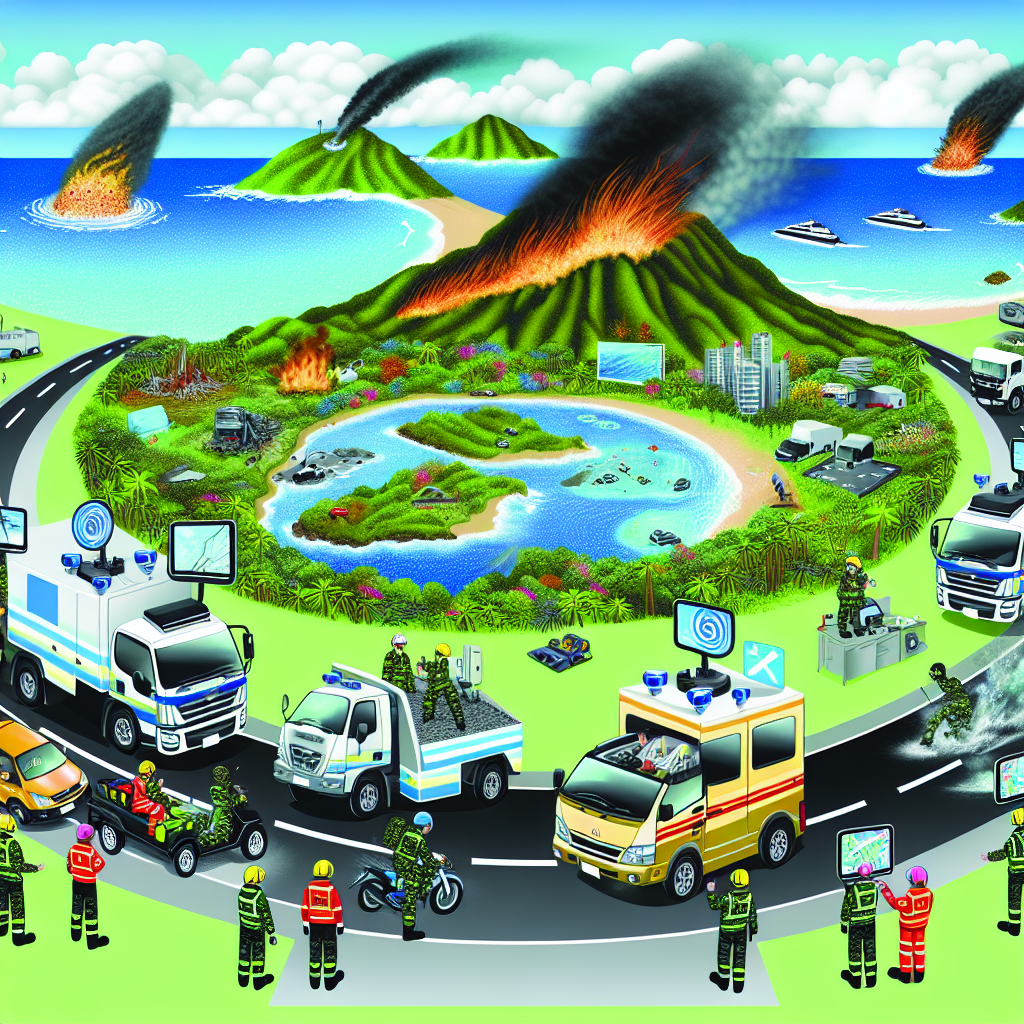
Tow trucks are more than just vehicles; they are essential lifelines in our communities, particularly in island settings where road challenges can be daunting. They serve a multitude of purposes, from providing roadside assistance to transporting disabled vehicles, ensuring that our roads remain safe and navigable. For local auto repair shops, car dealerships, and property managers, understanding the role of tow trucks not only enhances operational efficiency but also bolsters customer satisfaction. This article delves into how tow trucks contribute significantly to roadside assistance, the recent technological advancements in their design, and their broader economic impact on the automotive industry, all framed with the unique challenges and needs of island environments.
Tow Trucks at the Edge of the Road: Safety, Speed, and the Networked Surge of Roadside Rescue
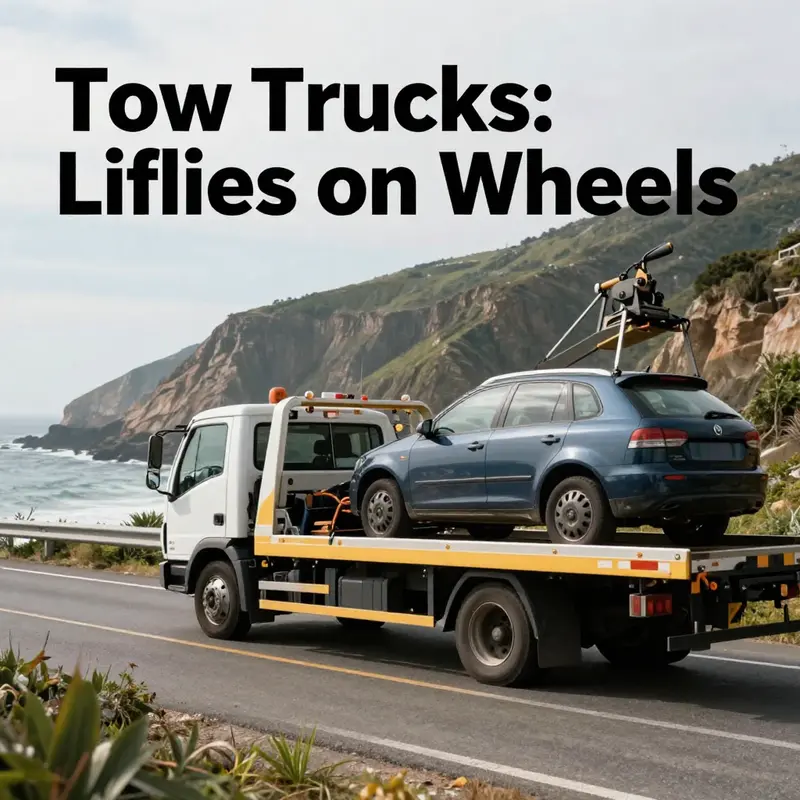
On a rain-slick highway where headlights carve silver arcs through the mist, a tow truck glides into the scene with the calm efficiency of a well-rehearsed chorus. The operator surveys the lane, reads the wind-blown debris, and pins attention to the safety perimeter with a sequence that looks almost ceremonial but is, in practice, lifesaving. This is not merely a vehicle lifting a carcass of metal and rubber from the shoulder; it is a mobile node in a larger system designed to restore mobility, reduce danger, and keep traffic flowing as safely as possible after a disruption. In that sense, the tow truck functions as the essential link between a stranded driver and a safe resolution, a link forged in time-sensitive moments and backed by specialized tools, trained judgment, and an evolving network of partners who share a common aim: to get people and their lives back on the move with as little harm as possible.
At its core, the tow truck’s primary mission is transportation. It is trained to move a disabled or broken-down vehicle from the roadside to a repair shop, dealership, or another designated location where it can be assessed, repaired, or awaiting further arrangements. Yet that simple statement belies the complexity that accompanies every recovery. Leaving a vehicle stranded on the edge of the roadway poses obvious risks to the driver, to other motorists, and to the responders themselves. The operator must gauge speed, approach angle, and the exact point of contact—decisions that are made with a calm confidence born from years of practice and an intimate familiarity with tire, frame, suspension, and chassis variances. The aim is not to extract the vehicle as aggressively as possible but to move it with maximum control and minimum stress on the vehicle and its occupants. In this sense, the tow truck is as much a guardian of safety as it is a vehicle of transport, a role that expands when the roadside morphs into a complex accident scene or a busy urban corridor where multiple agencies converge.
Beyond this core function, tow trucks perform a pivotal safety service by removing vehicles from hazardous locations. On a shoulder crowded with speeding traffic, every inch gained in distance from the live lane reduces the risk of a follow-on incident. The operator’s choices—whether to deploy wheel lift, boom, or slide behind a damaged car—are guided not only by the vehicle’s mechanical condition but by real-time assessments of traffic patterns, weather, visibility, and the presence of injured passengers. The integration of safety measures is thorough and constant. Modern devices include high-visibility lighting, reflective cones, wheel chocks, and chains that secure a vehicle against unexpected movement during loading. The workforce respects the gravity of these moments; a misstep can cascade into further harm, so each move is deliberate, each restraint chosen with care, each hook or strap positioned to minimize additional damage to an already compromised machine.
Technically, tow trucks are marvels of specialized equipment and adaptable technology. The typical recovery sequence showcases a toolkit of devices designed to handle a wide spectrum of emergencies. A winch, driven by a robust hydraulic system, provides the pulling force necessary to coax a stubborn vehicle back toward the roadway or onto a flatbed. A hydraulic lift, often combined with a wheel-lift mechanism, redistributes the load so a car can be carried rather than dragged, preserving critical components and reducing the risk of fluid leaks or frame distortions. In some scenarios, the operator must reach into a ditch, onto uneven terrain, or over obstacles; here a compact crane or stabilizing legs can anchor the unit and stabilize the vehicle amid shifting ground conditions. The synergy of these tools is used with a precise understanding of the vehicle’s geometry. A careful plan unfolds, one that accounts for the weight distribution, the attachment points, and the possibility that a vehicle might be perched halfway in a culvert or partially submerged in water.
Alongside the mechanical repertoire lies a growing layer of intelligent systems. Global positioning and real-time dispatch software enable responders to plot the safest and most efficient route, anticipate potential hazards, and coordinate with other teams—police, fire, emergency medical services, and road maintenance crews—so that everyone arrives with a shared map of the unfolding operation. This coordination is not cosmetic but functional. When a call comes in, the network identifies the nearest compatible unit, estimates arrival times, and often projects the optimal loading strategy based on the responding vehicle’s weight ratings and the road’s geometry. In this way, the tow truck becomes a node in a broader ecosystem of emergency response and traffic management, a conduit through which information travels with the same velocity as the metal and hydraulics it commands.
The interplay between movement and safety extends into the practice of accident recovery. When a collision has shaped one or more vehicles into unpredictable forms, recovery work becomes an exercise in patience and nuance. The operator assesses the scene for hazards that may not be obvious from a passing glance: fluids that could slick the pavement, airbags that might still deploy, and the stability of vehicles resting against barriers or in ditches. Precision takes precedence over speed. The goal is to choreograph a sequence that preserves the integrity of the vehicle and the surrounding ecosystem of traffic. It is common for one asset to monitor traffic flow while another stabilizes a vehicle and another handles the securement lines. This distribution of tasks, though often invisible to the outside observer, keeps the entire operation within safe boundaries and accelerates the return of the road to normal function.
In practice, a tow operation often begins with a careful risk assessment. A driver must decide whether to attempt a roadside repair, request a jump-start, or simply tow the vehicle to a safer location. The operator’s role, then, is to translate the driver’s needs into a concrete, safe plan of action. If a battery is dead, the tow crew can provide a temporary power supply via integrated jump-start equipment, a capability that can save minutes and reduce the exposure of all parties to the dangers of a stalled vehicle. If fuel is low, or if a tire is compromised, or if a lockout prevents access, the team can coordinate ancillary services, sometimes within the same dispatch cycle, so that the driver is not stranded while the primary recovery proceeds. The practical reality is that a tow truck often wears many hats in rapid succession: counselor, technician, traffic manager, and, at times, a bridge to more extensive repair or mobility options.
Part of the evolution of the tow truck lies in its alignment with broader roadside assistance networks. These networks, once a loose constellation of local operators, have matured into structured ecosystems where services interlock to cover a wide spectrum of needs. A disabled vehicle may require not only transport but also fuel delivery, tire changes, or lockout assistance. The modernization of these networks means that the tow operator can anticipate demand and allocate resources with a high degree of foresight. A dispatcher can map a chain of services that respond in concert rather than in a rush of isolated calls. The result is a smoother journey for the motorist, a reduced risk of secondary incidents, and a speedier return to normal traffic conditions. In this broader system, the tow operator is a co-manager of risk and a facilitator of continuity, ensuring that a moment of disruption does not become a prolonged experience of helplessness or danger.
As the road network grows more complex, the role of the tow truck continues to expand into the realm of first response. Tow operators often arrive as one of the first responders on the scene, even before law enforcement or fire crews, because the immediate need is to clear the lane and reduce the exposure of all road users to risk. This early arrival is not about bypassing other agencies but about enabling the subsequent responders to do their job in a safer, more efficient environment. Clearing traffic, removing damaged vehicles, and creating space for medical teams to operate all weave the tow truck into the critical fabric of emergency management. The operator’s ability to act swiftly without compromising safety becomes a force multiplier, preserving life and facilitating the rapid assessment of injuries and needs. In urban cores and on isolated stretches alike, this function remains a constant reminder that road safety is a collective effort and that the tow truck is an indispensable member of that effort.
The sophistication of modern tow operations is inseparable from the communication networks that connect them to the wider system. Advanced communication systems enable seamless coordination with other emergency services and with insurance providers. Real-time data on location, vehicle condition, and the status of the loading process can be shared across platforms, reducing duplication of effort and enhancing accountability. The dispatch workflow, once a linear sequence of calls and responses, has evolved into a dynamic, multi-threaded operation in which information flows in parallel and is then synthesized into a coherent operational picture. This evolution has two practical outcomes: responders arrive more quickly and with greater accuracy, and the on-scene process remains transparent to all stakeholders who need to understand what step comes next. The sound of a radio is increasingly joined by the glow of a screen, the ping of a GPS update, and the quiet certainty of a coordinated plan that has evolved from a simple act of towing to a carefully managed, data-informed operation.
Looking ahead, the future of tow trucks is inseparable from the broader transformation of transportation networks into connected, intelligent systems. Vehicle-to-infrastructure technologies hold the promise of automatic alerts when a vehicle malfunctions or is involved in an accident, triggering a rapid, preemptive response that shortens the time to assistance and reduces the risk of secondary incidents. In such a world, a roadside event becomes a known node in a living map, with alarms, routes, and resource allocations adjusted in real time. The tow truck will not lose its essential humanity—its trained judgment, its steady hands, and its obligation to safety—but it will increasingly operate within a digital ecosystem that amplifies its effectiveness. The one constant remains simple: when the road presents danger or disruption, a trained professional, with a carefully chosen set of tools and a network behind him or her, will transform a potentially perilous moment into a controlled, recoverable incident.
For practitioners, researchers, and policymakers alike, the growth of tow services as a reliable, scalable element of emergency response invites a broader conversation about preparedness, resilience, and equitable access to roadside assistance. Island communities, remote regions, and densely populated urban centers all face distinct challenges, and the tale of the tow truck adapts to each context. It is a story of infrastructure meeting human needs, of technology supporting judgment without replacing it, and of a system designed to minimize harm while restoring mobility. The operator’s work remains as much about the health of the road as the repair of a vehicle. In this sense, every tow is a small act of public service, a careful balance between speed and safety, between the urgency to resume travel and the necessity to protect people from the consequences of a breakdown.
As the evening traffic resumes its rhythm and the road returns to its familiar cadence, the operator closes the scene with the same quiet confidence that opened it. The recovered vehicle is strapped securely, loaded, and handed off to the next stage of care. The roadside is ready for the next call, the next need, the next moment when mobility hinges on the steady, skilled work of a tow professional and the network that supports them. In a world where journeys increasingly cross borders of time, space, and technology, the tow truck remains a steadfast companion—never first, but always essential, a moving anchor that steadies the road and, in doing so, steadies the people who depend on it. For those who navigate the highways and byways of a modern life, the sight of a tow truck is no longer merely the sign of a breakdown; it is a signal that help is organized, available, and on its way, a reminder that infrastructure, when combined with human expertise, can turn chaos into a controllable, recoverable moment.
For readers seeking to connect these ideas to practice and policy, a deeper exploration of how emergency response strategies can be designed around the realities of roadside recovery can be found through the resource on essential fleet emergency-response strategies. This guide offers a framework for coordinating fleets, responders, and insurers in ways that maximize safety and minimize disruption. Such resources help translate the daily artistry of on-scene towing into scalable, repeatable, and auditable procedures that communities can rely on when the road demands its most delicate balance of speed and care. As technology continues to weave itself into every fiber of roadside operations, the tow truck stands as both a beneficiary and a driver of progress, a device that converts risk into resilience and miles of asphalt into a corridor of recovery.
External resource: For authoritative information on the evolving role of tow trucks within modern roadside assistance and intelligent transportation systems, see https://doi.org/10.4018/978-1-4666-2223-4.ch001.
Tow Trucks at the Edge of Innovation: How Hydraulic Mastery, Electric Readiness, and Smart Fleets Redefine Roadside Rescue
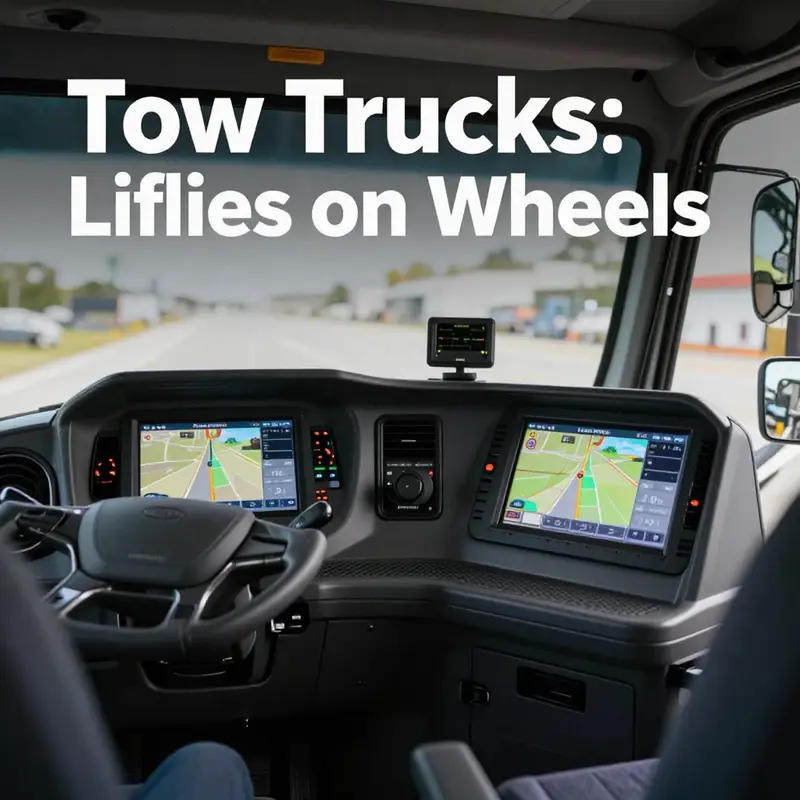
When people picture a tow truck, they often imagine a hulking metal giant with a winch and a rope, patiently waiting for the call that will test its strength. Yet the modern tow truck is less a single instrument of force than a coordinated platform of technology, safety, and logistics. It is a rolling workshop where hydraulic precision, sensor feedback, and networked intelligence converge to lift, tow, and transport with ever greater certainty. The image of towing—pulling a car from a ditch or hoisting a stranded vehicle onto a flatbed—belies the sophistication that quietly powers what happens on the edge of every roadway. In recent years, the industry has witnessed a quiet but steady revolution. The devices that underwrite a tow operation have become smarter, safer, and more adaptable to the diverse demands of today’s traffic environment. A tow truck is no longer merely a tool of brute strength; it is a mobile hub of hydraulics, hydraulically driven platforms, control systems, and fleet-wide coordination that can respond to emergencies with a level of organization that rivals the best land-based service operations on land.
At the heart of this transformation is the hydraulic system. In flatbed or rollback configurations, the platform’s movement is not a crude lift but a choreography of cylinders, pumps, and controllers that syncs with the operator’s inputs. Advanced hydraulic systems deliver smooth, level lowering to the ground and precise, controlled raising as the bed retracts. This smoothness matters as much as raw lifting capacity. When a vehicle is disabled in a precarious position, the difference between a jolt and a deliberate, measured motion can prevent further damage or injury. The hydraulic bed becomes a stage upon which careful positioning unfolds. It is the quiet backbone of a humane towing approach, ensuring that a vehicle, even in vulnerable condition, can be driven or winched onto the bed with confidence. The functional benefits are clear: safer load transfer, reduced risk of scrapes or frame damage, and the ability to accommodate a wider range of vehicle heights and dimensions, from compact cars to compact SUVs and light trucks. In longer-distance operations, the stability and control afforded by refined hydraulics translate into a smoother ride for the towed vehicle and less strain on the tow rig itself, which, in turn, diminishes wear and tear on the vehicle handling system.
Wheel lift technology offers another layer of efficiency. Historically, wheel-lift rigs required careful maneuvering to lift a wheel off the ground while the other wheels remained on the road. Today’s improvements—especially with improved hydraulic mechanisms—enable faster deployment and more reliable loading with a smaller margin for error. Operators can lift either the front or rear wheels with a minimum of ground contact, expediting the tow and reducing the need for extensive winching. This capability is particularly valuable during short-distance tows or when a vehicle is in a tight urban environment where maneuverability matters as much as force. The streamlined action reduces the time on-scene, allowing responders to clear lanes more quickly and reduce secondary incidents caused by blocked traffic. In practice, the power of wheel lift lies not just in speed but in the broader safety envelope it creates: less scraping, fewer sudden shifts, and a more controlled ascent onto the bed. For fleets serving busy streets, this translates into higher dispatch throughput and a lower likelihood of on-scene injuries, benefits that ripple outward to drivers, passengers, and other road users.
The narrative of modernization would be incomplete without acknowledging the rise of intelligent fleet management. The convergence of telematics, real-time data analytics, and cloud-connected dispatch platforms has migrated tow operations from a purely hands-on craft to a data-informed service. Real-time tracking of each vehicle, coupled with route optimization algorithms, means a dispatcher can orchestrate multiple calls with an awareness of current traffic conditions, weather, and on-board status. Maintenance alerts surface before a part fails, preventing unexpected breakdowns that would otherwise strand a driver or block a lane. The result is a substantial reduction in downtime and a marked improvement in service reliability. This intelligent layer is not merely about speed; it is about resilience. If a vehicle experiences a hydraulic fault, the system can flag the issue, schedule a service window, and reallocate resources to maintain coverage in a given area. The integration of fleet management systems with incident response protocols also strengthens cooperation with police and fire departments during emergency scenes. As fleets expand and the demand for rapid, organized response grows, the ability to see, plan, and act across a network of tow trucks becomes a strategic advantage.
This evolving operational landscape has also embraced the practical challenges and opportunities presented by electric vehicles. EVs introduce new dynamics to towing, requiring equipment capable of handling higher voltage systems, heavier drivetrains, and different weight distribution profiles. To support a full spectrum of vehicle types, modern tow trucks are being redesigned or retrofitted with components that address the risks associated with high-voltage systems, battery packs, and the thermal realities of electric powertrains. Training, protective equipment, and specialized procedures become integral to the job, not afterthoughts. The goal is not simply to move an EV from point A to point B but to do so with deliberate attention to battery integrity, insulation, and the potential for thermal events. The equipment itself must adapt, featuring contact-safe winch lines, insulated control housings, and a platform that can accommodate different weights while preserving the structural integrity of the towed vehicle. This EV readiness is more than compliance; it’s a commitment to safety for operators, bystanders, and the EV owners who rely on tow services in moments of vulnerability. Industry participants recognize that the EV era will demand ongoing investment, training, and careful standardization to ensure consistent performance across cities and regions.
Yet perhaps the most forward-looking aspect of tow truck technology lies in autonomous concepts that may reshape the future of roadside recovery. Late-stage research and pilot programs envision scenarios where certain tasks—such as positioning the bed, aligning the vehicle, or initiating a wired tow—could operate under controlled automation. The promise is clear: augmenting human operators with automated systems can reduce fatigue, lower the risk of error, and increase the number of operations a fleet can handle in a given shift. This is not about replacing the human operator but about extending capabilities. In the real world, autonomy could be applied to repetitive, high-volume tasks or to accompany drivers in highly regulated areas where standard procedures must be followed to the letter. The ethical, legal, and safety frameworks surrounding autonomous towing will evolve in step with the technology, but the direction is unmistakable: automation could usher in a new cadence of service that improves safety margins and frees human workers to focus on complex or hazardous scenarios that require judgement, empathy, and deft manual handling. For an industry that often operates at the sharp edge of risk, such integration offers a way to balance speed, safety, and reliability as the demand for rapid response continues to grow.
Sustainability, too, threads through every major development. Modern fleets increasingly consider the environmental footprint of their operations. Green technology deployment, more efficient powertrains, and smarter routing all contribute to reducing emissions. Lightweight yet durable materials for platforms, regenerative energy concepts where feasible, and energy management strategies during idle times help TAC—turnaround time and energy consumption—align more closely with broader climate goals. This isn’t merely about the technology within a single vehicle; it is about the lifecycle of a fleet: the way vehicles are fueled, maintained, and retired, the way spares are sourced, and how duty cycles are scheduled to minimize waste. As municipalities and private operators alike strive for lower emissions and quieter streets, the towing sector’s embrace of sustainability becomes a visible thread linking day-to-day service with long-term environmental responsibilities. The environmental narrative is not a separate footnote but a driver that shapes choices between hydraulic efficiency, battery-friendly systems, and smarter dispatch strategies.
In the end, these converging strands—hydraulic precision, wheel-lift efficiency, smart fleet management, EV adaptation, autonomous potential, and sustainability—reframe the tow truck from a solitary tool into a moving, adaptable platform that can respond to a changing roadscape. The vehicle that arrives at a site now carries, within its chassis and software, a map of the surrounding traffic, the health of its own hardware, and a plan for how to execute a load safely from curb to bed. The operator, far from being simply a driver, becomes a conductor of a small but complex orchestra of systems, each tuned to reduce risk and improve outcomes for motorists in distress. As the chapter on tows advances, the road ahead becomes not just a path to a repair bay but a corridor of experimentation, where each emergency scene offers an opportunity to refine a system that serves the public with greater speed, safety, and responsibility.
For readers seeking a broader view of how these innovations are described and debated in industry circles, recent industry commentary and analysis offer context on the pace of change and the practical implications for daily practice. If you are working on island fleet operations, you may find the practical perspectives on emergency response strategies particularly relevant; they illuminate how the integration of technology with trained personnel can yield more reliable service in geographically challenging environments. essential fleet emergency response strategies.
The road to the future of tow services is not a single invention but a continuum of improvements that gradually expand what a tow truck can do, how safely it can do it, and how efficiently it can serve communities in need. The narrative is not about a handful of advances but about the way a vehicle, once tethered to a simple winch, becomes a mobile platform that embodies the intersection of mechanical artistry, electrical sophistication, and organizational intelligence. As cities grow denser and fleets face more complex challenges—from congested urban cores to remote industrial belts—the technology of tow trucks will continue to evolve in ways that mirror those challenges. Each new capability, from a refined hydraulic bed to an integrated data stream that informs dispatch, adds a layer of resilience to the entire process of roadside assistance. And while the specifics—such as wheel lift efficiency or battery-aware lifting protocols—may seem granular, the cumulative effect is a service that is quicker to react, gentler on the vehicles it handles, and more predictable for the people who depend on it in moments of stress.
External resource: https://www.towingindustrynews.com/technological-advances-in-tow-truck-design/
Tow Trucks and the Economy: How Recovery Vehicles Keep Mobility and Markets Moving
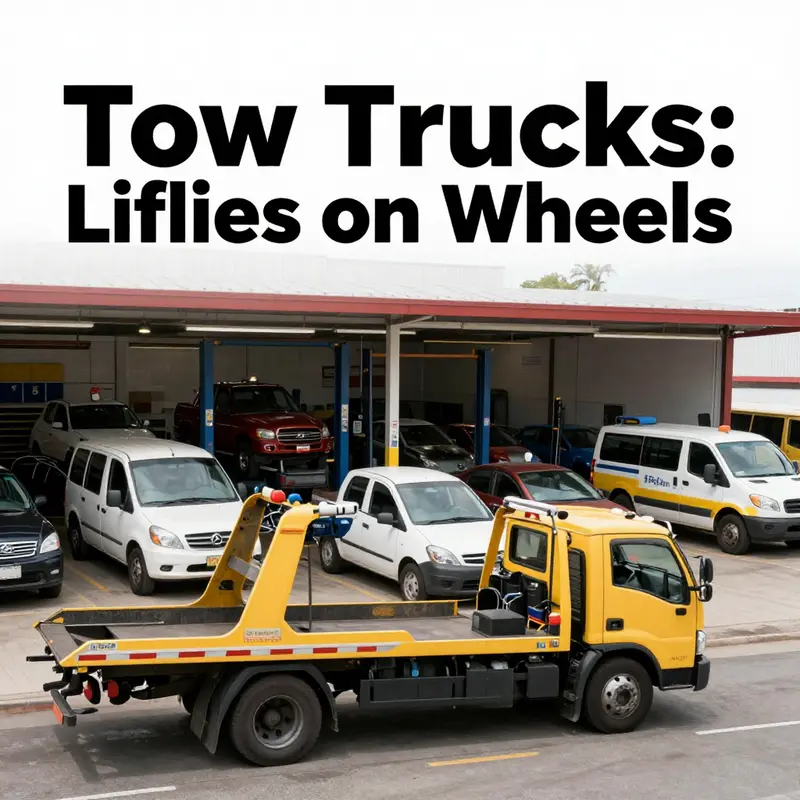
A tow truck is more than roadside assistance. It is a mobile asset management tool that appears when disruption meets protection, and it helps keep vehicles in service and corridors clear. The economic significance goes beyond the immediate tow as it stabilizes downtime costs, preserves asset value, and enables logistics to run on time.
A market dynamic is present: industry revenue sits around USD 3.5 billion in 2024 and is projected to rise to about USD 5.8 billion by 2033, a CAGR near 6 percent. Drivers include urban congestion, growing fleets, and the shift toward digital dispatch ecosystems. Modern tow fleets invest in smarter equipment and training to improve safety and speed.
Operational impact is substantial. Tow services reduce ripple effects of a breakdown: less idling, shorter queue times, lower fuel burn, and fewer secondary incidents. They participate in traffic management and emergency response, forming a coordinated system with police and public safety services. When disruption is cleared, lane capacity returns faster and overall travel reliability improves.
Asset care matters. Recovered vehicles risk depreciation; prompt, careful handling protects value. Insurance programs, rental fleets, and dealerships depend on certified operators who can move delicate assets under controlled conditions. The economic ripple extends to insurers, repair shops, and manufacturers via more predictable repair and resale outcomes.
Fleet technology and sustainability are reshaping the field. Telematics and route optimization enable smarter dispatch, while newer equipment improves safety and reduces downtime. Lighter, safer trucks and proper lifting gear contribute to lower energy use and better environmental outcomes, aligning the industry with broader mobility goals.
Practical guidance is useful for fleets and regional planners. Consider integrating towing partners into emergency response and logistics planning, standardizing training and equipment, and using data sharing to improve coordination. Strong governance over dispatch, scope of service, and incident documentation helps reduce cost and risk while boosting uptime.
The bottom line is that tow trucks act as economic levers. As the market grows and technology advances, recovery vehicles become more deeply embedded in resilience and efficiency of transportation, supporting not just individual breakdowns but the reliability of city networks and regional economies.
Final thoughts
Tow trucks are indispensable to the fabric of island communities, providing essential services that ensure the safety and mobility of residents and visitors alike. From their crucial role in emergency roadside assistance to the evolution of technology that enhances their capabilities, these vehicles impact not only individual drivers but also the broader automotive industry. By understanding their multifaceted contributions, stakeholders like auto repair shops, car dealerships, property managers, and fleet operators can better appreciate the value they offer. Embracing these insights can lead to improved operations and greater customer satisfaction in island settings.