Towing a car with a truck isn’t just about connecting two vehicles; it’s an art that demands thoughtful preparation, proper equipment, and strict adherence to safety standards. Whether you’re an auto repair shop owner needing to transport vehicles, a property manager overseeing fleet operations, or a resort operator assisting guests, understanding how to tow safely and effectively is vital. This guide will walk you through the essential steps, including preparation for towing, choosing the right equipment, securing the connections, and safe driving practices, each integral to a successful towing operation that keeps you and others safe on the road.
Preparation as Precision: Safe Steps to Tow a Car with a Truck
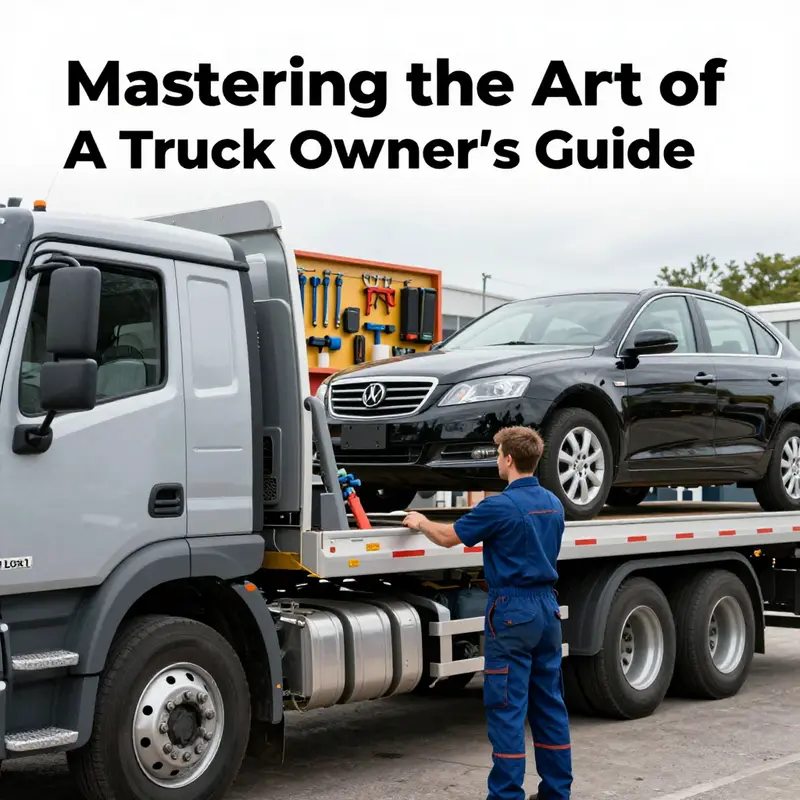
Towing a car with a truck is less about raw horsepower and more about disciplined preparation, deliberate connection, and a clear plan of action. When the road is crowded or the distance stretches, the difference between a smooth move and a missed hazard comes down to how you prepare. This chapter treats preparation not as a preface but as the core discipline that governs every decision you make on the towing journey. It begins long before you attach anything to the tow hitch and ends only after you have safely released the towed vehicle and completed a thorough post-tow check. The aim is to create a flow that feels almost instinctive: assess, secure, move, communicate, and verify. Even the smallest detail—like ensuring the parking brake is fully released or confirming tire pressures—can translate into fewer surprises once you are underway. In this sense, preparation becomes a precision tool that preserves both vehicles and people alike while keeping the operation within the boundaries of safety and common-sense stewardship.
The first layer of preparation centers on the status of both vehicles. A truck with adequate towing capacity should not be asked to haul a car beyond its limits, and this starts with a quick but honest appraisal of weight and balance. Before you hook up anything, inspect the towing vehicle’s brakes, tires, and lights; ensure the transmission and engine are in good condition, and confirm that the truck’s own stability and steering systems are responsive. The towed car deserves an equally careful check. Ensure its brakes, tires, lights, and steering are functional. For automatic transmissions, shift into Neutral and release the parking brake once the tow connection is established. For manual transmissions, Neutral is still the baseline, but the absence of a parking brake engagement becomes even more critical to avoid drivetrain binding. Position both vehicles on a flat, open area where you can connect without interference from other traffic, pedestrians, or unexpected obstacles. A calm, level staging ground reduces the likelihood of last-minute adjustments that could introduce mishaps mid-connection or during the initial motion.
A thorough assessment also calls for attention to tires and pressure. Underinflated or overinflated tires on either vehicle can amplify steering vagueness, increase the risk of blowouts, and compromise stability during the towing process. Before you begin, verify that all tires—on the towed vehicle in particular—are at the correct pressure and free of cut, bulge, or tread irregularities. If the engine of the towed vehicle is not malfunctioning, you may leave it running to preserve power steering and brake assist systems; if there is a mechanical issue, consult the owner’s manual for the prescribed approach. In general, the more you know about the towed car’s mechanical condition, the more confidently you can plan the towing sequence. The moment you feel uncertain about any component—steering, braking, or suspension—pause and reassess. The safety margin you build here will pay dividends once you are on the move, particularly in urban environments where sudden stops or lane changes can demand immediate, precise responses.
When it comes to choosing the right equipment, the conversation shifts from general caution to practical deployment. Tow ropes and bars each have their niche, and the distance you intend to travel, along with the weight of the towed car, should drive your choice. A tow rope offers a lighter, simpler option for short distances and smaller vehicles. A rigid tow bar, sometimes called a hard tow, provides a firmer connection and better control on longer hauls or slick surfaces, but it requires precise alignment and a hitch that is rated to carry the load. A tow dolly can be ideal for automatic transmission cars; it supports the front wheels while keeping the transmission protected from lubricant disruption, making it suitable for short-to-medium distances. For longer journeys or all-wheel-drive scenarios, a flatbed trailer remains the safest and most drivetrain-friendly choice, distributing weight evenly and mitigating the risk of drivetrain damage. In selecting equipment, consider the weight of the towed car, the road conditions you anticipate, and the legal requirements in your area. Keep in mind that the rope should be high-visibility and free of wear, fraying, or damage, and the connection hardware should be rated well above the expected load.
Once you have selected the appropriate equipment, secure the connection with care. Attach the tow rope or bar to the designated towing points on both vehicles—typically the front or rear frame rails or official tow hooks—and avoid weak points such as bumpers or suspension components. If you choose a tow rope, use a secure knot or locking mechanism that will not slip under tension, and double-check all connections before you apply any load. For tow bars, follow the installation manual precisely; ensure bolts and connectors are tightened and that the coupling pin is fully inserted and locked. After connecting, perform a gentle check: apply a small amount of tension by moving the truck slowly and watching for any hitch wobble, misalignment, or unexpected slack. If anything feels off, stop and re-secure the attachment. A stable, confident connection reduces the risk of sudden detachment when you commence movement, and it provides a predictable baseline for subsequent driving work.
Planning the route is a facet of preparation that often gets overlooked in the rush of a roadside tow. You should map a path that minimizes risk and adheres to local towing regulations. Choose routes that are flat and have light traffic where possible, avoiding narrow streets, steep grades, or roads with low clearances. If available, confirm with local authorities or a dispatch service about any restrictions on towing behavior in the chosen corridor. Before you roll out, set up a communication plan between drivers and passengers. Establish clear signals for slowing, stopping, and turning. In low-visibility conditions, such as rain or dusk, ensure all lights are operational and that hazard lights or double flashers are engaged as needed to improve visibility for other motorists. A walkie-talkie or mobile phone can be invaluable for maintaining coordination over longer distances, particularly when visibility is compromised or if you need to discuss changes to the plan mid-journey.
It is also essential to understand vehicle-specific towing rules and regional requirements, especially when 4WD and AWD systems are involved. Four-wheel-drive vehicles present particular challenges. Part-time 4WD systems typically require switching to 2WD mode before towing. Full-time 4WD systems often cannot be safely towed with all wheels on the ground, and many manufacturers recommend flatbed towing or the use of a dedicated tow mode to preserve the drivetrain. On-demand 4WD systems may accommodate towing with certain configurations, but you should always refer to the owner’s manual for precise instructions. Manual or automatic transmissions respond differently to towing, and the gear position you select can influence lubrication and cooling in the transmission, so the neutral setting is not a universal catch-all across every vehicle. If you are uncertain, err on the side of caution and opt for a flatbed or tow dolly that confines movement to safe, designated towing methods. Weather conditions can multiply the risk of a bad tow, so consider delaying the operation if heavy rain, snow, fog, or icy surfaces are present. Even at night, the same rules apply—extra lighting, slower speeds, and increased following distance are not optional; they are the baseline for safe execution.
As you prepare to move, the next layer involves how you manage the actual driving and the moment you initiate motion. Driving speeds must remain deliberately slow and controlled: stay well below typical highway limits, and adjust speed based on road surface, visibility, and traffic density. In urban settings, a conservative ceiling of about 30 km/h (18 mph) is prudent, and on any highway where towing is permitted, keep to the manufacturer-recommended limit or a conservative reduction if in doubt. Smooth acceleration and brake application become essential skills; jerky starts or sudden stops can unsettle the towed vehicle and place unexpected loads on the connection hardware. Maintain a constant, predictable cadence; avoid abrupt lane changes or aggressive steering inputs. Communication between drivers should be precise: use clear hand signals, agreed-upon horn patterns, or simple radio cues to convey slowdowns, stops, or turns. When visibility is compromised or in the dark, rely on the full lighting package—hazard lights, rear position lights, and, if necessary, additional auxiliary lighting to illuminate the road ahead. Keeping a safe following distance is another simple, often overlooked practice. Maintain a generous buffer—roughly 10 to 15 meters under normal conditions—to give both drivers time to react to any sudden hazard or unexpected braking by the vehicle in front.
In practice, the preparation framework extends to special considerations that can be easy to overlook until a problem arises. Automatic transmission cars, if towed without appropriate equipment like a tow dolly or flatbed, can suffer transmission damage from lack of lubrication during long-distance towing. For 4WD/AWD vehicles, the manual outlines specific requirements that often deter simple rear-wheel towing; the best approach is to use a flatbed when there is any doubt. And weather, always a factor, demands even more caution. Rain and ice dramatically reduce traction and increase stopping distances, while fog or snow can mask hazards ahead. Plan for these conditions by slowing further and by reserving extra space to reduce risk. Night driving introduces additional complexity: ensure that the towed vehicle’s lights are fully functional and that your own vehicle’s lighting remains bright and visible to other road users. If you must tow at night, consider additional lighting or reflective markers to increase conspicuity. All these adjustments reinforce the point that preparation is not a one-off step but a continuous discipline that adapts to the specifics of the situation, the vehicles involved, and the environment you operate within.
When the tow ends and you reach your destination, the process of release and post-tow inspection becomes a final checkpoint that seals the operation with accountability. Stop the truck safely, gently release tension on the tow bar or rope, and disconnect carefully. After the connection is removed, conduct a thorough inspection of the towed vehicle for any signs of damage—misaligned wheels, scratches, loose components, or soft spots in tires. If any issue is found, report it and, if necessary, refer to a professional service for a comprehensive assessment. The goal is not merely to complete a tow but to preserve the mechanical integrity of both vehicles and to minimize any downstream consequences that could compromise safety on the return trip or in subsequent journeys. The practical wisdom here is simple: treat every tow as a controlled operation with a clear start, a precise sequence of actions, and a careful after-action review. This mindset turns what could be a hazardous roadside task into a reliable, repeatable procedure that you can rely on when it matters most.
For readers seeking a consolidated source of best practices and a broader discussion of towing mechanics, the community knowledge base available on the island towing network provides practical tips and recurring cautions that reinforce the habits described here. If you want to explore further, you can visit the Island Tow Truck blog for related discussions on towing strategy and roadside safety. the Island Tow Truck blog.
To support safe practice and ongoing learning, remember that the official recommendations from national safety authorities are valuable benchmarks. These guidelines emphasize careful preparation, correct equipment, and disciplined driving behavior to minimize risk during towing operations. For authoritative safety guidance, see the National Highway Traffic Safety Administration resources at https://www.nhtsa.gov. This external resource offers corroborated safety practices and up-to-date recommendations that can inform both professional responders and everyday drivers who find themselves needing to tow a car with a truck.
Incorporating these steps into a cohesive routine makes preparation a practical, repeatable, and defensible part of any towing plan. The aim is not to overwhelm you with rules but to equip you with a flow that is both protective and efficient. When you approach a towing task with calm preparation, a clear plan, and the right tools, you are not just moving a vehicle; you are managing risk, protecting livelihoods, and giving yourself the confidence to handle unexpected circumstances with composure. That is the essence of towing preparedness: a quiet, disciplined competence that keeps you and others safe on every mile of the road.
Gear Guide: Equipment for Towing a Car with a Truck
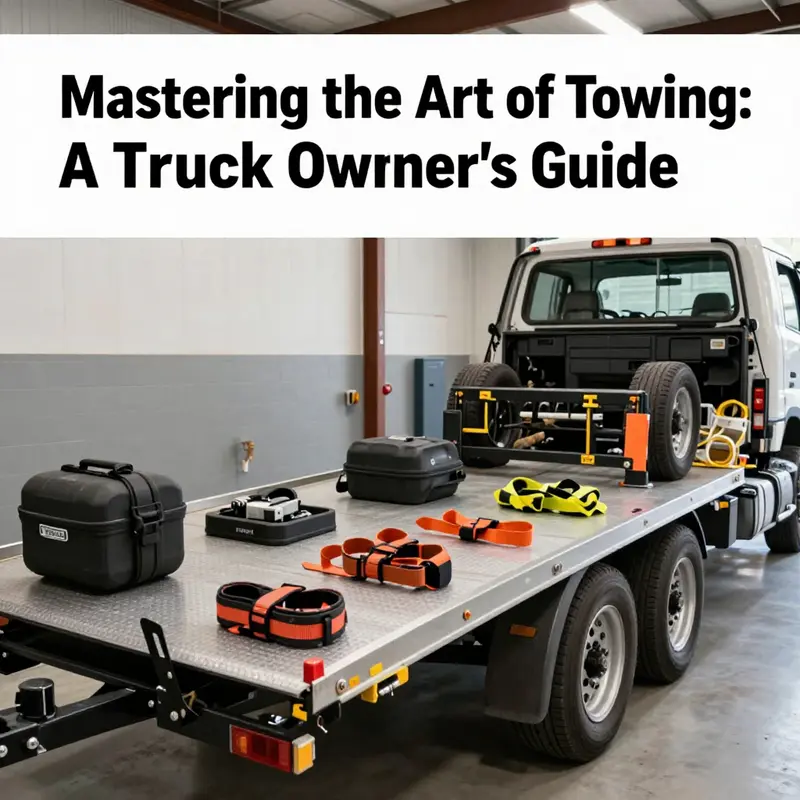
Towing a car with a pickup truck tests judgment as much as strength. The gear you choose shapes safety, drivetrain protection, and how smoothly the job goes. There is not a single universal solution; instead there is a spectrum of options you can match to the task.\n\nFor everyday tasks, common options include a car trailer, a flatbed trailer, a tow dolly, or a rigid tow bar. Rotator tow trucks offer the most capability but come with higher cost, specialized training, and additional maintenance.\n\nFor longer distances or vehicles with AWD/4WD, a flatbed provides full vehicle support and minimizes drivetrain load. Dollies are useful for front-wheel-drive autos where the transmission should remain engaged, but they require careful weight distribution. A rigid tow bar can be economical and simple, but it demands precise alignment and slows turning.\n\nKey planning steps: identify the vehicle type and payload, confirm connection points, verify lights and brakes, and plan a route with safe stopping points. Check weather and road conditions, and practice safe speed to minimize sway. Above all, the operator’s judgment and training are the decisive factor; the right gear is only as good as the person using it.
The Secure Link: Mastering the Connection When Towing a Car Behind a Truck
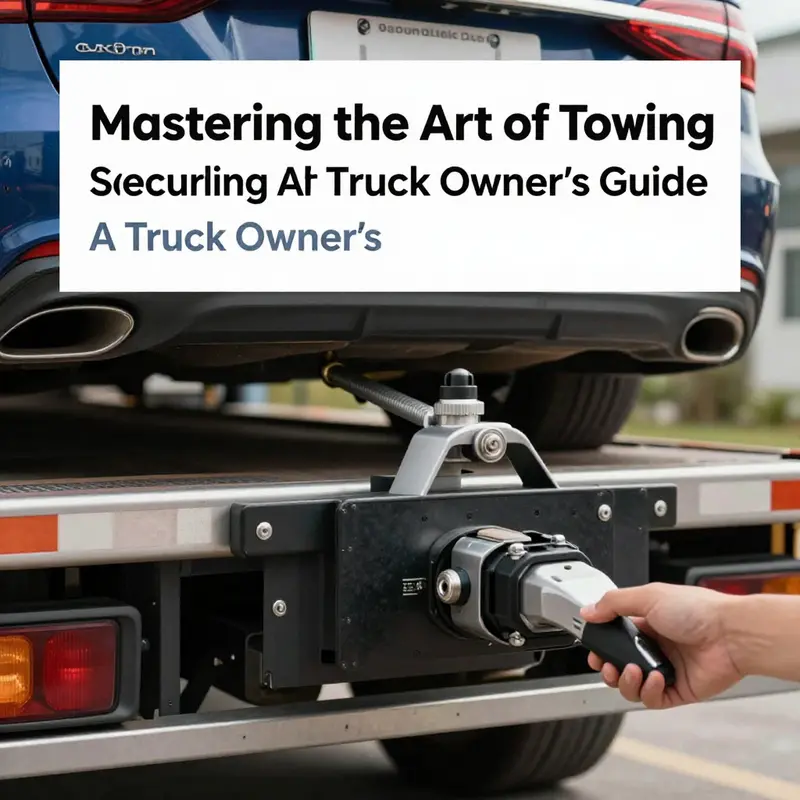
Securing the connection between a towing truck and a towed car sits at the heart of every safe, responsible towing operation. It is the moment when preparation meets physics, where a small misstep can ripple into a serious incident on the highway. Across the countless scenarios that professional drivers encounter, the most crucial outcome is a connection that stays rigid, stable, and predictable from start to finish. This chapter threads together practical wisdom about the connection itself, the secondary safeguards that protect both vehicles, and the subtle cues that tell you you are approaching a secure setup rather than a risky gamble. It is not a separate checklist so much as the backbone of a good towing plan, linking equipment choice, connection technique, and ongoing vigilance into a single, coherent practice aligned with the broader aim of transporting a car with a truck safely and efficiently.
The first principle is straightforward but often underestimated: use a heavy duty tow bar or hitch system designed to handle the actual load and dynamics of the vehicles involved. A rigid link between the truck and the towed car minimizes sway and reduces the kind of drivetrain and chassis stress that can arise when the connection is loose or flexing. When implemented correctly, the tow bar functions like a sturdy arm, guiding the towed car as a single unit rather than letting it oscillate independently. This stability translates into smoother steering inputs for the truck driver, more predictable braking behavior, and a higher margin of safety for surrounding traffic. Without a solid connection, even the most careful driver can encounter a runaway moment or a failure that cascades into a more serious accident.
However, the connection is not a single point of failure you can safely ignore. It is a network of components that must work in concert. The hitch or tow bar is only the primary link; safety chains act as an indispensable secondary fail safe. When the chains are crossed under the tow bar in an X pattern, they form a protective cradle that catches the car if the main link should fail. This simple geometry—chains beneath the bar, crossing to connect to secure frame points on the towing vehicle—transforms potential catastrophe into a manageable event. The crossing pattern is not ornamental; it is a crucial redundancy. The chains should be rated for the combined weight of the two vehicles and be checked for wear, stretched links, and corrosion before each run. A chain that looks fine but has a tiny bend or a suspect link can compromise the entire system even if the main connection appears solid.
Attachment points deserve equal attention. Never attach to a bumper or any fragile component; the frame points or designated tow hooks provide the strongest, most reliable anchors. The frame points distribute load through structural members designed to bear stress during towing, while bumper connections can deform, crack, or fail under traction. The tow bar itself must be properly seated, with the pin fully inserted and secured with a locking mechanism. A loose pin is a signal flag for danger—if the bar can wiggle, the entire setup is flying blind to the realities of road dynamics. Before you start moving, run your hands along the connection to feel for any movement or play that should not be there. If anything gives or rattles, stop and re tighten. A silent, steady connection is better than a loud, failed one.
Electrical integration is another critical layer. Modern vehicles rely on tail lights, brake lights, and sometimes turn indicators on the towed car. The electrical wiring must be tested prior to departure to ensure signals transmit reliably and without delay. A flickering light or a nonfunctional brake signal can confuse following drivers and create a hazard. The same is true for the braking system itself if the setup includes any form of trailer braking assistance; verify the wiring harness, fuses, and ground connection, and ensure the towed car’s lights synchronize with the truck’s system. If the wiring is not integrated properly, you may face a legal and safety nightmare, even if the mechanical connection looks perfect.
The connection also benefits from thoughtful alignment and drivetrain considerations. A key decision that shapes how you secure the link is the choice between a tow bar setup and other methods such as a tow dolly or flatbed. Each method alters the forces transmitted to the towed vehicle. A rigid tow bar creates a direct, linear pull that is easiest to manage on a straight road. A tow dolly or flatbed, in comparison, encases the vehicle in a controlled cradle, dramatically reducing drivetrain exposure for automatic transmissions and all wheel drive systems. When the towed car is automatic transmission, the optimal approach often involves a tow dolly or flatbed for longer moves. Securing the connection under these constraints becomes a matter of ensuring you are matching the method to the vehicle’s design so that the link remains tight and the load remains within the system’s capabilities.
One of the most practical ways to embed confidence in the connection is through a process of deliberate, progressive verification. After you attach the bar or hitch and install the safety chains, perform a gentle test pull before committing to road travel. A slight forward tug will reveal any looseness, misalignment, or binding in the pivot points. This pre drive check should extend to the electrical connections, ensuring lights react in time as you move. It is not about finding a problem to fix on the fly but validating that the initial set up has achieved a state of stability. If you discover any resistance, asymmetry, or unexpected movement, halt the operation and reassess. Do not progress until you have achieved a clean, controlled feel at the coupling and the adapter or ball mount remains firmly anchored.
For operators who encounter the luxury segment of vehicles, the connection takes on an even more precise dimension. Luxury or high value cars demand additional care because their value pairs with a need for maximum protection. In such cases, professional practices that emphasize a controlled, steady loading sequence become indispensable. Some tow crews use specialized car carriers or rollback trucks with hydraulic tilt decks. These systems allow the flatbed to lower smoothly to ground level, enabling the towed vehicle to be rolled or slid onto the bed with minimal handling of the drivetrain. The secure connection, in this context, is part of a broader sequence: align the truck with the vehicle, engage the wheel chocks, connect the winch or straps as needed to secure the car to the deck, and then verify the coupling between the truck and the towed car. This approach minimizes any drivetrain stress and provides a safer environment for loading, especially when the vehicle’s tires are compromised or the car is inoperable.
In practice, the operator’s experience matters as much as the equipment. A disciplined routine reduces the odds of a missed step. A routine might begin with a visual sweep of the area to confirm that there are no overhead hazards, lines, or uneven surfaces that could catch the towing gear. The operator then confirms weight ratings against the actual vehicle mass, ensuring that the tow bar, chains, and hitch assembly are within their limits. The next step is to verify how the two vehicles sit in relation to each other on a flat surface. Any misalignment, such as a tow bar that sits unevenly or a chain that drapes at an odd angle, can produce additional friction during movement that you will not fully feel until you are under load. Only after all these checks should the driver engage the drive, maintaining a cautious, measured pace while listening for any unfamiliar sounds, vibrations, or changes in the feel of the tow.
The final phase of securing the connection is about ongoing vigilance as the journey begins. The road, with its changing surfaces and weather conditions, introduces dynamic forces that were not present at the moment of attachment. The driver must remain alert for any shift in the alignment, unusual pulling sensations, or changes in the trailer’s yaw. Small adjustments to throttle and braking should be made gradually to maintain a smooth energy transfer along the tow line. It is during these early moments that you can catch anomalies before they escalate. A well secured link is not a static achievement; it requires continuous confirmation that the connection remains consistent with the road’s evolving demands. This is where plain language communication between the truck operator and any spotter or passenger becomes valuable. A simple signal such as a nod, beep, or hand gesture can help maintain situational awareness when conditions demand precision.
The cognitive load of maintaining a secure connection should not be underestimated. Drivers must balance attention between the link itself and the traffic environment around them. To support this, some teams incorporate a small safety cadence into their routine: a pre departure visual check, a second confirmatory check after a short distance, and then a final cross check before entering high traffic areas. This cadence provides a practical means to preserve that sense of control that a secure connection requires. The focus on connection is not about micromanagement; it is about preserving the likelihood that the vehicle behind the truck will behave as a predictable extension of the towing system rather than an autonomous guest that might pull in a dangerous direction with little warning.
As you reinforce the abstractions of the secure link with concrete practice, you may also seek guidance from trusted sources and professional communities. If you want to explore more perspectives on towing safety and practical procedures, you can visit the Island Tow Truck blog for additional context and practical notes that align with the procedures described here. The site offers insights into emergency response planning, fleet readiness, and everyday towing challenges that mirror the realities of field operations. https://theislandtowtruck.com/blog/
In sum, securing the connection is a disciplined exercise in combining robust hardware with vigilant, methodical checks. It is an intentional act of engineering aimed at translating momentary human intent into a controlled, safe motion along the road. The beauty of a well secured link is its feedback: you feel confident and unhurried, and your vehicle’s behavior under tow mirrors the calm, predictable response you would expect from a single, well understood system. The more you internalize this as a core principle, the more you’ll find that every subsequent step—whether loading onto a flatbed, adjusting for weather, or coordinating with a second driver—becomes a matter of harmonizing with a couple of simple, time tested practices rather than wrestling with a cascade of ad hoc decisions. The secure connection is, indeed, the defining hinge of the whole operation, binding preparation, technique, and safety into a single, coherent act that makes towing a car with a truck a responsible and manageable undertaking.
External reference for further depth and a comprehensive pre trip safety checklist: https://www.safetyscience.com/towing-safety-checklist
Tow with Confidence: Safe Driving Practices When Towing a Car with a Truck
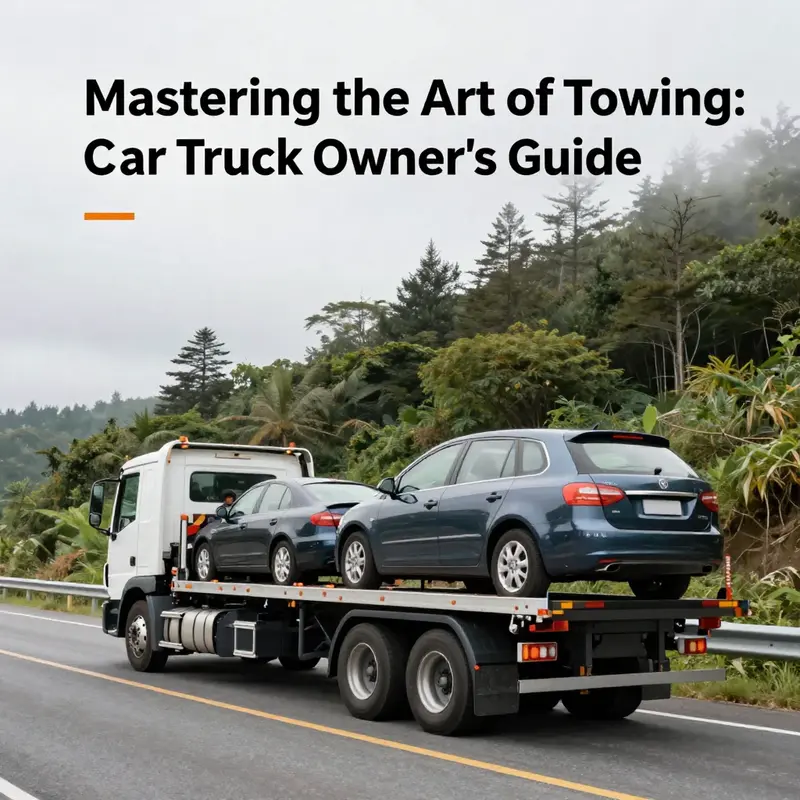
When you haul a car behind a truck, safety becomes a moving target that changes with every mile. The act of towing transforms a routine drive into a coordinated operation that requires time, attention, and disciplined control. You are not merely steering a heavy load; you are managing a dynamic system that involves the tow vehicle, the towed vehicle, and everyone sharing the road with you. The aim of this chapter is not to overwhelm with technicalities but to weave a steady thread of safe habits into the rhythm of your journey. With good preparation, clear communication, and conservative driving, you can reduce risk while keeping traffic moving efficiently. The road demands respect for weight, momentum, and the limits of both machines and drivers. The fundamentals are simple in principle: keep the speed low, stay predictable, ensure visibility, and monitor every connection as if the load itself could shift at any moment. Those habits form the backbone of responsible towing on real roads, not just in a yard or a staging area.
From the moment you decide to tow, the margin for error narrows. A truck that is well equipped and well used becomes a reliable partner when you tow a car. Yet that reliability rests on a disciplined approach to speed, acceleration, braking, and lane discipline. The simplest actions can have outsized consequences when one of the wheels on the towed vehicle is restrained or the tow line experiences any slippage. It is tempting to treat the tow as an extension of your normal driving, but the physics and the stakes are different. You are towing a second machine that behaves as if it were a bulky tail. A brake light that fails to illuminate or a turn signal that lags can mislead following traffic into unsafe maneuvers. Therefore, the first rule is to accept that towing changes your reference frame. You will see the road differently, feel the road differently, and respond to it with even greater care.
A common source of confidence when towing is the habit of keeping the setup simple and predictable. Start with proper weight distribution and correct equipment. A tow dolly, a flatbed, or a rated tow bar—matched to the vehicle you are towing and the distance you plan to cover—forms the technical foundation. But equipment alone does not guarantee safety. To translate that foundation into safe practice, you must translate theory into steady, practiced behavior behind the wheel. That means adopting a conservative speed, especially when you are just starting to move. The numbers you see in manuals—whether it is 15 mph in some detailed guidance or 30 km/h in typical urban towing instructions—are not arbitrary. They reflect the reality that stopping distances grow and steering becomes more demanding when a heavy car lags behind a truck. The safest approach is to choose a conservative target and hold it firmly. If the road is unfamiliar or weather is unsettled, reduce the speed further. When in doubt, err on the side of caution. A few extra minutes on the road today can prevent costly wear, damage, or injury tomorrow.
As you prepare to move, the connection between tow vehicle and towed car demands careful attention. The secure attachment is more than a mechanical check; it is the first line of safety that translates your driving choices into a stable, controlled motion. Ensure the hitch or tow bar is rated for the combined weight, and verify that all connections are snug, with pins fully inserted and locking mechanisms engaged. For rope-based setups, test the rig with a gentle tug, then proceed only if you are confident the system will hold under dynamic loads. If you use a tow dolly or a flatbed, make sure the towed vehicle is positioned so that its wheels can move freely and that the transmission is in neutral, with the parking brake released as required by the vehicle’s manual. These steps may seem repetitive, but they are essential to prevent a shift in tension that could surprise you mid-curve or at the edge of a lane.
Once you are on the road, the rhythm of safe towing becomes a matter of proportion and timing. Gentle acceleration is not merely polite; it is protective. A sudden tug can place near-instant stress on the hitch, the tow points, and the tow line. The preferred approach is to begin moving with a smooth, progressive pull, allowing the towed car to respond without abrupt changes in pace. This principle carries into braking. In many towing scenarios, the decision to engage or disconnect the towed car’s brakes depends on the manufacturer’s recommendations and the specific setup. If you are towing with a system that requires the towed vehicle’s brakes to be engaged, begin by testing brake engagement in a controlled setting before you leave the staging area. Conversely, if the setup calls for the brakes to be disconnected to prevent drag, be meticulous about following the exact procedure. Any misstep here can cause the towed car to steer unexpectedly or to create resistance that increases the risk of tire imbalance or tow equipment failure. The overarching rule is to treat the drag as a delicate force that must be managed, not conquered with brute speed.
Visibility remains one of the most often overlooked aspects of safe towing. The towed car’s lighting must work in harmony with the truck’s systems, and you should assume that other drivers do not expect the extra length and altered handling. In practice, this means ensuring that brake lights, tail lights, and turn signals on the trailer or the towed vehicle are fully functional and clearly visible. In low-visibility conditions, turn on hazard lights as an additional indication to following traffic, and maintain a steady, predictable lane position that minimizes the need for abrupt lane changes. If the weather closes in, the hazard lights and lights on the towed vehicle become even more crucial as a signal of the wider profile you present to others on the road. Clear signaling helps other drivers anticipate your actions and reduces the likelihood of a last-second maneuver that could destabilize the tow train.
The alignment and movement of the towed wheels are another practical area where small details pay off in big ways. Ensure that the wheels on the towed car can turn freely and that nothing beneath the chassis is dragging or binding. This check is especially important for vehicles with automatic transmissions, where binding or dragging can create torque reactions that ripple back into the hitch system. A towing setup that introduces unintended friction or skew can strain the hitch and tires, and it can complicate steering at corners or while negotiating a ramp. If you notice any binding, stop safely, reassess the connection, and correct it before continuing. A momentary pause in a flat, safe place can prevent a series of small but cumulative problems on the highway.
Following distance and lane discipline deserve a closer look because the combined length and weight of the towing configuration change how you interact with other traffic. The added momentum of the towed car means longer stopping distances, wider lanes, and a greater need for early signaling. Leave ample space behind you and in front of you, especially when negotiating curves or merging onto a highway. Use clear signals well in advance of lane changes, and anticipate that other drivers may not correctly gauge how long your setup is. If you are using a two-vehicle system, maintain steady, predictable throttle inputs so that the tow line remains taut but not driven taut, a condition that could stress the hitch or the mounting points. In practice, this translates into a patient, wide-berth approach to decisions that would ordinarily be quick in a single-vehicle trip. The safer you ride the path ahead, the more controllable your turnout becomes for a long, potentially variable towing segment.
Weather and light conditions are not mere backdrops to your towing plan; they actively shape how you drive and how you interpret risk. Rain, fog, or ice complicate stopping distances, reduce visibility, and magnify the consequences of small errors. If you must tow in inclement weather, shorten your towed distance if possible, reduce speeds even further, and increase following distances. Night driving adds another layer of vigilance. In darkness, the combination of your own headlights with those on the towed vehicle helps other road users judge your shape and speed. It may also be prudent to use additional auxiliary lighting if permissible and safe in your jurisdiction. Each adverse condition reduces margins, and the best response is to slow down and increase the cushion you give to potential emergencies. The guidance offered by reputable sources emphasizes vigilance and preparation when conditions deteriorate, and it encourages drivers to use restraint rather than bold improvisation.
Special vehicle considerations demand careful attention. Automatic transmission cars often require restrictions on long-distance tows unless secured with a dolly or flatbed that keeps the transmission lubricated and protected. For four-wheel drive or all-wheel-drive vehicles, the manual will usually specify that towing with rear wheels on the ground is not acceptable unless the vehicle has a dedicated tow mode. In most cases, flatbed towing is recommended to avoid drivetrain damage. These considerations are not mere footnotes; they are essential to preventing damage that may not be immediately apparent but can manifest after many miles of travel. Weather adds another layer of complexity. For example, wet road surfaces can reduce friction and increase stopping distances, while wind gusts can cause swaying in stretches of open highway. The recommended practice is conservative: plan routes that avoid high wind exposures, choose surfaces with better traction, and allow extra time for turns and lane changes.
As the journey ends and you reach your destination, the process of release and inspection becomes a final, reflective practice in safety. Slow, controlled release of tension on the tow line and careful modular disassembly of all attachments prevent sudden shifts that could damage either vehicle. Take a moment to inspect both vehicles for signs of damage—misaligned wheels, loose fasteners, or scrapes along the frame. Even small marks can signal a misalignment or a loose component that could fail on a subsequent drive. If anything looks amiss, resolve it before you move the vehicles into routine operation. This attention to detail reinforces the habit that safe towing is not a one-time precaution but a continuous discipline.
For drivers who want to deepen their safety framework, there are additional resources that can guide practice and preparedness beyond the mechanics of towing. For a broader, more systematic approach to road safety and emergency planning in fleet settings, you can consult the Essential Fleet Emergency Response Strategies. It offers a structured perspective on risk management, incident response, and the practical steps needed to keep everyone on the road safe during challenging situations. This resource is a helpful complement to the hands-on guidance you have just read, providing a framework for thinking about worst-case scenarios and how to respond calmly and effectively. If you would like to explore more general information about towing culture and the practical realities of on-the-road work, the Island Tow Truck blog offers additional context and real-world insights. The combination of these sources can broaden your understanding while grounding it in proven practices.
As you move from this chapter into the next, remember that the most reliable safety measure is consistent habit. Rehearse your setup, checklists, and signaling routines before each tow, just as you would rehearse a safe approach to any complex driving task. When in doubt, slow down, verify, and communicate clearly with any passengers or observers who may be sharing the road. The road is not the place to improvise under pressure; it is a controlled environment where a measured, disciplined approach pays off in safer trips and more predictable outcomes. Keeping these principles at the center of your towing practice will help you protect not only your vehicle and the towed car but every other traveler on the road. If you lean into caution, maintain clear signals, and follow the manufacturer’s guidance, you will cultivate a reliable, responsive towing routine that serves you well on both short hops and longer journeys.
External resource for further reading: Which? Vehicle Towing Rules. https://www.which.co.uk/car-advice/vehicle-towing-rules
Final thoughts
Towing a car with a truck encompasses a variety of crucial steps from thorough preparation to the execution of safe driving practices. As a truck owner or operator, understanding these processes not only protects your investment but also ensures the safety of everyone on the road. By focusing on proper inspections, using appropriate equipment, securing your connections, and adopting safe driving techniques, you can tow with confidence. Remember, each step you take contributes to a smoother experience, making you a responsible figure in your community, whether in auto repair, property management, or commercial operations.