
When it comes to understanding the costs associated with tow trucks, whether for local auto repair shops, car dealerships, property managers, resort operators, or commercial fleet operators, it’s crucial to have an informed perspective. The price of a tow truck can vary significantly based on its size, capacity, features, and manufacturer. This comprehensive examination will explore the costs involved with light, medium, and heavy-duty tow trucks, the factors affecting these prices, and the impact of customization and features on your overall investment. Each chapter is designed to guide your understanding of how much a tow truck will truly cost you.
Light-Duty Tow Trucks: Prices, Value, and The Cost of Ownership
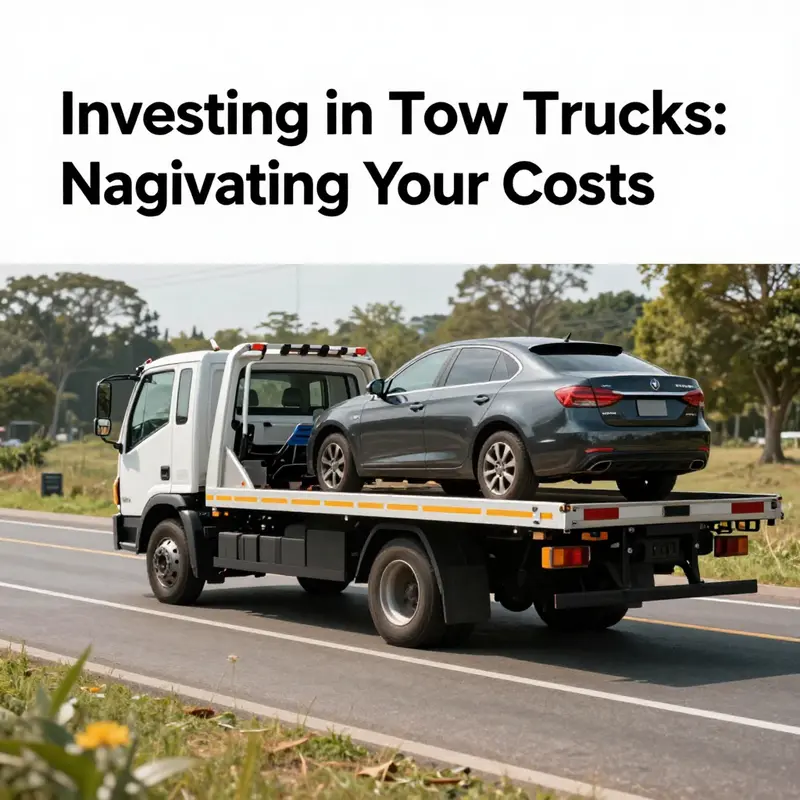
When a shop owner, fleet manager, or independent operator asks, “How much for a light-duty tow truck?” the answer is rarely a single number. Prices depend on configuration, options, and the cost of care over the vehicle’s life. In 2026, typical new light-duty configurations sit in a broad band: basic chassis and under-lift packages start in the mid-teens to low twenty-thousands, while more capable 5-ton setups with wheel-lift, longer decks, robust hydraulics, and enhanced safety features push toward the mid to upper thirty-thousands. The numbers reflect not just the chassis, but the added components, assembly labor, and the level of automation.
Total cost of ownership matters: maintenance, insurance, downtime, and fuel use all accumulate. Advanced hydraulic networks and precision bed mechanisms demand specialized service, so forecast maintenance can equal a significant portion of the initial price over the vehicle’s life. Geography matters: regional labor costs, taxes, and the availability of parts can widen or narrow the cost gap between markets. Financing terms and warranty coverage can also dramatically affect monthly cash flow and total lifetime expense.
To compare options effectively, buyers should map required capacity, typical recovery scenarios, and maintenance tolerance—and then seek total cost of ownership, not just upfront sticker price. A robust service network, good parts availability, and strong safety packages can reduce downtime and long-run costs, even if the headline price looks higher. Bottom line: more capability costs more, but prudent buyers align features with needs and optimize for reliability and uptime to protect the total economic value of the investment.
Medium-Duty Tow Trucks: Balancing Price, Power, and Practicality in the 10–20-Ton Class
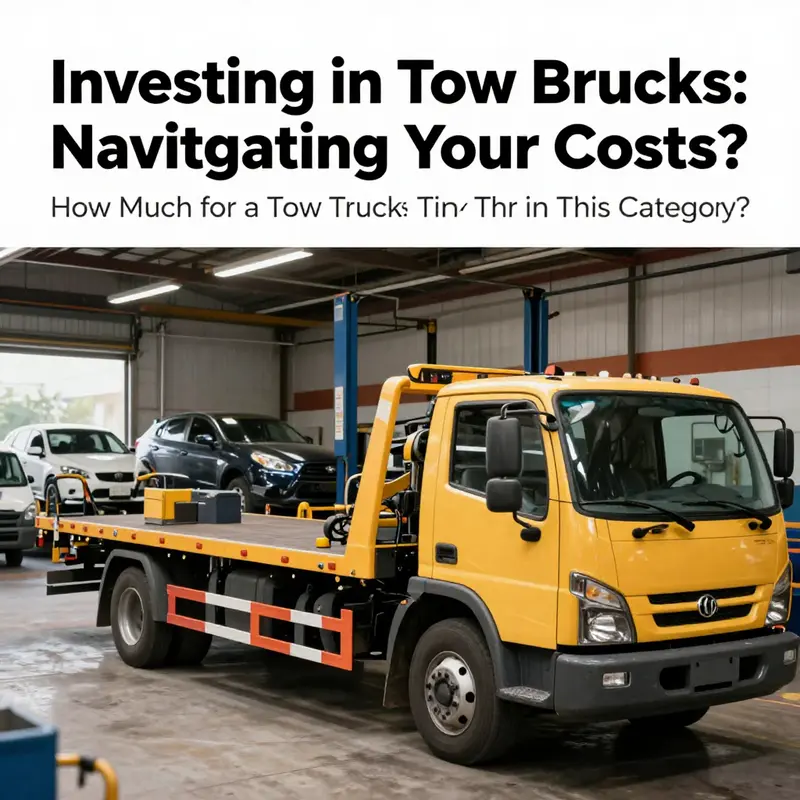
Medium-duty tow trucks sit in a critical middle ground for fleets that need serious recovery capability without stepping into the sheer heft and cost of heavy-duty units. They’re the workhorse of many towing operations, capable of handling vans, SUVs, pickup trucks, and even small buses with a reliability profile that keeps a small-to-midsize shop moving through the day’s queue. What makes this category so compelling is not just the raw lifting capacity, but the way price, performance, and durability braid together. Buyers must weigh where in this spectrum their operation lies: the cadence of tows, the types of vehicles most often recovered, the typical roadway conditions, and the desired level of on-board recovery equipment. The price tag you’ll see in the market reflects that balance. It’s not a simple line that separates “cheap” from “premium.” Instead, it’s a dynamic range shaped by age, configuration, and the specifics of how the unit will be used on a day-to-day basis. Entwined with this evaluation is the truth that the medium-duty segment offers a wide spectrum of configurations, each with its own trade-offs in cost and capability. If you’re just stepping into this category, the first thing to grasp is how varied the price landscape can be, even within seemingly similar tonnage and lifting systems. What looks like a uniform weight class on paper can hide a set of feature choices that push sticker prices up or keep them remarkably low. On average, medium-duty tow trucks tend to sit in a broad band of affordability and value, but the exact point on that spectrum depends heavily on what you need the vehicle to do and how new or used you’re willing to go. The market in 2026 shows a wide gap between entry-level, basic configurations and highly capable, feature-rich units. For a fleet that runs a tight schedule with a predictable towing pattern, the question isn’t just “how much is a tow truck in this category?” It’s “what combination of capacity, reliability, and on-board recovery tools will keep fatigue off the crew and downtime off the books?” That nuance is essential, because it directly informs not only the initial outlay but the total cost of ownership over the vehicle’s life.
Heavy-Duty Tow Trucks: Power, Price, and Practicality in the High-End Market
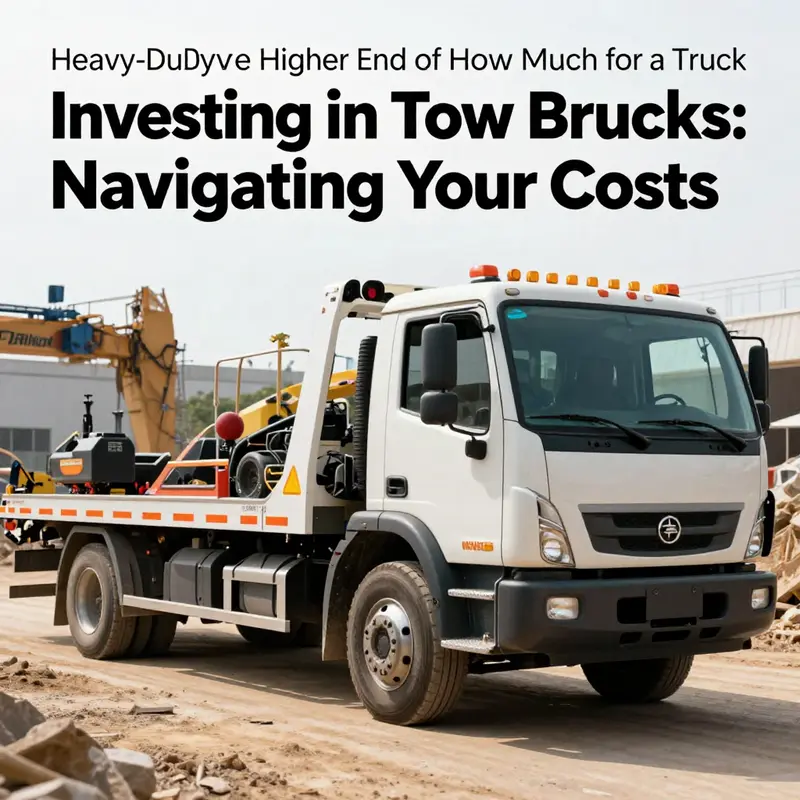
The heavy-duty category sits at the top end of tow trucks, with units built to lift, rotate, and stabilize loads in the 30- to 50-ton range and beyond. They are designed to recover large commercial trucks, construction equipment, and other heavy masses that would overwhelm standard wreckers. The value lies not only in raw power but in controlled motion, reliability, and uptime in demanding environments. Purchases balance initial cost against long-term performance, maintenance, and the potential to reduce outsourcing for major recoveries.
Price-wise, base configurations typically start well above the light and medium segments, and depending on rotator capacity, boom reach, winch capacity, stabilization systems, telematics, and safety features, sticker prices can range from the low six figures up to the high six figures. Real-world examples vary widely based on customization, build quality, and regional supply chains. High-end components, redundant hydraulics, and advanced control systems can push the price significantly higher.
Beyond price, the total cost of ownership includes maintenance, parts availability, downtime, fuel, tires, and the cost of skilled technicians. Fleets should consider service networks, warranties, financing, and insurance. The decision to invest often hinges on expected utilization and the ability to complete recoveries quickly and safely, thereby protecting uptime and enabling revenue.
Channel and sourcing choices affect price and service. Direct factory purchases may yield favorable terms but longer lead times; distributors can offer broader service networks; international sourcing may lower upfront costs but require diligence on parts and support. Service and parts availability often determine the best long-term value.
Ultimately, heavy-duty units are chosen when the fleet faces frequent large recoveries, narrow time windows, or on-site constraints where external towing is impractical. In such cases, the added cost is weighed against faster response, reduced downtime, and the ability to win more business through improved resilience.
Tow Truck Costs Unpacked: How Much You’ll Pay and the Real Drivers Behind the Price
Tow trucks are more than simple machines. They are purpose-built tools whose price tags reflect a careful balance between capacity, configuration, and the environment in which they operate. When someone asks how much a tow truck costs, the reply cannot be a single number. It must acknowledge that price is a moving target shaped by what the vehicle is designed to do, how far it will be asked to go, and the level of reliability and safety that buyers expect. The final figure you’ll see on a dealership sheet or from a fleet supplier is the result of choices about size, type, and features, all of which map to how often the truck will be used, what kinds of loads it will lift, and the conditions under which it will work. In practical terms, the price you pay for a tow truck depends on three broad tiers of capability—light-duty, medium-duty, and heavy-duty—and a mesh of add-ons that can swing the total in meaningful ways. The light-duty class, designed for smaller cars and everyday breakdowns, typically sits in a comfortable range for many small fleets and independent operators. A compact vehicle with a limited lifting capacity, designed to handle sedans, compact SUVs, and light pickups, tends to be priced between roughly $18,500 and $36,000. This range reflects not only the core chassis and basic recovery equipment but also the option to install enhancements such as a smaller hydraulic winch, an under-lift or flatbed platform, and essential safety features. In many markets, buyers who search for the lowest possible entry point gravitate toward configurations that emphasize portability and simplicity, but they still count on a quality winch, sturdy wheel-lift capability, and reliable braking and lighting systems. The price narrative for light-duty units is already telling you something important: you are paying for the capacity to recover a considerable portion of the everyday vehicle mix, but you are not buying the heavy-duty torque needed for large trucks or demanding recoveries. For a small operator, the decision to purchase a light-duty truck is often the decision to build reliability into a compact, nimble tool rather than to chase maximum raw lifting power. The mid-range tier—medium-duty tow trucks—extends the range from about $24,000 to $70,000. This class covers both 10-ton and 20-ton capabilities and sits at the intersection of everyday reliability and the need to handle heavier pickups, full-size vans, and commercial vehicles. A 10–15 ton capability unit might be priced between $24,000 and $35,000 in a simplified package, while more sophisticated 12-ton under-lift or integrated models with boom lifts can reach toward the upper end of the spectrum, $25,000 up to $70,000, depending on the exact configuration. What changes as you move into the medium-duty space is not just the power but the sophistication of the equipment. The heavier frame, stronger winches, longer booms, and more robust hydraulic systems begin to demand better materials, tighter tolerances, and more precise engineering. The result is greater reliability under heavier loads, fewer service interruptions, and, crucially, the ability to serve a broader client base—from fleets that rely on routine stands-by to operators who must move a large portion of their revenue through a handful of high-demand jobs. The heavy-duty class—capable of 50-ton recoveries and beyond—tends to be the domain of specialized emergency vehicles used in large-scale recoveries, disaster response, or industrial settings. Prices here range roughly from $36,000 to $98,000, a band that captures the cost of multi-axle configurations, high-capacity winches, heavy-duty booms, advanced stabilization systems, and extended service life commitments. In this tier, every additional ton of capacity translates into materials, engineering, and testing that ensure the truck can perform when it is most needed. And within each class, there is an individual calculus of features that can push price up or down. A hydraulic boom, a high-output winch, a full suite of safety systems, wheel-lift or under-lift options, a flatbed that can be extended or retracted, and the presence of integrated control panels for rapid, safe operation all drive the ultimate cost. It is common for buyers to face price variability driven by customization. Warranties, dealer support, the number of pre-installed accessories, and the level of after-sales service all have a meaningful impact on the purchase price. A base model with standard equipment might be attractive on the surface, yet the need for a longer service life and better uptime can justify choosing more robust components, higher-grade hydraulic fluids, and better cold-weather or extreme-temperature performance packages. The cost conversation then extends beyond the sticker price. Even if a fleet spends a fixed amount to acquire a truck, ongoing ownership costs—maintenance, insurance, fuel efficiency, and compliance with local safety and licensing standards—still shape the total cost of ownership. In practice, those ongoing costs matter, particularly for operators who plan to deploy their tow trucks across longer shifts, into irregular hours, or across varied terrain. A well-maintained recovery asset saves money over time by reducing the frequency of costly repairs and unplanned downtime. The price of the vehicle, therefore, is part of a larger budget calculus that balances upfront investment with long-term reliability and service life. It is worth noting that the sticker price tells only part of the story. Some buyers discover that the quoted price on a new machine reflects a baseline, with options and add-ons elevating the final figure. A choice to install hydraulic booms or larger winches, or to add specialized safety systems, for example, can push the total well beyond the initial estimate. This is not merely about luxury features; it is often about the ability to take on riskier recoveries with higher efficiency, which in turn reduces the cost of missed opportunities and delays. In rural or remote settings where repair and maintenance services are scarce, buyers may value aftermarket support and extended warranties more than a lower sticker price, because uptime and quick response times matter more than the raw initial outlay. Conversely, in densely populated urban markets, the hours of operation, traffic realities, and the need to maneuver through tight spaces can either justify a premium for a well-equipped, highly maneuverable unit or push buyers toward more compact but versatile platforms. The pricing conversation thus weaves together a practical math problem with a strategic decision. It is not only about how much you pay upfront but about how quickly the asset returns value through increased productivity, faster response times, and readiness for a wider range of jobs. For the fleet operator who must plan for island or coastal operations, the cost calculus gains additional layers. On an island, the distance to repair shops and the likelihood of impound or recovery scenarios can shape the preferred configuration. A compact, reliable light-duty unit may be attractive for day-to-day incidents, yet the occasional need to extract larger vehicles from remote locations may justify stepping up to a medium- or heavy-duty option with a longer reach, more robust winching, and the ability to stall less on the roadside. In such cases, the decision often becomes a balance between the expense of a bigger, more capable machine and the revenue protection the larger unit provides by reducing downtime and expanding the range of recoveries the fleet can undertake. If the goal is to optimize a response strategy, there is value in aligning the cost of the tow truck with the business model it supports. The price you pay should be informed by expected utilization, anticipated workload mix, and the geographic realities of the service area. A practical way to approach pricing is to separate the purchase decision from the service pricing for customers. In other words, what you pay to own the asset is one thing; what you charge for a tow is another, albeit intertwined, factor. Most providers structure their service charges around a base hookup fee plus a per-mile rate, with variations that reflect the time of day, the type of vehicle, and any special handling required. Some firms employ a fixed-mile threshold followed by incremental miles, while others use a tiered approach that clamps costs into defined distance brackets. For example, a short tow might come in at a base fee plus a modest per-mile amount, while longer hauls will see a steeper per-mile rate as distance grows. The hook-and-roll model—where a fixed hook-up fee is charged to secure the vehicle and then a per-mile charge accrues as the vehicle is towed—remains a common pattern, particularly for consumer tows. The underlying message is simple: always ask for a detailed estimate upfront, including a breakdown of base fees, distance charges, and any potential surcharges for after-hours work, traffic conditions, or storage. Rural areas often present longer typical tow distances, which can translate into higher travel charges even if the local base rates are lower. Urban environments, by contrast, may impose higher hourly rates due to traffic conditions and the complexity of maneuvering a heavy vehicle through congested streets. This is not mere price theater. It is a reflection of the real-world operating conditions that tow truck operators face daily. For fleet managers tasked with planning ahead, the takeaway is to think in terms of value as well as price. A unit that costs a bit more upfront but reduces downtime, increases service capacity, and extends service life can be a smarter investment than a cheaper alternative that demands frequent repairs or limits the types of jobs the fleet can handle. The conversation about costs also naturally intersects with the broader theme of emergency readiness. For island fleets, or any operation that relies on prompt response in challenging terrain, the cost decision becomes a component of a broader strategy—one that includes training, maintenance schedules, and a robust spare-parts plan. To explore these strategic considerations in a broader context, many operators turn to resources that discuss emergency preparedness and fleet resilience. For readers involved in island operations or remote service areas, a practical companion is the article on essential fleet emergency response strategies, which offers guidance on aligning equipment choices with response capabilities. You can read that resource here: essential fleet emergency response strategies.
As you map the price landscape, keep in mind that the numbers you see in catalogs are part of a larger ecosystem. Negotiation, supplier customization, and post-sale support can all shift the final tally. If you are trying to forecast total cost of ownership for a fleet, start with these three anchors: the base price by class, the feature set that genuinely affects uptime, and the maintenance profile that follows with usage. In practice, a well-chosen vehicle in the right class can deliver more value over time than a marginally cheaper option that struggles to perform in the field. The best approach is to build a cost model that ties the initial purchase price to expected utilization, operating days, and the typical recovery scenarios you anticipate. Include the added costs—insurance, licensing, maintenance, fuel, potential storage fees, and after-hours callouts—and compare them against the revenue impact of faster response times and higher capability. With a clear model, you can make informed choices about whether a light-duty unit will meet the majority of needs, whether a medium-duty platform offers the right balance of reach and maneuverability, or whether a heavy-duty installation is necessary to handle peak loads and extraordinary recoveries. Finally, remember that the market for tow trucks is dynamic. Prices shift with supply chain factors, commodity costs, and the evolving landscape of safety standards. For precise pricing, it is always best to consult suppliers directly, discuss your exact specifications, and request a formal quote that includes a breakdown of each cost component. A careful, transparent quote will help you compare options on a like-for-like basis and avoid surprises when a job hits the roadside. External resources provide broader context but should be weighed alongside your own operational needs and the realities of your service area. For a comprehensive overview of towing costs in the industry, you can consult external data resources such as the AAA towing-costs guide: https://www.aaa.com/automotive/towing-costs/.
In short, the price of a tow truck is not a fixed number but a function of size, capability, and the operational promises you intend to keep. Light-duty units offer everyday accessibility and efficiency for smaller jobs, while medium- and heavy-duty designs unlock capacity for bigger tasks and complex recoveries. The deciding factors are not only the raw numbers, but also how those numbers translate into uptime, scope of service, and the ability to meet demand in your particular geographic and logistical context. For fleet operators confronting island or remote working conditions, that translates into a careful assessment of how much capability is truly required, what risks are worth mitigating, and how increased upfront investment may repay itself through improved response times and reduced downtime. The end goal is a balanced portfolio of assets that keeps the wheels turning when the next call comes in, no matter the distance or the weather. This is what makes the cost discussion not a single line item but a strategic component of a resilient towing operation.
Options in Motion: How Customization and Features Shape Tow Truck Prices
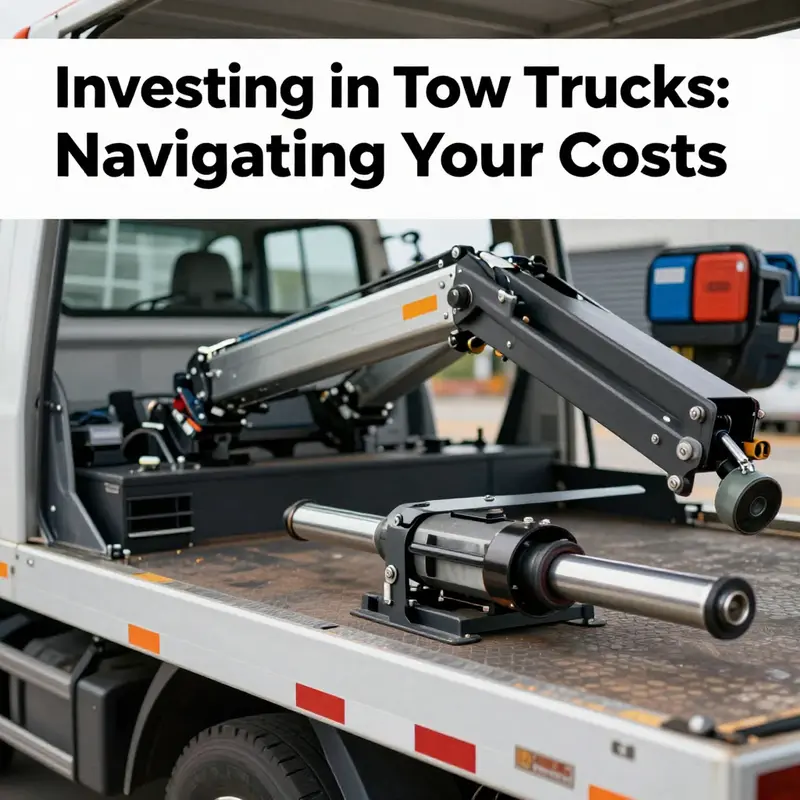
Pricing a tow truck is more than tallying a sticker price. It is about translating operational demands into mechanical choices and service agreements. Buyers navigate a ladder of options from the base chassis to the final safety package, and every rung influences how much the vehicle costs today and how much it saves tomorrow. The latest market data for 2026 shows a clear division: light-duty models in roughly 18,500 to 36,000, mid-range 24,000 to 70,000, and heavy-duty configurations climbing toward the upper end of the spectrum. Within those ranges, the real variation sits in customization. The base price rarely captures what a fleet will pay once you account for specialized equipment, warranty plans, and the long-term cost of ownership. The more a buyer tailors a tow truck to a particular operation, the more the price climbs, but so does the value in uptime, safety, and efficiency.
To fully appreciate the influence of customization, it helps to think in terms of the core architecture: the chassis, the body, and the feature set. Light-duty tow trucks often arrive ready for short-distance tows and delicate handling of smaller vehicles. They can be very capable, but achieving secure, damage-free transport in a busy shop-to-spot cycle typically requires a flatbed arrangement. Flatbeds are inherently more complex than basic hook-and-tull setups because they combine hydraulic drive surfaces with anti-scrape protection, sophisticated locking mechanisms, and quick-release tie-downs. That extra hydraulics, control logic, and structural reinforcement translate into higher upfront costs. They also yield important operational benefits, especially when the job involves moving vehicles with no ignition, limited access, or the risk of surface damage.
As operators move into the 10-ton to 20-ton band, the story grows more intricate. The mid-range category opens the door to under-lift designs, integrated booms, and variable-height platforms, along with stronger winches and faster cycle times. The price range expands not only because of the higher lifting capacity but also because these configurations demand more robust components, greater electrical capacity, and more complex hydraulics. The result is a system able to retrieve stalled vehicles from tricky spots, hoist heavy loads, and operate in adverse conditions, yet they demand careful tuning and calibration. It is not simply about strength; it is about the efficiency and reliability of the entire chain—from the powertrain to the control system, to the operator’s seat and the interface that keeps everything aligned during a live recovery.
The realm of customization also encompasses the body and equipment. A tow truck becomes a different instrument depending on whether its primary job is to secure a vehicle for transport, to upright and attach, or to recover and load in a constrained environment. For example, specialized flatbed upgrades can include reinforced bed surfaces, deployable ramps, and tailored lock-down fixtures. These additions improve secure transport and speed, but they also carry their own cost of installation, alignment, and testing. Conversely, some operators seek a more modular approach, where the base chassis is configured with a core set of tools and components that can later be swapped or augmented. In this model, upgrades such as a hydraulic boom, a heavier winch, or an auxiliary power unit are added according to need, letting fleets scale up as demands shift. Each path has a price tag, and the difference between them is rarely a single line item; it is a cumulative effect across the whole vehicle.
Within this landscape, the exact numbers you see in a catalog are a starting point, not a final figure. Beyond the basic price, the cost of customization arises from several intertwined factors. First, the type of tow truck matters. Light-duty, with a flatbed or a compact wheel-lift, tends to start lower, but the moment you add a heavy-duty boom lift, a long reach, or an extra set of cameras for blind-spot coverage, the price can move quickly upward. The inclusion of a full-length bed with heavy-duty anti-corrosion protection and a sealing system for water and dust ingress adds both capability and price. The second factor is capacity and load management. Higher towing capacity requires sturdier structural elements, more powerful hydraulics, and more robust safety systems. The third factor is specialized equipment. This includes the hardware that directly impacts performance: hydraulic booms, winches with higher line pull, multiple winches for different angles, wheel-lift attachments with improved grip and pawl systems, and the electro-hydraulic controls that coordinate each action for smooth, precise operations. Those items do not exist in isolation; they form an integrated kit where the failure mode of one component can affect others, and warranty coverage often reflects that reality.
Operational demands drive a lot of the decision-making. A fleet that handles a mix of urban towing, rural recoveries, and accident scene management will weigh the pros and cons of each configuration with unusual care. In a dense urban environment, a compact under-lift with a boom and a capable winch can deliver quick recovery with minimal space and reduced risk of collateral damage to other vehicles. A coastal or island fleet, on the other hand, may prioritize corrosion resistance, extended reach, and the ability to operate under salt spray conditions. These considerations influence not just the initial price but also maintenance costs and downtime. It is not unusual for a higher upfront investment to be offset over the vehicle’s life by fewer breakdowns, shorter job durations, and a slimmer maintenance bill thanks to a more integrated design.
From the standpoint of risk and safety, the customization decision carries a premium but also a potential for reducing operational risk. Modern safety systems— visible lights, audible alarms, remote monitoring, and backup procedures—are a meaningful element of the total cost. They protect staff, protect vehicles, and reduce the likelihood of costly insurance claims or downtime due to an incident. These features, while seeming like a luxury, often become essential to compliance with evolving industry standards and municipal requirements. The broader environment in which the tow truck operates can push a buyer toward more sophisticated configurations, especially when fleet managers must meet regulatory expectations or demonstrate a consistent service level to clients. In practice, these safety features and robust control schemes translate into higher upfront costs, but they also offer a longer runway of reliability and predictable performance in challenging recovery scenes.
But pricing is not simply a matter of chasing the most capable machine. Fleet managers who take a disciplined approach to customization often achieve significant value by aligning options with actual work plans. For many operators, the best strategy is to estimate the most frequent job types, travel distances, and vehicle weights, then map those needs to a baseline configuration. If most towing requires short hauls, a well-chosen flatbed with dependable reliability and a moderate level of automation might be the sweet spot. If the job frequently requires heavy lifting and dragging from difficult angles, an upgraded boom, stronger winches, and more sophisticated stabilization arms can dramatically reduce cycle time and increase safer outcomes. The math here is straightforward: upfront customization costs distributed over a larger number of recovery sessions yield a lower cost per tow or per mile, improving the overall return on investment.
It is essential to recognize that the price story does not stop at a single purchase. Total cost of ownership encompasses maintenance, spare parts, fuel efficiency, and the durability of the equipment in the harsh conditions that tow work often presents. The higher the complexity of the system, the more attention a fleet must devote to preventive maintenance. This is where the relationship with suppliers and service networks becomes critical. Buyers who partner with manufacturers or authorized service centers can count on better parts availability, timely service, and consistent calibration of hydraulic and control systems. The cost of these service agreements is part of the ongoing investment in the vehicle’s reliability. In some cases, a longer warranty or an extended service plan translates into a lower outlay for unplanned downtime, a factor that many operators weigh heavily when comparing options. The upshot is that the cheapest sticker price can prove a poor choice over five years if maintenance incidents or performance gaps disrupt daily operations.
The road to a well-structured purchase also leans on apples-to-apples comparisons. When requesting quotes, buyers should insist on standardized specifications across bids, which makes the true cost of each feature visible. It is not enough to compare a flatbed price to a basic wheel-lift; the real comparison should include the same bed type, the same boom reach, the same winch capacity, and the same safety package. Under these controlled conditions, subtle differences in engineering philosophy—such as the placement of the hydraulic pumps, the routing of hoses, or the method of load securing—become the factors that push prices up or down. This practice equips fleet managers to parse trade-offs and to forecast maintenance windows and downtime more accurately. The exercise of comparison, while seemingly tedious, yields dividends in uptime and predictability for the organization. Those decisions echo real-world case studies you can explore in the the Island Tow Truck blog.
For readers who want to dig deeper into the official technical landscape of these machines, the external resource provides a comprehensive benchmark. It offers detailed specifications, pricing benchmarks, and guidance on selecting configurations that match operational needs. This resource is especially valuable for someone reconciling the need for speed and safety with the realities of a limited budget. By combining practitioner insights with formal specifications, a buyer can construct a rational investment plan that respects both performance demands and fiscal constraints. The final price, in other words, reflects not only the raw capabilities of the machine but also the care with which those capabilities are embedded in the delivery, service, and reliability framework surrounding it.
In the end, understanding how customization and features influence the price of a tow truck helps buyers move beyond sticker shock toward strategic procurement. It invites a conversation about what is truly required for a given operation, what is a prudent margin for risk, and how to budget for the future repairs and upgrades that are likely to come. The result is a purchase that serves the fleet rather than a single function, with a configuration that reflects real-world needs and a price that makes sense within the life of the vehicle. It is a delicate balance between capability and compatibility, between upfront investment and long-term value, and between the aspiration to stay ahead of the curve and the discipline of staying within a sustainable budget. For more detailed specifications and pricing benchmarks, see the Official Technical Specifications and Pricing Guide for Commercial Tow Trucks (2025).
Final thoughts
Acquiring a tow truck represents a significant investment, particularly for auto repair shops, car dealerships, property managers, resort operators, and commercial fleet operators. Understanding how much for a tow truck varies by category—light, medium, or heavy-duty—is essential for making an informed decision. By considering all pricing factors, including customization and additional features, businesses can choose a tow truck that aligns with their operational needs and budget. With the right knowledge, you can ensure you’re making a wise investment that will serve your business effectively and efficiently.