
Understanding the towing capacity of your truck is not just a matter of numbers; it is critical for the safety and efficiency of your operations, whether you are in auto repair, commercial fleet management, or property management. Towing capacity dictates how much weight you can safely haul, impacting your productivity and operational success. In this guide, we’ll break down the factors that determine your truck’s towing capacity, dive into essential safe towing practices, and support you with a detailed understanding of how to optimize your truck for the loads you need to transport. Each chapter is crafted to enhance your knowledge and help you operate within safe limits, helping you to make better decisions for your business in our island-centric environment.
Tow Capacity Demystified: A Real-World Breakdown of What Your Truck Can Actually Tow
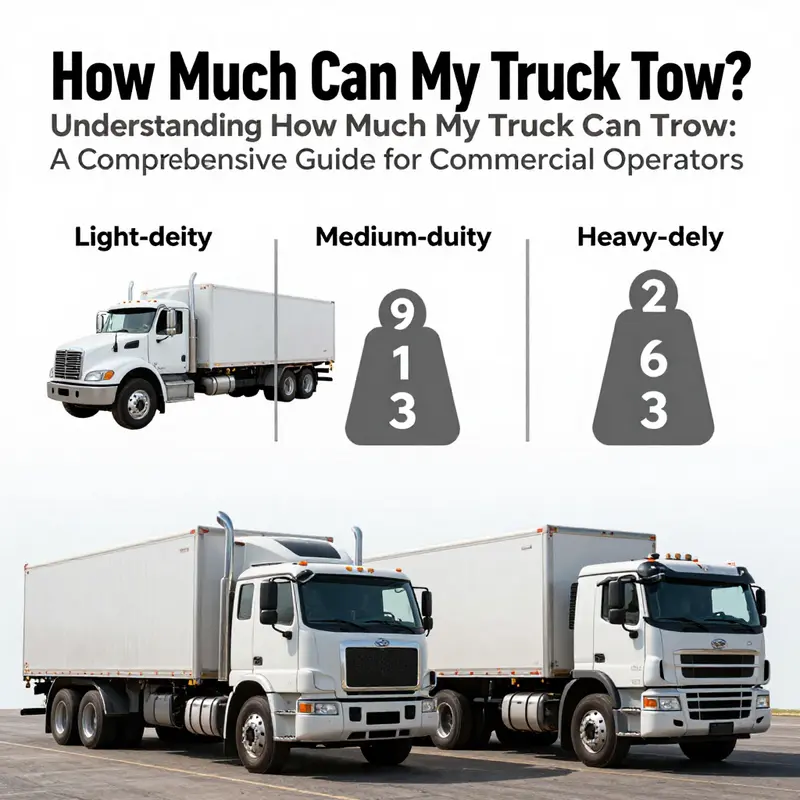
When you ask how much your truck can tow, you’re really asking for a practical number that reflects real-world conditions, not a single label on a spec sheet. The truth is that there isn’t one universal answer. Towing capacity depends on a constellation of choices built into the vehicle and on the trailer you intend to haul. You’ll find a broad spectrum: light-duty trucks typically tow within a certain range, medium-duty trucks within another, and heavy-duty machines far higher still. But those ranges are starting points, not guarantees. They are best understood as guidelines that help you gauge how a particular combination will behave on the road, especially when hills, weather, and road surfaces come into play. The core idea is simple: the manufacturer defines a safe limit, and you must respect that limit for safety, legality, and longevity of the vehicle and trailer combination.
To frame the topic clearly, consider three categories in broad terms. Light-duty trucks generally offer towing capacities from roughly 5,000 to 13,000 pounds, depending on engine choices, drivetrain configurations, and available trailer packages. This range captures the variety of setups aimed at everyday utility and personal use. Medium-duty trucks move into a higher band, typically from about 10,000 to 20,000 pounds, designed to handle heavier work more routinely. And heavy-duty trucks—built to haul substantial loads—often exceed 20,000 pounds and can reach well beyond 30,000 pounds when properly equipped. It is important to stress that these figures are guides and that the actual permissible load is defined by the vehicle’s official specifications.
In practice, the most authoritative source of truth for a given vehicle is the manufacturer’s stated towing capacity. That value, along with related figures, appears in several places: the owner’s manual, the vehicle’s specification label on the door jamb, and the registration documentation where applicable. The manufacturer’s rating is determined by a combination of the engine’s torque and power delivery, the transmission’s ability to manage load, the suspension and frame’s structural integrity, and the braking system’s capacity to slow and stop the combination safely. Because towing places unusual stresses on all of these components, a high-capacity engine alone does not guarantee that a vehicle can safely tow a very heavy trailer if the rest of the system is not up to the task.
Crucially, the official data point you’ll see in practice is the combination of GVWR, MAM, and MTM. GVWR, or the gross vehicle weight rating, states the maximum total weight the vehicle can carry, including its own curb weight, occupants, cargo, and, crucially, the trailer’s tongue weight when towing. The MAM, or Maximum Authorized Mass, is a similar concept sometimes used on certain documents to denote the maximum permissible combined weight. MTM, or Maximum Trailer Mass, specifies how heavy the trailer itself can be. In most jurisdictions, the lowest applicable limit among these figures governs the safe towing operation. If a truck’s GVWR is 4,000 kilograms, and the trailer’s brakes or coupling are only rated to handle 2,500 kilograms, the practical limit becomes 2,500 kilograms, not the higher value on the truck alone. This single principle—never exceeding the lowest-rated component—safeguards the entire towing setup.
The process of confirming these numbers is not just about a single line on a page. It requires cross-checking the vehicle’s registration documentation, the manual, and any trailer-specific ratings. For people in the United Kingdom, for example, the registration certificate or the DVLA record can be used to verify legal specifications, including the limits on towing capacity, GVWR, and related figures. This emphasis on official sources underlines a simple truth: accuracy matters, and outdated or secondhand information can be misleading when you’re planning to move a heavy load.
Beyond the official numbers lies a practical network of factors that determine how close you come to the stated capacity in everyday use. The design of the truck’s axle and suspension plays a central role. A strong chassis and reinforced suspension help the vehicle resist the sway and the dynamic stresses that arise when a trailer is connected and moving. The engine and transmission are another critical link in the chain: high torque helps the truck start moving heavy loads more confidently, maintain speed on inclines, and recover when the road pitches upward or downward. But torque alone isn’t sufficient if the transmission isn’t able to handle sustained high-load operation or if cooling isn’t up to the task in prolonged towing. That is why many towing-focused configurations include upgraded cooling systems, heavier-duty differentials, and longer-lasting materials to withstand the heat and stress generated by pulling heavy trailers over long distances.
Equally important are the tires. The tires must be rated for the combined weight of truck and trailer, and the sidewall markings—load index and speed rating—should align with or exceed the demands of the loaded vehicle. Inconsistent or under-rated tires can fail catastrophically under load, even before the vehicle reaches its theoretical limit. The braking system takes on even greater significance when a trailer is involved. Modern tow setups often rely on a trailer brake controller that communicates with the trailer’s braking mechanism, ensuring that the trailing unit contributes to braking rather than merely following the truck’s stopping power. The combination of good brakes, proper tires, and a robust suspension is what makes the difference between a smooth, controlled tow and a hazardous experience that can end in loss of control or equipment damage.
All of these pieces come together only when you have accurate, up-to-date information about your specific configuration. Your vehicle’s labeling, the manual, and the official registration data provide the baseline figures. But the real-world work of towing invites careful, conservative planning. A common approach is to treat the stated maximum as a ceiling rather than a target. Don’t aim to reach the limit in everyday use. Instead, plan for a margin of safety. In many practical settings—especially when you’re new to towing or operating in challenging terrain—staying well below the published maximum reduces risk and preserves component life. In short, the capacity you read about is a guide to what the vehicle can safely handle under ideal conditions; real life demands prudent adjustments for terrain, weather, and load distribution.
To help with interpretation, consider how these numbers apply when you prepare for a tow. Start by locating the official figures for your vehicle: GVWR and MTM, as well as the stated towing capacity. Then compare those numbers with the trailer you intend to haul. The trailer’s own weight and its load add to the truck’s weight, and you must ensure that the combined total does not exceed GVWR and that the trailer’s weight on the hitch, sometimes called tongue weight, does not surpass the vehicle’s capabilities. This is where the concept of weight distribution comes in: if the trailer pushes too much weight onto the hitch, it can destabilize the vehicle and reduce overall braking efficiency. A balanced setup helps ensure that the load is carried in a manner that the suspension, tires, and braking system can manage reliably.
For readers who want to connect the dots between theory and practice, there are practical resources that walk through the process of reading capacity numbers and applying them to specific towing tasks. A useful route is to examine the vehicle’s official documentation and to consult trusted, up-to-date online references that summarize how GVWR, MAM, and MTM relate to actual towing. As you become more confident, you’ll find that certain real-world cues—such as engine heat, transmission behavior, and trailer sway—tell you when you are approaching the practical limit even if the theoretical limit has not yet been reached. These cues are not just convenience clues; they are safety signals that help prevent mechanical failure and hazardous conditions on the road.
The path from the label to the road passes through verification and cautious planning. The DVLA online vehicle details service, for example, offers a way to confirm legal specifications by entering a registration number and pulling up the vehicle’s current data. This is especially helpful when you’re dealing with a used vehicle or a model year with evolving specifications. Using official tools to verify your vehicle’s capacity helps ensure that you are not relying on outdated information or assumptions that could expose you to penalties or unsafe operating conditions. If you are curious about the exact legal specifics for your ride, this kind of verification is worth the extra step. And for readers who want a broader, more practical perspective on towing in challenging environments, there is a deeper narrative about how fleets plan for emergencies and how professionals balance safety with efficiency in real-world operations. Those considerations connect to everyday decisions you make when you haul a trailer for work, for family needs, or for weekend adventures.
To deepen the practical dimension, imagine you are planning a tow for a weekend trip that includes a mix of highways and winding secondary roads. You would first confirm the maximum authorized mass and the maximum trailer mass from the registration or manual, then compare these numbers to the trailer’s weight and to the combined weight you expect on the road. If the trailer itself has brakes that are rated for a lower mass than the truck is capable of pulling, you must adjust your plan accordingly. If the trailer’s brakes can handle more weight, you still shouldn’t assume you can push the truck to its full capacity; you must factor in dyno-like realities such as air resistance, steering control, and the need for effective cooling on long climbs. In practice, this means you might choose to tow a lighter trailer than the maximum allowed, give yourself extra distance for braking, and avoid sustained full-throttle climbs when the engine and transmission are already under stress. These are not merely theoretical considerations; they are the determinants of a safe, predictable tow that preserves both vehicle health and personal safety.
For those who want to bridge the gap between the numbers and hands-on guidance, the following approach often helps. Start with the official capacity figure from the manual or GVWR-based data, then apply a conservative margin—say no more than 80 percent of the rating for heavy loads or when you are towing in challenging conditions. This is not a universal rule but a practical heuristic that accounts for real-world factors the numbers don’t capture. Then verify with the trailer’s weight ratings, especially if the trailer has its own braking system and braking controller. If you are towing on a hill, at elevation, or through strong crosswinds, you might find your efficiency actually falls below the nominal capacity. In those moments, the margin you built into your planning will keep you away from the edge of the limits, making the tow smoother and safer.
All of this—numbers, checks, margins, and real-world cues—becomes a coherent practice when you commit to a disciplined approach to towing. It starts with knowing where the official limits come from and ends with applying those limits under the conditions you face. If you want a concise primer on how to align the theoretical capacity with practical towing, you can explore the deeper discussions in the research literature and everyday guides that translate the numbers into real-world steps. One handy way to keep learning is to browse trusted resources that distill these concepts into actionable tips, such as the Island Tow Truck blog, which offers practical insights for people who tow as part of their work or hobby. the Island Tow Truck blog.
In the end, knowing how much your truck can tow is less about chasing a single number and more about understanding the system that makes safe towing possible. The vehicle is a complex machine built from many parts that each play a role in carrying, controlling, and stopping a loaded trailer. The labeling and manuals provide the ceiling, but your planning and execution determine how close you come to that ceiling without compromising safety. Approaching towing with this mindset—grounded in official specifications, cross-checked data, and careful real-world judgment—leads to more confident driving, fewer surprises, and less risk of damage to your equipment. If you ever doubt whether a load is within safe limits, err on the side of caution. It is a choice that protects you, your passengers, and your investment, and it allows you to work, travel, and play with the peace of mind that comes from knowing you are operating within the vehicle’s designed capabilities.
External resources can reinforce these ideas and provide additional context for the legal and safety dimensions of towing. For readers who want to verify official data or explore vehicle-specific details, the government resource mentioned earlier offers a straightforward way to access current specifications directly from the regulatory database. This kind of verification is a reminder that the numbers you rely on are living data—subject to updates, recalls, and revisions as new models enter the market and as vehicle configurations change with new equipment and safety features. By keeping a steady eye on the official sources and approaching each tow with careful planning, you can unlock the maximum practical capacity of your truck while preserving performance, safety, and compliance.
External resource: https://www.gov.uk/check-vehicle-details
Tow to the Right Weight: Decoding Your Truck’s True Towing Capacity and Using It Safely

Towing is one of those tasks that sounds simple in theory—hook up a trailer and go—but in practice it asks a lot from a vehicle, from your own judgment, and from the road itself. The question, how much can my truck tow, isn’t answered by a single number. It’s a conversation among the vehicle’s engineering, the trailer’s weight, the road’s grade, the weather, and the way you drive. Read straight from the owner’s manual, the maximum towing capacity is a ceiling, not a guarantee that every trip will feel effortless. It is the highest weight the manufacturer deems safe under controlled conditions. In the real world, safe towing depends on many factors that work together the moment you leave the driveway. Understanding those factors helps you choose the right trailer, plan sensible loads, and keep yourself and everyone else on the road out of harm’s way.
At the heart of every tow job is a baseline figure—the manufacturer’s specified maximum towing capacity. This number is not a marketing ploy; it is the product of engineering, safety margins, and testing. It is calculated with the vehicle in mind as a complete system: engine, transmission, cooling, suspension, brakes, and the drivetrain all have to work in harmony when the trailer is attached. The stated capacity is the maximum weight the vehicle can tow under ideal conditions, which rarely occur in daily use. Yet it’s the number you should start with when you compare trailers or plan a serious haul. You will usually find this figure in the owner’s manual or on a specification label inside the driver’s door jamb. Keeping this figure in mind provides a boundary against which you weigh all other considerations.
Beyond the manufacturer’s ceiling, two big levers determine how much you can actually tow on a given day: engine power and torque, and how that power is delivered through the transmission. Power is not a single dial you can tweak; it is a combined package of horsepower and torque that lets the truck accelerate from a stop, climb hills, and maintain speed on grade with a load. A more powerful engine and higher torque typically help you handle heavier trailers with less strain, but they come with their own trade-offs, such as fuel consumption, heat buildup, and component wear if the vehicle is pushed beyond its design expectations. The transmission matters just as much. A well-tuned automatic transmission with a robust torque converter or a manual setup designed for sustained loads can maintain appropriate gear selections and engine speeds, reducing the risk of overheating, slipping, or lugging under load. In contrast, a transmission that hunts gears, slips, or overheats under load can dramatically degrade towing performance and safety, even if the nominal towing capacity seems adequate on paper.
The axle ratio is another subtle but powerful influence. The gearing inside the axle determines how hard the engine must work to deliver torque to the wheels, especially when climbing a hill with a loaded trailer. A higher numeric axle ratio can improve towing performance by keeping the engine in a power band where it can deliver the torque you need without excessive RPMs. The flip side is reduced fuel efficiency and more engine noise at highway speeds. It is a balancing act: you want enough gearing to move heavy weights without sacrificing control and efficiency on the open road. The decision about gearing is rarely about a single trip; it reflects how you intend to use the truck and what kind of loads you expect to carry regularly.
But even with a strong engine, a precise transmission, and the right gearing, your actual towing capacity can shrink the moment you introduce real-world variables. Vehicle condition is one of the most overlooked yet decisive factors. Worn brakes, tired suspension components, uneven or bald tires, and degraded steering or driveline parts can all limit how safely you can tow. The tires you run, their load rating, and their inflation pressure are not cosmetic details; they directly influence braking distance, cornering stability, and how loads are distributed across the contact patch. The same goes for the truck’s brakes themselves—disc or drum setups, proportioning valves, and trailer brake connections matter immensely when you are pulling something heavy. When any of these systems are degraded, the margin between your load and your safety margin narrows.
Trailer weight and how it is distributed are equally critical. Trailers aren’t just a single mass behind the hitch; they’re a combination of the trailer’s own weight, its cargo, and the way that weight sits over the axles. The weight that your trailer applies to the hitch, known as tongue weight, typically falls in the realm of roughly 10 to 15 percent of the trailer’s gross weight. Get this balance wrong, and you can overload the hitch or shift too much weight onto the rear axle of the tow vehicle, which can impair steering, braking, and overall stability. A trailer that is loaded only toward the back can feel like it’s pushing the rear of the tow vehicle or lifting the front end off the ground, making steering feel vague or unresponsive. Load distribution boards or a weight-distribution hitch can help, but any modification to load distribution must be matched to the vehicle’s capacity and the trailer’s configuration.
Along with tongue weight, the total weight that the tow vehicle must carry matters. This includes not only the trailer’s weight but also the payload inside the truck—passengers, cargo in the bed or cab, and any aftermarket equipment you might be carrying. Even if you remain within the maximum towing capacity, carrying a full crew and a highly loaded bed can tip the scales toward exceeding the vehicle’s gross combination weight rating (GCWR). The GCWR is the ceiling for the combined weight of the tow vehicle, all passengers and cargo inside it, and the trailer. It’s a different metric from the GVWR, which is the maximum weight the truck can carry on its axles and frame when not towing. Both numbers matter, and both can be reached or exceeded without warning if you aren’t careful. You do not want to learn this the hard way at highway speed.
To navigate these numbers with confidence, you need to cross-check the apparent limits against practical realities. One of the simplest and most practical checks is to ensure you stay well within GCWR when you plan a tow. If you know your curb weight, the weight of your anticipated passengers and cargo, and the trailer’s gross weight, you can estimate your total mass on the road. If that total approaches or exceeds GCWR, you are operating in a zone that invites excess heat, reduced braking efficiency, and potential steering instability. A sometimes overlooked piece of the puzzle is the trailer’s own braking system. If the trailer has its own braking system, you must have the correct brake controller installed and properly configured. Without controlled braking on the trailer, the combined braking force can be uneven, leading to longer stopping distances and a higher risk of sway. If the trailer relies on the tow vehicle for braking, you must ensure the tow vehicle’s brakes and cooling system are capable of handling the extra load, especially on long grades or in hot weather.
Besides the mechanical dimensions, there is a practical discipline to towing that often separates safe practice from risky overreach: pre-trip planning and honest assessment of the route. A level, dry highway is very different from a grade-laden mountain pass in the rain. The latter tasks demand more power, more braking energy, and greater control over weight transfer. When you evaluate a route, you should consider the trailer’s weight, the grade you’ll encounter, the air temperature, the length of the climb, and the potential for deceleration on descent. Each of these can push your actual performance below the truck’s stated capacity. When in doubt, plan for a lighter load or choose a route that offers alternate options with longer descents that permit gradual braking rather than heavy, sustained braking that can overheat components. This planning becomes second nature for anyone who regularly hauls heavy loads and is part of responsible fleet operation, especially when time-sensitive deliveries intersect with challenging terrain.
All of these dynamics—engine and transmission capability, gearing, vehicle condition, and trailer weight distribution—cohere into a simple, actionable rule of thumb: treat towing capacity as a safe boundary rather than a target. Start with the manufacturer’s maximum but only apply a working limit well below that ceiling based on actual conditions, equipment condition, and the specifics of the load. The more you know about your trailer’s weight, how it is loaded, and the real-world conditions you face, the more accurately you can translate the written capacity into a safe, dependable haul. If you are in the process of evaluating a used tow vehicle or a trailer to pair with it, remember that prior maintenance history, the age of the tires and brakes, and the presence of a functioning brake system on the trailer all influence your real-world capabilities. The difference between a theoretical capacity and an actual safe practice can be subtle, but it is substantial enough to matter on the road.
For those who oversee fleets or regularly rely on towing as part of emergency response, this conversation gains additional gravity. The margin for error is smaller when lives and time are on the line, and decisions about what to tow and how far to haul must be grounded in thorough assessments of both capability and risk. A practical path is to combine the physics and the numbers with a disciplined approach to operations. Keep a log of each tow that records the trailer’s weight, load distribution, and the route’s grade; track how the tow vehicle performed—were the brakes heated, did the transmission downshift smoothly, did the steering feel precise at highway speeds with a loaded trailer? Over time, these records become a usable field guide that helps you adjust loads, plan safer routes, and maintain the equipment that keeps those operations moving.
As you consider these factors, it becomes helpful to connect the theory to everyday practice. For instance, in mobile or island environments where fleets must respond quickly and reliably, the same principles apply, but the constraints can be tighter. If you’re responsible for emergency response or maintenance fleets that rely on towing to meet mission needs, you’ll want to nest your capacity constraints within a broader framework of readiness. This is where practical guides for fleet preparedness and emergency response strategies can offer structured applications of the same concepts. For a practical, fleet-oriented perspective, see the guide on essential fleet emergency response strategies. It translates the underlying physics and capacity realities into actionable decision-making for teams that must move quickly and safely under pressure.
Beyond the numbers and the mechanical realities, there is a quiet, often underappreciated element that underpins safe towing: preparation and mindset. The best tow setups are not the ones that push the vehicle to its absolute limit but the ones that respect the limits while planning for contingencies. This includes ensuring that you have the right hitch equipment to match the weight and the trailer’s configuration, confirming that lights and brakes on the trailer operate correctly, and ensuring your mirrors, visibility, and braking distance are appropriate for the combined mass you’re moving. It also means knowing when to postpone a trip, swap trailers for a lighter option, or simply take an extra rest break on longer journeys to avoid fatigue. The goal is not to maximize capacity on a single outing but to maintain control, predictability, and safety across a range of possibilities.
When people move toward buying a truck with towing as a primary use, they discover that the conversation isn’t just about horsepower and torque; it’s about the whole vehicle being a load-bearing system that interacts with a managed, predictable trailer. A robust understanding of the capacity numbers can guide conversations with sales reps or technicians, but it also empowers buyers to make better-informed tradeoffs. A vehicle that offers a higher official towing capacity may do little good if its brakes, cooling system, or transmission are marginal for the loads you intend to haul. Conversely, a truck with a slightly lower stated capacity might perform better under heavy use if it has a reliable cooling system, a well-matched transmission, and solid brakes that stay within safe operating temperatures. These are the kinds of nuances that become clear only through careful observation and honest testing in the real world, rather than through glossy brochures or marketing claims.
For people who are considering a used tow vehicle to support ongoing towing needs, the picture becomes even more nuanced. A previously owned truck may show strong numbers on the spec sheet, but its performance depends on how well the vehicle was maintained and whether it carried loads that pushed its components near their limits over time. A comprehensive assessment should consider the trailer’s total weight history, the condition of the GVWR- and GCWR-related components, and the history of any major system work—especially brakes, cooling, and the transmission. A practical guide from industry sources emphasizes the importance of understanding GVWR, GCWR, and actual towing history when evaluating used tow trucks. This context is essential for anyone who intends to use a secondhand rig for serious hauling. It is also why a cautious, methodical approach to inspection and testing is essential for safety and performance, regardless of whether the vehicle is new or used.
As you reflect on these ideas, you may find it helpful to connect with sources that frame towing capacity not just as a static number but as a shared expectation of reliability and control. For those who manage fleets or plan for island or remote operations, a thoughtful, safety-first approach to capacity translates into more reliable service, fewer breakdowns, and first-time-right performance in critical moments. The intended outcome is simple: you want to be able to predict, with reasonable confidence, how much weight you can move and how that weight will behave along the way. That means combining the raw capacity with careful load planning, proper hitching practices, and an honest appraisal of vehicle condition. It also means recognizing that every load is different, and the patterns learned on one trip may not apply to the next if conditions change. In other words, capacity is a guide that becomes practical wisdom only when you couple it with disciplined, proactive care for the entire towing system.
To bring this into a more personal frame, imagine planning a weekend project that involves hauling a travel trailer, a dump trailer filled with equipment, or a large equipment trailer with a heavy load. You would start by confirming the manufacturer’s maximum towing capacity, then check the tongue weight and the trailer’s gross weight. You would consider how much you and any passengers weigh, what you’re carrying in the bed or cab, and how far you need to travel. You would check the trailer’s brakes and the tow vehicle’s brakes, confirm tire conditions and pressure, and ensure your route doesn’t present hazards that would push the truck beyond its safe operating envelope. You would also have a contingency plan in case the load proves heavier than expected or weather complicates the journey. The process is not about proving the vehicle can pull more than others; it’s about ensuring the pull can be controlled, predictable, and safe from start to finish.
In closing this exploration, the practical lesson is clear: your truck’s towing capacity is not a single, static target. It is a boundary defined by the interaction of the vehicle’s engineering, the trailer’s weight and load distribution, and the road you intend to travel. Respect those boundaries, and you gain not just safety but the confidence to plan smarter, drive steadier, and deliver more reliably, whether you’re moving a weekend set of gear or managing critical emergency-response duties. If you are navigating the decision between different trailers or different trucks for towing-heavy use, use the capacity framework to compare not just the numbers on paper but the whole system those numbers represent. The right choice is the one that offers consistent, predictable performance, with a comfortable margin between the loads you haul and the vehicle’s limits.
For further practical context on fleet readiness and emergency towing readiness, you may explore resources that translate capacity concepts into actionable planning for island and remote operations. This kind of guidance reframes capacity as part of a broader discipline of safety, preparation, and disciplined operation. If you’re curious about how these principles apply to a fleet that must respond quickly and safely in challenging conditions, read more about essential fleet emergency response strategies. essential fleet emergency response strategies.
Finally, for those who want a deeper dive into the technical realities of towing with used or older equipment, there are comprehensive guides that examine GVWR, GCWR, and actual towing histories. These resources help ensure that a “cheap” used tow-truck option still meets safety and performance standards, especially when heavy loads are involved. External readers can consult industry references such as the Tow Truck Guide for detailed, practical information about selecting and assessing tow equipment and configurations: https://www.towtruckguide.com/cheap-used-tow-truck-complete-guide .
Tow Capacity Demystified: Reading the Numbers That Define Safe Hauling
Towing capacity is not a single, simple number you can memorize and apply to every trailer. It is a conversation among several moving parts: the truck, the hitch, the trailer, the load, the terrain, and the laws that govern road safety. When you set out to answer the question “how much can my truck tow,” you’re really trying to understand how the whole system behaves under real conditions. The most important guardrail in this conversation is a rating called the Gross Combined Vehicle Weight Rating, or GCWR. This is the maximum allowable weight of the tow vehicle plus the trailer and everything on it, including the payload inside the truck—passengers, gear, fuel—and the weight of the trailer itself. Exceed the GCWR and you are asking the brakes to stop, the suspension to absorb bumps, and the steering to respond, all at once, with more load than the system was designed to handle. The consequences can range from accelerated component wear to compromised braking performance and, in the worst cases, a loss of control on the road. It sounds simple in theory, but translating it into a practical number for your particular setup requires patience and precision, because GCWR is not the only limit you must respect. In the man-hours of field use and the sheet of numbers tucked into a manual, you will also encounter the vehicle’s Gross Vehicle Weight Rating, or GVWR, and the payload capacity that flows from it. GVWR is the maximum allowable weight of the vehicle when fully loaded, including everything inside the cab and bed, minus nothing. It includes the weight of the vehicle itself when it rolls off the assembly line, plus fuel, passengers, cargo, and any aftermarket equipment. If you load up the cab with people and gear, or if you add heavy accessories, you are approaching or surpassing the GVWR, which can, in turn, erode a vehicle’s ability to safely tow even the same trailer you towed last weekend. A practical way to think about this is to treat the GVWR as the ceiling for what you can carry in the truck itself. The payload rating is the part of that equation that tells you how much weight you can add on top of the bare chassis, including occupants and cargo, before you reach the GVWR. If your truck’s payload is limited, you may find that you can legally tow a heavy trailer but cannot legally carry enough people or gear to meet the overall limits when you are fully loaded for a trip. These relationships matter not only for safety, but also for warranty and liability. Manufacturers specify these numbers precisely in the owner’s manual and on the vehicle’s specification label, usually found on the driver’s side door jamb. When you see a weight figure there, it is the authoritative reference for that exact truck configuration. Do not guess. Do not extrapolate from a different model or a different cab/bed combination. To carry a trailer with confidence, you must align the numbers in your head with the numbers on the chassis and the numbers on the tongue of the trailer you intend to pull. Tongue weight, which is the downward force the trailer exerts on the hitch, is the other essential piece of this puzzle. A commonly cited guideline is that tongue weight should be roughly 10 to 15 percent of the trailer’s total weight. This range helps maintain stability, ensuring that the trailer tracks behind the tow vehicle rather than wagging or pushing the rear of the truck around on braking or cornering. If the tongue weight is too light, you risk trailer sway, which can become a dangerous ghost in the mirror during a gusty crosswind or a steep downgrade. If it’s too heavy, you shift too much load to the hitch and the front axle, potentially compromising steering control and tire wear. Getting this balance right often requires a careful calculation that accounts for the trailer’s empty weight, its cargo, and the distribution of that cargo within the trailer. The math becomes particularly important when you add weight to the trailer or modify the truck with aftermarket equipment. A truck may tolerate a certain overall weight on a given day, but if you change the tongue weight by loading the trailer differently—or if you accessorize the truck in a way that changes its curb weight—you can push the combined system beyond what the GCWR allows. This interplay is why a single number, such as “the trailer weighs 8,000 pounds,” is not enough information to declare a safe towing limit. To move from general ranges to a reliable figure, you must consider three core pillars: the vehicle’s ratings, the trailer’s weight characteristics, and the actual loading scenario you expect to encounter. The first pillar is straightforward: consult the owner’s manual and the door jamb label for GCWR, GVWR, and payload. This is not sensational data, but it is the backbone of safe planning. The second pillar invites you to know the trailer’s total weight, which is the sum of its own empty weight plus all cargo, equipment, and any ballast you intend to carry. This total is what determines tongue weight, which in turn interacts with the truck’s payload and the hitch’s ability to support the load. The third pillar is the dynamic reality of the road: grade, wind, altitude, tire condition, brake health, and even the type of hitch and whether you use a weight-distribution hitch with a properly adjusted sway control. Any one of these elements can tilt a well-calculated number into unsafe territory if mismanaged. For many people, bringing these ideas together feels like solving a multi-variable puzzle. You begin with the GCWR as the ceiling, and you subtract the weight of the truck itself along with its occupants and cargo to determine how much headroom you have left for the trailer. Then you examine the trailer’s weight, including payload shifting within the trailer and any cargo that changes weight as you drive. If the headroom remains positive after accounting for tongue weight and trailer weight, you can tow that trailer safely in theory. In practice, however, the road rarely presents an empty, plum-black sheet of highway; it presents grades, curves, and weather, and you’ll want a margin that reflects those realities. Margin means not just staying under the GCWR, but staying well within it to accommodate unexpected surges in weight due to fuel burn, passengers, or gear shifting during braking and acceleration. It also means recognizing when you are approaching the limits of braking performance, suspension travel, or tire load capacity. A heavier trailer pulls more weight through the braking system, increasing the demand on the tow vehicle’s brakes. If the vehicle is forced to shed energy too quickly or too aggressively to avoid an impact, components may overheat, and the stopping distance will lengthen—hazardous outcomes that you want to avoid by planning ahead and staying in the safe zone. When you venture into this planning mindset, you’ll often discover that there is a broad band of safe towing for light-duty, medium-duty, and heavy-duty configurations, but the exact bandwidth is dramatically narrower than a single, always-true number. In the pocket of common sense that guides everyday towing, the numbers you find in manuals and labels act as guardrails; they are there precisely to prevent overloading and to keep you within an envelope where the vehicle and trailer can work together without compromising control or safety. This may sound like pedantry, but it is practical prudence. To put it into context, imagine the common ranges that appear in field guides and owner literature: light-duty trucks typically offer towing capacities from roughly five thousand pounds up to about thirteen thousand pounds, a spread that reflects differences in engines, transmissions, drivetrains, and available towing packages. Medium-duty trucks extend that window considerably, often between ten thousand and twenty thousand pounds, with performance hinging on the same factors of powertrain configuration and trailer equipment. Heavy-duty trucks, designed for heavier work, frequently exceed twenty thousand pounds, occasionally reaching thirty thousand or more when fully equipped. These ranges remind us that the “how much can my truck tow” question cannot be answered by a stereotype or a quick look at a tow rating card. It must be anchored in the specific truck’s stickers and manual, and it must reflect the true weight of the trailer and its cargo at the time of tow. A practical habit that helps many owners stay safe is to treat GCWR and GVWR as two separate checks rather than a single limit. You can carry a heavy trailer with a low tongue weight if the system’s design permits it, but you must still ensure the total weight does not push the GCWR beyond what the truck and trailer can handle in combination. Likewise, you can have a trailer that’s relatively light, but if you fill the truck with four adults and a heavy toolbox, you might hit the GVWR threshold before you reach the trailer’s own weight limit. The risk, of course, is misjudgment in the heat of a trip’s start. This is where a practical, methodical approach helps—especially for those new to towing or for anyone considering a switch to a larger trailer or a different worksite. It is here that a simple rule of thumb can be useful, but only as a starting point: use the published limits as a ceiling, but plan to stay well below them to maintain a generous safety margin. If you want a more precise, real-time sense of how your particular truck and trailer will behave, you can leverage calculators and guidance that tailor results to your exact configuration. These tools ask for your truck’s make, model, year, and current trailer specifications, and they return a projected total weight and a safe operating window that respects manufacturer safeguards. While such tools can be invaluable, the real value comes from integrating them into a careful pre-tow checklist: weigh the truck with occupants and cargo to verify the actual curb weight you are starting from; weigh the trailer to determine its gross weight; calculate tongue weight based on the trailer’s total weight and distribution; and compare those results against the GCWR and GVWR to confirm there is margin. For those who want to deepen their understanding with practical reading and community knowledge, the ongoing conversation in practical towing literature can be a good companion. You can explore more about towing considerations and the philosophy of safe hauling at The Island Tow Truck blog, which offers accessible insights drawn from field experience and technical understanding. The Island Tow Truck blog This broader literacy helps ensure that the numbers you see on a page translate into reliable decisions on the road, and that the decision you make about which trailer to tow is based on sound physics and common sense as much as on a single chart. If you’re looking for a structured way to verify your numbers and to explore scenarios before you buy or hook up, you are already engaging in the right habit. The most reliable path remains consulting the vehicle’s owner’s manual and the shutdowns of the manual’s intent: the exact lines and the exact pages that detail GCWR, GVWR, payload, and tongue weight. Those words are written for a reason, and they are there to prevent you from discovering the hard way what happens when a miscalculation forces a system beyond its design limits. When you consider all these factors together—GCWR, GVWR, payload, and tongue weight—along with the dynamic realities of travel, you realize that towing capacity is a living constraint rather than a fixed badge. It is shaped by how you load, how you distribute weight, how you maintain your tires and brakes, and how you choose to engage the trailer in varying conditions. The practical upshot is straightforward: know the numbers, keep a generous safety margin, and use up-to-date tools that reflect manufacturer specifications and current conditions. In other words, treat towing capacity as a disciplined measurement rather than a guess. This discipline becomes especially important when you face environmental challenges such as steep grades, windy crosswinds, or variable road surfaces, all of which demand added reserve in your calculations and in your trip planning. The road is unpredictable; the numbers are not. The better you align your loading strategy with the ratings, the more predictable and safer your towing experience will be. For those who want an iterative approach, begin with a conservative trailer choice and gradually test lighter loads to confirm confidence in stopping distances, handling, and sway control before attempting heavier tows. This gentle progression is not only prudent; it builds a habit of safety that can serve you well across years of hauling needs. Of course, the exact figures you will rely on may vary by vehicle configuration, so always confirm with the owner’s manual and corresponding specification label. If you keep that discipline in mind and approach towing as a careful calculation rather than a marketing line, you will be far less likely to push your truck—or your trailer—beyond a safe envelope. And as you refine your approach, you will discover that the idea of “how much can my truck tow” is less about chasing a single limit and more about understanding a system that rewards diligent loading, precise measurement, and thoughtful planning. To support that mindset, you can also explore more resources and practical guidance through related topics and communities that discuss towing readiness, vehicle dynamics, and fleet safety planning. In preparing for any heavy-haul task, remember that a responsible plan includes verifying weight distributions, ensuring the trailer brakes and hitch are appropriate for the load, and confirming that all weights stay within the manufacturer’s specified margins. For readers who want to extend their learning, a broader discussion on towing readiness and emergency planning for island fleets offers tools and checklists that can apply to everyday towing scenarios as well. For more context, you can visit the fleet safety and emergency-readiness literature at the site dedicated to island fleet preparedness. The continuing education around towing safety and readiness helps keep you aligned with best practices that protect people and property on the road and on the worksite. When the moment comes to haul, you will feel the difference between guessing and knowing. You will see the road more clearly, anticipate the behavior of your rig more accurately, and make better choices about what to tow, how to load, and how to drive. If you want additional calculators and guidance beyond the core manual specifications, you can consult a dedicated online towing-capacity calculator. This external resource provides a structured, manufacturer-aligned framework for evaluating your setup and ensuring you stay within safe limits. Access the calculator at: https://www.rvtowcheck.com. In summary, the question “how much can my truck tow?” is answered not by a single figure but by a careful examination of several interlocking ratings, a clear understanding of trailer weight and distribution, and a deliberate practice of loading with safety as the constant. By grounding your planning in GCWR, GVWR, payload, and tongue weight, and by complementing that foundation with reliable calculators and reputable guidance, you create a reliable compass for towing that protects you, your passengers, and your equipment on every trip. The road is long, but with the right numbers guiding your decisions, you will travel it with confidence rather than uncertainty, turning a potentially intimidating challenge into a well-managed, safe, and repeatable routine. And when you keep this mindset—checking labels, weighing components, and validating loads with careful calculations—you will be better prepared for the next haul, the next descent, and the next turn, knowing that you have the understanding and the discipline to stay within safe limits every time you connect trailer to tow vehicle.
Final thoughts
In summary, understanding your truck’s towing capacity is vital for ensuring efficient and safe operations, especially on our beautiful islands where road conditions may vary. By knowing how much your vehicle can tow, considering the influencing factors, and adhering to guidelines for safe towing practices, you equip yourself to face any challenge head-on. Remember, it’s not just about towing; it’s about doing so safely and responsibly for the sake of your business and others on the road. Armed with knowledge, you can make decisions that enhance your productivity while adhering to safety regulations.