For local auto repair shops, property managers, and commercial fleet operators, understanding the necessity of a Commercial Driver’s License (CDL) to drive a tow truck can be crucial. As towing regulations vary across states, knowing whether you need a CDL and the specific weight and legal requirements associated with operating a tow truck is essential for compliance and safety. This article will provide a comprehensive guide divided into four chapters: Chapter One will clarify CDL classifications; Chapter Two will delve into weight ratings and existing regulations; Chapter Three will outline the legal requirements and eligibility; and Chapter Four will detail state-specific regulations and resources that will empower you to make informed decisions in your towing services.
Tow Truck Licensing Demystified: Navigating CDL Classifications, Weight Rules, and Road-Ready Certification
When a tow truck glides into view, flashing lights and a chain of back-to-back recoveries behind it, the question of licensing often feels almost procedural. Do you need a Commercial Driver’s License (CDL) to drive a tow truck? The short answer is usually yes, but the longer, more useful answer depends on weight, configuration, and what the vehicle is doing on the road. For many service fleets and independent operators, the weight of the tow truck itself and any vehicle it is tasked with moving creates a precise threshold that triggers a CDL requirement. This is not a mere formality; it is a safety and regulatory framework designed to ensure drivers have the training, knowledge, and skills to handle heavy-duty operations under all kinds of conditions. The result is a system that looks straightforward at first glance but reveals nuance once you examine the numbers, the configurations, and the responsibilities that come with heavy vehicles and roadside work.
In practical terms, the key concept to grasp begins with the Gross Vehicle Weight Rating (GVWR). If the tow truck has a GVWR over 26,000 pounds, it typically falls under CDL requirements no matter what else it carries. If the tow truck is under that figure but is towing a trailer that exceeds 10,000 pounds GVWR, many states treat the operation as a combination vehicle that also requires a CDL, often with a B endorsement for the combination. These thresholds matter more than brand or model; they are about the capabilities and the potential risk the vehicle introduces to the road. The logic is simple in form, but applying it to a specific job can be intricate. For instance, a mid-size wrecker used in light-duty recovery may exceed the 26,000-pound mark when loaded or may be paired with a substantial trailer that pushes the total over the limit. In such cases, the driver needs a Class B CDL, and possibly additional endorsements if the work involves specialized loads or equipment.
California, often seen as a bellwether for licensing rules, follows the same fundamental logic with state-specific details. The California DMV outlines that a CDL is required if the GVWR of the tow truck exceeds 26,000 pounds, or if the vehicle tows another vehicle with a GVWR over 10,000 pounds. This distinction is not merely about the truck’s own weight; it triggers when the fleet’s operational reality involves moving heavy trailers or multiple vehicles in a single trip. The practical implication is that many tow operators in California, especially those who perform heavy-duty recoveries or fleet towing, will be aligned with a Class B CDL. It is worth noting, however, that endorsements may come into play if the operation involves hazardous materials or transporting passengers. Those extra pieces of training are not optional extras; they are part of the licensing framework that ensures the driver can handle the specific, sometimes high-risk, scenarios encountered on the road.
The classification question does not end with Class B. If a tow truck operator’s duties involve moving exceptionally heavy combinations—vehicles towed together with trailers or trucks that exceed certain GVWR thresholds—a Class A CDL becomes necessary. The exact determination hinges on the combination’s total weight and the configuration of the towing setup. The difference between Class B and Class A is not academic. It changes how the driver must demonstrate knowledge on the written test, how much behind-the-wheel training is required, and the scope of the license itself. In industries where a tow truck is used for large-scale fleet recovery, disaster response, or heavy-duty roadside assist, applicants may encounter endorsements beyond basic CDL training. Endorsements for hazardous materials or passengers, for example, add layers of testing and background checks that reflect the broader responsibilities that come with operating a vehicle in more complex contexts. The practical takeaway is simple: the precise combination of vehicle weight, towing configuration, and the nature of the work determines the exact CDL path—and attempting to drive without that credential, where required, can expose a driver and a company to serious penalties.
For those aiming to enter the tow truck profession, a clear, structured path exists. The process typically unfolds in three stages, a sequence designed to build competency from a standard driver’s license to the specialized skills required for heavy vehicle operation. First, one must possess a valid standard driver’s license and meet basic medical and vision requirements. Second, if the weight and configuration meet CDL thresholds, an application is filed for the CDL, with the appropriate class selected based on the vehicle and towing setup. Third, applicants must pass both knowledge and skills tests. The knowledge test covers road rules, weight classifications, and the specifics of operating a heavy vehicle, while the skills test demonstrates practical driving proficiency, including turning, backing, braking, and handling a tow setup under simulated road conditions. It is not enough to memorize numbers; mastery of control, spatial awareness, and the ability to respond to emergencies under varied weather and traffic is essential.
Within this framework, it is crucial to recognize that laws and regulations can change, and they vary by state. A nationwide blueprint exists, but the execution depends on local transport agencies. The California DMV offers explicit guidance, and the same careful sourcing applies in every state. Given the complexity and regional variation, drivers and employers should consult the state’s DMV or equivalent regulatory agency to confirm the exact requirements for a particular vehicle and operation. This step is more than bureaucratic compliance; it is a safeguard that helps ensure the operator can perform heavy-duty tasks safely and within the law. A driver may find themselves in a situation where a vehicle that looks ordinary on a shop floor becomes a CDL-classified machine once it is loaded for service. That is the nature of GVWR—the weight rating does not just describe a number on a spec sheet; it describes the real-world responsibility of moving heavy loads through traffic and around people who are on the road with you.
As regulations evolve, so does the reality of the workforce. In 2025, the Department of Transportation issued an emergency rule that adds a layer of eligibility to CDL applications: individuals must have valid lawful status in the United States to apply for a CDL. This measure underscores the legal framework surrounding heavy-vehicle operation and serves as a reminder that licensing is part of a broader system of road safety and national compliance. For prospective tow-truck drivers, this rule means that no amount of training can substitute for meeting immigration-status requirements set by federal authorities, and it also means employers need to verify eligibility as part of the hiring and licensing process. The practical effect is a more stringent pipeline into the profession, one that prioritizes not only skill and safety but also legal eligibility to operate commercial vehicles.
Understanding the weight-based rules is only part of the picture. A driver’s ability to execute a successful tow operation depends on more than the license. It depends on training that builds situational awareness, a clear understanding of weight distribution, braking distances, and the interaction between the tow vehicle and the towed load. It means learning how to secure a vehicle, how to control a heavy rig under steering inputs, and how to manage the risk of cargo shifting during transport. It also means recognizing when a job requires more than a standard tow truck: specialized equipment, additional crew, or a different licensing class. In these moments, the operator relies on the CDL framework to govern the scope of permissible operations, ensuring that the person behind the wheel has demonstrated the required competency for a given task.
The practical implications extend to fleet managers and shop supervisors as well. When a company deploys a tow truck, it is responsible for ensuring its drivers meet the relevant CDL requirements, carry the proper endorsements if needed, and stay current on requalification and medical certification. The emphasis is on safety, consistency, and accountability. A well-trained driver can anticipate the unique hazards of the work—standing on a busy highway, securing a vehicle that may be unstable after a collision, or coordinating with other responders at a scene. The better the training, the more predictable the outcomes, even when conditions are less than ideal. This is where the broader culture of professional towing begins to take shape: a culture that values compliance not as a burden but as a foundation for dependable, responsible service.
For readers seeking a practical touchstone, consider the broader context of fleet operations and emergency response readiness. The Island Tow Truck blog offers a perspective on how fleets balance regulatory requirements with the realities of daily work, including the role of licensing in consistent service delivery. You can explore insights and practical guidance at The Island Tow Truck blog. https://theislandtowtruck.com/blog/
If you need to confirm the exact requirements for a specific vehicle or operation, the authoritative source remains the state’s licensing authority. California’s DMV page on Commercial Driver Licenses outlines the precise classifications, weight thresholds, and endorsements, along with the steps to obtain or upgrade a CDL. The DMV site is the reliable reference for the latest rules, which can change as safety standards evolve. For researchers and practitioners alike, aligning with the official guidance helps ensure that every tow operation complies with the law and delivers the safest possible service to the public.
For ongoing care and compliance with licensing standards, it is wise to stay attuned to updates from the state and federal authorities, and to maintain clear documentation of training, medical clearance, and licensing status. This documentation supports not only regulatory compliance but the overall reliability of the towing operation. It also helps an employer advocate for safety and professional development within the team, reinforcing a culture in which every driver is prepared to take on the job for which they are licensed. In the end, the question remains consistent: does a tow truck require a CDL? The answer is not a single yes or no, but a nuanced, weight-driven, operation-specific determination that starts with GVWR, considers the towing configuration, and culminates in the licensing path that best fits the driver’s role. When in doubt, consult the DMV, verify the vehicle’s weight and towing setup, and pursue the appropriate CDL and endorsements to match the job’s responsibilities. This approach keeps the driver legal, the operation safe, and the road a little safer for everyone who shares it.
External resource for further reading: For authoritative licensing details, see the California DMV’s page on Commercial Driver Licenses: https://www.dmv.ca.gov/portal/driver-licensing/commercial-driver-licenses/.
Tow Truck CDL Rules Unveiled: Weight Ratings, Endorsements, and the Path to Compliance
The process of deciding whether a tow truck requires a CDL often feels like stepping into a maze of weights and rules. The core idea is simple: the license you need depends on the vehicle’s GVWR and, in many cases, the weight that is being towed. For fleets that perform roadside recovery or municipal towing, this affects training, testing, and day-to-day responsibilities. Understanding weight ratings helps align operations with safety, compliance, and employer expectations. The aim is to ensure every job begins with a license appropriate to the load and the maneuvering required.
In practical terms, a tow truck that is designed to tow other vehicles will usually require a CDL if its GVWR is 26,001 pounds or more. This is commonly Class B, which covers most medium- to heavy-duty tow trucks. When the towed trailer pushes the combined weight into a higher range, a combination-vehicle endorsement or a higher class may come into play. Some states allow lighter tows under a non-CDL license, while others require a CDL for certain tasks or commercial assignments. The variability means drivers should check their state DMV for exact thresholds and endorsements.
States differ in how they apply the rules. California, for example, often allows a standard license for lighter towing but requires a CDL for towing over the 26,000-pound threshold. The general principle remains: weight drives licensing, but the exact cutoffs depend on where you work and how the vehicle is configured. Employers may require a CDL even for tasks that could be performed non-CDL, due to risk, insurance, or policy considerations. This makes it important to discuss licensing expectations with recruiters and fleet managers before taking assignments.
To stay compliant, verify requirements with the local DMV and review employer policy. If your vehicle, loads, or routes bring you close to or over 26,001 pounds, plan for CDL training and endorsements (such as a combination endorsement if you regularly tow heavy trailers). With changes in federal and state rules, staying informed is essential. For example, check official resources from your state DMV and, where relevant, federal guidance on CDL eligibility and endorsements. You can also consult industry resources and your employer’s guidelines to map a clear licensing path for your area of operation.
Ultimately, weight matters because it shapes safety, training, and liability on the road. A CDL signals that a driver has met standardized standards for handling heavier, more complex tows. While the policy landscape is nuanced, the practical takeaway is simple: if the vehicle and load push toward or beyond 26,001 pounds, expect that a CDL (and possibly a combination endorsement) will be part of the job.
Weight as the Gatekeeper: Demystifying CDL Requirements for Tow Truck Operators
When a tow truck slides into view in a crowded urban street or across a quiet seaside lane, it carries more than a load. It bears a responsibility to move people and property safely, to manage complex equipment, and to do so under the rules that govern commercial driving in the United States. The question that comes up for anyone eyeing work as a tow-truck operator is deceptively simple: do you need a Commercial Driver’s License, or CDL, to drive a tow truck? The short answer is that it is typically required, but the nuance lies in weight, configuration, and the specific duties you will perform. The determining factor is the vehicle’s Gross Vehicle Weight Rating, or GVWR, and how that weight interacts with any trailer you may be pulling. In practical terms, most heavy-duty tow trucks used in commercial settings cross the line where a CDL becomes mandatory. Yet there are scenarios—especially with smaller trucks or with lighter towed loads—where the rules are less straightforward, and where state variations can tilt the decision one way or the other. It is this balance between weight, purpose, and jurisdiction that defines the pathway toward licensure and, equally important, toward safe and compliant practice on the road.
To understand why weight matters, imagine the GVWR as the maximum weight the vehicle is designed to carry, including its own weight, passengers, cargo, and any equipment required for operation. When a tow truck’s GVWR sits at or above 26,001 pounds for a single vehicle, the landscape shifts toward a CDL Class B framework in most states. This is the baseline that begins to unlock the professional road-use credentials necessary for towing heavy loads and handling operations that demand specialized training. The distinction matters not only for regulators but for employers who expect drivers to meet a standardized level of skill, knowledge, and safety awareness before they entrust them with a commercial vehicle. The rules grow more intricate if a trailer is involved. If the tow vehicle is pulling a trailer with a GVWR over 10,000 pounds, several jurisdictions require a CDL, often with a Class B endorsement for the combination vehicle. In other words, the moment the combined weight crosses a particular threshold, the driver must demonstrate competence to manage that heavier, more complex pairing on the roadway.
This framework—weight as the gatekeeper—also brings into focus the practical differences between Class B and Class A CDLs. Class B covers single heavy vehicles with GVWR over 26,000 pounds. A tow truck that stands alone within this category generally fits the bill. But when a trailer is attached and its weight pushes the combined total beyond 26,000 pounds, Class A becomes relevant. The Class A CDL signals readiness to operate a combination vehicle with a heavier GCWR, and with that comes a broader set of testing and training requirements. It may also introduce endorsements that tailor the license to particular operations. For towing scenarios, the state may expect endorsements related to the kind of cargo and the towing configuration. In some interpretations, the “T” endorsement for doubles and triples or the “S” endorsement for straight trucks may come into play, depending on the vehicle setup and the state’s licensing structure. The bottom line is clear: weight and configuration determine the licensing path, and operators must align their credentials with the exact specification of the work they intend to perform.
Beyond the weight thresholds, there are regulatory layers that touch every tow-truck operation. The U.S. Department of Transportation’s licensing framework is complemented by state-level DMV rules, which interpret federal standards and apply them to local fleets. This is why a driver who is ready to roll must not simply assume that a CDL is universally required for every tow truck. While many commercial tow trucks do demand a CDL, there are exceptions—especially for smaller, light-duty tow trucks or for non-commercial, private use. Still, the working reality in most professional contexts is that licensing through a CDL is not optional if the vehicle or the towed load falls within the heavier categories. Employers often require proof of a valid CDL and the right endorsements as a baseline for consideration. Insurance policies and risk management practices also ride on the driver’s licensing status, adding a practical incentive to secure the correct credential before stepping into a roll cage and fastening the first strap.
One development that potential applicants should monitor is the regulatory environment surrounding eligibility. As of September 2025, the Department of Transportation issued an emergency rule restricting CDL eligibility for individuals who do not have valid legal immigration status in the United States. This change marks a significant shift in who can legally apply for a CDL and, by extension, who can work as a tow-truck driver in a commercial capacity. The rule underscores the reality that licensing is not just about passing tests; it is also about meeting eligibility criteria tied to lawful presence in the country. While this rule represents a nationwide standard at the federal level, states retain the authority to interpret and apply the requirements within their own DMV processes. In practice, anyone pursuing a CDL should anticipate additional documentation, diligence in maintaining legal status, and ongoing compliance with both federal and state regulations. The most accurate and up-to-date information will always come from your local DMV, which can confirm how the rule applies in your state and what steps you must take to become a licensed tow-truck operator.
The practical implication of all these rules is straightforward: if you intend to drive a tow truck commercially, you should plan for CDL training and testing as a normal part of your career path. The training covers more than driving maneuvers. It includes weight distribution, braking performance under load, safe hitching and unhooking practices, vehicle inspection routines, and the specific hazards associated with towing heavy cars or other vehicles. The knowledge test touches on rules of the road, hours-of-service considerations, and the fundamental legal frameworks that govern commercial driving. The skills test, meanwhile, evaluates your ability to perform coupling and uncoupling, light-to-heavy vehicle handling, and emergency maneuvers with a real or simulated load. A medical certificate is usually required to ensure that a driver meets the physical standards needed to operate a large vehicle safely. This med card must be kept current to avoid gaps in licensure eligibility. These steps may seem straightforward, but the demands of a tow-truck operation—especially under pressure during roadside calls—require a level of discipline, attention to gear, and adherence to procedure that extends far beyond everyday driving.
Another layer worth understanding is the environment in which a tow-truck driver operates. A tow operator must be prepared to interact with law enforcement, roadside service teams, and sometimes dispatch centers that coordinate multi-vehicle responses. In many regions, the tow-truck operator is part of a broader fleet that includes other heavy equipment and support vehicles, and safety protocols extend to the entire team. In such settings, the CDL is not simply a credential; it is a marker of competence that helps ensure the fleet functions as a coordinated unit. Endorsements may be required or strongly encouraged depending on the specific duties—such as operating a straight truck or handling heavy towing operations with a trailer. The references to endorsements like the S (straight truck) and T (doubles/triples) highlight how the licensing framework adapts to different towing configurations. Yet the core message remains consistent: licensing aligns with the vehicle’s weight and the tasks the driver will perform, and it is the pathway to operate responsibly and legally on the road.
For those navigating this landscape, it helps to approach licensing as a structured sequence rather than a one-off hurdle. Start by accurately determining the GVWR of the tow truck you intend to drive and any trailer you would tow. If the combined weight exceeds the thresholds that trigger Class A licensing, you should pursue that tier. If the vehicle alone sits above 26,000 pounds, Class B becomes the practical target. Then, check for any endorsements that may be necessary for your work environment. It is also wise to anticipate the medical certificate and the periodic renewals that keep your status current. In an era where compliance is a foundation of operational safety, the investment in proper licensing pays off in safer training, fewer regulatory headaches, and more consistent, reliable service for customers who depend on quick and professional roadside assistance.
To connect these licensing considerations to real-world practice, many drivers find value in resource-rich guidance that speaks directly to tow-truck operations. For practical context, our broader discussion can be complemented by insights drawn from the industry’s practical resources. For more practitioner-focused context and updates, see the Island Tow Truck blog, which offers perspectives that consistently align with on-the-ground realities of towing work. the Island Tow Truck blog.
Of course, the most authoritative guidance comes from the state that issues the license. California, for example, places a clear emphasis on GVWR thresholds and the classification system, while other states may interpret the same weight thresholds with slight variations. The California DMV provides an official overview through its CDL Information portal, including the steps to obtain a CDL, the tests involved, and the required medical certification. This is the core reference for anyone operating or planning to operate a tow truck within California’s borders and serves as a model for how state-level authorities approach licensing and eligibility. Whether you are in California or another state, always verify the exact requirements with your local DMV to confirm the precise weight limits, endorsements, and testing criteria that apply to your situation.
In sum, the necessity of a CDL to drive a tow truck is a matter of weight, configuration, and regulatory context. The simple rule—GVWR thresholds—shapes the decision, but the consequences extend into safety practices, employer expectations, and the broader compliance ecosystem that governs commercial vehicle operation. When you consider a career in towing, you are not just buying driving time; you are committing to a standard of professional competency that ensures every tow is performed with control, care, and accountability. The weight gatekeepers are there to protect drivers, passengers, and the public, and navigating them thoughtfully is an essential early step on the road to a lawful, rewarding tow-truck career.
For continued practical guidance on licensing and career pathways in towing, you can explore additional resources and community perspectives on the Islands’ tow-truck ecosystem via the internal blog link above. And for official regulatory specifics, refer to the California DMV CDL Information page linked here as a starting point, recognizing that state-level interpretation will guide your exact pathway to licensure.
Tow Truck CDL Requirements Unfold: A State-by-State Compass for Compliance and Safety
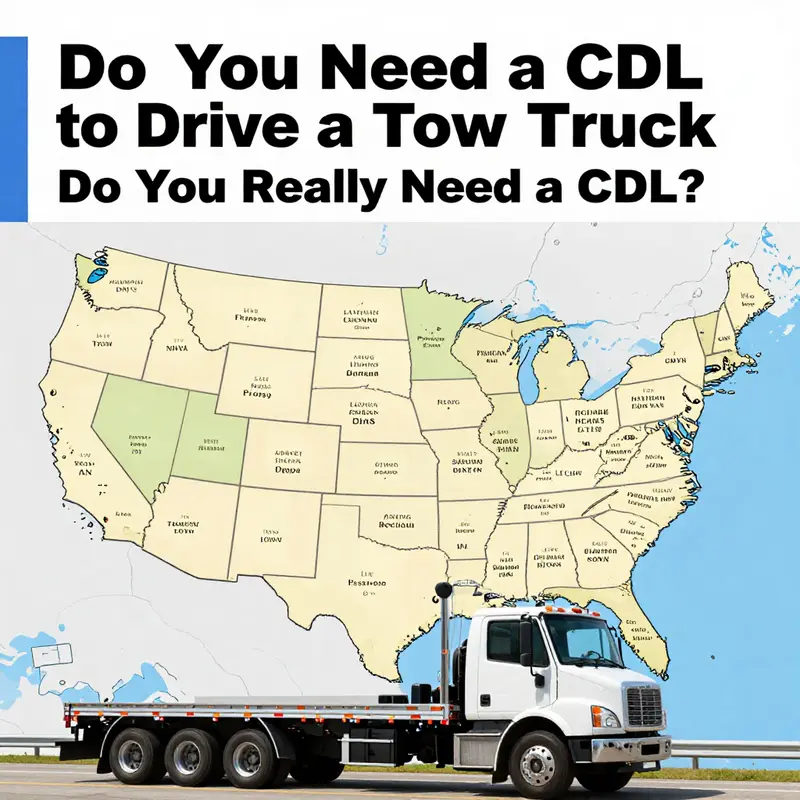
The question of whether a Commercial Driver’s License (CDL) is required to drive a tow truck often comes down to one number and one principle: weight. In practice, the necessity of a CDL hinges on the Gross Vehicle Weight Rating (GVWR) of the tow truck itself, as well as the GVWR of any vehicle it is actively towing. For many operators, that means a CDL Class B is the baseline, because it typically covers single vehicles with a GVWR of 26,001 pounds or more. This threshold is what many commercial towing outfits use to determine licensing needs, fleeting as those numbers may seem to the casual observer. Yet the landscape isn’t a flat line; the moment you begin to attach a trailer and tow another vehicle, the rules shift in meaningful ways. If the trailer you’re pulling has a GVWR over 10,000 pounds, even when the tow truck remains under 26,001 pounds, you can find yourself looking at a CDL requirement for a combination vehicle. Some states recognize this nuance by requiring the “B” endorsement when operating a tow vehicle with a heavy trailer, while others may apply a more stringent standard. The practical upshot is clear: weight is the first gatekeeper, but the gate can be different depending on where you drive and what you tow. A good rule of thumb is to treat any situation where the combined weight of the tow and trailer might exceed 26,001 pounds as an occasion to verify whether a CDL, and which endorsements, are necessary for your operation.
Beyond the weight conversation lies another layer that can alter the licensing equation: the purpose of the towing operation. Some states differentiate between commercial towing for hire and private, non-commercial towing. In practice, many jurisdictions allow certain non-commercial or local private towing activities to proceed without a CDL, especially when the operation is within city limits or the operator is not transporting goods for hire across state lines. The distinction between personal, private, and commercial use can be subtle, but it matters. It affects not only whether a CDL is required, but also whether specific training, permits, or registrations are needed. That is why the decision tree should begin with a careful mapping of weight and purpose, then move toward the formal determinations offered by the state’s DMV and the federal framework that governs trucking more broadly.
A pivotal update that has reshaped the terrain for many would-be tow truck drivers concerns immigration status and CDL eligibility. As of September 2025, the Department of Transportation issued an emergency rule banning individuals who do not have legal immigration status from applying for a CDL. This change is not a footnote; it directly affects who can even attempt to obtain the license needed to drive a tow truck in many commercial settings. The practical effect is that, regardless of weight thresholds or state nuances, the eligibility to apply for and hold a CDL now depends on lawful status in the United States. For operators, fleet managers, and aspiring drivers, this adds a non-negotiable prerequisite to the licensing pathway: confirm legal status before beginning the process of testing, training, and paperwork. The rule functions as a reminder that licensing sits at the intersection of state regulations, federal standards, and broader regulatory controls on who may obtain a CDL.
With these general principles in mind, the next step is to understand how state lines shape the rulebook. The federal standard, largely channeled through the Federal Motor Carrier Safety Administration (FMCSA), sets the baseline for CDL classifications, weight thresholds, and the kinds of endorsements that might apply to heavy towing operations. But the states administer the tests, issue the licenses, and determine exemptions or additional requirements. California, Texas, Florida, and New York, among others, illustrate a spectrum that aligns with the GVWR framework while injecting specific nuances that reflect local road patterns, commercial activity, and enforcement priorities. In California, for example, the CDL is typically required if the tow truck’s GVWR exceeds 26,000 pounds or if hazardous materials are being transported. Texas mirrors that approach closely, emphasizing the weight threshold and adding considerations for towed vehicles exceeding 10,000 pounds. Florida follows the weight-based logic too, but its applicability can hinge on whether towing is performed as part of a private activity versus a commercial service. New York maintains a consistent emphasis on weight and the nature of the operation, with rules that track federal standards while addressing state-specific licensing pathways and enforcement expectations.
The practical takeaway for someone weighing whether to pursue a CDL for tow-truck work is to start with a precise inventory of what you will be driving and towing. List the GVWR of the tow truck, the GVWR of any trailer, and the combined weight you anticipate moving on a typical job. If those numbers flirt with or exceed the 26,000-pound mark, begin the formal validation process with the state DMV to determine whether a Class B license is required, and whether any endorsements for combination vehicles apply. It is equally important to examine the purpose of your towing work. If you plan to operate in a commercial setting—haul-for-hire, contract work for a towing company, or incident response for a fleet—you are more likely to be subject to the CDL regime than if your work remains private and local. This distinction is not just theoretical; it directly informs whether your path to licensure will require a standard CDL, a Class B with合 combination endorsements, or potentially a different license altogether.
Navigating this territory responsibly means engaging with the official sources that govern licensing at the state level. The DMV is the primary gatekeeper for licensing requirements, testing prerequisites, medical certification, and knowledge of any exemptions when real-world operations are involved. The DMV’s guidance can vary by state, and those variations can be subtle yet consequential. When in doubt, a proactive approach is to consult the DMV’s official website or to contact a licensing official directly. The official sources provide the most reliable, up-to-date details on which vehicles require a CDL, what endorsements may be needed for towing, and what training or testing steps are mandatory before you can legally hit the road with a tow truck that is actively towing another vehicle. In many cases, the DMV will outline the exact GVWR thresholds, the types of trailers that trigger endorsements, and any state-specific allowances for non-commercial towing operations.
For drivers and fleet managers who want a broader, planning-oriented perspective on safety and preparedness—beyond just the licensing box—the conversation often turns to the operational implications of towing at scale. A well-prepared fleet considers not only the licensing requirements but also the practical realities of managing an operation that involves heavy vehicles, roadside assistance, and the potential for hazardous situations. This is where resources that address emergency response, maintenance discipline, and driver training become valuable complements to the licensing pathway. To explore planning resources that support fleet readiness, see the internal guide on emergency planning for island fleets, which offers practical strategies for coordinating response, training, and continuity when time and terrain matter. The emphasis is on integrating licensing decisions with a broader framework for reliability and safety, so that a tow operation can weather regulatory changes without sacrificing service quality or compliance. essential fleet emergency response strategies.
The federal layer of guidance remains a reliable anchor as you map out your licensing path. The FMCSA site aggregates federal standards, including classifications, weight thresholds, and the general approach to endorsements and vehicle configurations. While FMCSA can be a longer read, it serves as the authoritative reference point for the weight-based logic and the general concept of what constitutes a commercial vehicle in towing operations. Because state rules can evolve and because immigration statuses affect eligibility, keeping a regular check on both FMCSA and your state DMV updates helps ensure that a plan you set today remains valid tomorrow. The external resource to consult for this federal perspective is the FMCSA website, which outlines core standards and provides links to state-specific regulations: https://www.fmcsa.dot.gov.
In practice, the licensing decision is rarely a single, one-page checklist item. It is a layered assessment that begins with GVWR, then moves to the weight of any trailer, and then considers the purpose and the intended work environment. If the numbers tip into the CDL territory, you’ll want to prepare for the full licensing process: the written knowledge test, the skills test, vehicle inspections, and medical certification where required. If you fall below the thresholds, you may still face state requirements for driver qualification, light-medical certifications, or vehicle-specific endorsements that apply to heavy towing or specialized services. Either way, the prudent path is to confirm, before you begin investing in training or gathering documents, how your state interprets the rules for your exact vehicle combination and your work scenario.
Finally, the broader takeaway is the value of integrating licensing decisions with ongoing safety and compliance practices. CDL requirements are not only about legal authority to operate; they are about the credential-based assurance that drivers have the training and familiarity with the vehicle’s dynamics, braking profiles, and potential hazards encountered while moving heavy loads. Tow trucks present unique safety considerations: abrupt weight shifts during towing, unpredictable road conditions, equipment failure scenarios, and the necessity for effective roadside communication. A driver trained under a CDL framework is prepared to handle the complexities of towing operations with a higher level of discipline, which, in turn, elevates the safety of the crew, the public, and the towed vehicle. To navigate this landscape responsibly, connect licensing decisions with training, maintenance protocols, and emergency response planning so that a towing operation operates not only within the letter of the law but also within a robust culture of safety and readiness.
In sum, whether a CDL is required to drive a tow truck depends on a synthesis of weight thresholds, the towing scenario, and the regulatory posture of the state in which you operate. Weight remains the first and most concrete determinant, with the 26,000-pound GVWR line signaling when a Class B license typically comes into play for many tow rigs. The act of towing a trailer above 10,000 pounds often intensifies the licensing pathway toward a combination-vehicle endorsement. But the story doesn’t end there. State variations, private versus commercial use, and the evolving posture on immigration status all influence the precise licensing steps you must take. To stay compliant, the best approach is practical, persistent verification: review the GVWRs, confirm the operation’s purpose, consult the DMV’s official guidance for your state, and supplement this with federal context from FMCSA. In doing so, you’ll have a clear, defensible path to licensing that aligns with the realities of tow-truck work and the demands of safety on the road.
As you plan the next move in your tow-truck career or fleet strategy, keep in mind that licensing is not a one-time hurdle but a moving target shaped by weight, purpose, and policy. The pathway you choose should reflect not only the minimum compliance required to legally drive but also the larger aim of operating a responsible, reliably trained, and safety-focused towing service. In that sense, the CDL decision becomes a foundational element of your operational integrity—one that ensures you can serve customers, protect your team, and meet the legitimate expectations of regulators, insurers, and the communities you assist on the road. And as the regulatory horizon evolves, staying connected with trusted DMV guidance and federal standards will help you adapt with confidence, ensuring that your tow-truck operation remains both compliant and capable of delivering the critical service that communities depend on during emergencies and everyday roadside incidents.
Final thoughts
In summary, understanding whether you need a CDL to drive a tow truck is crucial for local businesses involved in towing and recovery services. Each chapter of this article has outlined the necessary classifications and weight regulations, legal obligations, and the varying requirements across states. With this knowledge, you can navigate the complexities of towing operations more effectively, ensuring both compliance and safety in your services.