Towing can be a stressful experience, especially for local auto repair shops, car dealerships, property managers, resort operators, and commercial fleet operators. Understanding where tow trucks take vehicles in various scenarios is essential for effective management and operation. Whether it’s dealing with illegally parked vehicles, accidents, or repossessions, knowing the right destinations can help streamline processes and enhance communication with customers. This article delves into three critical situations where tow trucks are involved, offering a comprehensive insight into the logistics behind towing services in our communities.
Where Illegal Parking Leads: The Hidden Journeys of Tow Trucks and the Impound System
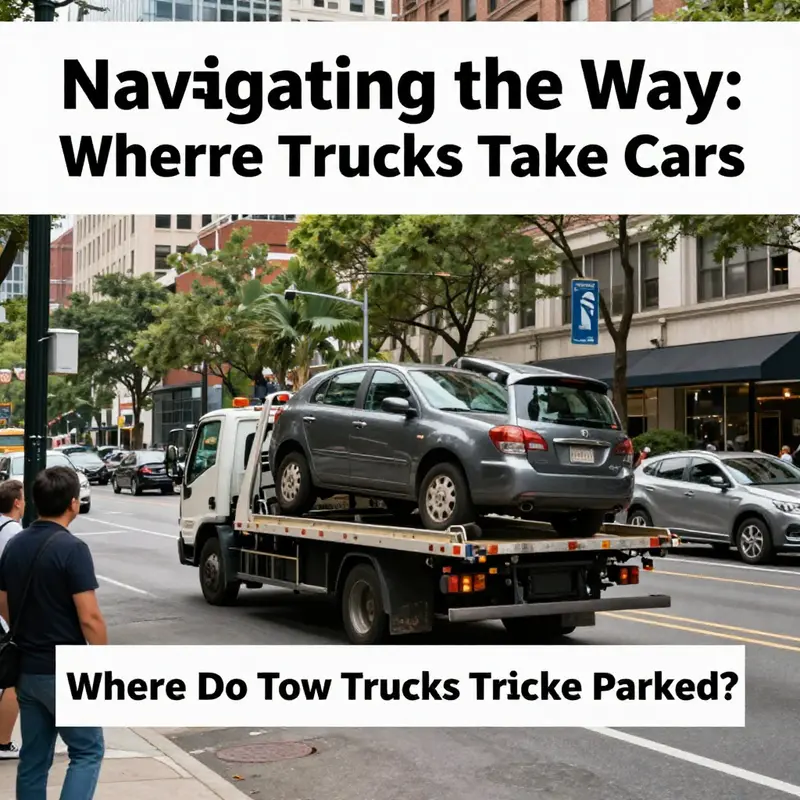
When a vehicle is towed for illegal parking, the moment the wheel lifts from the curb, a carefully choreographed journey begins. The story of that car no longer unfolds on the street, but behind gates, through lanes of a secured lot, and into a system designed to sort infringements from repairs, repossessions, and, in the bleakest cases, abandonments. The destination is not random. It is determined by law, by local practice, and by the practical realities of the city where the violation occurred. In many urban centers, the immediate grip of enforcement tightens around a single goal: to remove the vehicle from a space reserved for lawful use and to recoup the costs of the removal itself. From there, the path follows a few predictable routes, each with its own implications for the vehicle owner, for the adjudicator of the offense, and for the city that manages the balance between mobility and regulation. The impound lot, the repair shop, the dealership, and the salvage yard are not mere abstractions. They are real places with fences, gates, and operating hours, each serving a distinct purpose in the larger ecosystem of urban transportation management. To understand the journey of a car that is towed for illegal parking, one must first understand the impound yard as a concept and as a locus of consequence. An impound lot is a secure storage area designated by local authorities or contracted entities to hold unlawfully parked vehicles. These yards exist because the space on city streets is not a limitless resource. When a car sits in a no-parking zone, within a tow-away zone, or after hours in a restricted alley, it blocks a space that someone else might need for legitimate use. The tow operator, legally empowered to act, becomes the physical agent who translates a violation into a temporary relocation of the vehicle. Once the tow is complete, the vehicle arrives at the impound lot, where the gate seals its fate for a period that can range from a few days to several weeks. The impound yard is not merely a holding area; it is the entry point into a formal administrative process. The owner must pay towing charges and storage fees to reclaim the car, and they must present identification and proof of ownership. The exact requirements vary by jurisdiction, but the logic is consistent: the party seeking return must demonstrate that they own the vehicle and are accountable for the charges incurred. This is where the drama of the impound system becomes a practical lesson in civic administration. In some cities, impound lots are centralized into a single hub that acts as a clearinghouse for removed vehicles. In others, the system relies on multiple regional facilities that can receive tows from different neighborhoods or districts. The choice between a centralized hub and a network of regional yards is influenced by traffic patterns, budget constraints, and agreements with private towing companies. The city’s approach to impound operations can shape the experience of owners who must reclaim their vehicles. Waiting times, access hours, and the efficiency of the reclaim process are all shaped by how the impound network is organized. One immediate consequence for owners is the cost structure. Towing charges are nonnegotiable in most jurisdictions, and storage fees accumulate daily. The bill can become substantial, especially if the owner is slow to respond or if the vehicle was towed from a location where access to the impound lot is limited or inconvenient. The financial stress of an unexpected tow can compound the frustration of losing access to a vehicle that one formerly used every day. Yet the impound experience is not simply punitive. It serves the broader aim of removing hazards from congested spaces and ensuring that violations do not go unaddressed. For city planners and traffic officials, it is an instrument of compliance, a way to maintain the turnover of curb space, and a mechanism to deter future infractions through tangible consequences. The narrative of the impound lot, however, cannot be detached from the city’s regulatory architecture. Different jurisdictions implement towing and impound policies in ways that reflect their priorities and constraints. In some places, the law grants law enforcement broad discretion in directing where a tow should go, depending on the severity of the violation, the vehicle type, or the location of the infraction. In others, a contractual relationship with a private towing company channels all tows through a single facility or a set of approved yards. The effect on the vehicle’s fate—whether it remains in limbo until the owner pays, or whether it is moved to another destination for appraisal—depends on these arrangements. A vehicle that is towed for illegal parking often travels a short distance to the nearest impound lot. But that “nearest” system is not merely a map of proximity. It is a map of policy. The owner’s rights and duties converge with the yard’s capacity and the city’s enforcement priorities. In many places, the impound process is tightly structured: a notice of tow is issued, towing occurs, the vehicle is secured at the lot, fees accumulate, and an eventual reclaim window opens when the owner fulfills the financial and administrative requirements. The owner’s path to reclaim is not always straightforward. Some people discover the tow only after a friend reports the car missing. Others receive a notice tucked under a windshield wiper or posted on a municipal portal. The moment when the owner realizes their car is gone is often just the first of several hurdles. Proof of ownership, a valid driver’s license, and a picture ID are routinely required. If the car was financed, the lender may have an interest in the vehicle’s disposition, and the lien status can affect the reclaim process. These layers of administration underscore a critical point: the impound system operates at the intersection of traffic enforcement, public safety, and private finance. To the casual observer, an impound lot can seem like a sterile, punitive mechanism. But for those who work within it, the lot is a node of complexity where law meets logistics. The design of the impound yards—fences, lighting, surveillance, and staffing—reflects a need to protect vehicles and people alike. Access hours are structured to minimize unauthorized entry and to expedite processing for those who arrive with the necessary documentation. The security of the yard is not an afterthought. It is a prerequisite for managing the inflow of cars and the outflow of fees. The journey does not always end at the impound gate, however. In some cases, a vehicle may be considered abandoned or left unclaimed for an extended period. When there is no clear owner response in the reclaim window, the yard and the city might proceed to auction or disposal. Auctions are a practical solution to freeing valuable space and to recoup some of the costs associated with removal and storage. They are a last resort, not a first step, and they operate under a different set of laws and procedures that govern notice, bidding, and transfer of ownership. The auction process also introduces a broader social and economic dimension to the story of a towed car. It interacts with the market for used parts, the resale of repairable but damaged vehicles, and the broader dynamics of vehicle ownership in dense urban environments. A car that is towed for illegal parking can thus traverse multiple lifecycles: from street space occupier to impounded asset, to reclaimable property, and, for some, to auctioned item at the threshold of another owner’s possession. The path it follows is not universal and is shaped by the jurisdiction in which the tow occurred. Some cities maintain centralized impound hubs that act as both a holding facility and a referral point for further processing. Others rely on a network where a vehicle may be moved from the initial tow yard to a repair facility, if, for example, the vehicle presents a safety concern or requires assessment before release. The reality is that the destiny of a towed vehicle is rarely fixed in advance. It emerges from a sequence of administrative decisions, each guided by local law and the practicalities of the system. In addition to the impound option, there are practical reasons why a vehicle towed for illegal parking might end up in a closely related facility, especially when the owner is slow to respond or fails to provide satisfactory proof of ownership. A vehicle that is believed to be abandoned, or one with unresolved insurance or lien issues, can encounter a different set of procedures that lead to storage in a designated facility or, in some cases, to a branch of the same network that handles repossessions or salvage. The careful choreography continues beyond reclaim windows, because the city must maintain a delicate balance between offering a fair chance for owners to recover their property and ensuring that street space is effectively managed for the public good. The local government’s stance on how long to store a vehicle, what counts as abandonment, and what rights the owner retains during the confiscation process all shape the eventual outcome. To come full circle, it is essential to acknowledge the human dimension of this system. The tow operator who performs the pull, the impound yard staff who document the intake, the clerk who processes the reclaim, the attorney who interprets the lien—each person plays a part in the chain that transforms a street violation into a formal administrative event. The car, usually quiet and unassuming, becomes a focal point for a web of policies designed to keep traffic flowing, curbside spaces available, and the public safe. For vehicle owners, a clear, proactive approach can ease the burden. Understanding that an illegal parking tow is not simply a moment of loss but a doorway into a structured process helps reduce fear and confusion. This means recognizing the importance of timely communication with the local authority, noting the location and time of the tow, and gathering the items necessary to reclaim the vehicle quickly: proof of ownership, a photo ID, any lien information, and the receipts from the towing and storage charges. It also means asking the right questions: How long is the reclaim window? What documents are required? Are there waivers for certain individuals or special circumstances? And what happens if the vehicle is moved to a different facility within the impound network? In some jurisdictions, residents can find the exact procedural map on municipal websites or through the parking enforcement agency. In others, the information is dispersed across multiple pages and portals, which can make the process seem opaque. The practical takeaway is simple: if you park illegally, you should assume the car might be taken to the nearest secure impound lot and held under a schedule defined by local policy. Knowing this can transform a moment of frustration into a more measured response. It can also steer you toward seeking guidance before the reclaim window closes. As cities differ in their layout and management of impound operations, so too do the experiences of owners who face the tow. Some find the experience frustrating but fair, a necessary friction that keeps streets open for those who are parking legally. Others may encounter longer waits, higher fees, or more complicated documentation requirements, depending on the city’s efficiency and the clarity of its communication. The stakes also rise when the vehicle has special status—such as being a commercial vehicle, a liability concern, or a vehicle tied to a lender or insurer. In these cases, the impound process interacts with other systems, and the path from tow to release becomes intertwined with legal and financial considerations. To illustrate, consider a city that operates a centralized towing hub. The hub acts as the first stop for any towed vehicle from a particular zone. From there, the vehicle might go to a secondary yard if it requires evaluation or if space is limited. In such a system, the speed of reclaim depends on how efficiently the hub can complete intake, assign storage charges, and notify owners. In a city with multiple regional facilities, a vehicle might arrive at the yard closest to its original location, minimizing the distance the vehicle must travel in the future and reducing the owner’s travel burden for reclaim. Each model has its pros and cons, but both share the same core objective: to ensure that the street returns to its intended use as quickly as possible while maintaining a fair, auditable process for those who must reclaim their property. The journey of a car to the impound lot can also reveal broader social and political dimensions. It is a visible reminder of how societies prioritize space, regulate behavior, and allocate resources to maintain order on crowded streets. It can spark discussions about the efficiency of enforcement, the transparency of procedures, and the equity of penalties for different kinds of violations. For those who want to go beyond the immediate logistics, there is value in understanding how impound systems fit into the continuum of vehicle management in a city. A tow for illegal parking does not stand alone. It interacts with the broader network of breakdown towing, accident response, repossession, and salvage operations. When a vehicle is towed for illegal parking, the impound system is the first stage in a chain that sometimes ends in a temporary release, sometimes in a sale at auction, and sometimes in a scrap yard. The law and policy surrounding these outcomes are specific to each jurisdiction, shaped by local statutes as well as regional enforcement practices. The practical implications for vehicle owners who face a tow are clear enough: respond quickly, gather documents, understand the reclaim window, and be prepared for the costs that come with storage and towing. But the deeper takeaway is that the impound process is a microcosm of urban governance in motion. It embodies the tension between keeping streets usable and respecting the rights and needs of residents who rely on their vehicles. It demonstrates how cities translate the abstract language of citations and fines into a tangible sequence of events that requires coordination across agencies, private contractors, and the public. For readers who want to explore this world further, a reliable starting point is to consult local municipal resources or parking enforcement guides, which often provide the definitive rules for a given city. Those resources are not just bureaucratic boilerplate; they are practical maps that help people navigate the moment of loss and regain that follows a tow. If you are curious about how this plays out in more detail, you can read about the specifics of towing and impound information at reliable local government pages and, for a broader perspective, on insightful industry discussions such as the Island Tow Truck blog. For ongoing awareness of how fleets and road safety intersect with emergency readiness, the internal resources from that site can offer useful context and practical considerations. Using these channels can reduce confusion, improve response times, and ultimately help vehicle owners regain access to their cars with as little stress as possible. As the urban landscape continues to evolve, the impound system remains a stable, if occasionally controversial, component of how cities manage curb space and regulate parking behavior. It is a system built on mandated procedures, practical constraints, and the shared goal of keeping streets accessible and safe for everyone. The next time you pass a tow yard, you might glimpse not merely a chain, a gate, and a row of immobilized cars but a living organism of civic management—an organization designed to translate a parking violation into a measurable outcome that protects the public realm while acknowledging the rights and responsibilities of vehicle owners. External resource for further reading: City of London – Towing and Impound Information
Tow Route: Aftermath and Destination
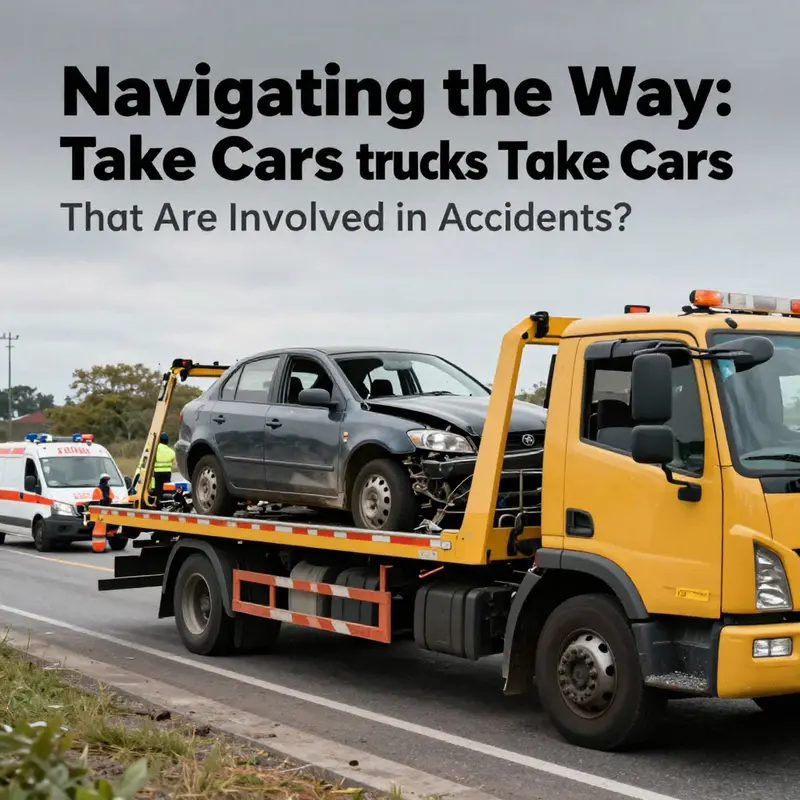
After a crash, the car’s next home is determined by a web of rules, costs, and priorities. The tow crew arrives, securing the scene and transporting the vehicle to a destination that may be a repair shop, a salvage yard, an impound lot, a storage facility, or a dealership. The first option is usually a local repair shop when the vehicle is drivable or towable and the owner wishes to restore function and value. The insurer evaluates the damage and authorizes repair or total loss. If the damage is extensive or financial value is insufficient to justify repair, salvage becomes the practical end. In some cases, a police impound may hold the vehicle for investigation, citation, or lien issues, with strict release conditions and daily storage fees. Temporary storage near the scene gives adjusters time to inspect, photo-document, and prepare estimates. Dealerships may be involved when recalls, warranties, or lender requirements influence the disposition. Technology, policy, and the driver’s preferences all shape the final route, but the aim remains to recover safety, protect rights, and manage costs. Across destinations, the process rests on clear documentation, compliant procedures, and coordinated action among insurers, law enforcement, towing providers, and owners. The exact path varies by region and circumstance, but the core idea is consistent: the vehicle moves toward a destination that balances safety, value, liability, and practicality. For readers seeking deeper context, regulatory resources and industry guides outline how tow operations fit into the broader system of road safety and vehicle recovery.
Tow Truck Trajectories: Mapping the Routes of Repossessed and Totaled Cars
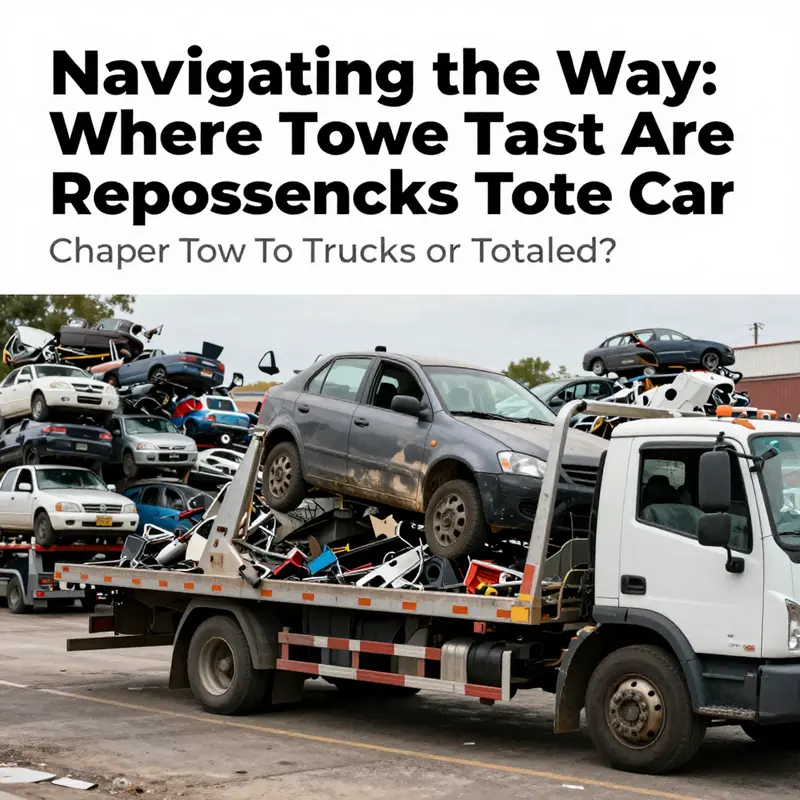
When a tow truck arrives to claim a vehicle, the moment is not merely a transfer of a car from road to repair or storage. It marks the start of a carefully choreographed journey through a series of destinations that reflect the car’s status, the lender’s or insurer’s procedures, and the laws that govern ownership, debt, and salvage. For the layperson, the car’s final destination may seem incidental, but for anyone who has faced repossession, total loss, or the complexities of insurance claims, the path is a map of finance, risk, and logistics. The way tow companies move a vehicle depends on who requested the tow, what has happened to the car, and what the future holds for it in terms of sale, repair, or disposal.
When a lender initiates repossession, the first leg is typically toward a secure storage facility operated by a repossession company. These yards are designed to keep vehicles safe, organized, and accessible to auction channels while maintaining a clear chain of custody. The car arrives with paperwork documenting the lien holder, the vehicle’s identification, and the loan status. This is not a quick curb-to-shop tow; it is a staged step in a financial transaction aimed at recovery or settlement. The owner’s opportunity to reclaim the vehicle—if they can catch up on the debt or negotiate a settlement—depends on the yard’s processes, the lender’s authority, and local laws.
Next often comes auto auctions, the marketplace where lenders recover value. The vehicle is inspected, documented, and prepared for sale, sometimes with notes about mechanical issues or cosmetic damage. The car’s condition, title status, and lien presence influence which auction block it lands on and how quickly it moves. Depending on outcomes, it may go to salvage or be sold to a dealer for resale to a private buyer. The economics of the sale hinge on cover costs, fees, and the balance of the loan.
Sometimes the car is deemed worth salvaging. If repair costs exceed value, insurers or lenders may direct the vehicle to a salvage yard or teardown, where components are removed and recycled. This process follows environmental and safety rules, including the proper handling of fluids and hazardous materials, and results in a vehicle that is more likely to serve as a parts source than as transport on the road.
Another route is the insurer storage facility. After an accident, an adjuster may direct the car to a facility for assessment and decision on repairs, salvage, or resale. The storage site provides a controlled space for inspections and for documenting the car’s status and any pending settlements. The handling emphasizes transparency so that claims can be settled fairly and efficiently.
Across all routes, one constant is the documentation trail. Transfer of custody, title status, and the reason for each move must be recorded to prevent disputes and to support accurate valuations. Tow operators act as the critical link, ensuring a car arrives at the right destination while keeping the chain of custody intact. The result is a traceable history that safeguards lenders, owners, and buyers alike.
Owners facing repossession or total loss can benefit from understanding this journey. Knowing the typical destinations helps anticipate costs, reclaim options, and the timing of sales or payouts. The system is designed to resolve debt, recover value, and move vehicles toward an appropriate end, whether that end is a return to operation, a salvage sale, or recycling.
Final thoughts
Understanding where tow trucks take vehicles provides valuable insights for businesses and individuals alike. Being aware of the destinations—impound yards, repair shops, and salvage yards—can aid local auto repair shops, car dealerships, and fleet operators in making informed decisions. It not only enhances recovery efforts but also supports better communication during challenging situations. Equipped with this knowledge, businesses can optimize their operational strategies and foster better relations with their customers.