Navigating the expansive and often chaotic world of Grand Theft Auto V can feel like a thrilling rollercoaster. Among the diverse array of vehicles, one utility stands out for its versatility: the tow truck. Essential for completing heist missions, helping stranded motorists, or simply executing your creative gameplay, knowing how to locate the tow truck sets a foundation for a seamless experience. In this guide, we will explore the steps to obtain the tow truck, pinpoint its location at the FIB lot in Los Santos, outline the retrieval process, ensure platform consistency, and highlight the strategic importance of this vehicle in your gaming adventures. Whether you’re an auto repair shop owner, a car dealership manager, or a fleet operator, this comprehensive guide has you covered.
Tow Truck Tactics: The Heist-Exclusive Vehicle and the Narrow Window to Grab It in GTA V
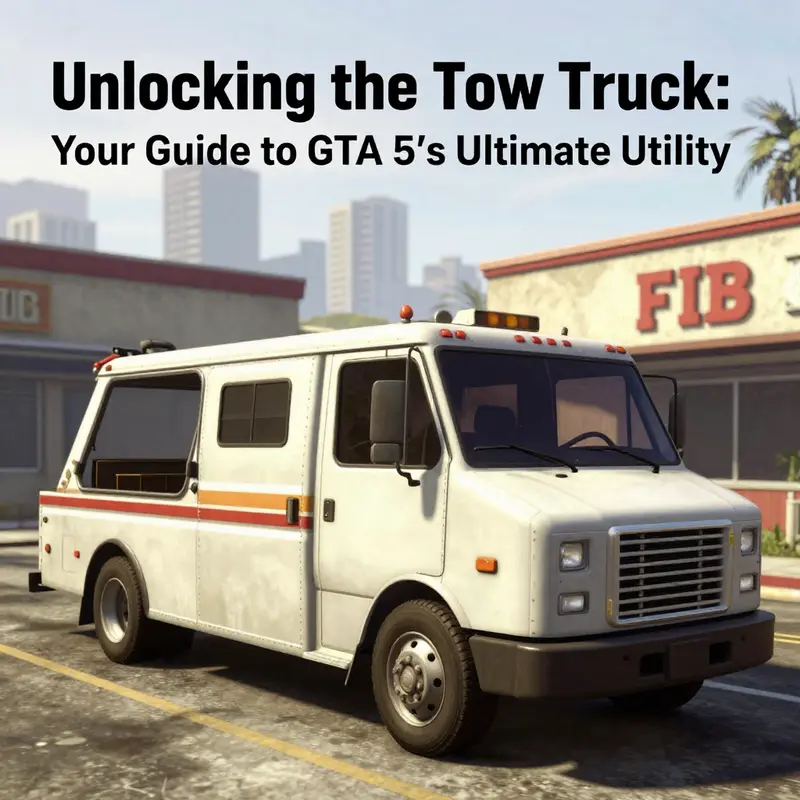
GTA V lives at the intersection of plan and panic, where every tool you need for a clever escape is tied to the story you’re threading through Los Santos. Among the gadgets, rides, and weapons, the Tow Truck stands out not for its everyday utility but for its specificity. It is not a vehicle you wander into a showroom to buy, nor is it a standard garage staple. The Tow Truck in GTA V is a mission-dependent instrument, a vehicle that appears only within a tightly scripted segment of the narrative designed to propel you through a high-stakes heist with a precise tempo. The thrill comes not from owning it in perpetuity, but from understanding the conditions that unlock its use and the consequences that follow when the sequence ends. It is a reminder that in this game, access to certain hardware is an event, not a purchase, and the timing of that event shapes your entire approach to the mission and the chase that follows.
To set the stage, a player must first navigate the story to the moment when the plan to steal the Maze Bank diamonds is taking shape. The essential trigger is completing The Big Score, the capstone heist that makes or breaks the rest of the campaign for Michael, Franklin, and Trevor. Once that mission has run its course, and the dust settles on the team’s high-stakes gambit, the Tow Truck becomes a spoken artifact in the world—something you know exists, something you might even seek out. The narrative thread here is important: even though the vehicle is technically playable, its appearance marks a finite point in the game’s chronology. After the mission chain that centers on the diamonds, the Tow Truck is introduced as a tool for a decisive, high-speed confrontation. Then comes the moment you must decide how to engage with it, because your opportunities to wield this vehicle are limited in time and scope.
The actual moment of access is tightly choreographed. In the hands of Michael and Franklin, the Tow Truck arrives as part of a plan to secure the diamonds, adding a layer of practicality to the plan’s drama. You’ll find control of the Tow Truck in a garage near the airport—an area that sits on the northwestern edge of Los Santos, where the city’s bustle fades into a more utilitarian landscape of runways and industrial corridors. The specific vehicle you’ll work with, often described as the Bulldog Tow Truck in community guides, is parked in a secure area that reinforces the sense that this is a mission asset rather than a common ride. The setup is deliberate: you’re not simply driving for speed or convenience. You’re driving to execute the heist’s next leg, and the vehicle’s design—sturdy, with a long reach and dependable torque—reflects that purpose. This isn’t a car you take for a casual cruise; it’s a tool calibrated for a sequence where speed, control, and a little bit of luck with the law enforcement response all matter.
Yet the immediate thrill of commanding the Tow Truck is tempered by a stark limitation. The moment the mission ends, the vehicle’s life in the open world comes to an closing, either through destruction or removal from the game space. This is a crucial distinction that colors how players approach the entire segment. The Tow Truck’s value lies in its contribution to the mission’s mechanical rhythm—the way it forces you to balance speed with caution, to choreograph a pursuit with a moving target and a dynamic police response, rather than to collect a new ride for your personal fleet. In other words, this vehicle is not a fixture to be stored away for later use. It is an instrument of a story beat, a tool granted to you for a fleeting window where the narrative’s tempo demands that you push your reflexes to the limit.
The mission itself—the Tow Truck mission, often catalogued as Mission #39 in the GTA V campaign—serves as a microcosm of the game’s design philosophy. After the pre-mission setup, you are handed the wheel of the Tow Truck and sent into a sequence that tests your capacity to maintain velocity while managing the pursuit’s complications. The mission’s core challenge, sometimes described within guides as the “Truckin’” objective, asks you to drive at high speed for a sustained period, roughly ten to fifteen seconds, under pressure and with the knowledge that your performance will be graded. The time constraint for completing the mission adds an additional tension: you typically have around six minutes to complete the objective, a window that includes the chase, the maneuvers, and the escape that follows. These numbers aren’t merely trivia; they shape how you approach the route, the timing of when you push Franklin’s ability to boost his speed, and how you manage the vehicle’s health and structural integrity as you navigate city streets crowned with traffic and the occasional ambush by law enforcement.
What makes this sequence feel also like a test of strategic improvisation is how the Tow Truck’s deployment sits at the nexus of character interaction. Michael and Franklin’s collaboration is a deliberate choice by the writers to anchor a moment in which you’re witnessing a plan come together in real time. Franklin’s special ability—his speed boost—becomes a practical tool in this context, allowing you to outrun pursuing units and clear obstacles that would otherwise stall your progress. The combination of precise driving, aggressive positioning, and the occasional use of Franklin’s ability contributes to a sense of momentum, a fleeting experience where the player becomes part of a cinematic escape rather than just a participant in a sandbox run. It is a reminder that GTA V’s most memorable sequences often hinge on how well you can translate a scripted sequence into your own controlled performance, one that balances the game’s physics, the environment, and your decision-making under pressure.
As a piece of game design, the Tow Truck mission embodies a core truth about GTA V: the city is full of tools and vehicles that exist to serve a narrative moment, not to become permanent extensions of your personal inventory. The Tow Truck is one of those tools, valuable for what it accomplishes within the mission and instructive for what it teaches about resource use, risk management, and the relationship between plan and improvisation. When you finally reach the mission’s conclusion, you’re left with a stark, almost cinematic cut: the vehicle you spent so much time maneuvering is either removed from the world or destroyed as the mission concludes. The downbeat is deliberate, reinforcing the idea that some experiences in Los Santos are finite, designed to be experienced in a single, focused arc rather than repurposed into a longer tableau of daily use. This design choice—while perhaps frustrating to players who crave long-term vehicle ownership—adds a layer of narrative texture to the game’s mechanics, making each return to the world feel like a decision with consequences.
For players who want to anchor their understanding of where to find a Tow Truck, the takeaway is clear. The vehicle is tied to a specific mission sequence, one that begins with The Big Score and culminates in the Tow Truck mission. It is not a garage staple, a dealership option, or a vehicle you can spawn at will outside of the mission context. If you’re exploring Los Santos with the intent of experiencing this mission-driven tool, you’ll want to prepare for a precise set of conditions: you’ll head toward the northwest corridor that houses the airport and the urban periphery, ready to engage when the mission scripts allow it. It’s easy to romanticize the Tow Truck as a roaming gadget you can always pull off the street, but the game’s engineering keeps it anchored to the story’s momentum. It’s this tension between narrative necessity and player agency that makes the Tow Truck segment one of the game’s most memorable demonstrations of how a single vehicle choice can shape a whole sequence.
For readers who want a deeper, step-by-step corroboration of the mission’s details or who crave a more granular walkthrough, there are reliable resources that map the mission’s beats and confirm the vehicle’s behavior. A prominent guide from IGN outlines the Tow Truck mission, its objectives, and tips for achieving a successful run. This external reference provides readers with verifiable information about the mission’s parameters and can help set expectations for players approaching the sequence for the first time. [External resource: IGN Tow Truck guide]
If you’re looking for a companion page that discusses broader vehicle usage in the context of emergency response or fleet management within a real-world framework, there is a related internal resource you can explore to complement the idea of quick-response vehicles and their roles in complex operations. The Island Tow Truck Blog offers a repository of perspectives on fleet operations and tactical vehicle deployments. You can dive into practical insights and case studies through their blog, which, while not a GTA V guide, echoes the themes of rapid deployment and specialized equipment that players experience in the game. Explore the internal link here: The Island Tow Truck Blog. The cross-pollination between in-game strategy and real-world fleet operations can be surprising and instructive, helping readers appreciate how the thrill of a timed heist corresponds to the discipline of coordinating assets under pressure.
In summary, the Tow Truck in GTA V is a mission-specific instrument that appears only within the Tow Truck mission following The Big Score. It can be commanded within a garage near the airport, where Michael and Franklin orchestrate the team’s escape and diamond extraction. It is not a permanent owner, and it cannot be retained beyond the mission’s end. The experience hinges on managing speed, control, and the challenge of outpacing authorities within a tightly bounded time frame. The city’s design rewards players who treat this sequence as a moving puzzle rather than a simple drive, turning every maneuver into a test of precision under pressure. By embracing the mission’s constraints and understanding the vehicle’s role within the larger narrative arc, players can appreciate how GTA V uses a single, curated tool to drive momentum, tension, and a cinematic sense of closure.
External resource: IGN Tow Truck guide. Internal resource: The Island Tow Truck Blog.
From Heist to Haul: Locating GTA 5’s Tow Truck at the FIB Lot
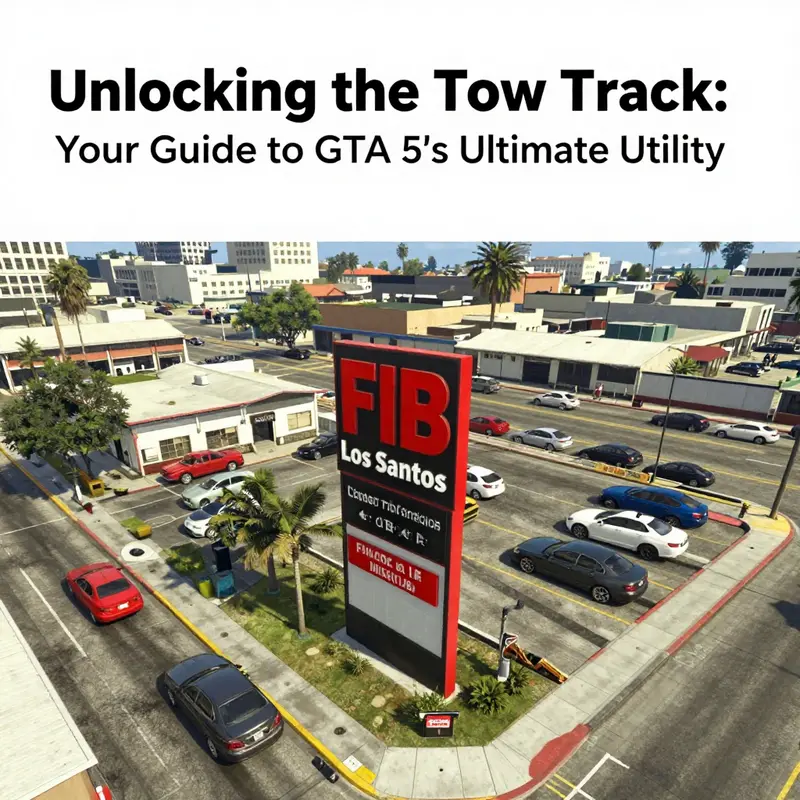
In the sprawling, sun-bleached world of Los Santos, there are moments when a vehicle isn’t just a way to get from A to B but a lifeline that unlocks the next phase of a plan. The Tow Truck you need for pivotal moments in GTA 5 sits in exactly that role. It’s not something you stumble upon in a random street chase or a generic garage; it’s tethered to the game’s heist narrative, a practical tool whose presence marks the transition from one mission set to the next. The journey to that vehicle has a single through-line: complete the mission that grants access, then return to a designated, highly secure parking area where the Tow Truck waits, almost as if it’s been keeping watch in case you ever decided to rewrite the plan and tow your way to the next big objective. The practical upshot is simple, even if the path there seems anything but. You finish a major heist, you head back to the FIB Lot, and there, parked with the confident calm of a squad car after a successful operation, is the Tow Truck that you will rely on for the reveals and reverses to come.
The exact unlocking moment can feel like a confluence of two equally credible versions of the same story, depending on which guide you consult or which patch you’ve played most recently. One strand of the lore places the Tow Truck in the context of The Big Score, the late-game heist that rearranges the power dynamics of Los Santos. After you complete that pivotal job, the Tow Truck appears at the FIB lot in Los Santos, near the Sandy Shores area and its airstrip, as if the city itself is signaling, “Here is the tool you need to carry forward.” The other strand insists that the Tow Truck you’ll want for the FIB mission cycle is tied to the earlier, leaner chaos of The FIB heist itself—the moment you and your crew infiltrate the FIB facility and steal a vehicle crucial to your plan. In both narratives, the outcome is the same: the Tow Truck becomes a fixed asset in the FIB compound, and the next mission depends on your ability to access it and drive it away without damaging it. The game’s design leans on this duality to reinforce a sense that, once you’ve breached the FIB’s defenses and pulled off a critical extraction, your next move is mapped out in concrete terms: return to the FIB Headquarters’ parking area and claim what you need.
The practical steps to get there are straightforward, but they require a careful hand and a mindful approach to the mission’s momentum. First, you must complete the mission that acts as the gateway to the Tow Truck. Whether you’re following the trail of The Big Score or the earlier FIB-focused operation, the logic remains intact: the Tow Truck is off-limits until the relevant objective is completed, and once the final checkpoint ticks green, your map updates with a clear directive—the FIB lot is the destination and the Tow Truck awaits in a designated zone. The second step is to drive back to the FIB Headquarters, the imposing complex that anchors the city’s most secretive operation, and to navigate the lot that sits near the entrance. The FIB lot is not a maze of alleys or a hidden back lot; it’s a secure, open-air parking area marked by the club-like red-and-black signage that screams “government facility” with a blunt efficiency. In this space, the Tow Truck is parked in a position that’s easy to spot once you’ve learned the lay of the land. It sits near the entrance, or sometimes in the area that the game marks as the main pickup zone, a consistent place that rewards players who remember to check the map and follow the cues rather than improvising in the heat of the moment. The Tow Truck’s presence is not a rumor or a side quest reward; it’s a confirmed asset that you can drive away with immediately, a practical, no-nonsense tool that will enable you to complete the mission you’ve already committed to finishing.
The moment you see the Tow Truck parked in the lot, a new sense of momentum flows through the session. The vehicle is designed with the utility you expect from a specialized tow unit: sturdy construction, a large towing arm that can latch onto other vehicles with relative ease, and the rugged, road-tested feel that makes it a reliable partner for heavy-lifting in the chaos of a high-stakes crime scene. The Tow Truck’s role in the subsequent mission—often framed as The Takeout, where you need to retrieve a van loaded with stolen goods—underlines the vehicle’s practical purpose beyond its symbolic value. It becomes the instrument that makes the plan execute as designed, a reminder that the right tool at the right moment can transform risk into a smooth, controlled operation. In the open world of GTA 5, where plans frequently hinge on timing and the precise sequencing of actions, having the Tow Truck ready at the FIB Lot translates into a tangible edge—one that turns a potentially perilous extraction into a mission that proceeds on rails.
With the Tow Truck on hand, the surrounding environment offers its own set of helpful cues. The FIB compound is a fortress of a setting, and the Tow Truck’s position in the parking area is a deliberate counterpoint to the security surrounding the operation. The vehicle’s location tends to be in the open, easily visible from the entrance, which makes it easy to locate even if you’ve got the adrenaline of a mission in progress pushing your attention elsewhere. The map function in GTA 5 is your friend here: if you find yourself uncertain about the Tow Truck’s exact spot, a quick glance at the mini-map and the larger map will illuminate the parking zone and give you a precise waypoint. The key is not to risk damage to the Tow Truck, which would complicate the story’s progression. The game rewards careful handling, a reminder that this vehicle isn’t just a tool of necessity but a plot-critical asset. Damaging it—whether through careless driving or clipping other objects during a chase—can disrupt the flow of the mission and force you to improvise an alternative plan, something the game designers intentionally discourage in the Takedown’s final stretch because the Tow Truck’s function is too central to the operation’s continuity.
The larger arc of GTA 5’s story with the Tow Truck also emphasizes the balance between exploration and narrative responsibility. In a world where the player is free to explore and experiment, the Tow Truck’s availability signals a moment when the story’s architecture has shifted. You’ve proven your ability to navigate a complex security environment, or you’ve demonstrated the improvisational skill necessary to pull off a daring theft, and now you’re handed a vehicle whose design is optimum for the next phase’s practicality. The Tow Truck thereby becomes more than a vehicle; it becomes a symbol of the player’s readiness to escalate the plan, to push deeper into the game’s layered narrative of heists, risk, and the cunning required to survive in a city that never stops demanding more from its operators.
For players who want to double-check the directional breadcrumbs, a few concise reminders help maintain flow without derailing immersion. First, clear the session of any lingering distractions before heading back to the FIB lot. A clean slate minimizes the risk of losing track of the Tow Truck’s location or of accidentally commandeering a vehicle that isn’t intended for the mission’s needs. Second, treat the Tow Truck with care. The vehicle’s value isn’t only practical; it’s narrative—its condition affects the ease with which you will complete The Takeout and proceed to subsequent tasks. Third, once you’ve claimed the Tow Truck, use its capabilities strategically. Its primary function is to tow, but the way you leverage that function—the speed with which you secure the target vehicle, the way you coordinate timing with your crew, the path you choose to avoid reinforcements—will influence how smoothly the next stage unfolds.
As the chapter closes, the image remains crisp: you, the Tow Truck, and the lined entries of the FIB Parking lot, a moment that marks a shift from one phase of a sprawling plan to the next. The location’s consistency across platforms—PC, PlayStation, Xbox—gives a reassuring rhythm to the experience, a reminder that the game’s design is built to be navigable by players across different hardware without sacrificing the sense of place. And even as new patches or tweaks roll through, the essential relationship remains intact: complete the mission that unlocks access, locate the Tow Truck in its open, guarded parking zone, and drive away with a tool that will help you move forward in a game that rewards precision, patience, and the willingness to let a well-placed vehicle do the heavy lifting. For those who want to cross-verify the details and see how the Tow Truck is described in newer guides, the following resource offers an up-to-date, authoritative perspective on the vehicle’s role in GTA 5: IGN GTA 5 Tow Truck Guide
Tow Gateways: Navigating GTA V’s Tow Truck Havens and How to Bring One Home
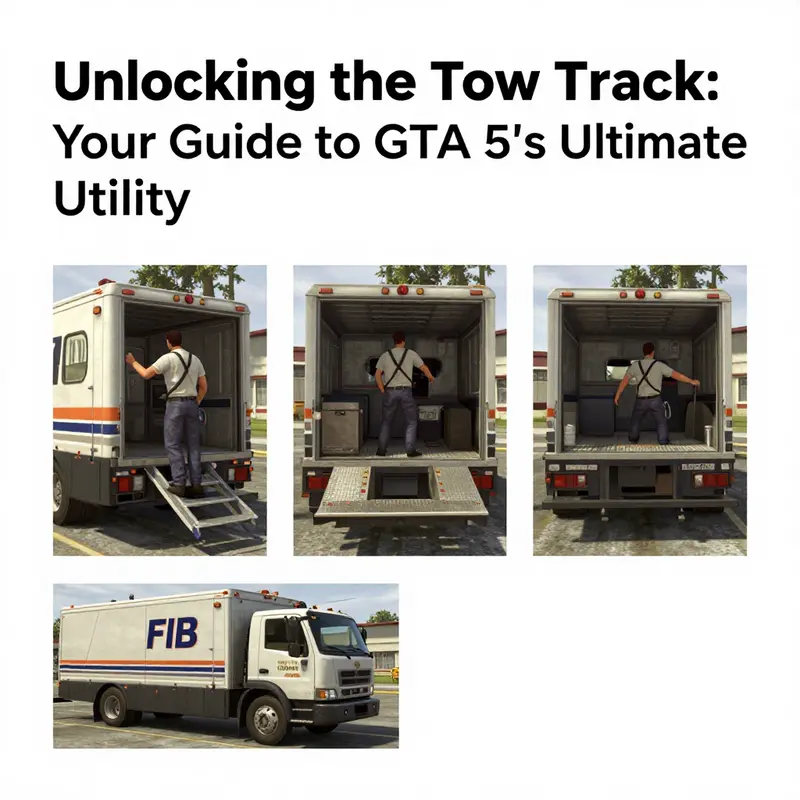
In the sprawling, sun-bleached streets of Los Santos, the tow truck is more than a workhorse; it’s a key that unlocks a patient, streetwise form of play. It’s a vehicle that invites you to think about how you move through the city, not just which car you drive. The moment you decide to chase a tow truck is the moment you decide to shift from chasing speed to chasing utility. The game rewards that shift with access to a new mechanic, a practical tool that expands your options for missions, side objectives, and even small-scale business ventures that hinge on being in the right place at the right time with the right vehicle. And the path to that vehicle—where it hides, how it appears, and what you do with it once you have it—tells a quiet, surprisingly coherent story about Los Santos and the players who learn to navigate its rules as deftly as its traffic. The most straightforward route to a tow truck, of course, is tied to a single, major game moment: the completion of a sprawling heist that rearranges the city’s balance of power and opens doors that were locked before. After you finish The Big Score, a tow truck becomes available at a very particular, highly identifiable location—the FIB lot in Los Santos, a secure parking area marked by a bold red and black FIB sign and tucked near the convenience of the Sandy Shores Airport. It’s a location that feels almost ceremonial in its positioning, as if the game itself wants you to taste a certain sense of achievement before you are handed a practical tool. Once you’ve cleared the last step of the heist’s sequence, you can simply drive to the FIB lot, climb behind the wheel of the recovered utility vehicle, and put your plan into motion. The moment the tow truck’s engine settles into a steady growl and you ease away from the curb, you begin to understand how this vehicle changes your approach to the city’s everyday chaos. The tow truck’s purpose is straightforward on its face, yet the implications are layered: you can recover vehicles that are stuck in odd spots, pull a stranded ride out of a parking fine mess, or even stage rescue responses to incidents when the city’s sirens rise and fall in the distance. The payoff isn’t merely the thrill of possession; it’s the tactic of possession—the ability to reposition yourself in the urban map with a tool that adds texture to your play style and, over time, can broaden the scope of what you can accomplish in the city’s rough-and-ready economy of vehicles and rescues. And because Los Santos is a city that punishes hesitation, you’ll want to be prepared to act when the moment arrives, which means knowing where to look, how to operate, and what to expect from the tow truck once you’ve claimed it as your own. The essential takeaway is simple: the FIB lot near Sandy Shores Airport is a reliable anchor point, but it isn’t the only place a tow truck can surface during your travels through the game. The map is dotted with other likely hideouts, the most common being abandoned yards, scrapyards, and industrial zones that line the city’s older corridors. There, rows of rust and chance meet, and a tow truck can appear as if by fate, offering a chance to act on a moment of opportunity. The same logic applies to locations surrounding police stations and other high-traffic civic zones, where a tow truck’s utility can be a boon to quick recoveries, especially if you’re juggling a mission or a time-sensitive objective that demands a fast, controlled re-positioning of vehicles. It’s not merely about finding the truck; it’s about understanding how it might appear in your path and learning to recognize the city’s habits. The game’s design rewards players who learn to read those patterns as if they were part of a living map. In some missions—like Hijack, where Franklin and Trevor interplay to seize a target—tow trucks aren’t far from the action, and their presence can shift the sequence’s tempo. The Paleto Bay area offers a different kind of lure: a Classic Tow Truck is typically found near the edge of town, close to the local fuel and service districts, with the Custom Car Shop—sometimes referred to by players as the town’s “Car Wash”—acting as a conspicuous landmark. In these moments, the tow truck isn’t a rare prize but a practical instrument. Its role is to help you stage a more efficient move, whether you’re liberating a stuck vehicle, staging a fetch-and-deliver operation during a chaotic chase, or simply transporting cars for a mission that requires precision handling in the tight, winding streets that thread through the county’s more rural corners. The control scheme for the tow truck is a familiar, almost ritual set of actions that become second nature with practice. On PC, you enter the driver’s seat with the F key, a straightforward command that signals your intention to take the wheel and assume responsibility for the convoy’s next leg. Once you’ve lined up with the target vehicle, the tow hook’s alignment becomes your primary concern. It’s a task of careful, almost surgical precision: you back up until the hook is precisely aligned with the bumper you’re targeting, then you use Shift to raise the hook and Ctrl to lower it, adjusting the height until you feel the lock engage with the vehicle’s frame. The moment the hook catches, the tow truck becomes an extension of your own hands—the ability to pull a car out of a parking space, a ditch, or a stray road-side position and steer it toward a destination with the calm, methodical confidence of someone who knows the city’s rhythms as well as the heat of its sirens. When you reach that destination, releasing the captured vehicle is a moment of clean, almost ceremonial release: H taps the lock and the rescued vehicle slides free, ready for its new path. This simple sequence—enter, hook, transport, release—transforms your playstyle into something more than just racing or shooting. It becomes a means of solving problems in real time, of clearing the way for another mission objective, or of simply sustaining a quiet, understated business model, where you respond to calls, scan the streets for stranded cars, and choose to monetize your readiness by performing professional rescues that fit snugly into the city’s continuous churn. The practical value of a tow truck extends beyond narrative satisfaction. It offers a platform for experimentation and risk management in a city designed to keep you on your toes. If you cultivate a routine—checking the FIB lot after The Big Score, keeping an eye on sprawling industrial zones, and recognizing the Paleto Bay edge as a potential source when you’re up for a more rural detour—you’ll begin to see patterns that reward patient exploration. You’ll notice that the FIB lot’s location near the Sandy Shores Airport creates a predictable, reachable anchor point that reduces the time you spend searching for a tow truck and increases the time you spend executing tasks that rely on it. You’ll also realize that each location—whether the scrapyard, the police precincts’ perimeters, or the docks’ industrial hides—offers a slightly different accessibility and risk profile. Some spots present a chance encounter with a tow truck as you’re pursuing a separate objective; others require a deliberate detour and a careful memory of where a vehicle might be lurking in the edge of town. In the long run, the tow truck is more than a hobbyist’s curiosity; it’s a tool that lets you script your own urban routine. It opens doors to new mission possibilities, makes it feasible to support impromptu rescue operations, and even hints at the profit potential that a clever player can realize by coordinating calls and responses with police radio traffic or by simply observing where stranded cars appear at the edges of the map. If you’re looking to deepen your understanding of how others have navigated similar lanes of play, a broad resource stands ready to guide you through the mechanics of retrieval, hooking, and transport—one that also points to the city’s broader landscape of automotive salvage. For a deeper dive into the lore and practicalities of tow trucks in this world, you can explore The Island Tow Truck Blog. It offers perspectives that align with the practical, hands-on approach described here. The Island Tow Truck Blog
For continued, authoritative guidance on vehicle behavior, you can also consult the official support resources available online. While the city’s hazards and opportunities aren’t scripted to any single guide, having access to up-to-date, platform-specific tips helps you stay efficient as patches shift how the vehicle behaves and how missions flow. External resources can provide a broader context for how the tow truck fits into the game’s ever-evolving mechanics, especially as updates arrive that adjust vehicle physics, spawn probabilities, and mission triggers. https://support.rockstargames.com
Where to Find the Tow Truck in GTA 5: Platform Consistency and the Hidden Realities of Story Mode
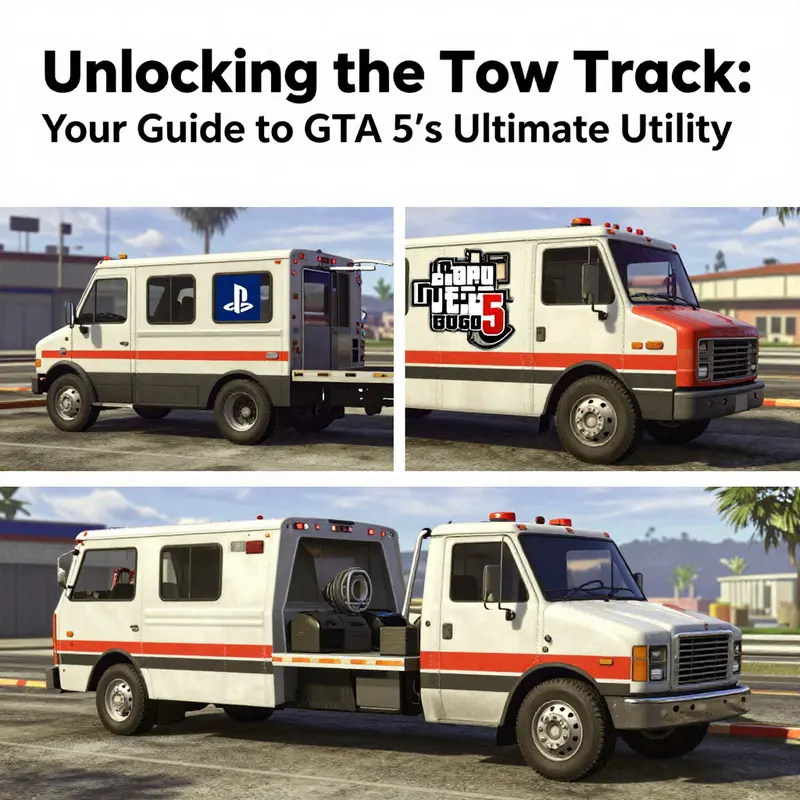
Fans who poke through the maps of Los Santos and Blaine County often imagine a ready-made tow truck awaiting pickup in the chaos of story mode. The truth, however, sits a little differently in the GTA 5 universe. While the world is full of eclectic vehicles and clever setups for mischief, there is no dedicated tow truck that you can simply spawn for everyday recovery work in the single-player narrative. The absence is not a glitch to exploit but a design choice that keeps towing in the realm of physics and improvisation rather than a ready-made tool. In practice, that means you won’t find a tow vehicle parked in a garage or street corner waiting for your command. Instead, players must rely on how the game models car-to-car interactions, the physics engine, and a bit of persistence to simulate towing when needed. The core mechanic is simple in concept: you try to link two vehicles so that one can haul the other along, but the execution demands patience and practice because the physics can be stubborn. Attaching a towed car to a towing vehicle typically involves connecting via the bumpers, using an approach that feels almost old-school in a world built around high-octane speed and elaborate heists. The challenge isn’t just about engaging the tow; it’s about understanding the limits of what the game allows and recognizing when you’re bending the system rather than bending reality. In this light, the GTA 5 towing experience is less a toolbox and more a physics puzzle that players learn to solve through trial, error, and careful control of momentum. The absence of a built-in tow truck is consistent across all three major platforms—PlayStation, Xbox, and PC—and has remained so through updates that stretch the game’s boundaries in other directions. Even as the latest version has expanded content in many areas, the storytelling engine keeps towing grounded in the same limitations. For players who crave a more realistic or convenient towing experience, the path forward offers two main routes: work within the physics system to simulate towing, or explore community-created modifications that reimagine how vehicles connect and stretch the boundaries of the game’s mechanics. The latter path can significantly alter the feel of recovery work or rescue missions, but it also comes with caveats. Mods are not endorsed by Rockstar Games; they require additional installation steps, can affect stability, and may clash with certain game versions or platform constraints. If you pursue them, remember that the core GTA 5 experience remains intact without them, and learning to work with the native system can still be deeply satisfying because it challenges you to balance weight, traction, and speed in a way that the game intends. Within this context, the practical question remains: where do you find a tow setup that feels authentic within the single-player game? The straightforward in-universe answer is to complete a significant milestone in the heist storyline, specifically the late-game operation that changes the city’s criminal economy—and that change actually brings a functional tow resource into your reach, but not as a conventional vehicle you pull out of a dealership. After you complete the mission known as The Big Score, you gain access to a secure parking area that has long been a symbol of federal oversight: the FIB lot near the Sandy Shores Airport. The location is unmistakable once you reach the eastern edge of the desert map—an area that feels almost ceremonial in its calm after the mission’s intensity. The lot is marked by a bold red-and-black FIB sign, a visual cue that this space belongs to the agency and, in game terms, a space where few players would expect to find a run-of-the-mill utility vehicle. Yet this is precisely where thetow truck you might be seeking appears in the post-mission world. The vehicle sits there exactly as players have reported—parked, accessible, and drivable the moment you arrive. The moment you step into the wheel, you discover that this Tow Truck doesn’t come with a pre-installed towing rig in Story Mode. That expectation is part of the broader design: Rockstar keeps towing as a mechanic rooted in in-world physics rather than a plug-and-play asset. So, the Tow Truck’s physical presence in the FIB lot is a convenient tool, but only in the sense that you can drive it away and use it to cause the vehicle you’re hauling to interact with other physics-based constraints. It’s a difference worth embracing because it highlights a persistent thread in GTA 5’s design philosophy: the world is extensive and immersive, but not every tool is pre-built for every mission or mode. The fact that this tow option comes from a single, specific post-heist moment—rather than an immediately accessible in-story vehicle—gives players a clear narrative thread to follow. It anchors the towing option to a meaningful milestone and to a particular locale, which helps maintain the game’s sense of place and progression. From a practical standpoint, the FIB lot near Sandy Shores Airport is easier to reach than it might look at first, given the game’s sprawling map. After you’ve completed The Big Score, you can plan a trip to this secure area and simply drive in. The sign, the fencing, and the general layout contribute to a vibe that says, “This is not your ordinary parking lot.” And yet the Tow Truck there is not a shiny beacon of convenience; it’s a reminder of the game’s careful balance between storytelling moments and mechanical options. As players contemplate how to move a vehicle—from one car to another—there is a sense that the act mirrors the way GTA 5 handles other complex tasks: you improvise with what’s available, test the limits, and, if necessary, accept imperfect but workable results. To enhance realism, players sometimes experiment with different towing setups, testing which combinations yield the most stable connection, which speeds preserve control, and which angles grant the most reliable drag without snapping the linked vehicles apart. This experimental spirit, while not a formal tutorial, is part of the learning curve that defines GTA 5’s enduring appeal. For those who crave even more fidelity in towing, the community has explored mods and custom vehicle packs that alter how towing is accomplished or add specialized tow equipment to the world. It’s important to note that these options exist outside the base game experience, and they require additional installation steps and adjustments to ensure compatibility with your platform. In other words, you can push the boundaries if you wish, but you should be mindful of potential stability concerns and the official stance from the developers. Those who prefer to stay within the canonical GTA 5 experience can still enjoy the satisfaction of solving a towing scenario within the constraints that the game presents. The Big Score’s payoff is not just monetary; it’s a doorway to a tool that, in a world where every mission carries its own weight, becomes a practical component of your post-heist workflow. The FIB lot’s proximity to Sandy Shores Airport also emphasizes a recurring GTA 5 pattern: the game often places critical, otherwise mundane options in quiet, almost out-of-the-way corners of the map. The idea is that the extraordinary heist work you do has a long tail, affecting your options in places you might not expect to frequent. The platform-wide consistency means that, regardless of whether you play on PC, PlayStation, or Xbox, the route to this tow possibility remains the same. Rockstar’s design ensures that this is not a version-dependent feature or a platform-specific easter egg; it is a narrative and mechanical outcome anchored in the game’s world-building. For players who want to connect their GTA 5 experience to broader themes of fleet management or recovery operations, there is a subtle but meaningful link: the discipline of locating a scarce, critical asset within a sprawling map mirrors the realities of emergency response planning in real-world contexts. In fact, you can think of the FIB lot as a narrative allegory for asset allocation under high stakes: you complete a mission, you gain access to a resource, and you must learn to negotiate space, time, and vehicle behavior to get the job done. If you’re curious about how to translate the GTA 5 towing experience into broader fleet or emergency response thinking, you can explore resources that discuss strategic planning under pressure; one such resource offers frameworks for handling emergency scenarios in island fleets, which can provide a useful lens through which to view the decision-making atmosphere of GTA 5’s post-heist landscape. For more on those approaches, see Essential Fleet Emergency Response Strategies. [https://theislandtowtruck.com/essential-fleet-emergency-response-strategies/] In the end, the journey to a functional towing setup in GTA 5 is less about a single, perfect asset and more about understanding the interplay of mission design, world physics, and platform-wide consistency. The Big Score opens a door, the FIB lot provides a staging ground, and the rest hinges on your willingness to experiment within the game’s physics and to accept the creative constraints that define the single-player experience. And while mods offer a tempting shortcut for some players seeking more realism or variety, the core experience remains anchored to the same mechanics across PS, Xbox, and PC. For players who want a quick refresher on the wider landscape of towing techniques, there are guides and community discussions that explore how to manage a disabled vehicle in GTA 5’s story mode, including the sometimes finicky moments when the towed car lurches or detaches. Additionally, fans who enjoy delving into the engineering-minded side of the pastime may turn to external resources that catalog a range of towing approaches and techniques beyond the base game. External reference: https://www.alibaba.com/product-detail/How-To-Tow-A-Car-In-GTA-5-Complete-Guide_1600483975124.html?spm=a2700.100112.1000703.1.1f7e5d6bNwKsJg
Tow Lines and Tight Turns: Finding the Tow Truck in GTA 5 and Why It Changes Your Los Santos Play
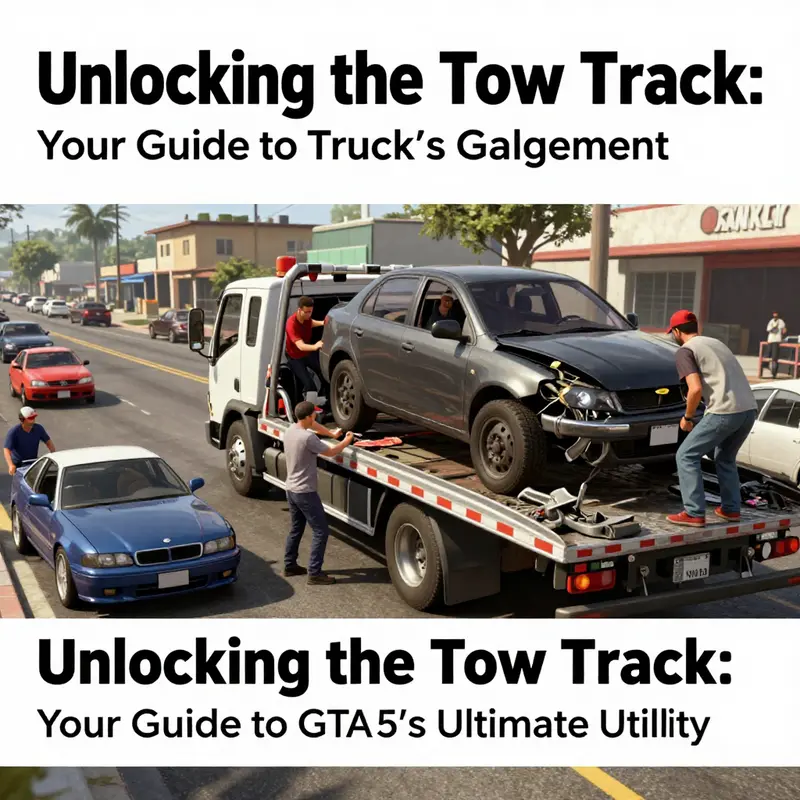
In the sprawling, sunlit maze of Los Santos and Blaine County, the Tow Truck is more than a blunt instrument for clearing wrecks. It is a steady partner for players who want to bend the map to their will, who see every curb as a potential corridor and every blocked lane as a canvas for improvisation. The vehicle is not merely a means to an objective; it is a tool that expands how you move, how you plan, and how you relate to the city around you. When you first ask where to get a Tow Truck in GTA 5, you may picture it as a single, fixed pickup, a neat unlock after a cinematic moment. Yet the truth is richer. The Tow Truck appears in two complementary ways: a post mission unlock that comes with the big heist heart of the game, and a network of spawn points scattered across the map that reward curiosity and patient exploration. Understanding both threads helps you see why this heavy, wheeled helper deserves a permanent slot in your virtual garage and a recurring role in your open world rhythm.
The most reliable doorway to ownership begins after you complete the big score, the capstone moment many players remember as the turning of the map’s economic axis. Once the mission closes and the dust settles, the Tow Truck shows up at a specific, secure pocket of Los Santos known as the FIB lot. This is not simply a nondescript parking area; it is a place stamped with a red and black FIB sign, a visual cue that the city has shifted its gear and that your crew has earned access to new forms of mobility. The lot sits in the orbit of the city, handy enough to reach from the busiest districts yet quiet enough to feel like a personal staging area. The Tow Truck that sits there is ready to be driven away immediately, with no extra tasks required beyond stepping into the cab and turning the key. This moment crystallizes a core truth about GTA 5’s world-building: big scores unlock new tools, but those tools become meaningful only when you learn how to deploy them in the open world that follows.
From that initial unlock, the Tow Truck reveals its deeper utility. It is not limited to dramatic rescue missions or dramatic heist logistics. Its real strength lies in the kind of play that flourishes when you slow down and map out your routes. Suppose you need to move a car that somehow ended up wedged in a narrow alley or parked in a space that blocks a do-not-miss objective. The Tow Truck gives you a practical, reliable way to reposition vehicles without relying on a pedestrian-friendly chaos spiral. It’s a slow, steady power—one that lets you clear space, re-route traffic, and solve spatial puzzles with a straightforward, mechanical solution. The satisfaction comes not from forcing the world to yield to speed, but from learning to harmonize the world’s chaos with your own careful planning. And because GTA 5 thrives on a living sense of consequence, the Tow Truck’s presence at key moments makes the city feel more real, more responsive, and more within your control.
Beyond that pivotal unlock, the map itself offers a broader ecology of Tow Trucks. Industrial zones, construction sites, and freight yards are the likely homes for these heavy salvage units. In Los Santos proper, the Port area near the docks and warehouse corridors becomes a reliable hunting ground, especially when the city’s rhythms have sent cars rattling and engines cooling in the humid air. The proximity to shipping lanes and industrial backstreets means Tow Trucks appear as a natural byproduct of the city’s continuous churn, parked near loading ramps and long rows of dormant vehicles waiting for a tow or a temporary home while crews reassess their plans. The same logic extends to districts around Chumash and the maze of opportunities near the Maze Bank Tower, where long corridors of vehicles, broken trucks, and abandoned haulers intersect with the urban choreography of missions and side jobs. In Blaine County, the Tow Truck tends to appear near Rockford Hills and Strawberry, especially around large industrial complexes or roadside service stations. These are not random spawn points but nodes in a network that makes sense once you recognize the city’s economic geography: a tow truck needs a place to be that is both practical for a job and plausible within the city’s story.
There is also a more intimate, offline reality to Tow Truck spawns that players quickly intuit. Tow Trucks nestle near garages and repair shops scattered across the county, giving you a natural reason to stroll through Davis or Vespucci Beach and glance at a forklift of steel and a heavy cable waiting for its next task. After some missions or events, a garage can become second-stage real estate for a towing operation, a space where you prepare for the next stretch of the map and reset your route in a way that feels earned. This continuity matters. It means the Tow Truck is not a one-off symbol of power or a simple means to clear space; it is an ordinary, dependable part of the city’s infrastructure, ready to spark a novel approach to a mission or a fresh route through a long play session.
Because GTA 5’s world has age and updates, the exact spawn locations can twist with patches and seasonal events. The studio’s cadence means a Tow Truck that appears reliably in one patch might drift in another, or become temporarily scarce as the map’s balance shifts. For players who want to stay current without chasing patch notes incessantly, community-maintained resources become an essential companion. A widely referenced reference point for verified spawn locations and practical tips is GTA5-Mods.com, a hub where enthusiasts document how vehicles appear and behave in the current version of the game. The site offers a living picture of the Tow Truck’s distribution, allowing you to adjust your in-game plans to the map’s current layout. It is a reminder that the open world is not static and that your approach must adapt as the city reshapes itself with each update.
Beyond the mechanics and the geography, the Tow Truck contributes to the city’s ecosystem of labor and opportunity. In the broader storytelling of Los Santos, you will encounter side jobs and informal tasks that frame towing as a legitimate business within the in-game economy. Rather than seeing the Tow Truck as a gadget, you begin to understand it as a facilitator of mobility, the means by which you preserve momentum, keep your operations flowing, and maintain your schedule through the city’s constant variability. The Tow Truck makes possible a more deliberate pace of play, one in which you plan your routes, time your moves, and execute a sequence of actions that feels both practical and rewarding. It becomes a small, reliable partner for the player who values preparedness, strategy, and the quiet thrill of pulling out a vehicle that is obstructing a critical path.
If you want to deepen your knowledge of how to use the Tow Truck most effectively, there are practical habits worth cultivating. Start with map awareness. Keep an eye on the big hubs—the port districts, the industrial belts, and the roadways that thread Blaine County together. A Tow Truck makes sense there because it aligns with the kinds of disruptions and task flows you are likely to encounter. Second, think of towing as part of a larger plan rather than a standalone action. Move vehicles to unlock routes, reposition a nuisance car to create a clean corridor for a mission, or stage a car for a quick extraction that minimizes risk. Third, practice the towing mechanics in a low-stakes zone so you understand how the hitch engages, how loads balance, and how detachments affect your next moves in real time. The more you practice, the more your tow operations translate into fluid, confident play.
For readers who enjoy a broader perspective, the town’s hidden logic reveals itself through community discourse and shared experience. The Island Tow Truck blog offers a lens into practical fleets and the mindset players bring to the task of keeping a city moving. It is not a direct guide to GTA 5, but the way it frames towing as a disciplined craft mirrors the approach you can bring to Los Santos. You can explore it here: the Island Tow Truck blog.
Ultimately, the Tow Truck’s value in GTA 5 rests on a simple idea: the city rewards mobility that blends timing, space management, and clever routing. The two entry points to owning and using this vehicle—post mission unlock via the FIB lot near Sandy Shores and the ongoing, map-spanning spawn network across Los Santos and Blaine County—combine to give you a robust toolkit for any escapade. You will discover that the Tow Truck is not just a means to clear the way; it is a vehicle that expands your agency, enabling you to redraw the map with intention rather than drift through it by chance. The open world becomes less a sequence of isolated objectives and more a fluid landscape you can shape with steady hands and a practiced eye. If you want to verify a Tow Truck’s presence in your current session and stay aligned with the game’s evolving layout, you can consult community resources and patch notes, but remember that nothing beats the moment when you look up from a street and spot a heavy rig waiting at the edge of your plan, ready to help you move forward. For ongoing updates on spawn behavior, see the external resource at GTA5-Mods.com.
Final thoughts
In conclusion, the tow truck in GTA 5 is not just a vehicle; it’s an essential tool that enhances gameplay and offers players various strategic advantages. Understanding how to acquire it—from completing ‘The Big Score’ heist to navigating to the FIB lot—ensures players can make the most of what this vehicle has to offer. Moreover, recognizing its consistent availability across all platforms helps ensure that gamers regardless of their preferences can utilize it effectively. So gear up, head over to the FIB lot, and enjoy the newfound capabilities the tow truck brings to your GTA V experience.