In the vibrant and bustling streets of Los Santos, tow trucks play a pivotal role in maintaining order, supporting businesses, and assisting in emergency scenarios. Understanding where to obtain a tow truck in Grand Theft Auto 5 can greatly benefit local auto repair shops, car dealerships, property managers, resort operators, and commercial fleet operators. This guide provides a detailed exploration of the online and offline methods to acquire a tow truck, highlights special missions that incorporate these vital vehicles, and directs you to community resources that facilitate your search. Dive in as we uncover the multifaceted ways to navigate the world of towing in GTA 5.
Tow Lines and Towing: A Practical Guide to Getting a Tow Truck in GTA 5 Online
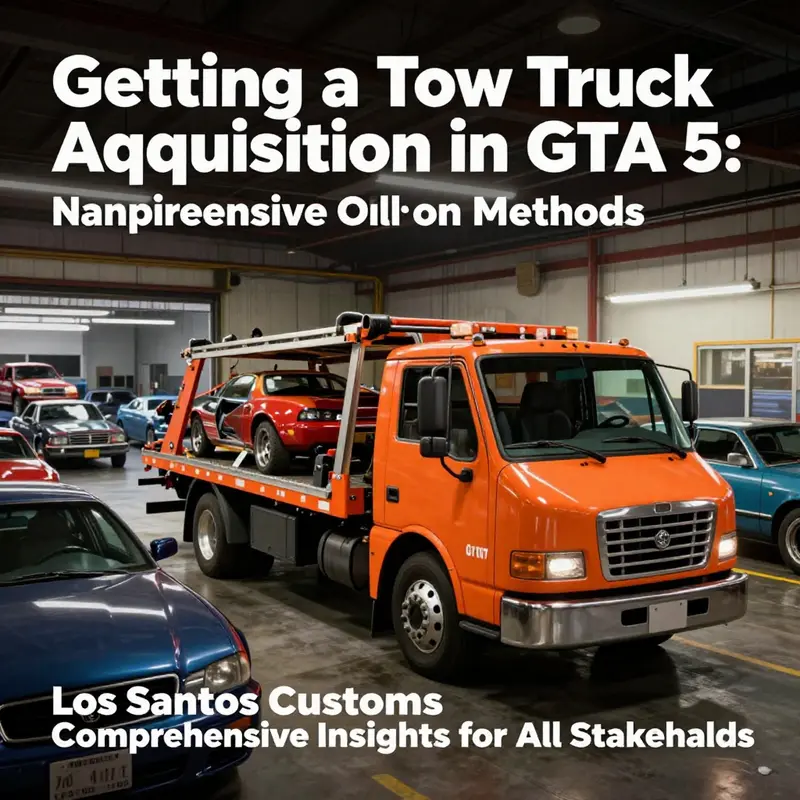
Tow trucks in GTA 5 Online sit at a curious crossroads between utility, fast cash, and the improvisational chaos that defines the city of Los Santos. They are not simply vehicles you add to a garage; they are tools that open up new rhythms of play. When you need to move a wrecked car out of the way during a raid on a weakened faction, or you want to stage a freight-sized rescue during a chaotic heist setup, a tow truck becomes more than a convenience. It becomes a reliable partner in your virtual logistics chain. The path to owning one in the online mode is straightforward, and it mirrors the broader design philosophy of GTA Online: give players clear options, a little risk, and the freedom to tailor their fleet to their play style. This chapter dives into how you obtain a tow truck in Online, how the different routes fit different player goals, and the practical considerations that keep your operation smooth when you surge into chaos and competition in the city that never sleeps.
The most direct, dependable route to a tow truck in GTA Online starts with the in game vehicle dealership ecosystem. The city offers a catalog stocked with a range of vehicles, and among them you will find tow trucks that fit a spectrum of needs. A standard, smaller tow truck serves nimble tasks, where speed and maneuverability matter more than raw lifting power. A heavier variant brings true hauling heft, capable of moving larger blocks of debris, stubborn wrecks, or multiple cars in a single sweep. The choice between these two classes should align with how you intend to use the vehicle in the long run. If your plans lean toward quick errands, roadside towing to clear space for a crew operation, or rapid repositioning, the lighter model is a sensible starting point. If you anticipate heavier loads or a more persistent towing workflow—perhaps supporting a crew operation or a longer exchange of vehicles in missions—the heavier option is your better bet.
Acquiring a tow truck through the in game dealer flow is simple and reliable. Access your in game phone, navigate to the Vehicle Dealer section, and look for the Tow Trucks category. There you can browse the available models, compare their handling, tolerance, and visual upgrades, and select the one that matches your aims. The process mirrors how you would acquire any other specialized vehicle in Los Santos: you choose, you confirm, and you pay with your in game credits. The dealer system rewards planning and a measured approach. It’s straightforward enough for a player who is simply trying to assemble a functioning fleet, yet it supports deeper strategies for those who want to optimize their outlay, performance, and resale value within the sandbox economy of GTA Online. If you are playing with a crew or a shared garage, this route also scales well. You can allocate a tow truck to your crew’s inventory, making it accessible to teammates who share the same vehicle resources. The ease of this shared usage is part of what makes the dealer path so appealing for players who want to coordinate logistics across a team.
Beyond the mechanics of purchase, the act of choosing between a light and a heavy tow truck invites a broader reflection on how you want to structure your play. The lighter model emphasizes quick turnarounds. It’s ideal for a player who flips from mission to mission, when the ability to curbside tow or reposition another vehicle promptly matters more than raw lifting power. The heavy variant, by contrast, is your workhorse. It accepts bigger tasks, handles stubborn tow jobs, and can serve as a mobile workshop in certain role play scenarios where you simulate disaster relief or salvage operations around the city. The distinction is not merely about strength; it shapes your tempo. Do you want fast, nimble towing to keep your operations moving with the least friction, or do you want a line of defense capable of handling heavier tasks under pressure? Your choice threads into your whole GTA Online workflow and informs how you approach missions, crew activities, and the time you dedicate to refining your fleet.
If the immediate urge to own a tow truck is tempered by curiosity about specific mission tied experiences, you may encounter opportunities through limited time events or special missions that feature towing as a core mechanic. One such channel is the Tow Truck mission itself. While this assignment has traditionally served as a storyline or a structured challenge, it periodically appears in Online under certain conditions, particularly during events that blur the lines between story mode progression and online play. Completing the mission is not just a test of driving and hooking skills; it also grants practical on the road experience towing and repositioning vehicles under constraints. The repeated pattern to watch for is whether the mission is available during your session, and to grab the moment if it lines up with your current goals. Availability can be inconsistent, which is why planning around a regular purchase from the dealer remains the most reliable path for most players. Still, if you enjoy the thrill of timed challenges and want to test your reflexes under pressure, the Tow Truck mission offers a satisfying experiential payoff that complements the more strategic route of buying and customizing your own vehicle.
For players who value social gaming and collective efficiency, there is another route worth considering: the crew system. If you are part of a Crew, you can pool resources and acquire vehicles through the crew garage using crew funds. This approach is especially practical for groups that anticipate frequent vehicle sharing or collaborations on heist setups that require a consistent towing capability. A tow truck in a crew garage is not simply a personal asset; it becomes a shared instrument, available to members who need it for a mission, a recovery operation, or a staged meetup around a central objective. The logistics of sharing are navigable through the crew management interface: you designate the vehicle as a crew asset, you define which garages hold the vehicle, and you set access rights so teammates can pull it when it’s needed. The Crew option thus extends the reach of a single purchase, turning it into a strategic fixture that supports coordinated play and reliability across a group’s activities.
There is also a more improvisational route that players sometimes explore: the ability to locate tow trucks on the streets and at specific spawn points. While this approach should be viewed as supplementary and supplementary risk laden, it reflects a core element of the GTA Online world, where manpower and vehicles can appear in a pinch. In practical terms, you can encounter tow trucks near industrial zones, auto repair hubs, or yards that operate as staging points for other missions. The chances of encountering a tow truck through spawns are never guaranteed, and this method requires a readiness to react quickly and an acceptance of the possibility of police attention should you attempt to claim a vehicle that is actively in use by other players or NPCs. For players who enjoy the thrill of a spontaneous pickup or a role play scenario in which a tow truck is needed to stage a scene or complete a task on the fly, this approach offers a degree of spontaneity that sits well with the anarchic energy of Los Santos. Yet it should be tempered with caution and situational awareness, because GTA Online’s world can pivot in an instant, and a successful steal can draw the attention of pursuing players or law enforcement in effecting a response to the theft.
The practical implications of whichever route you choose extend beyond the moment of purchase or mission completion. Once you have a tow truck, the work begins in earnest. You’ll want to invest in basic customization that enhances visibility, control, and reliability. A few upgrades can dramatically change how you move through mission clusters and how you participate in crew operations. Improved lighting helps during nighttime pulls, reinforced towing equipment reduces wear over repeated tasks, and tuned suspension can improve maneuverability when you must thread through congested streets to reach a stranded vehicle. These choices are not cosmetic embellishments alone; they are part of a practical calculus about what you do with the vehicle and how you do it. Your decisions about upgrades should reflect your typical routes, the kinds of jobs you expect to handle, and the level of risk you’re willing to tolerate when you operate in crowded city blocks or during high pressure heist sequences.
For readers who want to dive deeper into fleet planning and Island based operations, see The Island Tow Truck Blog. This resource offers extended perspectives on fleet management, rescue operations, and the logistics of maintaining a small but effective towing operation in crowded, dynamic environments. While the deeper theory can be fascinating, the practical takeaway remains clear: in GTA Online, the fastest and most reliable path to a tow truck is to secure one from the Vehicle Dealer, match your choice to your play style, and build a small, durable fleet that your crew can share when it matters most. The dealer path is stable, predictable, and scalable, and it rewards careful budgeting and a clear plan for how the vehicle will be used over weeks of play. The mission route provides episodic variety, the crew route amplifies collective capability, and the street spawn route adds a dash of unpredictability for players who relish improvisation. Whichever path you pick, the tow truck becomes a reliable ally in a city that rewards speed, precision, and the willingness to take calculated risks.
In practical terms, the best overall strategy for most players is straightforward. Start with a reliable purchase from the in game dealer, select the model that aligns with your primary tasks, and outfit it with upgrades that improve stability and visibility in variable lighting. If your social circle runs a Crew, consider coordinating the purchase and allocation of a tow truck so the vehicle is accessible when most needed, not locked behind a single player’s schedule. Keep a balance in your garage that includes a nimble option for quick tackles and a heavier option for tougher jobs. If you enjoy side challenges or the occasional story mode cadence, keep an eye on the Tow Truck mission’s availability window and factor that into your broader play plan. And when you feel the thrill of a sudden vehicle need in the heat of a session, remember that legitimate spawns are possible too, but that route is best treated as a supplementary option rather than a reliable replacement for the primary methods described above.
External resource: https://www.rockstargames.com/gtav/online/vehicles
Tow Power Unlocked: Mastering How to Get a Tow Truck in GTA V’s Story Mode
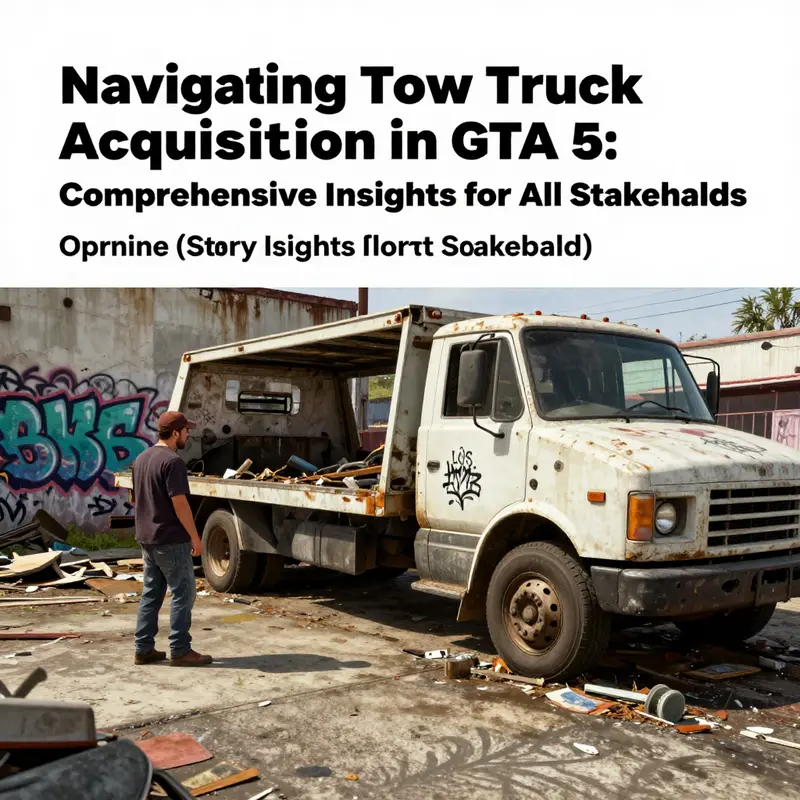
Getting a tow truck in GTA V’s Story Mode isn’t as straightforward as buying other specialty vehicles from a showroom. It requires a mix of story progression, a bit of hunting, and an understanding of how the city’s industrial arteries operate when the sun dips behind the skyline. The path isn’t just about grabbing a car and driving off with a hook attached; it’s about unlocking a dedicated space where the vehicle becomes a usable, repeatable tool and understanding how the city’s open world rewards patience and timing. In the span of the game’s world, the tow truck sits at the intersection of mission design and practical city life, a vehicle that can transform routine car moves into productive, mission-ready tasks when you know where to look and how to use what you find.
The core method in the offline, single-player canvas hinges on the progression of the main storyline. Early on, the player is oriented toward a sequence of high-stakes decisions and daring chases, but the tow truck is tucked away behind a specific mission arc. The mission that serves as the gateway is the towing job, a mission framed as part of the larger narrative push that rolls the plot toward its next major set piece. It’s not simply a drive-and-pobble moment; it’s a mission built to teach you the mechanics of towing, to cue you into the rhythm of hooking a vehicle, aligning your mount, and moving something heavy through the city’s maze of streets and alleys. The moment you complete the towing job, a new waypoint glows on your map: the Tow Yard. This yard sits in the industrial stretch of Los Santos, a place that, once unlocked, becomes your reliable source of tow trucks. It’s not a one-off loot; it’s a hub. Inside, you’ll find several tow trucks parked and ready, offering you permanent access to the vehicle and a chance to reuse it as a core part of your ongoing criminal or racing routines.
The Tow Yard’s introduction is more than a simple unlock prompt. It marks a shift in how you approach the world’s logistics. With the Tow Yard open, the vehicle is never far away, and you can simply stroll into the yard, walk up to a truck, and drive away as if you owned the thing. The practical implication is meaningful: you’re no longer beholden to a mission chain or a random NPC encounter when you need specific towing power. The yard becomes a staging ground for your business-like operations, a place to accumulate one of the game’s most utilitarian vehicles and reference it for later activities, whether you’re moving a stubborn sedan into a garage or maneuvering a diesel rig to clear a path for a mission objective.
Still, the city is not a strictly controlled environment. Random spawns occur, and the everyday Los Santos ecosystem retains a sense of unpredictability. Tow trucks will show up in various places—industrial zones, near major highways, and around construction sites—where the weight of the vehicle blends with the city’s functional aesthetics. These spawns aren’t guaranteed, and you can’t schedule them with the precision you’d expect from a dealer inventory. But their presence is a reminder that the toy is out there in the world, waiting for you to cross paths with it again. It’s the kind of mechanic that makes the city feel alive rather than a static backdrop waiting to serve a mission’s needs. If you time your activities to the rhythm of the industrial districts, you’ll notice the occasional tow truck idling near a loading dock or parked adjacent to a warehouse—silent proof that the physics of towing isn’t confined to your feet or a mission’s strict needs. When you do encounter one, you’ll appreciate the sense of agency that comes with driving away with a vehicle designed to attach, pull, and reposition.
If you’re looking for on-demand towing without the certainty of a permanent vehicle, the game gives you the option to use the in-game phone to call a tow truck service. This function is distinct from owning the vehicle; it operates as a temporary service that arrives at your location with a tow truck ready to perform a towing task. Accessing it is straightforward: open your phone with the Up Arrow, navigate to Quick Contacts, and select the Tow Truck Service. The dispatch will materialize at your current location and provide you with a tow, which you can use to relocate a vehicle or clear a path for the mission at hand. The service is especially useful when you need to move a vehicle that has broken down at a critical moment, or when you’re scripting a sequence that requires the repositioning of cars under time pressure. It’s a practical tool in the same way a real operator would be called in to move a vehicle during a salvage or recovery operation. Yet while this service is convenient, it does not grant you ownership. It’s a temporary, on-the-spot solution that complements the permanent access you gain by unlocking the Tow Yard.
In the narrative logic of the game, the Tow Yard represents a culmination of a certain skill trajectory. The mission that leads to its unlock is designed to teach not just the mechanics of towing but the broader concept of turning a specialized vehicle into a repeatable asset. Once you’ve unlocked the yard and accepted that you can pull a tow truck out whenever you need, you’ll discover that towing is not merely a skill reserved for a single mission; it becomes a versatile tool you can apply across a range of tasks. You’ll develop your own routine for how to position the vehicle, how to attach to other cars, and how to manage the tow’s weight and inertia as you navigate Los Santos’ serpentine roadways. The slower acceleration and heavier handling demand a careful approach, especially when maneuvering through the city’s tight lanes and crowded intersections. You’ll learn to read the traffic, to execute precise turns, and to anticipate the sway of a heavy load as you cut through alleys that demand patience and precision rather than speed.
A nuanced layer appears when you consider the models you might encounter inside the Tow Yard. The game’s variety includes different appearances and configurations of tow trucks, each with its own feel and handling profile. The practical takeaway is simple: once you’ve made the Tow Yard your home base, you’ll get a sense of which specific unit best matches the task you have in mind. You may favor a certain wheelbase for urban towing or opt for a sturdier version for heavier loads. The exact models aren’t the point as much as the function they provide—the ability to attach, maneuver, and reposition with a degree of reliability that hardens your confidence in the city’s chaos. For players who want to dig deeper, there are community guides that catalog variations and locations, offering a reference point for those who enjoy the micro-ops of vehicle recovery and transport. The practical benefit is clear: you’re no longer guessing where a tow truck might appear; you’re operating from a known, repeatable hub that aligns with the game’s pacing and your play style.
The journey from The Towing Job to the Tow Yard invites you to adopt a mindset that treats towing as a core capability rather than a one-off event. It’s tempting to think of towing as a simplistic function: attach, pull, drop off. In truth, the mechanic invites you to think about timing, space, and sequence. You’re moving toward a workflow where you anticipate the best angles for attaching a vehicle, the safest trajectory through the city’s traffic, and the most efficient way to deposit a car at a target location, whether that’s a garage, a mission objective, or a place to clear room for your next plan. The Tow Yard is more than a warehouse of vehicles; it’s a training ground that rewards repeat practice with tangible results. The more you interact with the yard, the more you’ll learn about how to leverage the tow truck’s capability, from linking to another vehicle to planning the optimal route that minimizes risk and maximizes speed, given the city’s constraints.
If you want a compact synthesis of where to look and how to act, you can anchor your approach in three pillars. First, invest in the narrative arc that leads to the towing job, because it is the door to ownership and consistent access. Second, cultivate a routine of checking the Tow Yard whenever you’re in the industrial districts or near the docks; this habit pays off with reliable, repeatable access. Third, treat the phone’s Tow Truck Service as a safety valve for times when a fixed tow is inconvenient or when the mission requires quick, on-demand repositioning. Each pillar reinforces the others, and together they transform towing from a peripheral tool into a trusted muscle of your GTA V toolkit.
For players who want to connect the practical with the cultural, there’s a useful resource in the broader community that collects tips, routes, and model references. You can explore a deeper explainer at The Island Tow Truck blog for practical riffs on towing in open-world environments, which provides a complementary perspective and a set of tested tricks for managing heavy loads in a chaotic city. The link is easy to integrate into your playthrough as a sidebar study rather than a primary guide. When you’re ready to deepen the technical side of the operation, allow yourself time to wander the Tow Yard, observe the trucks in daylight and at night, notice how different loads shift your handling, and practice the art of hooking and towing with deliberate, calm movements rather than rushed actions.
In the end, the GTA V story mode offers a structured path to a usable tow truck, but it also invites you to improvise within a controlled framework. The towing job is the gateway that makes permanent access possible, the Tow Yard becomes the home base that stabilizes your operations, and the random spawns and the phone-based service provide the flexibility that makes towing practical in real time. If you couple these elements with patient exploration, you’ll find that towing is not just a means to an end; it’s a recurring capability that expands the ways you can approach tasks, complete objectives, and shape your own flow in a city that rewards careful, deliberate action as much as bold risk-taking. For players who crave a deeper, more hands-on dive into how towing intersects with other activities—whether it’s mission-oriented logistics or the needs of a player-driven side venture—the GTA V offline world rewards curiosity and consistent practice, turning a niche vehicle into a dependable tool that persists from one heist sequence to the next.
External resource: For additional guidance that broadens the official perspective on vehicle recovery and related support, you can consult Rockstar Games’ support page. It offers authoritative notes on game mechanics and service options that help contextualize how tow operations fit into the larger system of missions, spawning, and in-world utilities. https://support.rockstargames.com/hc/en-us/articles/360047997111
Tow Truck Trials: Special Missions in GTA 5 and the Hidden Prep for the Heist
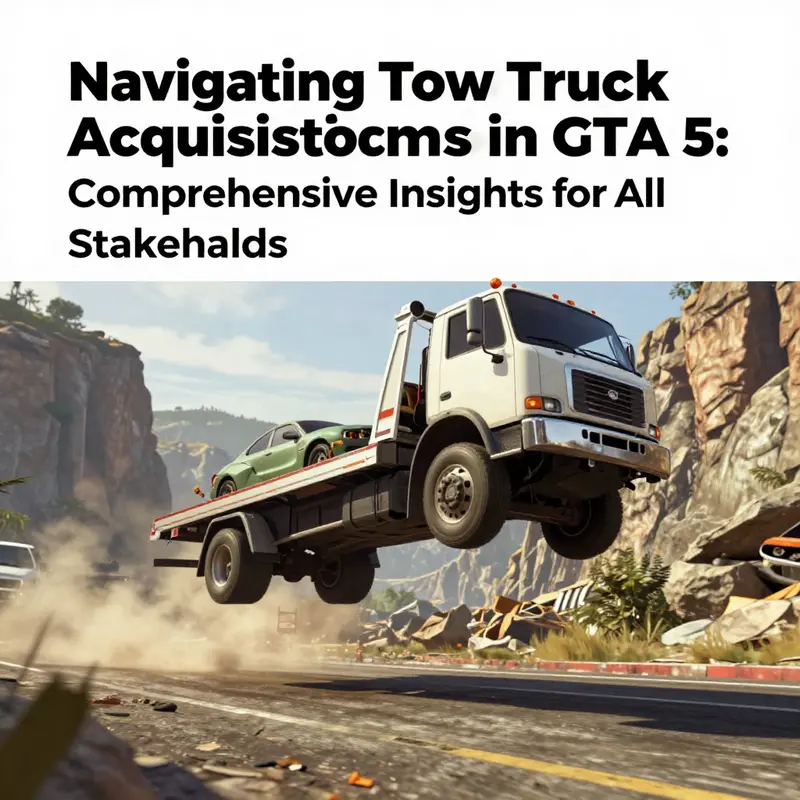
In the sprawling maze of Grand Theft Auto V, the tow truck rarely stands in the spotlight the way a sports car or a sniper rifle might. Yet when you trace the threads of the game’s most consequential moments—the pre-heist choreography that sets up your bank job, the way you maneuver through a city that refuses to stay quiet, the little details that turn a plan into a catastrophe or a victory—you quickly see that the tow truck is less a tool and more a quiet catalyst. The chapter you’re reading is not a simple catalog of where to find a tow vehicle in GTA 5; it follows the way special missions involving tow trucks braid into the narrative arc of the game, shaping choices, timing, and the feel of the heist itself. The most instructive moments are not the blockbuster heist cutscenes but the small, precise mechanics that tug at your sense of control, reliability, and risk management when you haul assets under pressure.\n\nThe first crucial waypoint comes with the mission that many players remember as the Tow Truck assignment. Designated as a Pre-Heist Mission, this task places Lester Crest at the helm of a plan that hinges on you mastering the towing mechanic in a pinch. You are asked to deliver a vehicle that wears a clever disguise, masquerading as an ordinary car while concealing a more valuable asset. The job is not just to get from point A to point B; it’s to understand the timing, the balance of weight, and the alignment of the tow hook with a target that is not going to wait for you to set up. The towing operation becomes a test of your spatial awareness as much as your nerve. You must line up the hitch, engage the hook, and then guide your load across streets that can bite back at any moment—police, onlookers, and the unpredictable rhythm of Los Santos traffic. If you miss the signal, if you jerk the tow too hard or overshoot a corner, the payload can detach, rattle loose, and ruin the operation in a heartbeat. In that sense, the Tow Truck mission isn’t merely about moving a crate; it’s about learning to manage momentum and precision when the clock is ticking and every second drags you closer to a potential confrontation with the city’s momentum.\n\nThe significance of this mission ripples forward into the larger structure of the game’s most consequential chapter—the hotel assassination. It’s easy to think of the later heist as the centerpiece, the moment the plan feels truly cinematic. Yet the hotel job’s success rests on the groundwork laid by the Tow Truck task. The vehicle you transport in the pre-heist sequence doesn’t just arrive at a destination; it acts as a key component that unlocks a chain of decisions. When you reach the rendezvous and the getaway vehicle is hidden or placed in a precise position, you transfer momentum from a small, almost domestic operation into a bank-level escalation that demands calm, timing, and a cool head under pressure. The connection is explicit in the way the mission designers weave the tow mechanics into the broader plan: a single misstep in the towing phase can cascade into misalignment for the later sequence, making the difference between an impeccable score and a costly failure. This is what gives the motive force to the entire set of tasks that follow. It’s a reminder that the game’s most dramatic moments are not always tied to a firefight or a sprint; sometimes they hinge on the quality of a hook, a careful pull, and the quiet economy of a vehicle being used exactly as planned.\n\nBeyond the scripted mission arcs, the game expands the practical world of tow trucks through a pair of accessible, playable avenues. In Online GTA Online, players can acquire a tow truck through the in-game commerce ecosystem. The vehicle category labeled as “Tow Truck” in the Vehicle Dealer menu and the Los Santos Customs network allows you to select a model that matches your crew’s needs, your playstyle, and your economic strategy. The option to purchase or summon a tow vehicle in a shared world turns towing into a business-grade operation, where you can carry cargo, rescue stranded cars, or stage creative chaos as part of a crew’s fleet. The idea here is not to collect trophies but to build utility: a tow truck becomes a rolling tool that can secure a quick path through a bottleneck, stage a dramatic escape, or serve as a mobile platform for mischief or mission-specific tasks. In this online ecosystem, you are not merely testing a mechanic; you are investing in a flexible asset that offers strategic value across a variety of player-driven objectives.\n\nOffline, in the Story Mode, the landscape shifts from acquisition to adaptation. The game does not present the tow truck as a direct consumer purchase you can stroll into a showroom to claim. Instead, the world rewards improvisation and situational problem-solving. You scout locations that historically give you access to a tow vehicle when you need one: near the airport area where Lester’s workspace sits, the industrial garages scattered through Los Santos’ industrial cores, and the San Fierro docks where some missions offer opportunities to drive away with a rig that has more utility than your standard car. These are not just random spawn points; they are nodes in a network of play where your choices matter. If a mission calls for a tow truck, you must be prepared to locate and take it, then manage the reprioritization of your tasks on the fly. The game rewards situational awareness: recognizing an opportunity to pair a tow with a secondary objective, or realizing that your best run might involve improvising a tactical route through a cluttered urban map so you can reach a tow vehicle before your rivals or the clock do.\n\nThere are other moments in the broader GTA V experience where tow trucks appear, not as grand set-pieces but as engines of the game’s rhythm. A side mission sometimes tasks you with a timed drive that involves towing a vehicle to a precise stopping point, testing your pacing and control in a way that echoes the more formal pre-heist tasks. In the context of special missions, these events emphasize a simple truth: without practical competence with towing, the game’s larger gambits tend to feel brittle. The sense of flow—the moment when every component aligns and you feel the plan click into place—depends on your ability to hook, pull, and settle a load with minimal fuss. It’s not merely about getting from A to B; it’s about shaping the tempo of a mission so that the rest of the crew can execute the next move with confidence and precision.\n\nAs you move from the private, offline space to the social, online space, the tow truck emerges as a bridge between planning and execution. It becomes a tool that is at once humble and indispensable, a reminder that some of the game’s most memorable scenes emerge when you combine restraint with audacity. The pre-heist work is a study in patient, deliberate action. You learn to read the city’s geographies—the routes that minimize exposure, the alleys that offer concealment, the gaps in the traffic that can be exploited for a clean tow. You learn to monitor your blip with care, to time your movements to beat police attention, and to anticipate what comes after the hook is latched. These are the kinds of practical refinements that begin to separate the veteran players from those who rush through the action.\n\nFor players who want a deeper dive into the mechanics, resources, and community-driven strategies around tow trucks, a good starting point in the broader knowledge network is the way the community documents and analyzes these missions. The lore around the Tow Truck mission is well preserved in fan-guided walkthroughs and strategy pages that distill the sequence, the objectives, and the conditions for achieving a gold medal in the pre-heist task. These guides keep the knowledge current and offer insights that extend beyond memory, tracing how each step interacts with the game’s physics, mission timers, and the city’s dynamic environment. If you’re charting your own path through the Special Missions, you’ll likely find that the primary value of these resources lies in how they illuminate the subtle decisions that determine success under pressure. In the end, the tow truck’s value is not only measured in the cargo it carries but in the way it teaches you to manage risk, time, and space when the city itself seems to urge you toward haste.\n\nTo connect this chapter with a broader practical thread—how to prepare for and navigate the practicalities of mission design and execution—a useful hub exists in the community blog that tracks vehicle utility and mission-specific strategies. In particular, you can explore essays and posts that discuss readiness, resource allocation, and emergency-response considerations for island fleets and heavy transports. The hub offers a range of perspectives on how drivers and crews prepare for high-stakes tasks in dynamic environments, which can help players translate the tow-truck experience in GTA 5 to a more general mindset about readiness and adaptability. For readers who want a direct link, see the following resource: theislandtowtruck.com/blog/. This internal reference provides a useful lens on fleet management and emergency-response thinking that complements the game’s tow-truck scenarios and can inspire creative approaches to mission planning in GTA 5.\n\nAs with any complex mission design, the ultimate takeaway from the special-tow-truck moments in GTA 5 is the enduring reminder that mastery often rests in the nuanced, almost invisible actions—a careful hook, a patient pull, and a route chosen with awareness rather than bravado. The city’s chaos will always press back, but with a tow truck in hand, you learn to choreograph movement, balance risk, and keep the mission’s tempo under your command. That is the heart of how these special missions shape the path to the bigger heists: not as a flashy standalone spectacle, but as a careful, cumulative craft that makes the difference between a plan that dissolves under pressure and one that carries you through to the bank and beyond. For players who want to explore the details beyond the core narrative, the same spirit of careful timing and reliable handling that defines the Tow Truck mission will serve you well, both in single-player precision and in the bustling, cooperative tempo of online play. The tow truck thus stands as a silent tutor within GTA 5—an instructor in patience, momentum, and the art of turning hauling into a strategic act, not merely a means of transportation.\n\nExternal reference: For a detailed walkthrough of the Tow Truck mission, see the IGN guide on GTA 5 Tow Truck.\n\nExternal resource: https://www.ign.com/wikis/grand-theft-auto-v/Tow_Truck
Tow Truck Trails: Navigating GTA 5’s Rescue Rigs with Community Guides
When you look for a tow truck in GTA 5, the path isn’t just about walking into a showroom or driving a model off a curb. It’s a journey shaped by how players share knowledge, map locations, and time the hunt around the game’s rhythms. This chapter treats that journey as a single, unfolding trail rather than a set of isolated steps. It honors the way online communities knit together practical, field-tested routes with the in-game mechanics that govern both Online and Story modes. In short, finding a tow truck is as much about reading the map as it is about reading the room of players who have already tested the terrain. The result is a fluid, intertwined approach that feels less like following a checklist and more like following a conversation that has been brewing in the game’s corners since it first launched.
In GTA Online, the straightforward logic is that you acquire vehicles by purchasing them or by leveraging the marketplace-like panels that the game provides for vehicle ownership. The most common route is to browse the in-game garages and vehicle dealers, scanning for a category that houses tow trucks. If your aim is immediate utility rather than long-term collection, the purchase path is fast and reliable, and it lets you tailor features such as paint, armor, or performance packages to your mission loadout. For players who want to diversify their fleet or who are testing the waters of the vehicle market, there are often alternative avenues—private listings or limited-time offers—that appear in the in-game economy. The practical upshot is simple: stay flexible, and let the vehicle menu guide your choices.
In Story Mode, the landscape shifts. You can’t buy a tow truck outright in the same way as Online, which prompts a more exploratory mindset. The world’s layout becomes your guide: tow trucks may appear in familiar nodes near busy hubs like the airport precincts, industrial zones, or waterfront docks. These are not random spawns; they reflect the game’s designed rhythms—areas where towing operations would plausibly occur during missions or as part of a broader set of tasks. The absence of a direct purchase option doesn’t close doors. It opens paths, inviting you to observe the map with a veteran eye and to plan your approach around the game’s mission structure.
The most conspicuous in-world moment that makes tow trucks feel tangible in Story Mode is the Truckin’ mission itself. This sequence is crafted to immerse you in the role of a towing operator within the narrative arc. When you drive a tow truck through this challenge, the vehicle becomes a working tool rather than a collectible. The mission rewards are not limited to progression alone; they include hands-on practice with the vehicle’s handling, the towing mechanics themselves, and a sense of how these work in high-pressure situations. Completing such a sequence offers immediate in-game familiarity with the type of tasks you’ll encounter later, whether you’re chasing a stunt tallied for a side challenge or simply trying to complete a set of mission objectives with efficiency.
Beyond the core game modes, community-driven resources shape how players approach tow truck discovery. A broad network of guides, walkthroughs, and map tips exists to compress weeks of play into reliable, repeatable patterns. These guides function as a collective memory of the game’s world. They translate the intuition of seasoned players into accessible, repeatable routes that newcomers can adopt without trial-and-error fatigue. The strength of these resources lies less in a single map pin than in the cross-pollination of observations: the way a location’s usefulness is validated by dozens of players, how a particular trick—like timing a spawn window or aligning a mission sequence—works across different playstyles and versions of the game.
To honor this collaborative knowledge, many players pivot to trusted community walkthroughs and strategy compendiums. The value of this approach isn’t simply about where to find a tow truck; it’s about understanding how the game’s cycles—missions, spawns, and dealer stock—interlock with real-player experience. A guide that explains the logic behind a spawn pattern remains more valuable than a static list of coordinates. It teaches you to read the map, to calibrate your expectations for time of day, mission state, and the fluctuations of the in-game economy. In practice, this means you’re not chasing a rumor; you’re following a method that has stood up to scrutiny across multiple play sessions and community feedback cycles.
The practical payoffs of leaning into community-guided methods are evident in how you approach both sides of the divider between Online and Story Mode. In Online, you can toggle between immediate access and longer-term inventory management. This flexibility is especially useful when you’re building a fleet for emergency response or event-based challenges that demand reliable towing capability. You might begin with a quick purchase to cover the immediate need, then gradually expand your stable of tow trucks through legitimate market avenues, all the while cross-checking with community tips about stock rotations and seasonal shifts in dealer offerings. The goal here is not to amass a single vehicle but to establish a practical, resilient lineup that supports the tasks you’re most likely to face in your play sessions.
In Story Mode, the storytelling layer adds another dimension: the sense that towing is part of a character’s arc, not merely a tool for destabilizing a mission’s tempo. The moments when you stumble upon a tow truck near the docks or in an industrial complex become useful data points for planning future endeavors. The truism that guides many players is simple: treat the map like a living document. Every spawn, every patrol route, every mission node is a piece of the broader narrative puzzle. When you learn to read these patterns, you reduce the friction of operations—whether you’re supporting a host of side tasks or pursuing a sequence that requires consistent tow work under time pressure.
Within this ecosystem, a small but meaningful practice emerges: integrating a single, well-curated internal resource into your routine. For readers seeking a consolidated take on fleet organization and towing logistics that aligns with the broader emergency-response mindset, consider exploring the Island Tow Truck blog. It offers a digest of insights that resonate with the way players think about equipment and readiness in shared virtual environments. You can find it here: the Island Tow Truck blog. This link is not about duplicating in-game advice; it’s about expanding the framework you use to interpret how equipment—towed in real and in-game worlds—fits into a larger operational picture. The approach complements in-game exploration by inviting you to think about readiness, maintenance, and rapid deployment, themes that echo through both GTA’s towing tasks and real-world fleet operations.
As you weave together these resources, you’ll find your method becomes less about chasing a fixed location and more about building a flexible search pattern. The idea is to map your own reliable routes and then overlay them with community-tested notes. This synergy yields a personal navigation system: you know where to look, you know when to expect a tow truck to appear, and you know how to adapt when stock shifts or a mission’s requirements demand a different piece of hardware. The process of learning through community input is, itself, a form of practice in situational analysis. It trains you to observe, adjust, and execute with confidence, turning a potentially frustrating scavenger hunt into a predictable, repeatable routine.
For players who want a more technical anchor, there is an advantage in understanding the specific mission scripts that govern tow truck appearances and usage. The Truckin’ challenge, for instance, does not only test speed; it tests your ability to manage towing within strict time windows. Recognizing the cues—the moments when a tow truck becomes the optimal tool, the paths that minimize detours, and the timing that aligns with mission progress—makes you more efficient in other towing scenarios, too. This cross-application mindset is what community resources excel at: they distill concrete tactics into transferable habits that improve not just one mission, but your overall approach to the game’s towing tasks.
While the knowledge network is valuable, it is prudent to balance it with a personal investigative cadence. Every session is an opportunity to test locations, confirm spawn windows, and verify dealer stock through fresh play. A good practice is to reserve time for a quick reconnaissance run in Story Mode to gauge what the world looks like at different hours and in different mission states. Then, when you switch to Online play, your observations translate into sharper decision-making about where to shop, which vehicle dealer feeds to monitor, and how to set up your towing operations for a given assault or stunt. The alignment of practical steps with the game’s evolving dynamics creates a more reliable flow, so that your tow truck becomes not just a vehicle, but a strategic asset in your GTA 5 toolkit.
In closing, community resources for finding tow trucks in GTA 5 are more than a convenience; they are a method for shaping your playstyle. They remind you that the game is an intricate system of locations, rules, and patterns, all of which reward patient observation, disciplined testing, and thoughtful adaptation. By embracing this approach, you acknowledge that your success with towing goes beyond the momentary thrill of acquiring a vehicle. It becomes part of a larger practice of navigating a living world with curiosity, precision, and shared knowledge. For readers who want to deepen this practice, a practical starting point is to explore the linked internal resource noted above and to remain open to the evolving guidance the community continues to generate. At the same time, when you need a definitive, line-by-line breakdown of specific spawn locations and challenge conditions, consult established external references that compile the best-tested routes and tips across platforms: https://www.gamefaqs.com/ps4/gta-v/faq/726893-tow-truck-challenges-and-locations. This external guide consolidates community-tested insights and provides a reference point you can cross-check against your own play sessions, helping you refine your approach to finding and using tow trucks in both Online and Story modes.
Final thoughts
Navigating the landscape of tow truck acquisition in GTA 5 offers invaluable opportunities for various local stakeholders, enriching gameplay and enhancing vehicle management. From utilizing online marketplaces to scouting vehicles in story mode and tapping into community wisdom, players can effectively secure the towing vehicles they need. Whether you run a local auto repair shop, manage a fleet, or are simply an avid player, understanding these methods ensures you’re well-equipped to handle any towing challenges that arise in the game.