The Rivian R1T is not just another electric truck; it’s a marvel of engineering that redefines what a workhorse can be. For local auto repair shops, dealerships, property managers, resort operators, and commercial fleet operators, understanding how much this powerhouse can tow is crucial for maximizing its utility. This article explores the Rivian R1T’s towing capacity, essential features, how it compares with other electric trucks, practical applications for various business needs, and key considerations for potential owners. Each chapter adds depth to the overall understanding, enabling you to make informed decisions about integrating this vehicle into your operations.
Tow Power in the Electric Era: How Much Can an Adventure-Ready Electric Pickup Tow?
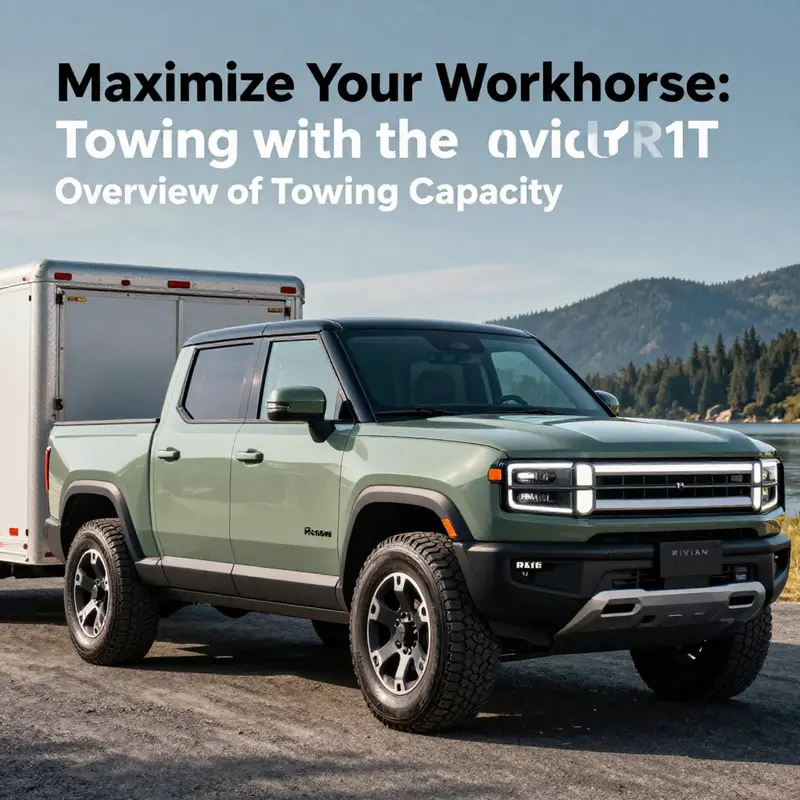
Across the expanding landscape of electric pickups, towing performance remains a decisive measure for planners, outdoors enthusiasts, and fleet operators alike. The moment a trailer, boat, or heavy camping setup becomes part of the equation, total capacity depends not just on raw power but on a carefully balanced blend of drivetrain design, cooling, braking, and chassis geometry. The most capable configurations in this class push a potent combination of torque, traction, and control into a package designed to deliver real-world performance without sacrificing reliability or safety. When the factory towing package is installed and the vehicle is properly configured, the maximum towing capacity on offer for this class sits at an impressive figure, established to handle rugged work and demanding adventures alike. The precise number, of course, varies with year, trim, and options, but the archetype remains consistent: a heavy-duty electric pickup that can pull substantial loads while still serving as a practical daily driver. To understand what this means in concrete terms, it helps to examine the core contributors to towing ability and how they interact in everyday use. The powertrain in question is a dual-motor setup that channels energy to the wheels with a level of immediacy and finesse unique to electric platforms. This arrangement can deliver on the order of hundreds of horsepower and well over a thousand pound-feet of torque, depending on the configuration and mode selected. The result is not merely brute force, but a broad spectrum of usable torque that remains accessible at low and mid RPMs, where a trailer’s initial pull is most critical. That torque is what helps the vehicle accelerate with a load behind it, whether ascending grades or maintaining speed on uneven terrain, and it also plays a crucial role in maintaining stability when towing heavy or awkwardly balanced trailers. The ability to deliver consistent torque while the battery and electronics work to manage heat is a defining feature of this segment. A robust chassis supports the weight and dynamics of a trailing load. Design choices that emphasize stiffness and cornering precision help preserve steering feel and control, even when the stance is loaded with gear. A carefully engineered suspension system contributes to stability by preserving a favorable weight distribution between the axles and minimizing pitching motion as wind or slope changes subtly alter the load on the hitch. In this context, the towing package is more than a single component; it’s a curated package of hardware and software that enables the vehicle to perform reliably under load, including an integrated trailer brake controller and a heavy-duty cooling system that keeps power electronics within safe thermal bounds during extended pulling sessions. The ability to tow up to a defined maximum with confidence hinges on these interlocking elements. It’s worth noting that payload capacity remains a separate figure from towing. While the former describes how much cargo can be carried in the bed and cabin, the latter describes how much can be pulled behind the vehicle. In many configurations, payload capacity is substantial, but the limiting factor for towing is often the thermal and braking design required to keep a heavy trailer under control. In the most capable configuration the towing capacity can reach an upper limit that places the vehicle among the top tier of electric pickups for pulling trailers. The number is not merely a headline figure; it represents a practical ceiling that is tested and verified through official specifications and independent reviews. For customers who need broader family or camper-focused capacity, there is variation within the same family of vehicles. A closely related model in the lineup offers a notable but lower towing capacity—illustrating how designers tailor power, chassis, and weight distribution to balance different use cases. In this scenario, a broader range of customers can still achieve substantial towing capability, while benefiting from other attributes such as interior space, comfort, or efficiency. To confirm, the stated maximum towing capacity—when the proper towing package is installed and conditions are favorable—has been validated by manufacturers and corroborated by independent automotive outlets that test and report on real-world performance. Those evaluations emphasize that numbers on the page reflect ideal or near-ideal conditions: a straight line, level terrain, flat air, and trailer weights within specified limits. Real-world results tend to be influenced by several variables. Elevation, ambient temperature, wind, and road grade all affect performance. Trailer design—length, height, tongue weight distribution, and braking system—also changes outcomes. When a trailer is properly loaded with a safe tongue weight and the hitch is matched to the vehicle’s rating, dynamic stability improves. In practice, the best results often come from a disciplined approach to loading, hitching, and driving. The towing process itself demands attention to details that can make a meaningful difference in both safety and efficiency. For example, a heavy load behind an electric pickup will demand more from the cooling system as heat builds in the powertrain during sustained pulls. The integrated trailer brake controller helps ensure that braking force at the trailer is coordinated with the vehicle’s own braking, which reduces the risk of wheel lockup or sway on descents or corners. Traction control systems, designed to preserve grip on slippery or uneven surfaces, play a critical supporting role when traction is compromised by a damp road or gravel. Those features, taken together, create a towing package that enables confident, controlled performance across a wide range of scenarios. When considering a family-oriented variant in the same lineup, the maximum towing capacity decreases, though the figure remains competitive within the electric truck and SUV segment. The lower rating reflects a balance of payload space, ride comfort, and interior practicality that appeals to buyers who anticipate light- to moderate-towing needs rather than heavy-duty hauls. The overall message is not simply about raw numbers; it is about how the vehicle’s architecture, safety systems, and engineering choices align to deliver predictable, repeatable performance under load. Independent reviews have substantiated the general thrust of these capabilities, testing towing in controlled environments and reporting consistent behavior that aligns with manufacturer specifications. They emphasize that the maximum figure is achieved only under suitable conditions and with the proper equipment. For anyone evaluating towing capabilities, the key takeaway is that the stated maximum is a ceiling—an important reference point—but the real-world experience will hinge on configuration, load, and terrain. Even so, the ceiling itself is part of the appeal. It signals that an electric pickup in this category can handle demanding towing duties without the compromise that used to accompany electric powertrains, such as limited torque delivery or restricted cooling capacity. The practical implications for owners, contractors, and outdoor enthusiasts are meaningful. If your routine includes frequent trailer use, you will want to verify that your vehicle is equipped with the appropriate towing package and that you understand the limits in terms of tongue weight and gross combined weight rating. A thoughtful plan before departure—checking trailer brakes, ensuring proper hitch alignment, confirming weight distribution, and accounting for weather and road conditions—can help maximize the towing experience while preserving the longevity of the powertrain and battery system. For readers who want to explore related operational considerations—such as emergency preparedness, fleet management, and practical strategies for sustaining performance on island routes—the Island Tow Truck blog offers a collection of resources that explore fleet operations, emergency response planning, and best practices in towing scenarios. You can find that resource here: the Island Tow Truck blog. For those who wish to verify official specifications from the manufacturer, consult the dedicated specification pages for this class of electric pickup, which provide the authoritative numbers and the recommended configurations. External resources can supply context for how the claimed numbers translate into real-world use, including how range and efficiency interact with towing loads and terrain. External resource: https://www.rivian.com/vehicles/r1t/specs
Tow Power Reimagined: Exploring the Maximum Haul of an Electric Adventure Truck
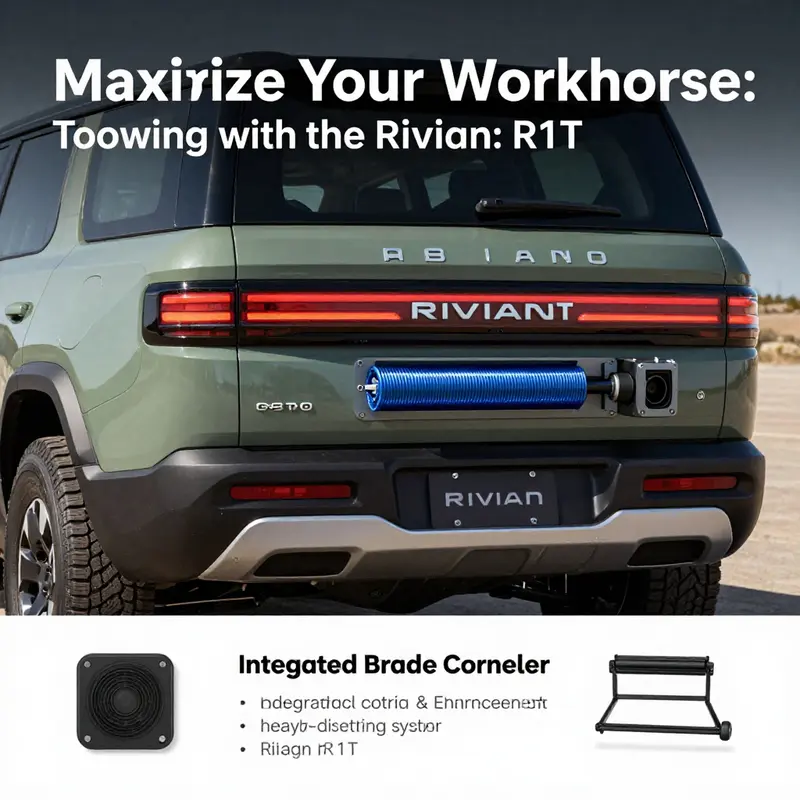
In the evolving landscape of electric utility vehicles, the most compelling shift isn’t only about efficiency. It’s about capability—how far power can be pushed, and how confidently a vehicle can pull a heavy load through varied terrain and weather. This chapter looks at one of the standout examples in the electric pickup category, a truck designed from the ground up with outdoor exploration in mind. When properly equipped with the factory towing package, this all-electric pickup offers a towing capacity of up to 11,000 pounds. That figure, substantial by any standard, places it among the top contenders in its class for towing performance. It isn’t a casual boast either; the capability rests on a carefully engineered combination of drivetrain, cooling, braking, and chassis systems that work together to maintain stability and control when a trailer is in tow.
Power is the first lever in the towing story. The vehicle’s dual-motor setup outputs a combined up to 800 horsepower and more than 900 pound-feet of torque. That kind of power is not just about raw acceleration; it translates to real-world capability when pulling a heavy load from rest, maintaining momentum on grades, or negotiating gusty crosswinds that can complicate a tow. The torque curve in electric propulsion tends to be immediate, so the initial launch away from a hitch point and the sustained pull over long hills feel notably decisive. In practical terms, the heavy loads associated with towing respond promptly, and the vehicle can manage climbs without the engine-like hesitation that sometimes accompanies heavy displacement powerplants. This isn’t merely about raw numbers; it’s about a towing experience that remains composed under demanding conditions.
To keep that power available without overheating or performance degradation, the truck includes a heavy-duty cooling system that targets power electronics and the motor(s). Towing generates extra heat, especially when you’re hauling through repeated acceleration or sustained climbs. A robust cooling system helps ensure the drivetrain sustains its performance without a dip in expedition-grade capability. Alongside cooling, the integrated trailer brake controller becomes essential. It allows the driver to match the trailer’s braking force with the tow vehicle’s brakes, producing smoother deceleration and reducing wear on both the tow vehicle and the trailer’s brakes. This feature is part of a broader suite of trailer-specific technologies designed to keep towing safer and more predictable, even as the trailer adds bulk and wind resistance.
Across the chassis, traction control and stability systems adapt to the demands of towing. When towing, weight shifts and trailer sway can threaten truck control. Advanced traction control helps maintain tire grip, distributing power and braking as needed to keep the vehicle on a predictable path. In tandem with stabilizing software, the pickup can manage the dynamics of towing through curves, on rough surfaces, and across slopes. A trailer stability control feature automatically intervenes when sway is detected, applying targeted braking and torque adjustments to restore steadiness without requiring the driver to intervene manually. The result is a more confident tow, whether you’re negotiating a winding mountain road, traversing a gravel road, or maneuvering in and out of a crowded campsite.
The towing package also includes a built-in hitch receiver and a structured path for the trailer to connect securely. This structural confidence matters because it’s not only about strength; it’s about alignment and predictability. The hitch interface supports consistent alignment when coupling and uncoupling, reducing the risk of hitch misalignment during setup. An integrated trailer monitoring system provides real-time feedback on trailer lights and braking status through the vehicle’s infotainment display. This visibility is more than convenience; it’s a safety feature that helps the driver confirm that all trailer functions are synchronized with the tow vehicle during travel. The combination of mechanical interfaces and electronic feedback helps reduce the cognitive load on the driver and lets you focus on the road and the surroundings rather than on micromanaging the trailer.
But the towing figure—11,000 pounds—depends on a specific configuration and proper setup. It is the peak capability under ideal conditions and with the required towing package installed. Real-world towing is influenced by a spectrum of factors: the weight and balance of the trailer, the weight distribution setup, road grade, altitude, ambient temperature, wind, and even the condition of the tow vehicle itself. A trailer’s weight is not a single number; it comprises tongue weight and the trailer’s overall gross weight, both of which affect braking, acceleration, and handling. A heavier tongue weight improves stability but reduces payload capacity for cargo in the bed or cabin. Conversely, a higher gross trailer weight taxes the powertrain more and can shorten range. The interplay between what you tow vs. what you carry inside the vehicle is not only about the numbers; it’s about how the system is configured to handle that combination across a typical journey.
Alongside these mechanical and electronic systems, the rock-solid premise of electric towing is the instant torque available at zero RPM. The response is immediate, which helps with on-road merge and lane changes when you’re pulling a heavy trailer. Yet this same instant torque can have a range cost. A fully electric drivetrain consumes more energy when delivering high-power outputs for extended periods, especially in towing scenarios where the vehicle must sustain momentum up grades or into headwinds. For prospective buyers, this means planning is essential. If your trips regularly involve long highway stretches with significant hills or mountains and you routinely tow near the maximum rating, you’ll want to account for range changes and plan charging accordingly. The manufacturer’s guidance emphasizes that towing while maintaining the highest possible performance requires the towing package, proper configuration, and adherence to model-year specifications and trim-specific limits.
The payload figure is equally noteworthy, though separate from towing. A payload rating—reported as up to around 20,000 pounds in some configurations—represents how much cargo you can carry in the bed and cabin without considering the trailer mass. This number matters for gear, equipment, or supplies you plan to move in daily use or on weekend expeditions. The distinction between payload and towing capacity is critical. A truck can tow a maximum of 11,000 pounds while also being able to carry several tons of gear, but pushing toward both extremes routinely demands careful weight management. Distributing weight correctly and ensuring the trailer is properly staged behind the tow vehicle is essential. In practice, the same principles that govern payload—even load distribution and secure stowage—also influence towing stability when you’re locking a heavy trailer into the hitch.
The adventure-oriented nature of the vehicle family to which this pickup belongs is matched by thoughtful towing features that improve the experience in the field. Advanced trailer stability control, built-in trailer monitoring, and integrated trailer brake control offer a layer of confidence that makes towing less stressful. These features are especially valuable when you’re far from urban services, moving through remote corridors, or maneuvering in tight spaces at a campsite or marina. Realizing the full advantage of the system means respecting the limits and understanding how the different subsystems interact. Tow with the package installed, acknowledge heat generation under heavy use, and factor in range considerations when planning trips where charging options are sparse.
In terms of how this capability translates to everyday use, the numbers matter, but the story is about reliability and predictability. The maximum towed weight signals what’s possible, but the actual experience depends on how you configure and operate the vehicle. The towing package does not only add horsepower in the pull; it adds the equipment and intelligence required for a safer, steadier tow. The experience becomes especially meaningful if your work or recreation requires hauling sizable trailers, boats, or campers. The ability to tow up to the stated limit with confidence, and to do so with a suite of safety and convenience features, elevates what is possible for electric trucks in this class.
For readers who want to ground this discussion in a broader context, practical guidance on towing safety and preparedness from a tow-focused resource can be a useful companion. For example, you can explore a trusted industry perspective at the Island Tow Truck blog, which offers practical insights on towing operations and preparation. the Island Tow Truck blog.
As with any vehicle of this class, the official specifications for your exact model year and trim will define the precise limits and capabilities. The maximum towing figure is a ceiling, not a guarantee for every road and trailer combination. Always verify the specification page for your configuration and consult the owner’s manual for any model-year caveats, including recommended tongue weight, required trailer stability features, and any explicit restrictions tied to towing while actively charging or during extreme temperatures. In addition, when you plan to tow, it is prudent to consider the overall system readiness—brakes, hitch compatibility, wiring, and trailer brakes—alongside the vehicle’s own energy management. This approach helps ensure both safety and reliability on the road or off the beaten path.
For readers seeking direct, official technical context, the manufacturer’s dedicated resources offer the most authoritative guidance on what configurations enable 11,000 pounds of towing capacity and which options are required to reach that ceiling. The information there reinforces the idea that the towing capacity is not just a number but a built-in ecosystem of components designed to support heavy loads with confidence across a range of operating conditions. In the end, the most meaningful takeaway is that today’s electric adventure trucks deliver real, usable towing capability that rivals many traditional options while adding the benefits of instant torque, refined control systems, and an integrated approach to trailer management that aligns with the practical demands of outdoor exploration and work alike.
External resource reference: For the official specifications and detailed configuration options, see the manufacturer’s information page. https://www.rivian.com/vehicles/r1t
Tow Power in the Electric Arena: How the 11,000-Pound Benchmark Shapes the Choice in Modern EV Pickups
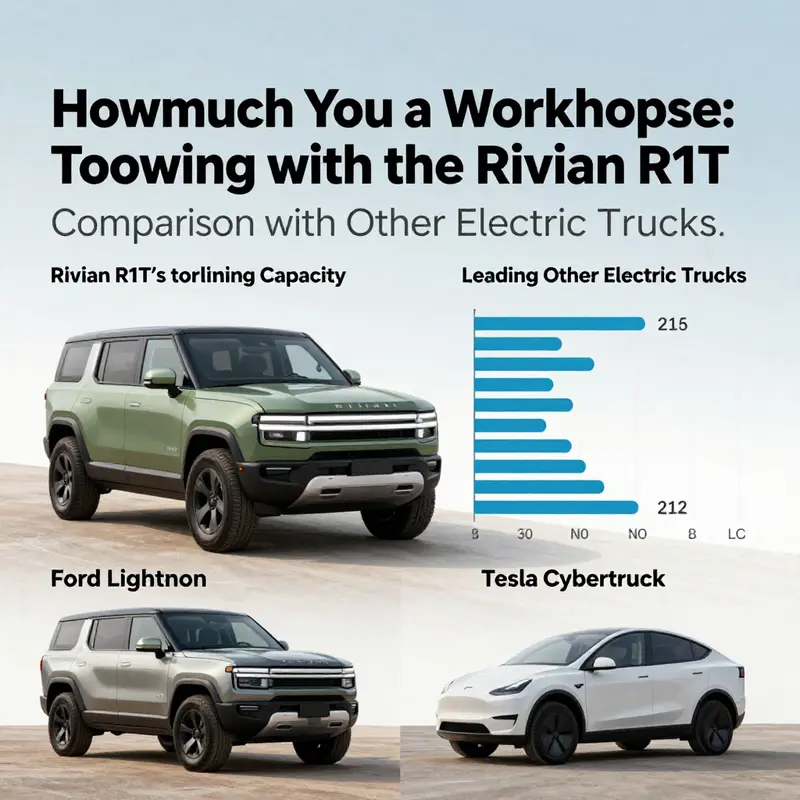
Tow power has become a defining metric in the evolving field of electric pickups, and the flagship electric model in this category aims to sit near the top of the class when it comes to raw towing capability. The official figure of up to 11,000 pounds, achievable when the factory towing package is installed and the vehicle is properly configured, signals a performance threshold that electric trucks are only beginning to approach. This isn’t merely a statistic; it’s a signal that the maker behind this electric pickup intends to merge utility with the efficiency and technology benefits of electric propulsion. For buyers who need to haul heavy trailers, boats, or heavy equipment, the 11,000-pound rating matters. It translates into real-world peace of mind when the trailer is hitched, the brake controller is set, and the road opens up with a load behind the truck. The manufacturer’s engineering philosophy centers on delivering torque smoothly, cooling that keeps power steady under load, and a chassis tuned to resist sway when a sizable payload sits behind the hitch.\n\nMax towing is grounded in a specific configuration. The 11,000-pound limit is not a universal number that applies in every situation. It presumes the presence of the factory towing package and a trailer that is compatible with the vehicle’s hitch, braking system, and overall weight ratings. In practice, the towing capacity line can shift with changes to battery state of charge, ambient temperature, and terrain grade. At its core, the weight behind the hitch multiplies the demand on the truck’s electrical drivetrain, cooling, and braking systems. The same truck that can lug a heavy trailer up a mountain pass may show a different performance profile on a steep, winding road with wind resistance added to the equation. In short, the 11,000-pound figure is a benchmark, not a guarantee under every conceivable condition, and it rests on the vehicle being properly equipped and loaded within safe limits.\n\nBeyond towing, the capability sits within a broader package of features designed to support towing as a practical, everyday task. A heavy-duty cooling system keeps temperatures in check during prolonged draws, ensuring that performance doesn’t fade as the trailer increases the thermal load. An integrated trailer brake controller helps maintain braking harmony between the tow vehicle and the trailer, a crucial factor for stability on the highway or when descending grades. Traction control and chassis software contribute to controlled acceleration, steady braking, and reduced wheel slip, especially on slippery surfaces or uneven pavement. All of these elements work together to translate the raw number into a dependable towing experience, one where the vehicle remains composed even as the mass behind it grows. When considering towing in the real world, it’s important to look at the whole ecosystem that supports weight behind the hitch, not just the headline rating.\n\nWhen this model compares to the broader field, it asserts itself with a clear advantage in raw towing power. A rival pickup from a well-established mainstream automaker can offer a maximum around 10,000 pounds when properly equipped. Another major rival can approach that same ceiling, but the 11,000-pound mark still stands out. The distinction isn’t solely about pounds; it’s about what those pounds represent in terms of drivetrain capability, control systems, and the engineering risk taken to enable such capability while preserving efficiency and reliability. The comparison underscores a trend in the market: electrical architectures are evolving to handle heavier and more confident towing without sacrificing the fundamental benefits that an electric platform provides, such as instant torque and regenerative braking that can assist in controlling a loaded trailer. Real-world results vary with a host of factors, including terrain, wind, grade, and the trailer’s own braking and weight distribution.\n\nThe design philosophy behind the towing capability emphasizes a balanced approach. The powertrain uses a dual-motor arrangement that channels torque to minimize wheel slip and distribute load across the drive wheels. Torque vectoring helps steer a towed load with confidence, reducing the tendency for the trailer to behave unpredictably during lane changes or gusty crosswinds. The result is a towing experience that feels more controlled at highway speeds than one might expect from an electric platform with rapid acceleration off the line. The cooling system remains active, monitoring heat during extended climbs, while the integrated trailer brake controller provides the needed modulation so the trailer’s brakes work in harmony with the vehicle’s brakes. This integrated approach is as much about control as it is about brute force; the ability to place weight behind the hitch in a stable, predictable way is what sustains confidence when the trailer is heavy and the road is not.\n\nPractical towing scenarios illuminate what the 11,000-pound target means for everyday use. Hobbyists who tow large campers or boats will find that the vehicle can maintain steadiness through transitions, while contractors moving heavy equipment may rely on the truck for both mobility and utility. The interior layout, the payload capacity, and the storage options contribute to overall utility. Separate from towing is payload capacity, which is substantial—up to a significant figure that reflects the ability to carry cargo in the bed itself. This distinction matters: payload is about what you carry in the truck, while towing is about what you pull behind it. Both numbers shape how you plan trips, how you load up, and how you budget for fuel or charging along the way. A high payload capacity complements towing by allowing the operator to distribute weight efficiently, keeping the center of gravity in check and preserving braking performance.\n\nAs with any high-torque, high-load situation, real-world results can deviate from the spec due to several variables. Battery state of charge has a direct effect on power delivery and thermal management. A near-empty battery will not only reduce the maximum available power but also reduce the ability of the cooling system to moderate temperature as load increases. Terrain matters—wind, grade, and surface conditions all influence how much of that 11,000-pound potential can be utilized at any moment. Even the trailer itself, its braking system, hitch class, and weight distribution influence performance. A trailer with efficient weight distribution, properly wired brakes, and a robust hitch makes the towing task easier, whereas a mismatched setup can magnify sway, overheating, or uneven braking. This is why the towing package and a careful adherence to manufacturer guidelines become essential: they help ensure that the large-numbers capability translates into reliable, repeatable performance, not a one-off demonstration.\n\nFor readers weighing their options, the broader market context matters. The appeal of a high towing rating is not solely in the maximum load; it’s in the combination of power, control, charging practicality, and maintenance considerations. A vehicle that can pull more weight is not always the best choice if its range under load is severely compromised or if its towing setup complicates routine maintenance. In practice, the choice often hinges on how frequently a heavy load is part of your routine, how far you drive while towing, and how you balance work and recreation. The same vehicle that can haul a significant trailer on a short trip might require mindful charging planning for an extended journey with a towed load, simply because pulling weight increases energy consumption. This interplay between peak capability and everyday practicality helps explain why some buyers prioritize a generous towing rating while others emphasize efficiency and charging infrastructure.\n\nTo close this exploration of tow power, consider how one arrives at a decision that aligns with both needs and expectations. The maximum rating offers a ceiling—an aspirational number that signals what is possible when the vehicle is configured and used within the right conditions. However, every towing scenario has its own constraints, from trailer prep to route planning and environmental factors. The best approach is to start with the official specifications, then temper expectations with real-world tests or reports from owners who use their trucks in ways that mirror your own needs. For broader towing practices and insights drawn from field experience, see The Island Tow Truck blog. For those who want to verify the official data and understand the precise configurations that enable the 11,000-pound figure, the maker’s specifications page is the definitive resource. There, you’ll find details on how the towing package interacts with the powertrain, what braking and cooling features are standard, and how payload and gross combined weight ratings come together to define safe operational limits. While the exact numbers may vary across model years and trims, the approach remains consistent: pair a high-capacity towing setup with thoughtful engineering, and you gain a vehicle that can tow substantial loads while still delivering the benefits of electric propulsion.
Tow Power, Real-World Weight: How a Rivian Truck Translates Electric Torque Into Serious Hauling
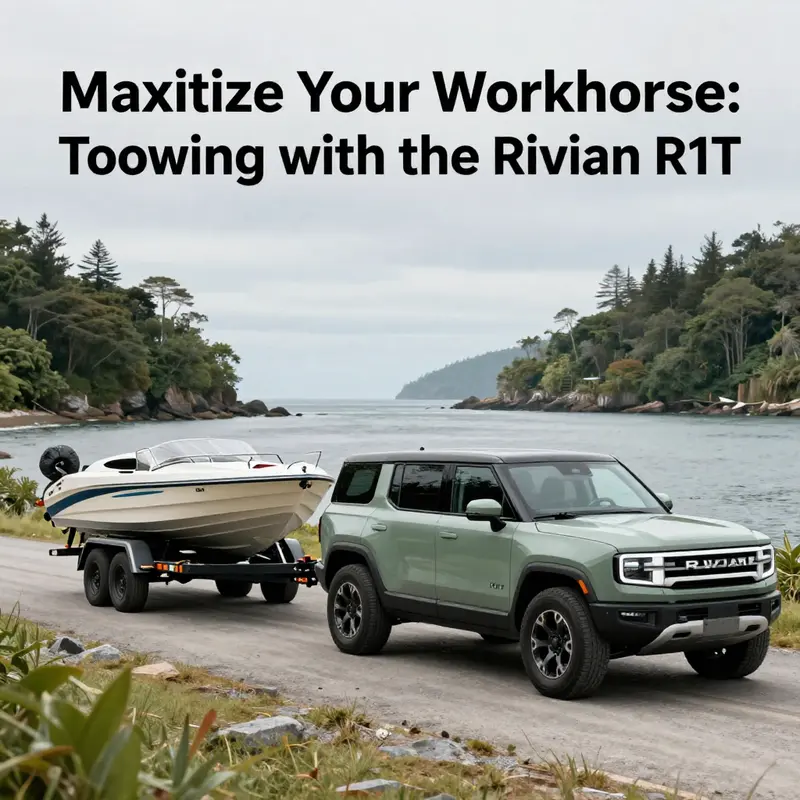
When you ask how much a Rivian truck can tow, you are not simply chasing a single number. You are examining a blend of engineering choices that redefine what towing an electric pickup can feel like in the real world. The Rivian R1T, a true all-electric adventure vehicle, is built to haul with authority when properly equipped, delivering a maximum towing capacity of 11,000 pounds. That figure isn’t a blind boast; it rests on a factory-installed towing package that unlocks a combination of hardware and software tuned for sustained, stable pulling. Behind that number lies a drivetrain that can deliver up to 800 horsepower and more than 900 lb-ft of torque from a standstill, a surge of pulling power that translates into confident accelerations and predictable control as you edge toward highway speeds with a heavy trailer in tow. It is not a mere feature; it is a philosophy: electric torque delivered instantly, paired with cooling and braking systems designed to manage the heat and the load over long, demanding pulls.
To truly understand what that 11,000-pound capacity means for everyday use, it helps to separate the concept of towing from the broader realities of vehicle capability. Towing capacity is the ceiling set by the vehicle’s chassis, powertrain, cooling, brakes, and trailer connection hardware. Payload, on the other hand, refers to the weight you can carry in the bed or cabin while your trailer is attached. Rivian’s broader specification page notes a separate, impressive payload capacity—up to 20,000 pounds (approximately 9,072 kilograms)—a reminder that these electric platforms are designed not only to haul trailers but to move heavy gear and equipment on wheels with relative ease. Yet the two capacities live in different zones of the vehicle’s performance envelope. Tow with a trailer, and you begin to tax the cooling array, the braking interface, and the electrical system in slightly different ways than you do when you’re simply carrying gear in the bed.
The practical implications of towing with an electric pickup become clearer when you imagine the kinds of tasks that made the pairing of power and control famous in the internal combustion era: hauling a sailboat trailer to the lake, towing a travel trailer on a coastal highway, or backing a bulky camper into a pull-through site after a long day. The R1T’s 11,000-pound capability means many of these tasks can be approached with a degree of composure that used to belong almost exclusively to larger, dedicated diesel trucks. A trailer loaded within that limit can be handled with smooth throttle response, confident engine braking after a descent, and the kind of weight transfer that keeps the trailer aligned with the tow vehicle through turns and lane changes. When the towing package is engaged, the R1T gains not just a sturdier hitch arrangement but a suite of support systems designed to maintain stability under load. There is a heavy-duty cooling system that keeps temperatures in check during extended pulls, an integrated trailer brake controller that synchronizes the trailer’s braking with the truck’s own system, and advanced traction control that can modulate power delivery across the axles to prevent unwanted wheel spin when the pavement surface is uneven or slick.
It is tempting to treat tow ratings as a single, unchanging line on a spec sheet. In practice, the usable towing capacity of any vehicle, including an electric Rivian, depends on configuration, payload in the vehicle, how you distribute weight on the hitch, and the environment you’re operating in. A properly configured R1T uses a factory-installed towing package that supports higher duty cycles, better brake cooling, and trailer integration features that can dramatically influence both safety and performance. The result is not a raw, unrefined pulling force but a controlled, calibrated ability to apply power, manage heat, and maintain steering feel when a sizable load is behind you. The duration of a tow matters just as much as the peak figure. Short drags or light, occasional pulls are very different from repeated, multi-hour highway towing or mountain passes where the powertrain and cooling system are working at or near their limits for extended periods.
For those who want a relatable frame of reference, the R1S—the seven-seat electric SUV sibling—offers a competitive towing figure of up to 7,700 pounds. That rating, while lower than the R1T’s, still surpasses many traditional non-luxury pickups at similar price points and package levels. The difference between the two vehicles isn’t simply about payload or seating; it reflects a strategic balance between interior space, traction management, and the thermal capacity of the drive system. In both cases, Rivian has tuned the suspension to handle the additional mass with controlled body motion, and the cooling strategies are designed to maintain consistent performance as temperatures climb during longer pulls. These capabilities broaden the range of practical towing scenarios, from boat launches on inland waters to seasonal campsites that require moving a sizeable trailer through mixed terrain.
To translate these numbers into a plan you can actually execute, consider the weight components you’ll be dealing with on any given trip. Trailer weight matters—the gross trailer weight you attach to the hitch. Add the tongue weight, which is the downward force the trailer exerts on the hitch, and you approach a more complete picture of the load your vehicle must move. Then factor in the vehicle’s own curb weight plus any passengers and cargo you carry inside the cab. The sum of these weights informs you of the gross combined vehicle weight rating (GCWR). Exceeding GCWR isn’t just a matter of failing to meet a spec; it reduces stability, increases stopping distances, and injects more heat into powertrain and brake systems. The numbers you see on the sticker or in the owner’s manual are there to help you keep the tow safe and predictable under a broad range of conditions.
While the numbers are compelling, the sensory experience of towing with a Rivian is even more informative. The torque curve of an electric drive is available instantly, which means you feel a strong, immediate pull as soon as you start to apply power. The truck’s mass helps with stability, while the four-motor architecture enables precise torque distribution to the wheels. This translates to confident launch from rest under load, smoother throttle control on climbs, and a steadier feel through long, flat stretches where wind and road irregularities can otherwise buffet a trailer. Regenerative braking, a staple of electric powertrains, becomes particularly useful in towing scenarios. It allows you to anticipate deceleration demands without excessive reliance on the service brakes, provided you have configured the system to balance energy recovery with trailer control. Even with all of these advantages, it is important to manage expectations: towing reduces overall efficiency, and the range you get from a full battery can drop noticeably with a sizable trailer in tow. The practical takeaway is not to pretend the EV powertrain behaves like a magic wand, but to appreciate how the architecture carves out a generous, composure-preserving window of control under load.
Beyond the numbers, the real-world applications for Rivian’s heavy-tare capacity begin to show through in the kinds of trips owners plan. Weekend getaways that involve a boat, a camper, or a large utility trailer become feasible with a calm, predictable towing experience. Off-grid adventures, where a rugged trailer might carry extra fuel, water, or gear, benefit from the built-in efficiency of an electric platform that can sustain long pulls with the right drive mode and camping needs in mind. When families plan longer road trips, the ability to bring along a sizeable trailer, while still having room for passengers and cargo in the cabin, becomes a practical advantage. The engineering inconvenience many people associate with towing—repeated stops to monitor heat, to adjust for wind, or to retrofit gearing for specific grades—appears reduced in this architecture. While you still need to be mindful of speed, trailer length, and braking, the impression of ease is a real differentiator, especially for those who value quiet cabins and predictable handling on dimly lit rural highways.
To make these ideas more actionable, it helps to adopt a few towing-savvy habits. First, plan weight distribution with accuracy. A trailer’s tongue weight should be balanced with the vehicle’s suspension and chassis dynamics so that steering remains precise and the trailer tracks cleanly behind the truck. Second, know your hitch and brake controller. The factory-installed systems are designed to communicate with the trailer, but you should confirm wiring, braking strength, and command responsiveness before you head out on a long pull. Third, respect the traffic environment and weather. Wind, rain, or an uphill grade amplifies the demands on cooling systems and brakes, and towing in such conditions should be approached with conservative speeds and ample following distance. Finally, remember that towing efficiency and range are closely tied to speed and drive mode selection. In many cases, staying within a moderate speed envelope and choosing a mode that emphasizes efficiency over raw acceleration will yield the most consistent performance across long pulls.
For readers who want a broader sense of how the Rivian approach to towing fits within a wider ecosystem of heavy transportation and emergency readiness, consider exploring practical perspectives on vehicle capability and trailer safety through industry perspectives and hands-on testing. The Island Tow Truck Blog offers a practical lens on how owners and operators manage heavy loads in diverse settings, complementing the technical specifications discussed here with experiential guidance. While the Rivian platform has its own unique controls and features, the core principles of weight management, trailer braking, and thermal awareness remain universal across modern towing practices.
Finally, the most authoritative, vehicle-specific information remains the official specifications provided by the manufacturer. For readers who want to verify numbers or compare trim-level specifics, the R1T specifications page provides the clearest reference for engine output, torque, payload, and cooling features that enable sustained towing. External resources complement this knowledge by offering independent observations, real-world testing, and practical insights that bridge the gap between spec sheets and daily use. External reference: https://www.rivian.com/vehicles/r1t/specifications.
In sum, a Rivian R1T equipped for towing does more than move a trailer from point A to point B. It embodies a shift in how heavy hauling feels and behaves in an electric vehicle. The combination of up-to 11,000 pounds of towing capacity, robust cooling, integrated trailer braking, and advanced traction control translates into a towing experience that is at once powerful and controlled. It invites owners to plan more ambitious trips, to expand the kinds of gear they can bring along, and to enjoy the confidence that comes with knowing the powertrain and chassis are engineered to handle the load with poise. The practical takeaway for prospective buyers or curious readers is straightforward: if your towing needs align with these capabilities, and you can accommodate a full package that supports heavy, sustained pulls, the Rivian platform offers a compelling path to combine electric efficiency with serious hauling power.
External resource: https://www.rivian.com/vehicles/r1t/specifications
Tow Power with Purpose: Owner Considerations for an All-Electric Adventure Truck
Across the expanding landscape of electric trucks, there is a clear appeal to capabilities that once required diesel or gasoline powertrains. The all-electric adventure pickup in question offers a compelling balance of rugged versatility and modern efficiency, with a towing capacity that stands out in its class when properly configured. In practical terms, the vehicle can tow up to 11,000 pounds (about 5,000 kg) when equipped with the factory towing package and the right hitch. That figure places it among the more capable electric options for towing large trailers, boats, or heavy outdoor gear. Yet as enticing as that maximum is, the reality of towing with this vehicle—like any specialized heavy-hauling setup—depends on careful preparation, precise loading, and a clear understanding of how the system responds under load. The towing package itself is not merely a badge or a single component; it comprises a heavy-duty cooling system, a reinforced frame, and a Class V receiver hitch, all designed to maintain performance and reliability when the trailer is pulling away from the curb. Without this package, the towing capacity drops significantly, and the vehicle’s engineering is optimized for everyday use rather than sustained, high-demand towing. In other words, this is a case where the right configuration unlocks the higher performance, and using the wrong setup can limit safety and capability. The owner who plans to haul larger trailers should treat the towing package as a foundational purchase, not an afterthought, because it lays the groundwork for the system’s thermal management, structural integrity, and braking coordination under load.
As with any heavy-hauling scenario, equal attention should be given to how the combined mass is distributed. The tongue weight—the portion of the trailer’s weight that presses downward on the hitch—needs careful management. A common guideline is to aim for roughly 10 to 15 percent of the trailer’s gross weight as tongue weight. This distribution helps the towing vehicle manage steering stability, brake response, and suspension loading without overloading the hitch or unloading the vehicle’s rear axle excessively. It is equally important to ensure the trailer’s brakes are properly matched and fully functional. An effective trailer brake system, paired with an integrated trailer brake controller if the vehicle supports one, gives the driver predictable and proportional braking input. On the road, this translates into smoother deceleration, steadier control through curves, and a safer overall stopping profile when a heavy load is involved. The nuance of braking becomes even more pronounced at highway speeds or when descending grades where heat build-up can affect braking performance. In such moments, the combination of a reinforced frame, robust cooling, and well-tuned brake signaling becomes a critical triad that sustains both safety and confidence for the tow.
The dynamics of driving with a trailer extend beyond the mechanical. Towing alters acceleration, cornering, and stability, while also increasing susceptibility to wind gusts and road irregularities. The vehicle’s powertrain is designed to deliver consistent output, but the sensation of the road changes once a trailer is attached. Expect longer stopping distances, slower acceleration, and a more pronounced push from crosswinds as the trailer acts like an additional sail. Drivers should cultivate a measured pace, especially when navigating hills or merging onto faster traffic. It is prudent to plan for longer lane changes, anticipate the need for wider turning radii, and maintain a greater following distance to account for the trailer’s momentum. These considerations become part of the tacit knowledge that grows from experience with heavy-haul towing, and they help preserve traction, steering feel, and overall control. The vehicle’s traction control system, designed to prevent tire slip and manage power delivery across the axles, becomes a partner in this process, smoothing out traction demands as the weight shifts during acceleration, braking, or cornering. Recognizing that the trailer changes the vehicle’s aerodynamics and energy use is crucial, because it reframes how a driver anticipates road conditions, traffic flow, and energy planning for the journey ahead.
From a physical performance standpoint, towing also intersects with how the truck consumes energy. An all-electric platform is efficient in normal use, but the act of towing introduces a noticeable penalty to range. The heavier the load and the faster the speed, the more energy is drawn from the battery. Efficient towing, therefore, begins with practical planning: preconditioning the battery to a optimal temperature before departure, using conservative driving strategies for the initial miles, and anticipating charging needs along the route. Battery thermal management remains a central factor; sustained high load can elevate temperatures, potentially triggering protective limits to prevent heat-related degradation. In colder climates, the impact can be even more pronounced, as energy is diverted to climate control and battery warm-up. For those who rely on this vehicle for long-haul trips or outdoor expeditions, routine route planning should include charging stops that consider the added energy drain of towing, the availability of high-capacity charging and the time needed to replenish the battery to a useful range. The practical takeaway is simple: heavy towing will redefine the trip’s pacing, so tolerance for longer intervals between fuel or energy stops should be built into the itinerary rather than discovered mid-journey.
Weight and load management also extend to the cargo carried inside the vehicle itself. The maximum payload capacity in this class is substantial—up to 20,000 pounds in the payload rating for hauling cargo—yet this figure is separate from towing. When towing, the combined load on the truck’s structure and its ballast must be considered, and the total weight should never exceed the manufacturer’s GCWR (gross combined weight rating). The GCWR is the ceiling for how much the vehicle and the trailer together can weigh, factoring in the vehicle’s curb weight, occupant and cargo mass inside the cabin, the trailer’s weight, and the tongue load. Staying within those limits is essential not only for safety but for preserving the longevity of the powertrain, suspension components, and braking system. A practical approach is to treat the towing and payload capacities as interdependent resources rather than separate, independent numbers. This mindset fosters smarter planning for trips that blend outdoor activities, work tasks, and on-site supplies.
The owner’s experience extends into maintenance considerations as well. Tires with appropriate load ratings and pressure maintenance become a foundational piece of the towing puzzle. When a trailer is involved, tire wear can become uneven, suspension components bear more stress, and wheel bearings face increased duty cycles. Regular inspection of hitch hardware, brake lines, electrical connections, and trailer wiring is prudent. Equally important is keeping documentation up to date: ensuring the towing package, its firmware, and any trailer-related electronics are current can help prevent unexpected behavior on the road. For individuals who frequently tow, creating a routine that includes pre-trip checks, load calculations, and post-trip reviews can fortify road safety and reliability. The narrative of ownership converges here: tow capability is not only about the maximum rating on a spec sheet. It is about how the system behaves under load, how predictable and stable the vehicle remains, and how well the entire setup supports the user’s goals, whether that means hauling a camping setup through remote terrain or transporting substantial gear to a coastal launch site.
Of course, the broader context of vehicle ownership and fleet planning has its own set of strategic considerations. For those who manage fleets or want to integrate heavy towing into a broader emergency response or logistics plan, it helps to consult resources that outline standards for safety, readiness, and response. See essential-fleet-emergency-response-strategies for guidance on aligning towing capabilities with broader fleet operations. This linkage underscores a key point: towing capacity is one piece of a larger system that includes driver training, maintenance discipline, and response readiness. The practical utility of a high-capacity electric tow vehicle emerges when it is supported by disciplined practices that span planning, operation, and ongoing care. For anyone who intends to make heavy towing part of regular use, this integrated approach should become the baseline rather than a reactive adjustment after a near-miss or a stressed component. The emphasis is on deliberate preparation and continuous learning as the towing scenario evolves across environments and seasons.
For readers seeking an authoritative summary of specifications and official parameters, consult the manufacturer’s technical resources. These sources provide the baseline numbers and the exact configurations that enable full capability, and they should be treated as the ground truth when planning a tow, especially for critical workloads or long trips. In practice, the combination of a properly equipped vehicle, careful load management, and disciplined driving creates a reliable towing experience that aligns with both outdoor adventure and practical utility. The balance between power delivery, thermal management, braking performance, and energy planning is the core narrative of tow readiness in an all-electric adventure truck. The journey from theoretical maximums to dependable, repeatable performance on the road is grounded in the details—the details of the towing package, the discipline of weight distribution, the realities of range under load, and the commitment to maintenance and safety that keeps every tow under control. For those who use these vehicles to support island operations, emergency response, or remote logistics, the message remains consistent: plan, prepare, practice, and respect the limits of the vehicle and the road.
External resources and official specifications can deepen this understanding. See the manufacturer’s official pages for precise, model-year specific data, and consider how your particular configuration might influence towing performance in your region. This careful approach ensures that you are not only aware of the potential towing capacity but also prepared to apply it safely and effectively on every journey.
Final thoughts
The Rivian R1T stands out as a prime choice for those considering an electric truck that does not compromise on towing power. With a maximum towing capacity of 11,000 pounds and thoughtful features that enhance towing performance, this electric pickup meets the diverse needs of local businesses, commercial fleets, and recreational activities. As you evaluate the Rivian R1T for practical applications in your operations, weigh its advantages against your specific requirements to harness its full potential.