For local auto repair shops, car dealerships, property managers, resort operators, and commercial fleet operators, the ability to communicate visually is invaluable. This guide to drawing a tow truck not only sharpens your artistic skills but also enhances your brand’s identity. Each of the four chapters will reveal step-by-step processes, essential components, common challenges with helpful tips, and art techniques that will elevate your drawing from basic to professional. Embrace your creativity and show clients the value and reliability behind your brand through engaging visuals.
Tow Truck in Focus: A Cohesive Sketch Journey from Shape to Shine
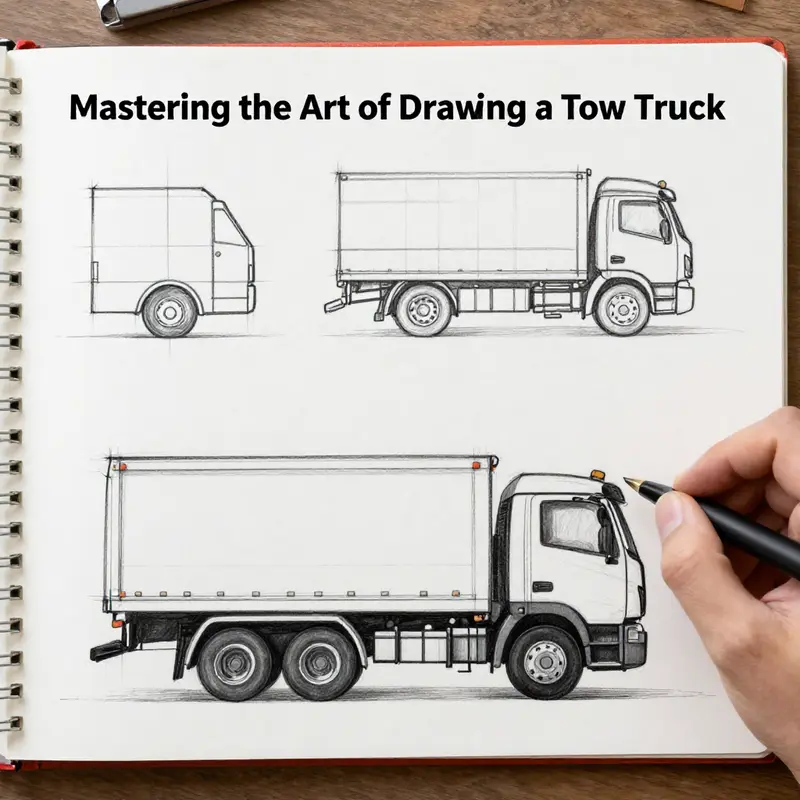
Sketching a tow truck invites a study of mass, function, and line. Start with a simple block for the cab, a broader chassis, and a delineated tow arm that reaches from the rear toward a sturdy hook. Place wheels with careful spacing, front slightly larger to imply perspective, and keep the silhouette clean to read at a glance. Refine the cab with windows and a windshield, add mirrors, headlights, and a bumper, then describe the winch drum and cable near the center of gravity. Emphasize the tow arm’s weight with solid lines and right angles, and add subtle shading along the edges to suggest metal surfaces. If you want narrative, place the tow hook and cable as a taut line, perhaps with a bit of slack to imply readiness. Finally, consider context: a simple road line or garage shadow can anchor the scene without distraction. Use light shading to set volume rather than contesting shapes, and keep the drawing legible more than photorealistic. The goal is to convey a tool designed for lifting and towing, not an exact replica of a model. Practice from basic geometry to the finished sketch, and use references to study proportions. With patience, the sketch reads as sturdy yet approachable, a tow truck built for efficiency and reliability.
The Visual Blueprint: Essential Components for Sketching a Realistic Tow Truck
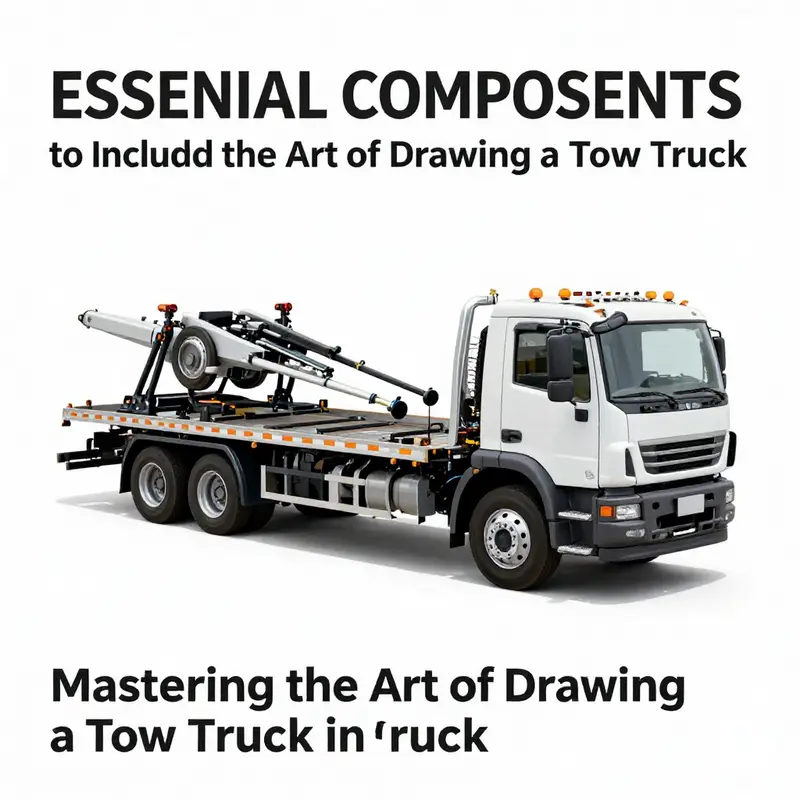
Sketching a tow truck is less about replicating a specific model and more about capturing a functional silhouette that communicates purpose at a glance. When you set out to draw one, you’re not merely tracing lines; you’re outlining a compact ecosystem of metal, hydraulics, and practicality that has to read clearly from a distance. The process hinges on recognizing and rendering a few core components that define the vehicle’s identity: the cab, the chassis, the boom, the winch, the wheels, the emergency lighting, the light bars or sirens, and the accessories that turn a generic truck into a workhorse on call. By treating these elements as a cohesive system rather than a collection of separate parts, you can craft a drawing that feels unified, balanced, and believable, even in a stylized sketch. The key is to start with the big picture and then refine the details in relation to it, letting each component inform the others as you proceed. If you want a broader perspective on the vocational context of tow trucks and how artists translate that context to imagery, you can visit the The Island Tow Truck blog for additional background and visual references The Island Tow Truck blog.
Begin with the overall silhouette. The cab should read as a compact, slightly rounded capsule that houses the driver’s seat and the front windshield. Most tow trucks emphasize a modern, streamlined shape with a broad, inviting windshield and side windows that taper toward the rear. Keep the cab proportionate to the chassis, ensuring the front end doesn’t look overly squat or strangely elongated. The chassis, by contrast, extends behind the cab in a long, sturdy base that anchors the vehicle’s presence on the page. In a sketch, this elongated base helps communicate the heavy-duty nature of the machine, so you should emphasize straight, parallel lines that run along the length of the truck. When you draw this foundation, you’re establishing the stage on which all the other components will perform.
The next move is to anchor the tow mechanism—the boom—along with the winch. The boom is the most distinctive feature and the one that immediately signals the vehicle’s purpose. It can extend from the back or the side, depending on the design you’re envisioning, but it should always look robust and capable of lifting substantial weight. Think of the boom as a long, angled arm that folds or telescopes in a real truck; in a drawing, you can convey its range by showing it at a slight angle behind the chassis, with segments that suggest extension. The winch sits near the base of the boom or at the front of the chassis, depending on the configuration. Depict the winch as a circular drum or a robust block with a cable wound around it. The cable should taper slightly as it leaves the drum, implying tension and length as it approaches the tow bar. A small hook at the end of the cable can complete the image, hinting at its purpose without crowding the composition. By integrating the boom and winch with the chassis, you create a palpable sense of leverage, weight, and range of motion that anchors the scene in realism.
Wheels are more than decorative circles; they are essential to conveying the vehicle’s heft and capability. Tow trucks typically feature large, durable wheels with thick tires designed to bear heavy loads. In your sketch, you want a clear wheelbase that anchors the vehicle to the ground and communicates stability. Draw four wheels with generous treads and a sense of mass. Within each wheel, add inner circles to indicate hubcaps or rims, and consider a slight offset to suggest perspective and weight distribution. The alignment matters; make sure the wheels sit evenly and parallel to the ground, unless you’re intentionally depicting a dynamic, uneven surface or a moment of motion, in which case a gentle tilt can convey action. The tires can be shaded with darker tones on the sidewalls and lighter highlights along the top to imply light catching off the rubber’s texture.
Detailing is where the drawing starts to feel alive, and it’s here that the character of the tow truck emerges. The windshield should be a curved rectangle that communicates depth and reflection. You can accentuate the glass with light lines to suggest the frame and any interior elements visible through the glass. The headlights and grille are small but crucial cues that anchor the front of the truck in a recognizable reality. A simple pair of headlights can be rendered as small ovals or rounded rectangles, paired with a horizontal grille line beneath them. Side mirrors extend from the cab as modest, functional shapes, their placement and size balancing the front’s weight. These details aren’t just ornamentation; they contribute to the overall impression of a working vehicle that has seen long days of duty on the road.
The emergency lighting and signaling equipment elevate the sketch from a static vehicle to a believable emergency-response machine. A tow truck’s lights are not merely cosmetic; they announce its presence and mandate safety during operations. Include a rotating beacon or a compact light bar on the roof or cab to convey visibility. The light bar can be a simple rectangle or a more intricate, segmented shape—whatever suits your style—but it should read as a device designed to command attention. When shading, consider the light’s potential reflections on the cab and windshield, which adds to the sense of realism. If you choose to depict a siren, place it discreetly on the front or above the cab, using a small curved line or capsule form and a contrasting color to differentiate it from the main paint. These lighting elements are not just technical details; they reassure the viewer that the vehicle is a working tool in high-stakes situations and thus deserving of close attention.
Beyond the core mechanical parts, there are accessories that turn a generic truck into a functional tool. Straps, towing dollies, and axle pads—these are the kinds of details that seasoned observers notice and that beginners often overlook. Straps can be drawn as parallel lines that compress toward the point of attachment, suggesting tension. A dollie or pair of dollies might sit under a towed vehicle’s wheels, indicated by simple rounded shapes connected to the main unit by slender lines. Axle pads can be shown as rectangular blocks under the chassis, hinting at the support structures that bear weight. These elements aren’t strictly necessary for a clean, recognizable drawing, but they contribute to authenticity and depth. Including them in a careful, restrained way can elevate a composition from a straightforward silhouette to a work that invites closer inspection.
When you draw, think in terms of how light interacts with metal and glass. The body panels of a tow truck catch light differently from the rubber of the tires or the metallic shine of the boom. Use a broad range of tones to create volume: darker shades for recessed areas such as wheel wells, undercarriage seams, and the space beneath the boom; midtones for the sides of the cab and chassis; and bright highlights along the edges where light naturally strikes. This approach helps communicate the truck’s solid, three-dimensional form even in a two-dimensional drawing. It also makes the cable and winch look taut and capable, a subtle cue that ties the mechanical components together into a single, coherent machine.
Consistency in proportion is essential for believability. If your cab appears too tall or the chassis too short, the drawing will feel off, regardless of how well you render the details. A practical check is to measure the relative heights of the cab and chassis against the wheels. The cab should not overshadow the truck’s operational reach, and the boom should not appear overscaled or underpowered in relation to the vehicle’s base. Perspective plays a role as well. A slight three-quarter view often serves tow trucks well because it exposes the front, side, and the back’s tapering lines of the boom. This angle naturally showcases the tow bar, the winch, and the cab’s geometry in a single, readable frame.
As you progress, you may find it helpful to reference visual guides that break down the components into digestible forms. A step-by-step approach can illuminate how the lines of the cab flow into the chassis, how the boom attaches and folds, and how the cable threads from winch to hook. Such references underscore how proportion, line weight, and silhouette contribute to an overall impression of readiness and capability. For readers seeking additional visual guidance, the Pinterest Tow Truck Drawing Guide offers diagrams and coloring techniques that illustrate wheels, cab, chassis, and boom from multiple angles, helping you understand proportion and assembly in a more tactile way.
In addition to the practical drawing considerations, there is a broader context worth acknowledging. Tow trucks are specialized service tools, designed to operate in dynamic, sometimes hazardous environments. Your sketch can reflect that operational reality through posture and stance. A tow truck drawn with slightly wider rear stances and a modest tilt can imply readiness to lift a vehicle from a roadside position. A calm, balanced composition speaks to steady control, while a more dynamic, angled pose can convey motion and mechanical momentum. The tension in the tow cable can be expressed through subtle, deliberate line work—short, tight lines near the drum that spread outward toward the boom—creating an impression of tautness and force. These small narrative choices matter, especially when you are guiding a viewer’s eye across the page and inviting them to linger on each component as if inspecting a real vehicle.
To keep your drawing coherent with the broader article topic of learning how to draw a tow truck, connect the components through shared geometry and aligned edges. The cab’s windshield line should echo the top edge of the grille, while the boom’s base should harmonize with the rear edge of the chassis. When you maintain these relationships, you ensure the drawing not only looks plausible but also feels intentional. If you’re building a sequence of sketches, you can begin with a simplified, geometric version to lock in proportions, then layer in the details such as the winch drum, the tow bar, and the cable. The simplification step acts as a scaffold, allowing you to refine with confidence rather than guesswork. This cadence—shape first, details later—helps you avoid common missteps that can distort the figure’s scale or misrepresent the truck’s function.
Artistic practice thrives on iteration, and a tow truck offers ample opportunities for repeated trials. Each pass allows you to adjust line weight, revise the cable path, or reset the boom’s angle to better read in silhouette. With every refinement, you’re not just improving accuracy; you’re cultivating an expressive vocabulary for how to convey weight, mass, and mechanical purpose on a single plane. The chapter’s focus on essential components remains a constant guide through these iterations: keep the cab and chassis as the backbone, treat the boom and winch as the engine of capability, and let the wheels, lights, and accessories narrate the vehicle’s readiness for action.
If you’d like to explore related topics or expand your practice, the internal resource hub can offer further context and examples. For broader perspectives on fleet design and emergency-response readiness, you can visit the The Island Tow Truck blog at the link above. This chapter’s emphasis on consistent proportion and the accurate portrayal of a tow mechanism aligns with the goals of those resources, reinforcing a practical approach that benefits both new artists and seasoned illustrators seeking reliable verisimilitude. A well-rounded sketch does more than imitate; it communicates the vehicle’s role, its function, and the sense that it is always ready to respond to a call. The end result should feel like the viewer has glimpsed a tool in action, a machine built to lift, tow, and stabilize other vehicles with steady, dependable force.
For readers who want additional hands-on guidance and visuals, the Pinterest Tow Truck Drawing Guide referenced earlier offers a collection of stepwise diagrams and coloring techniques that complement the textual guidance provided here. While you study those images, keep returning to the core message: identify the essential components, render them with faithful proportions, and then layer in details that emphasize function without clutter. Your tow truck sketch will benefit from that disciplined approach, turning a simple doodle into a convincing representation of a real-world machine. External resource for visual guidance: https://www.pinterest.com/pin/137592860746146552/.
Tow Truck Sketches in Motion: Navigating Common Challenges and Mastering the Drawn Rig
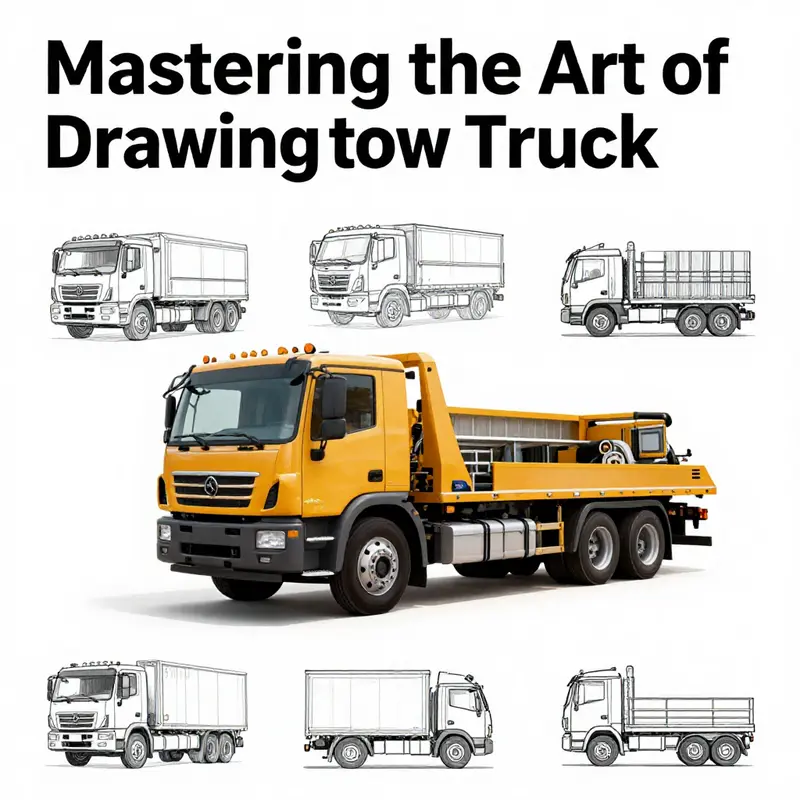
Drawing a tow truck is more than tracing an outline; it invites you into a small, mechanical theater where weight, balance, and a hint of urgency must live on the page. The act of rendering such a vehicle requires a sense of proportion and a respect for how real machines behave under gravity, how their parts interlock, and how a tow bar can carry a silent story of rescue or roadside drama. In practice, this chapter invites you to move beyond basic shapes and develop a fluency with the equipment that gives tow trucks their unmistakable silhouette—the cab perched over a sturdy chassis, the heavy rear assembly housing a winch and a lifting arm, and the all-important tow line that holds the scene together. The goal is not to produce a perfect technical drawing, but to balance readability with a credible mechanical presence, so a viewer can believe that the truck could actually perform the work it’s imagined to do.
Every drawing journey begins with the same quiet tension between simplicity and accuracy. The common challenges you encounter when you set out to depict a tow truck arise because the vehicle blends two distinct modes of design: the clean, almost geometric efficiency of a commercial cab and the complex, almost skeletal machinery of the towing system. When you first sketch the scene, you might feel tempted to rush toward the dramatic pose—the moment when a car is being winched or when the crane arm extends toward a halo of action. But that impulse can distort proportion, away from the calm, sturdy logic of the machine. The winch drum, hydraulic arms, and the towing frame sit in close physical relationship to the cab and chassis; they are not distant ornaments but essential supports. Take a breath and allow the drawing to breathe at this coordinated pace. Start with broad volumes, then refine, in turn, the knots and braces that connect one part to another.
The first challenge to address is the machine’s own complexity. A tow truck is not a single silhouette but a bundle of recognizable components: the cab, the chassis, a rear-mounted winch, and sometimes a crane arm or a flatbed extension. In many drawings, these elements appear as separate blocks that don’t quite align, so the eye can sense a disconnection between the vehicle’s body and its purpose. You can counter this by anchoring the towing mechanism to the chassis with a visible set of supports—straps, braces, and a frame that look strong enough to bear the weight of a car suspended in the air. It helps to study the way the frame arches and braces back toward the cab, almost like a subtle backbone. With careful alignment, the winch becomes not a afterthought but the hinge that ties the scene together, a deliberate extension of the vehicle’s power rather than a separate ornament.
Perspective is another pressure point. Tow trucks can be drawn from many angles, but the most convincing are often those that show depth and purpose without collapsing into a flat diagram. When you experiment with a three-quarter view, you gain depth in the wheels, the cab contours, and the towing apparatus. Yet this perspective amplifies the risk of distortion—especially with foreshortened tow bars, cables, and the towering crane arm. To manage this, imagine a light source that lends shape to the metal and cables. Let the highlights glide along the curved surfaces of the cab and the round form of the winch drum. Allow the tow chain to catch the light in a few quick glints, which you can depict as short, bright lines that imply tension and movement. In practice, you’ll find that the wheels and tires anchor the drawing in space; their roundness gives everything else a stage to perform on. Keep the wheel wells proportional to the cab, and let the horizon line run through the mid-chassis to preserve a grounded feel. The moment you introduce a believable perspective line, the other parts align with less mental strain and more fluid intuition.
A related concern is how to handle details without tipping into clutter. The temptation to add every bolt, clamp, and nut can make a tow truck look like a tangle of hardware rather than a coherent machine. The trick is to prioritize clarity over exhaustiveness. Identify a few key features that signal “tow truck” to the viewer: the stout tow bar, the winch drum, the hook at the end of the cable, and the general geometry of the crane arm if present. Sketch those elements with deliberate strokes, then suggest the rest with softer lines or subtle shading. In many cases, the absence of micro-detail can actually sharpen the overall impression; the audience fills in the rest with their understanding of real machines. You may reserve fine detailing for certain areas—the wheel rims and the winch drum can carry a touch more texture, while the rest of the body remains smooth and legible. When in doubt, step back and view the drawing from a distance. If the silhouette reads clearly and the main components are recognizable, you’ve achieved a balanced level of detail that supports readability without overwhelming it.
The workflow that helps most beginners and intermediate artists starts with the simplest possible schema. Begin with broad, basic shapes: a rounded rectangle for the cab, a longer, wider one for the chassis, and then a rectangular or angular block for the towing mechanism. The cab should sit slightly above the chassis, a natural consequence of the truck’s design and a cue to the viewer about gravity and weight distribution. From there, add the tow bar projecting forward and the winch assembly at the front—the place where the real work begins in earnest. It’s tempting to place the winch near the center, but the geometry of real tow trucks is choreographed around balance, so consider offsetting the winch toward one side to reflect how most designs carry the heavy equipment toward the rear or centerline of the chassis. The hook at the end of the cable is small but crucial; include a clear hook and a taut line to convey the sense that something is actively being moved. If you’re drawing a wrecker with a crane arm, you can introduce a slightly angular spine for the arm and show a couple of joint lines where hydraulics fold to extend reach. The key is to sketch the bones first, then add the muscles—cabs, fenders, and the subtle armor of bumpers—so the machine appears sturdy before you drape it in color and texture.
Wheels require particular care because they anchor the vehicle in space and guide the eye through the composition. When you draw four wheels, keep the front pair aligned with the cab’s front edge and the rear pair aligned with the chassis’ end. The tire treads can be suggested rather than fully drawn, especially if the scene is at a distance or if you’re prioritizing speed. The hubcaps or rims deserve a touch of realism; a few spokes or a chrome-like circle can suggest metal without plumbing the depths of mechanical accuracy. The relationship between the wheel arches and the tires should feel natural—never too tight, never too loose. If you’re rendering motion or action, you can tilt the tires slightly as if the truck is about to move, or you can add a faint sense of ground contact by shading the bottom edge of the tires and letting the tire traces disappear into the distance. These small cues contribute to the impression of weight and purpose, even as you simplify other parts.
Color and surface texture strongly influence the final mood of the drawing. Tow trucks typically carry bold color schemes; red, yellow, and black surfaces often communicate strength and visibility. The finish on metal components—the winch drum, the tow bar, and the crane arm—benefits from careful highlight and shadow work that defines their cylindrical and flat surfaces. You can imply chrome by using lighter tones and small highlights along edges, while darker values will describe the recessed areas of the chassis and undercarriage. Cable texture is another subtle but effective device: a few jagged, consistent lines along the guide path of the cable can convey tension and coiled metal. If you color the scene, consider a restrained palette so the focal points—such as the winch, the hook, and the tow bar—stand out. A saturated red or yellow on the cab can lead the viewer’s eye toward the towing mechanism, then your neutral grays and silvers for the machinery will keep the eye moving along the length of the vehicle, tracing how each part connects to the next.
Throughout the process, context matters. A tow truck never exists in isolation; it is always doing something or about to do something. Situating your sketch in a moment of action—a car being lifted, a cable taut with implied force, a driver’s cab window catching a reflection of an emergency beacon—adds narrative depth. Even a solitary, stationary pose can feel alive if you hint at acceleration through the line work around the wheels or through a slight tilt of the cab. The environment can be minimal—perhaps a hint of road or a distant streetlight—to frame the vehicle without stealing attention from the essential mechanics. When you choose a moment, you guide the viewer toward the heart of the scene: the tension in the tow line, the grip of the winch drum, and the sturdy geometry that makes the machine trustworthy.
If you’re seeking further ideas or alternative visual approaches, exploring reference images is invaluable. You do not need perfect replicas to learn from them; you’re looking for the feel—the proportions, the general shapes, the way the tow apparatus integrates with the chassis. Tackle one component at a time if the whole system feels overwhelming. Build the cab first, then the chassis, and finally the towing mechanism. This staged approach helps maintain coherence and reduces the risk of clutter. Contextual practice matters, too. Consider how the tow truck appears when it is actively rescuing another vehicle versus when it is parked with equipment ready. Lighting changes the entire mood, so you might work through several lighting scenarios to understand how shadows settle on the metal and how the reflective surfaces reveal form. If you want to broaden your resources without getting lost in a sea of images, look for general drawing references that focus on mechanical joints and cable systems rather than exact models. The aim is to cultivate an understanding of how these systems relate to one another, which will serve you whether you sketch a standard service truck or a stylized, cartoonish rendition.
As you refine your approach, remember that consistent practice pays off. Rehearse drawing tow trucks from different angles and at different scales. Compare your results against clear silhouettes to test readability. If a particular detail seems to draw too much attention, scale it back, or render it more schematically. The best drawings often feel confident in their simplified representation, with enough specificity to evoke a real machine without becoming a technical manual. For a broader sense of the viewer’s perspective and to see how others handle similar subjects, you can visit the general resources and community spaces that share tow-truck visuals and drawing techniques. For context on broader discussions and visual examples, check out the isalnd Tow Truck blog, which offers a range of posts on vehicle design and sketching approaches. theislandtowtruck.com/blog/
In closing, the practice of drawing a tow truck combines careful construction with a sense of momentum. You don’t need to chase every bolt or cable to achieve a credible depiction; you need to establish the core geometry, respect the way the towing mechanism relates to the chassis, and cultivate a rhythm that makes the scene feel alive. By starting with simple shapes, aligning parts with a thoughtful perspective, balancing detail with readability, and incorporating a little narrative tension through pose and light, you create sketches that communicate both the machine’s strength and its purpose. These methods translate beyond tow trucks. They describe a broader discipline in drawing: how to represent machinery honestly while keeping the image legible and appealing. The result is not just a pretty vehicle on a page but a convincing, dynamic reconstruction of a working machine, able to tell a compact story with a few lines and a careful choice of where to place emphasis.
For further exploration of real-world context and technique, you might consult general references about towing equipment and its operation. A useful external overview discusses the tow truck in its practical, real-world setting and provides broader context for the engineering and rules governing these vehicles. https://en.wikipedia.org/wiki/Tow_truck
Tow Truck Drawing Mastery: From Simple Shapes to Dynamic, Realistic Form
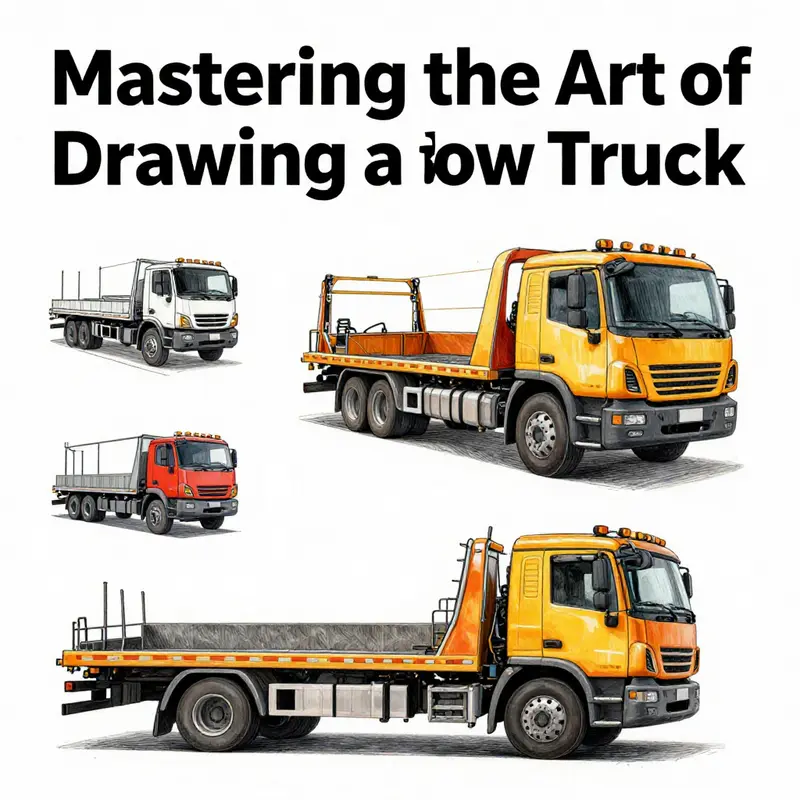
To draw a tow truck with confidence, you begin not with a finished outline but with a plan built from simple geometry. The cab becomes a rectangular volume, taller than it is wide, because the operator sits in a compact, boxy space; beneath it, a longer, lower chassis forms the main body. This pairing creates the essential silhouette that our eyes recognize from a distance. You sketch the tow arm as a trapezoid or angular bar that extends from the back or front depending on the design; the winch lives near the center of the front, represented as a circular drum from which the cable radiates. Start with these core shapes and keep the lines light and proportional. The act of measuring proportions, even roughly, locks in balance before you add detail. From there, the drawing begins to breathe when the shapes connect with a smooth, confident line that carries the eye from the cab to the chassis and onward to the heavy-duty components that define a tow truck in motion. This approach keeps you focused on structure first, so the more intricate features don’t crowd the frame and obscure the logic of the machine. As you work, the lines that once seemed tentative become the scaffolding that holds every additional gesture—door outlines, windows, mirrors, and the distinctive bulk of the tow arm—together in a coherent form that reads as a single vehicle rather than a collection of parts slapped on a page. The discipline of starting with a solid frame also makes color decisions easier, because the regions that will receive gloss, matte paint, or reflective chrome are already defined in a way that respects light and volume. When you pause to study the silhouette, you are not imagining just any truck; you are letting the tow truck’s weight, balance, and purpose guide your hand toward a figure that looks capable of lifting, pulling, and stabilizing another vehicle with authority. In that moment, the drawing becomes less about replicating a snapshot and more about translating mechanical truth into lines you can see and feel. There is a quiet, almost architectural satisfaction in watching a simple rectangle and a few careful lines evolve into a machine that communicates its role through form alone. The exercise is not merely technical; it is a study in translating motion into stillness—how tension lives in a line and how a curve can convey the resilience of metal without saying a word. As you iterate, you might test variations by shifting the tow arm’s angle, moving the winch slightly off-center, or adjusting the cab’s roofline to suggest a different era or design language. These small choices matter because they alter the vehicle’s personality while preserving its core identity. It is this balance—the clarity of a recognizable shape and the subtle warmth of artistic interpretation—that makes a tow truck drawing feel lived-in rather than schematic. Perspective then adds another layer of credibility. A tow truck seen from a slightly low vantage point amplifies its power and scale, so the wheels appear sturdy and the cab looms with confidence. You can imagine the horizon line just above the top edge of the cab; the front wheels foreshorten a touch more than the rear wheels, and the tow arm grows a touch more linear as it extends toward the subject of the pull. The eyes of the viewer ride along the tow arm to the winch, following the cable’s path as if you could glimpse the velocity of the impending lift. A strong perspective also helps you communicate action in a still image. Even if the moment captured is calm, the implied motion in the cable and the slight tilt of the tow arm can hint at a task underway. In this sense, perspective becomes a storytelling device that strengthens the composition without cluttering it with extraneous details. The shadow and light you apply then reinforce that story and the vehicle’s material truth. Lighting from above and slightly to one side creates a consistent pattern of highlights and shadows that map onto the cab, the hood, the windshield, and the chrome surfaces of the winch and tow bar. Shade the areas under the chassis with a soft gradient to suggest depth, and keep the upper planes of the cab and the tow arm brighter to communicate their metallic surfaces catching the sun. The effect is not merely cosmetic; it anchors the form in a believable spatial world. These shading choices work best when you approach color after you have established a reliable tonal range in grayscale. As the light falls, you emulate surfaces that reflect, absorb, or transmit light with subtlety. The glow on the windshield, a crisp edge on the grille, and the glint on the metal parts read as intentional details rather than random highlights. When you integrate color, keep the palette bold enough to separate the vehicle from the background yet controlled so that the tow truck remains readable from a distance. Common choices position the cab and chassis in a single, unifying color—red, yellow, or black are traditional, high-contrast options that help the vehicle pop on a gray road environment. The wheels deserve a darker treatment, almost black, with lighter inner rings for hubcaps that read as metal. The winch and tow bar benefit from a cool metallic gray or silver that stands up against the bolder body color. The tow cable can be a deeper brownish gray to suggest weathering or a slightly different metal tone that catches light differently from the steel bar and the wheel rims. The color decisions should reinforce the machine’s function and practicality, not merely decorate it. To deepen realism, you can layer texture on the tow arm to convey its rugged, reinforced geometry, then add small but telling marks—bolts, seams, and rivets—that animate the surface and break up flat planes without distracting the viewer. In real tow trucks, these mechanical idiosyncrasies—how the winch interface connects to the cable drum, how hydraulic arms fold with a satisfying inertia, and how the reflective stripes on the sides catch changing light—are the cues an observer uses to understand a vehicle’s capability. For this reason, studying authentic references pays dividends. Examine photos that emphasize structural details; note how the winch is mounted, how the hydraulic arms articulate, and how the cable loops and anchors to the tow bar. Even if you redraw these features in your own simplified style, grounding your drawing in real-world geometry yields a more credible result. The goal is not slavish imitation but an informed interpretation that keeps your design faithful to its purpose while leaving room for your own artistic voice. A helpful bridge between practice and understanding is a guided, step-by-step approach that begins with basic shapes and gradually adds complexity. The method remains consistent: establish the main forms first, then refine lines, then develop perspective and depth, and finally layer shading and texture. Such a pathway ensures you are not overwhelmed by details and you maintain a clear sense of proportion and balance. If you want a concrete resource for visual guidance, a step-by-step tutorial that demonstrates how to draw a tow truck using simple shapes and lines can be especially reassuring for beginners and intermediate artists. For foundational tips and a friendly walkthrough, the island tow truck blog offers approachable guidance. the island tow truck blog. Beyond the basics, you can push your skills by exploring variations in angle or adding a second vehicle in tow to convey a scene that tells a larger story. A forward-leaning tow truck, with the arm extended and the cable taut, can suggest a moment of decisive action; a parked setup with the winch resting and the arm lowered can imply maintenance and readiness. This broader scene-building aspect expands your repertoire without abandoning the core approach—start with accurate geometry, respect perspective, and apply thoughtful shading. As you practice, keep a simple habit of evaluating your work against three questions: Do the shapes read clearly as a tow truck at medium distance? Does the perspective imply weight and dynamic potential without distorting proportions? Is the shading consistent with the light source and does it add depth rather than simply darken areas? Answering these questions helps you stay aligned with the vehicle’s identity while growing your technical confidence. The process rewards persistence and careful observation more than any quick shortcut. You’ll find that each drawing teaches you a little more about balance, proportion, and the way light plays across a rugged surface. In time, the act of drawing a tow truck becomes a deliberate, almost meditative practice that blends structure with expression. When you switch to color, you’re adding another layer of nuance: how the reflectivity shifts as the angle of light changes, how the textures of paint, chrome, and tires interact, and how the overall tone supports the story you want the image to tell about the vehicle’s role on the road. Color can also be a storytelling device; a bright, attention-grabbing hue might suggest a service-focused fleet that operates at pace, while a more subdued palette could convey a historical or vintage vibe. The choice should align with the mood you intend to convey, yet always respect legibility and clarity so the tow truck remains immediately recognizable. Practicing from multiple angles—three-quarters view, side profile, and a slightly low front view—will further enhance your ability to render the tow truck convincingly in a single composition. It is through repetition that you internalize the relationship between the tow arm, the winch, and the structural unity of cab and chassis. The more you sketch, the more instinctive these relationships will feel, and the faster you will translate your ideas from concept into a polished drawing. For readers seeking additional inspiration or a practical visual demonstration, a detailed, step-by-step video can be a valuable complement to the textual guidance. A clear visual walkthrough is available here: https://www.youtube.com/watch?v=K7L8X2JYt9o
Final thoughts
Drawing a tow truck can serve as more than just a creative outlet; it’s a gateway to enhancing brand visibility and communication in the automotive industry. By understanding the essential steps, components, and tips presented in this guide, local auto repair shops, car dealerships, property managers, and commercial fleets can effectively convey their messages visually. The journey of putting pencil to paper not only develops individual drawing skills but also enriches the collective artistic dialogue within your community. The next time you engage with clients or stakeholders, consider harnessing these newly acquired skills to elevate your presentations.