Understanding the costs associated with towing a truck is vital for local auto repair shops, car dealerships, property managers, resort operators, and commercial fleet operators. The unpredictability of vehicular breakdowns can impose unexpected financial burdens, especially when navigating the island’s unique challenges. In this comprehensive overview, we delve into various factors that influence towing costs, including distance, vehicle type, emergency situations, and regional pricing differences. By breaking down each aspect, you will be equipped to anticipate costs, negotiate effectively, and make informed decisions when facing towing needs. Join us as we explore these key chapters that will enhance your understanding of truck towing expenses.
Tow Cost Realities: Distinguishing the True Cost of Getting Your Vehicle Home
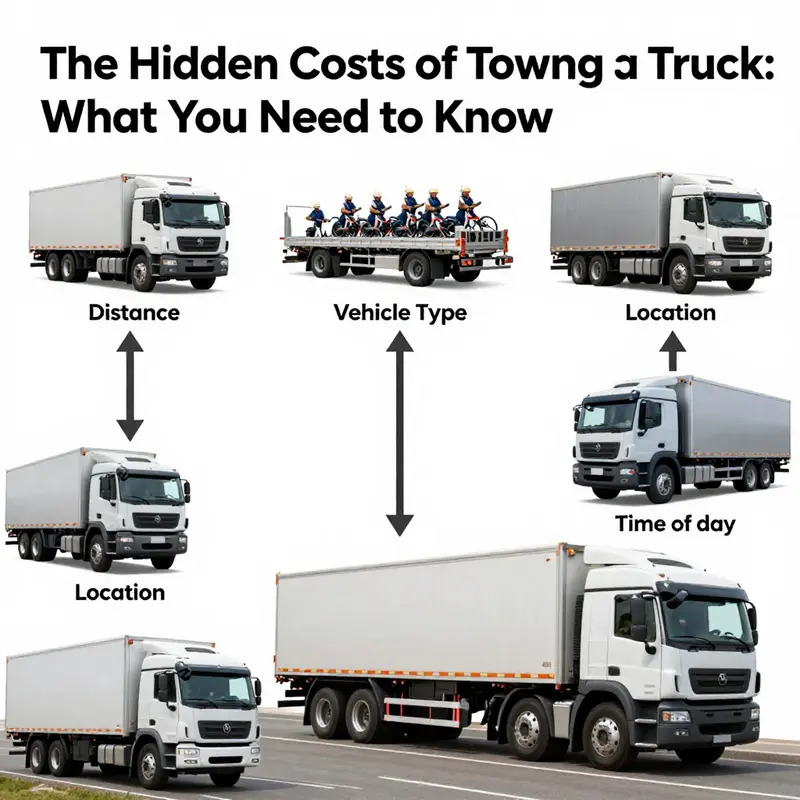
Tow costs are rarely a single figure. They reflect the distance, the truck type, the vehicle condition, the timing, and the add-on services you actually end up using. A starting quote is just that: a starting point that should be refined as the job details unfold.
Distance is the most obvious driver. The base rate covers the initial miles, after which per-mile charges add up. Short urban hops can look expensive due to traffic, parking, and the time a driver spends en route or waiting on-site. Longer hauls may incur return trips, remote-site access fees, and extra fuel burn, all of which shape the final number. Heavier vehicles also demand more labor and specialized equipment, so the impact of miles is amplified when the load is large or awkward.
Vehicle type and condition matter as much as distance. A heavy-duty truck or a commercial trailer needs stronger tow rigs, higher traction capacity, and a crew trained for precise loading. When a vehicle runs, the tow can be relatively quick; when it doesn’t, flatbeds, winching, or extra securing steps can add hours and costs. The more specialized the equipment and handling, the higher the base and the per-mile rates tend to be.
Time of day and location bring their own pricing signals. Emergency or after-hours towing commands higher rates because labor availability and service capacity are tighter. Urban environments may add access fees or parking surcharges, while rural locations can require longer drives that burn more fuel and time. The resulting price reflects both the crew’s schedule and the logistics of getting to and from the scene.
Ancillary services can tilt the bill in meaningful ways. A jump start, fuel delivery, locksmithing, tire changes, or extra security for a damaged vehicle all add lines to the invoice. Some providers present an itemized estimate up front, while others disclose add-ons during service. The key is to ask questions before work begins: does the quote include drive time to the scene? Are tolls, fuel surcharges, or parking fees included? Is a flatbed option available, and how would that choice affect cost? Will after-hours surcharges apply if trouble strikes after dark?
From a practical standpoint, prices tend to sit in a range rather than at a single number. Short distance tows in many areas may settle in a base price plus mileage, with more complex or heavier moves pushing costs higher into hundreds or even into the mid five figures for extraordinary cases. For flatbed operations, higher equipment and handling costs usually translate into a higher upfront charge.
The smartest approach is to request a transparent, itemized estimate before any work begins and to understand what could trigger additional charges. If a quote feels vague or hinges on uncertain variables, consider it a red flag. Conversely, a higher initial quote that forecasts fewer contingencies can sometimes protect against surprise charges later.
For further context on typical ranges, you can review national benchmarks from reputable sources, and be sure to compare apples to apples across providers. If you want a practical reference, you can consult industry materials such as the towing cost overview published by AAA at https://www.aaa.com/automotive/towing-costs
After-Hours Tow Fees: What It Really Costs to Tow a Truck at Night, on Weekends, or Holidays
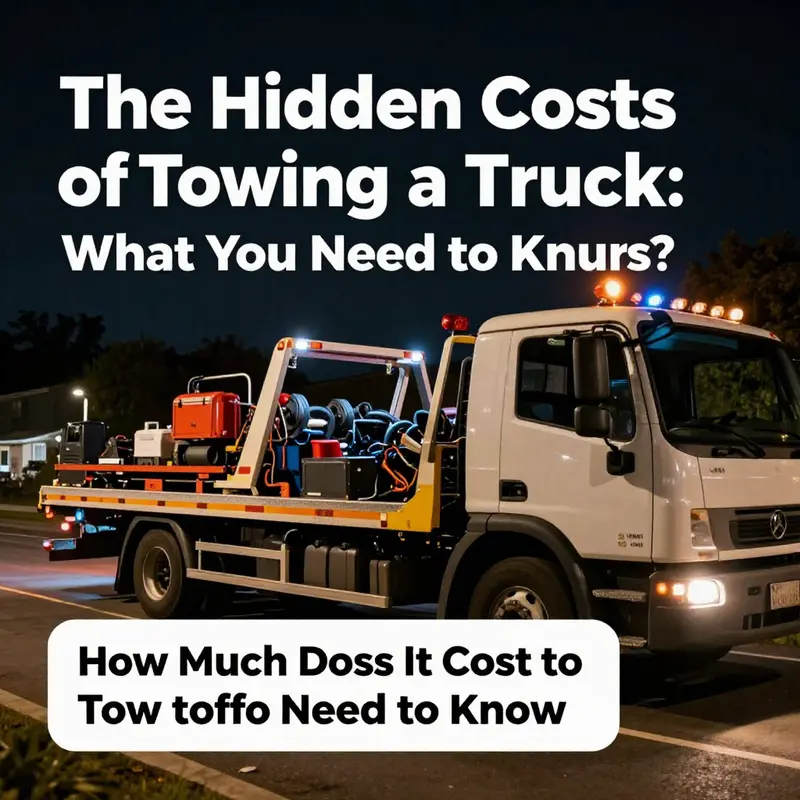
Understanding off-hours tow pricing and how to avoid surprise bills
When a truck becomes stranded after hours, the price to get it moving again often becomes the immediate concern. Off-hour towing—nights, weekends, and holidays—carries real, measurable premiums. These charges reflect limited service availability, higher labor costs for technicians called in outside normal shifts, and the extra equipment or manpower that difficult recoveries often require. Knowing how those premiums are calculated, typical cost ranges, and practical steps to limit exposure helps drivers and fleet managers make faster, less expensive decisions when an incident happens.
At its core, emergency towing pricing is an overlay on regular towing fees. A towing call usually starts with a base hook-up fee that covers the tow truck dispatch and the initial work to secure the vehicle. After that comes a per-mile charge for transport, and sometimes additional fees: winching, recovery, flatbed use, multi-vehicle handling, or storage if you can’t pick the truck up immediately. After-hours service typically tacks on a premium, either as a flat emergency fee or a percentage markup. That premium commonly ranges from about 50% to 100% above daytime rates, though it can climb higher for highly complex recoveries.
Concrete numbers make this clearer. A short, routine 10-mile tow for a light-duty pickup during daytime hours often runs between $75 and $180 in many U.S. markets. Call that a baseline. The identical service on a weekend night, however, can easily exceed $300 to $400. For larger vehicles—heavy-duty pickups, box trucks, or semis—the equipment needed shifts from a light wrecker to a heavy-duty tow truck or landoll, adding both hourly labor and specialized gear. Those jobs often start in the several-hundred-dollar range for simple tows and can reach $1,000 or more for complicated recoveries, particularly when traffic control, heavy winching, or multivehicle rigging is required.
Several predictable factors determine where a specific call lands on that price spectrum. Time of day is among the most consistent drivers: calls between midnight and 6 a.m. are commonly billed at a premium. Weekend and holiday service tends to be costlier because staff coverage is thin. Vehicle size matters: heavier trucks need heavier equipment, and specialized trucks consume more fuel, require longer travel, and demand operators with specific certifications. Distance still matters: most companies have a base distance included with the hook-up, then charge per mile. Location influences price too—urban centers can have higher base rates due to costs and demand, while rural calls may cost more because of longer travel times and fewer nearby towers.
Towing companies typically structure emergency pricing in one of a few ways. Some add a flat emergency fee—$150 to $250 is common—on top of the standard hook-up and per-mile fees. Others apply a percentage markup to the quoted base rate. A third model is a straightforward flat rate for emergency calls that covers a short distance and then switches to per-mile pricing beyond a threshold. Because rates vary so widely, always ask the tower how they calculate off-hour charges before work starts.
A practical example helps. Imagine a disabled light-duty truck, 10 miles from a repair shop. Daytime estimate: $140 (including hook-up and 10 miles). If the tower applies a 75% emergency surcharge for a late-night call, the final price would be $245. If the company uses a flat emergency fee of $200 plus $5 per mile, the same 10-mile move might total $250. For a heavy-duty tow of a commercial box truck that needs a rollback or landoll, the daytime cost for a short distance might be $300–$500. Nighttime surcharges, extra labor for loading, and recovery fees can push that into the $600–$1,200 zone.
If a truck is involved in a complex roadside recovery, expect higher figures. High-angle recoveries, deep-ditch extractions, or multi-truck incidents often require extra crew members, traffic control measures, and specialized recovery gear. Those jobs are priced more like emergency recovery operations than simple tows, and the hourly labor and equipment charges add quickly. Damage mitigation is also a factor—using a flatbed or landoll instead of a hook and tow reduces the chance of further damage, but costs more up front.
There are straightforward ways to reduce the financial sting when a tow is unavoidable. First, get an upfront estimate. Ask the operator to explain every component: hook-up, per-mile rate, emergency fee, winching charges, storage, and any anticipated hourly labor. If the provider uses percentage markups, ask for a written breakdown. If you have time, call two or three local towers to compare quotes, especially outside a life-or-safety emergency.
Second, confirm membership benefits and insurance coverage. Roadside assistance memberships and many commercial fleet programs include off-hour towing at reduced or no out-of-pocket cost. Verify network restrictions or blackout times in advance. Insurance policies sometimes cover towing, but that depends on the policy terms and whether the claim ties to a covered event.
Third, consider safety versus cost. If remaining in place until daylight is safe, it can be cheaper to wait for standard-hours service. However, leaving a disabled truck in a hazardous location, like a highway shoulder with high-speed traffic, is not advisable. Safety must come first; the cost of waiting is small compared with injury or secondary damage.
For fleet managers, planning makes all the difference. Establish a list of pre-approved, vetted towers with negotiated emergency rates and clear response expectations. Pre-negotiation reduces decision time and lowers the risk of paying a market-rate premium in high-stress moments. Training drivers on what to ask when they call, and what documentation to take at the scene, prevents overpaying and streamlines claims processing. For broader planning guidance, fleet operators will find value in essential response protocols and supplier relationships described in the linked material on essential fleet emergency response strategies.
When evaluating a tower, look beyond the hourly rate. Response time, equipment suitability, operator experience, insurance for damage during the tow, and storage policies matter. A cheaper tower that arrives late or lacks appropriate equipment can cost more in the long run. Verify that the towing company carries commercial liability and cargo coverage sufficient to protect your vehicle and its load.
A few billing nuances often surprise people. Many towers charge a hookup fee even when the truck is declared non-movable and must be recovered from an awkward position. Winching charges can be per fifteen minutes or hourly. Cancellation fees are also common: if a tower is dispatched and then released, expect a minimum charge to compensate for travel and labor. Fuel surcharges may appear during periods of high fuel prices. Document conversations and have the operator confirm charges before work begins whenever possible.
Negotiation is possible in many cases. If you can wait for a standard shift, ask if the driver can schedule the tow for morning. If the tower quotes a large emergency fee, request a breakdown and ask whether the company can waive a portion if the job turns out simpler than anticipated. For fleet accounts, negotiate emergency addendums to contracts that cap off-hour premiums and set flat fees for routine short-distance moves.
The bottom line is simple: off-hours towing for trucks can be expensive, but it is not unknowable or uncontrollable. Expect a 50–100% premium on basic calls during late nights, weekends, and holidays. Understand the billing components, get an upfront estimate, confirm membership or insurance coverage, and, when it is safe to do so, compare providers. For fleets, pre-approved vendor lists and clear emergency-response plans prevent excessive charges and reduce downtime. When a call is unavoidable, clear communication and documentation are your best tools to limit surprise costs and secure reliable service.
External resource for more information on emergency and off-hour towing rates: https://www.aaa.com/automotive/towing-services
Internal resource: For fleet managers seeking a structured approach, review essential fleet emergency response strategies at https://theislandtowtruck.com/essential-fleet-emergency-response-strategies/.
Tow Size, True Costs: How Vehicle Size and Tow Configuration Shape the Price of Truck Towing
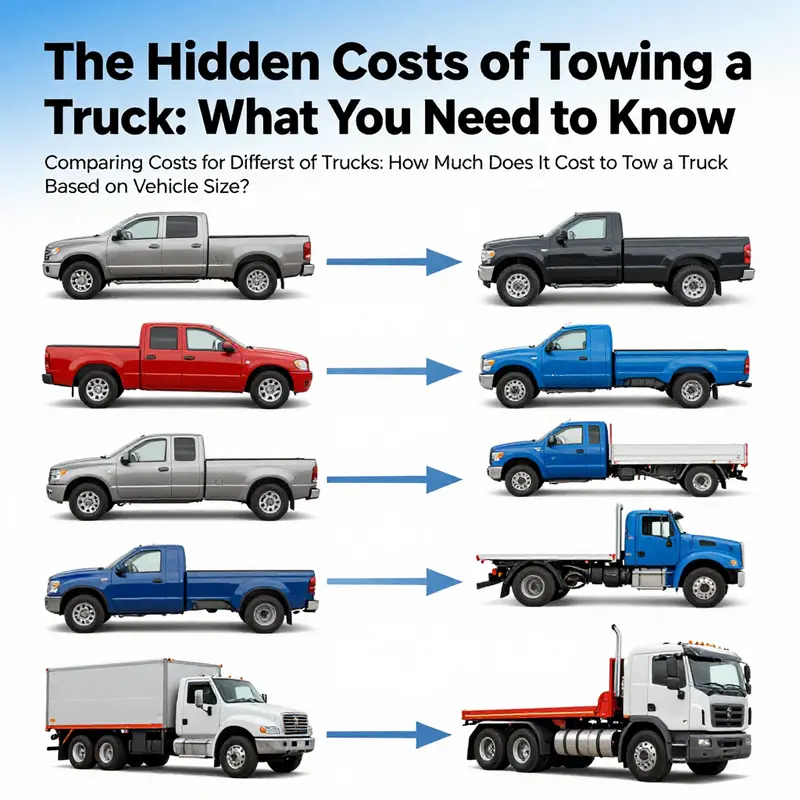
When a truck breaks down or is involved in an incident, the question of cost quickly rises to the surface. Yet the price tag for towing a truck is not a single number that fits every situation. It is a moving target shaped by the vehicle being towed, the equipment used to secure and transport it, the distance to the destination, and the conditions under which the tow must happen. In this chapter, we unravel how size and configuration determine costs, and why the same cause—an immobilized vehicle—can yield very different invoices depending on the approach a tow operation takes. The first piece of the puzzle is the equipment itself. Towing fleets deploy a spectrum of machines designed for different jobs. At the top end are heavy-duty wreckers, built to recover large commercial vehicles and heavy trucks. They employ robust restraints, multiple winches, and heavy-duty recovery gear that can manage significant loads without compromising the vehicle being towed. These are not one-size-fits-all machines; their capabilities are matched to the job, and that match translates into higher upfront investment and ongoing maintenance. Then there are smaller tow trucks that excel in urban environments, where maneuverability and speed are essential and the loads are typically lighter. These units are generally less expensive to purchase and operate, but their design constraints can increase the risk of undercarriage or transmission damage if they are used on vehicles that exceed their intended limits. Integrated tow trucks, which weave the towing apparatus into the truck chassis itself, sit somewhere in between. They optimize performance for frequent towing tasks and complex recoveries, but their upfront costs are higher because the engineering is more sophisticated. Finally, specialized utility vehicles with other capabilities—such as large fluid transport or on-site logistics support—enter the picture not for routine towing but for recovery operations that demand a broader toolkit. While not every tow involves such equipment, the existence of these specialized options illustrates how the cost scale is driven by function as much as by weight. The second piece of the puzzle is the base rate structure that ticktocks when the tow begins. For quick, short moves—often described as urban, light-load towing—the base rate plus per-mile charges form the core of the quote. In practical terms, short-distance towing, typically up to 10 miles, often falls within a range of roughly $75 to $150, depending on the provider and the local market. This baseline covers the initial mobilization, the hook-up, and the initial segment of the journey. Beyond that, per-mile fees accumulate. The farther you travel, the more each mile adds to the bill. The math becomes more nuanced when the job requires heavy-duty gear or special handling. A long-haul tow or a complex recovery that involves lifting, stabilizing, or cross-loading onto a flatbed can push the total well beyond the typical short-distance figure, frequently topping $300 to $500 or more for demanding operations. The time of day or day of week can tilt the scale as well. After-hours towing, weekend calls, and holiday emergencies command higher labor rates because the crew must be scheduled outside ordinary hours and may be dispatched under tighter time constraints. The price tag, in other words, is partly a reflection of the quiet economy of a 24/7 service industry as much as it is a reflection of the physical effort involved. The vehicle’s size and weight weigh heavily into both the operational requirements and the risk calculus. Heavier trucks demand stronger restraints, more secure tie-downs, and careful weight distribution to prevent damage to the towed vehicle or to the towing rig itself. For the fleet, this means greater fuel burn, more tire wear, and increased engine or transmission strain during transport. In the study of fleet economics, these factors are treated as part of the broader cost of operation, and they show up in the long-term price of services as well as in the occasional premium quoted for a difficult job. The cost of owning or leasing the equipment also feeds into the consumer price. Heavier-duty wreckers carry a higher purchase price, typically tens of thousands of dollars more than lighter-duty alternatives, and they require ongoing maintenance that can be both frequent and expensive. In broad terms, a heavy-duty wrecker can entail an upfront investment around or above six figures, while lighter units sit in a lower band. The specific numbers vary by region, by the exact configuration, and by the age and condition of the equipment, but the principle holds: size drives capability, and capability drives cost. It is not solely about speed or distance; it is about safety and control. A larger vehicle demands more robust devices to secure it, safeguard the tow operator, and minimize the risk of collateral damage to the vehicle being moved. That leads to another important point for consumers: the decision framework around choosing a towing approach. A flatbed tow—where the vehicle is loaded onto a rigid bed—offers excellent protection for sensitive drivetrains and for vehicles with transmission or undercarriage vulnerabilities. Flatbeds, however, come with higher upfront costs and higher operating expenses because of the specialized equipment and the careful handling required. If the truck’s configuration and the tow path make a bedless approach feasible, some operators will opt for a standard tow rather than a flatbed to control costs. Yet when there is a risk that the vehicle could slip, leak fluids, or suffer further damage if dragged, the flatbed becomes the prudent choice despite its higher price tag. The location and the environment further complicate matters. In dense urban cores, labor costs, permitting constraints, and the need for maneuvering room can raise both the base rate and the per-mile charges. Rural or suburban routes tend to feature lower labor costs, but distance becomes a more significant factor as the tow travels to a distant yard or processing facility. For the consumer, this means a practical approach to budgeting: request a clear, itemized quote that breaks out the base rate, mileage, after-hours surcharges (if applicable), and any equipment-specific fees. Ask whether a flatbed is necessary or if a conventional tow would suffice. It is also wise to confirm if any additional services—such as wheel-lift or stabilizing equipment, winching, or multi-point securing—are included or billed separately. These distinctions matter because they can be the difference between an affordable quick tow and a costly, protracted recovery. In the end, the price of towing a truck is not a single metric but a mosaic of factors that align with the vehicle’s size, the required equipment, and the realities of time and place. This mosaic helps explain why the same scenario can yield a range of price outcomes depending on the chosen configuration and the local market. For readers who want to explore further nuances and practical steps for budgeting, there is a breadth of community knowledge and fleet-management insights available. For additional context and ideas on fleet readiness, you can visit The Island Tow Truck blog. The Island Tow Truck blog.
As you plan for the unexpected, remember that the most accurate path to a fair price is direct engagement with a local provider who can assess the vehicle on the ground, verify access constraints, and tailor the approach to the specific situation. The quoted numbers in catalogs or general guidelines are helpful anchors, but the final invoice will reflect the actual conditions faced at the moment of tow. This is why a brief but thorough phone or online inquiry—outlining the truck size, axle count if known, the location of the tow, and any access obstacles—usually yields a more reliable estimate than relying on a rough, across-the-board figure. The aim is not to oversimplify the math but to illuminate the major levers that determine cost. In practice, understanding these levers helps you advocate for fair pricing and avoid hidden charges. It also clarifies why a larger, heavier vehicle can carry a higher price tag even when the distance is comparable to a smaller vehicle. The conversation around cost then becomes less about a single number and more about an informed dialogue that aligns the towing plan with safety, efficiency, and fiscal sense. For readers seeking deeper exploration of fleet planning and emergency response considerations—especially for island fleets facing unique logistical constraints—the linked blog offers a wealth of practical guidance. External resource: https://www.fleetowner.com
Urban Clocks and Rural Roads: How Location Shapes the Price Tag on Towed Trucks
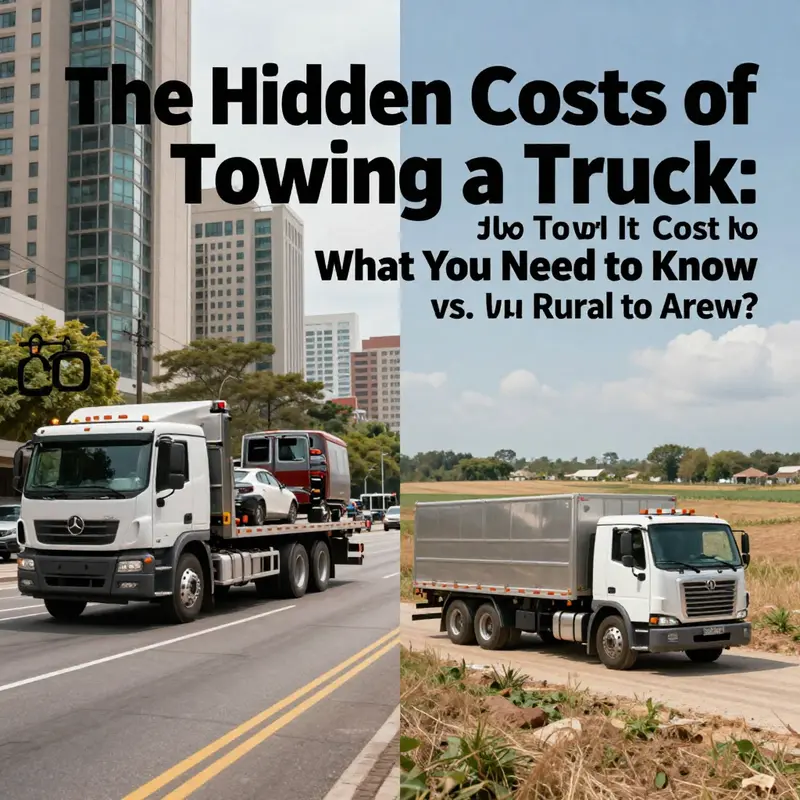
When you find yourself stranded with a truck that won’t move, the price to recover it can feel like a moving target. The cost to tow a truck is not a single, fixed number; it grows, shrinks, and shifts with the miles, the place, and the moment you need help. A single variable—location—often explains much of the price difference you’ll see when you’re comparing an urban tow to a rural one. In urban centers, the price tag tends to be influenced by high operating costs, dense traffic, and the challenge of accessing congested areas. In rural regions, by contrast, the same service is more likely to hinge on longer travel distances, fewer service providers, and the logistics of bringing specialized equipment to hard-to-reach locations. Understanding how these regional dynamics play out can help you anticipate costs, prepare a fair budget, and negotiate with clarity when an emergency arrives unexpectedly. It also frames a more accurate expectation of what you should pay for a tow in your area, rather than relying on a single nationwide average that glosses over critical regional differentiators.
In urban settings, the starting point for a tow is typically a base rate that covers the first few miles and the basic labor involved in dispatching a truck and driver. Most cities see a base rate in the vicinity of $75 to $125 for a standard tow of about five to ten miles. This range reflects not only the cost of fuel and driver time but also the overhead of operating in a bustling environment: city licenses, insurance requirements, parking restrictions, and the need to respond quickly amid ongoing traffic. The urban workflow is complicated by the reality of traffic congestion. A tow in the heart of a city may require taking longer routes than a straight-line distance would suggest, and the time spent idling in traffic, maneuvering through narrow streets, or awaiting access to a gated lot can all translate into higher labor costs and, sometimes, higher time-based charges. The result is a pricing picture where the base rate is the anchor, but surcharges for time and difficulty can push the total beyond the initial number. In addition, access limitations—think tight alleyways, high-rise districts, or restricted hours in commercial zones—can demand more manpower or the use of specialized equipment, further elevating the final bill. Peak hours, late-night dispatches, weekends, and holidays often carry a premium because the demand for service spikes and the opportunity cost for the provider rises. Those who have faced an after-hours call know that the clock ticks, and with it, the labor and equipment costs rise in step. The interplay of traffic, access, and overhead creates a pricing ecosystem in which urban tows come with a premium that mirrors the complexity of pulling a vehicle out of a dense, busy environment.
Rural towing presents a different economic calculus. In areas where service centers are sparse and response times can stretch into longer horizons, the distance between you and help becomes a principal determinant of cost. Rural responses are frequently characterized by longer travel to the scene, fewer nearby tow trucks, and less frequent consolidation of calls into a single, efficient route. Because of these factors, many rural operators rely on higher per-mile rates once you move past the initial base distances. Typical rural per-mile charges can range from $4 to $7 or more, depending on terrain, weather, and the actual miles required to reach your location. It is not unusual to encounter a scenario where a 20-mile tow in a rural setting lands somewhere in the neighborhood of $150 to $350 or more, depending on the machine needed, the weight of the vehicle, and whether the job requires specialized equipment. In contrast, a similar 20-mile tow in an urban environment might hover around $125 to $200, illustrating how rural operations, despite lower base rates in some cases, can accumulate costs quickly through distance and the logistics of moving long distances through sparsely populated regions. Rural pricing can also be shaped by the realities of limited competition and longer wait times. Fewer service providers mean less price competition, and extended wait times can lead to additional charges—often in the form of fuel surcharges or extended labor fees if the job stretches into off-hours or requires extra personnel to handle a heavy load. Heavy-duty vehicles, long-haul trailers, or equipment with 30-ton capacity require even more investment in specialized wrecker capabilities. In these situations, the provider must deploy high-capacity gear designed to handle the size and weight of the truck, which translates into higher equipment and calibration costs that inevitably filter into the final price.
The type and size of the vehicle being towed interact with geographic location in meaningful ways. A standard pickup or light-duty delivery truck follows a different pricing trajectory than a large construction truck, a class-8 semi, or a heavy-duty truck with a long chassis. In urban settings, the desire to minimize disruption and maximize rapid turnover can push operators to use smaller, more nimble tow rigs when feasible, but the job may demand the same basic overhead and dispatch costs. When the vehicle demands heavy-duty equipment, the cost scales up quickly in either region. A 30-ton wrecker, for example, carries substantial fuel, maintenance, and crew requirements, plus the capital cost of equipment that must be maintained and ready for high-stress operations. The presence of such equipment changes the math; it increases not only the per-mile rate but also the base charge and any call-out or standby fees that may apply when the weight or complexity of the tow compels a specialized crew to station equipment near the job site. In urban zones, the driver and crew may confront tighter schedules and greater risk of damage to surrounding property, which can prompt additional safety measures and, consequently, additional costs. In rural zones, off-road access challenges—steep grades, unpaved routes, mud, or snow—can demand more sophisticated recovery tools, driving up both the equipment rental costs and the labor time required to secure the vehicle without causing further harm.
From a practical standpoint, those who plan for the cost of towing should expect a few core components to appear on their bill. The base rate covers the shortest, simplest part of the job, but beyond that, per-mile fees, time-based charges (particularly when work extends into extended hours), and dispatch or call-out fees quickly accumulate. Additional line items may include fuel surcharges for long trips, wait-time charges if the driver is delayed due to a congested scene or a late-arriving arrival window, and equipment charges if a heavy-duty tow or a flatbed is needed. The distinction between a standard tow and a flatbed tow is especially relevant when the destination involves not just moving a vehicle, but preserving its condition during transport. Flatbed tow trucks, while providing a safer transport method for damaged vehicles, come with higher initial costs to maintain the hydraulics, the bed, and the securing gear. This price premium is more likely to show up in urban calls that require careful handling to avoid collateral damage in congested workspaces, but it can also show up in rural settings where uneven terrain or compromised access makes a flatbed the safer option.
Beyond the immediate calculations, a critical factor is how a consumer engages with the pricing process. The urban-rural divide is not simply about miles; it is about risk, time, and the probability of complications at the job site. A driver arriving in a busy downtown arter y may face parking restrictions and the challenge of blocking traffic, which can extend on-scene time and raise labor charges. Conversely, a rural operator may contend with longer drive times and potential delays caused by weather, road conditions, or limited daylight. In both contexts, the most reliable way to understand what you will pay is to request a written quote or a detailed estimate that itemizes base charges, mileage, and any surcharges. If a provider can’t spell out how the final figure is assembled, that should raise a warning flag and invite you to seek a second quote from another nearby service. A transparent breakdown lets you compare apples to apples and assess whether the price difference between two comparable options is justified by factors such as distance, vehicle weight, and access challenges rather than simply the sticker price.
The knowledge shared here echoes broader industry observations and reinforces a practical approach to budgeting for unexpected towing needs. For readers who want to see a broader discussion of pricing dynamics and regional variations, the Island Tow Truck blog offers context on how pricing structures evolve in different markets and what drivers can expect under varying conditions. This background can be especially helpful when you’re navigating a tow in a new city or planning for long trips that might traverse multiple regions. By approaching towing with a clear sense of the cost drivers—base rates, per-mile charges, time-based fees, and the added burden of access, weight, and equipment—drivers and fleet operators can prepare more accurate budgets and negotiate more fairly when confronted with a quote that seems higher than expected.
While regional differences are pronounced, the core takeaway remains consistent: always ask for a transparent price that breaks down the components, verify whether there will be additional charges for fuel or wait times, and consider the potential impact of including a heavy-duty or flatbed option. If possible, secure quotes from multiple providers to understand the range and the reasons behind any higher quotes. It is also wise to consider the broader context of the towing market in your area—how many drivers are available, what the typical response times look like, and whether the provider can guarantee a timely arrival. In the end, your ability to manage and anticipate costs rests on honest conversations with the service professional and a careful reading of the estimate before any work begins.
For researchers and practitioners who seek deeper, region-specific price data, authority sources like national pricing trend analyses can provide ongoing updates on how towing costs shift across the United States. These data points help illustrate that while the numbers you see may fluctuate, the underlying drivers—distance, access, vehicle size, and the time of service—remain consistent levers that shape the total bill. In that sense, your best preparation is a combination of real-time quotes and an understanding of the typical regional range; this gives you a realistic expectation for what a tow may cost in your area and helps you negotiate a fair arrangement when you need to call for assistance. To explore additional regional context and pricing trends, consider consulting a dedicated pricing resource and related industry analyses, which offer broader insights into how costs evolve across urban and rural landscapes.
External resource: https://www.naac.org/towing-costs
Final thoughts
Towing costs can be daunting, but by understanding the elements that influence them, businesses and property managers can better prepare for the unexpected. Whether based on vehicle size, the urgency of the situation, or the location’s specific rates, having these insights helps foster more effective negotiations with towing service providers. Make informed decisions and safeguard your operations against unforeseen towing expenses by keeping these factors in mind.