
Every minute counts in a roadside emergency, where quick-thinking drivers can be the difference between life and death. Take the story of Travis Braun, a truck driver who epitomizes this and whose rapid response saved an unconscious woman’s life in Kansas. His instinctive actions demonstrate the vital and often underappreciated role of commercial drivers in emergency situations.
These heroes are not just behind the wheel; they are the guardians of our highways, prepared to act decisively when seconds matter. Understanding the challenges they face and the skills they employ reveals a crucial aspect of roadway safety that deserves our attention and respect.
Insight on Roadside Emergencies
Roadside emergencies can occur unexpectedly and require immediate attention to ensure safety and resolve the situation effectively. Here are some important insights to consider:
Common Types of Roadside Emergencies
- Flat tires
- Running out of fuel
- Engine trouble
- Overheating
- Accidents and breakdowns
Safety Tips
- Stay calm and assess the situation. Move your vehicle to a safe location if possible.
- Turn on your hazard lights to alert other drivers.
- Using reflective triangles or flares can help increase visibility.
Emergency Kit Essentials
It’s advisable to keep an emergency kit in your vehicle, including:
- Spare tire, jack, and lug wrench
- First aid kit
- Flashlight with extra batteries
- Basic tools (screwdriver, pliers, etc.)
- Non-perishable snacks and water
When to Call for Assistance
If the situation is beyond your control, it’s best to call for professional roadside assistance. This includes:
- Inaccessible vehicles stuck in the mud or snow
- Severe engine issues that you can’t diagnose
- Injuries from accidents that require medical attention
Conclusion
Being prepared for roadside emergencies can greatly reduce the stress of the situation. Having an emergency kit and knowing who to call for help can ensure safety on the road.
Heroic Stories of Travis Braun and John Bradley
Travis Braun’s Heroic Actions
Travis Braun, a truck driver for ABF Freight, was honored as a Highway Angel for his remarkable actions during two distinct roadside emergencies. One of his most notable rescues occurred on August 15, 2023, while driving near Lawrence, Kansas. Braun witnessed a vehicle crash when a car collided with the median, veered off the road, and descended down an embankment. Without hesitation, he pulled over to assist. “I had to force the door open,” Braun recounted, highlighting the urgency of the situation. With help from another bystander, they managed to extract an unconscious woman from the smoking vehicle, who had sustained injuries including a suspected broken leg. Braun’s decisive actions not only saved her life but also showcased the critical role that truck drivers play in emergency situations. Reflecting on the incident, Braun emphatically stated, “I was there — I felt like I needed to do it.”
Braun’s commitment to acting in the face of danger demonstrates the true essence of heroism and was recognized by the Truckload Carriers Association when they named him a Highway Angel.
John Bradley’s Courage Under Pressure
Similarly, John Bradley, a driver for James River Carriers, has been honored with the Highway Angel designation following his quick thinking during a roadside emergency. While the specific details surrounding his heroic actions remain less publicized, it is clear that Bradley embodies the spirit of the Highway Angel program, which recognizes truck drivers who selflessly help others in need. His efforts serve as a reminder of the significant impact that individuals can have during crises, and how their training and instincts can save lives on our highways.
Both Travis Braun and John Bradley not only highlight personal courage but also represent the vital role of commercial drivers in maintaining safety on our roads. Their stories inspire others to act compassionately and courageously, fostering a culture of care and responsibility among all road users.
| Driver Name | Actions Taken | Outcomes | Vehicle Involved |
|---|---|---|---|
| Travis Braun | Forced open a door, rescued an unconscious woman from a crash site | Saved the woman’s life; sustained injuries included a suspected broken leg | Truck (ABF Freight) |
| John Bradley | Quick thinking during an emergency scenario | Preserved safety; details less publicized | Truck (James River Carriers) |
| [Driver 3 Name] | [Action taken] | [Outcome] | [Vehicle Type] |
| [Driver 4 Name] | [Action taken] | [Outcome] | [Vehicle Type] |
This table illustrates the types of actions taken by drivers during emergencies, emphasizing the importance of their quick responses and the impact on outcomes. The comparison highlights both Travis Braun and John Bradley as exemplary figures in their roles, showing that every driver can potentially make a lifesaving difference in critical situations.
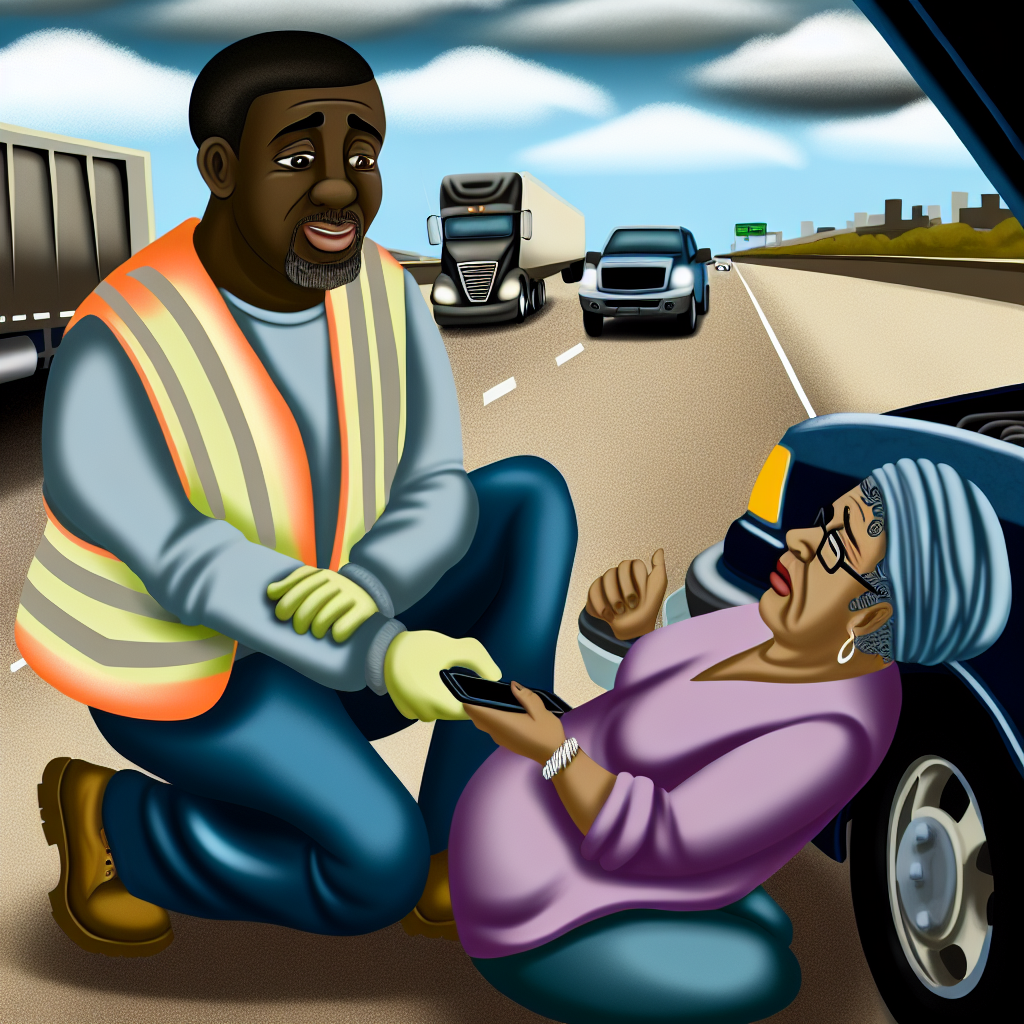
This image depicts a compassionate truck driver assisting another vehicle during a roadside emergency, illustrating the human aspect of heroism.
Evidence of Importance of Quick Reactions in Roadside Emergencies
Quick response times in roadside emergencies are critical for reducing fatalities, minimizing injury severity, and alleviating traffic congestion. Several studies and reports highlight the importance of rapid intervention:
-
Association Between Emergency Medical Service Response Time and Motor Vehicle Crash Mortality in the United States
Source: PubMed
Date: 2019
Summary: This study analyzed data from 2,268 U.S. counties and found a significant association between EMS response times and motor vehicle crash mortality rates. Counties with longer median EMS response times exhibited higher mortality rates, emphasizing the critical role of prompt emergency medical services in improving survival outcomes.
(pubmed.ncbi.nlm.nih.gov) -
Effect of Emergency Medical Service Response Time on Fatality Risk of Freeway Crashes: Bayesian Random Parameters Spatial Logistic Approach
Source: Frontiers in Public Health
Date: 2024
Summary: Research conducted on freeway crashes in China demonstrated that for each additional minute in EMS response time, the odds of a fatality increased by 2.6%. This underscores the importance of reducing response times to enhance survival rates in traffic incidents.
(frontiersin.org) -
Next Generation Traffic Incident Management | ITS Deployment Evaluation
Source: U.S. Department of Transportation
Date: 2023
Summary: The implementation of advanced Traffic Incident Management (TIM) technologies has led to significant improvements in incident response and clearance times. For instance, the Oro Valley, Arizona Police Department reported a 32% reduction in incident clearance times after adopting a Computer-Aided Dispatch (CAD) system. Similarly, the North Carolina Department of Transportation utilized Unmanned Aerial Systems (UAS) to map crash scenes, reducing clearance times by over 50%.
(itskrs.its.dot.gov) -
Influential Factors in Freeway Crash Response and Clearance Times by Emergency Management Services in Peak Periods
Source: PubMed
Date: 2005
Summary: An analysis of Ohio’s peak-period traffic crash data revealed that crashes involving injuries or fatalities had up to 20% shorter EMS response times compared to property-damage-only crashes. This indicates that the severity of an incident influences response times, with more serious incidents receiving quicker attention.
(pubmed.ncbi.nlm.nih.gov) -
Police Response Time and Injury Outcomes
Source: The Economic Journal
Date: 2023
Summary: A study examining police response times found that a 10% increase in response time led to a 1.3 percentage point increase in the likelihood of an incident resulting in injury. This highlights the direct correlation between rapid response and reduced injury rates.
(academic.oup.com)
These findings collectively emphasize that reducing response times in roadside emergencies is vital for improving survival rates, decreasing injury severity, and mitigating traffic congestion.
Organizations such as the Immigration and Customs Enforcement (ICE) and the Oklahoma Corporation Commission (OCC) play pivotal roles in ensuring the safety and compliance of truck drivers on our roadways, particularly among commercial trucks and CDL drivers. The ICE focuses on regulatory enforcement, especially concerning the legal status of the workforce, which can sometimes intersect with safety compliance efforts. Their actions ensure that all drivers, including those from immigrant backgrounds, adhere to the legal frameworks set forth to promote road safety.
On the other hand, the OCC actively engages in monitoring, enforcing, and developing regulations governing commercial motor vehicles in Oklahoma. This includes conducting inspections and audits, ensuring drivers possess valid Commercial Driver’s Licenses (CDLs), and maintaining vehicle safety standards. Together, these organizations contribute to reducing the prevalence of unsafe driving practices and ensuring that all commercial trucking operations comply with state and federal laws, thereby enhancing public safety and confidence on the road.
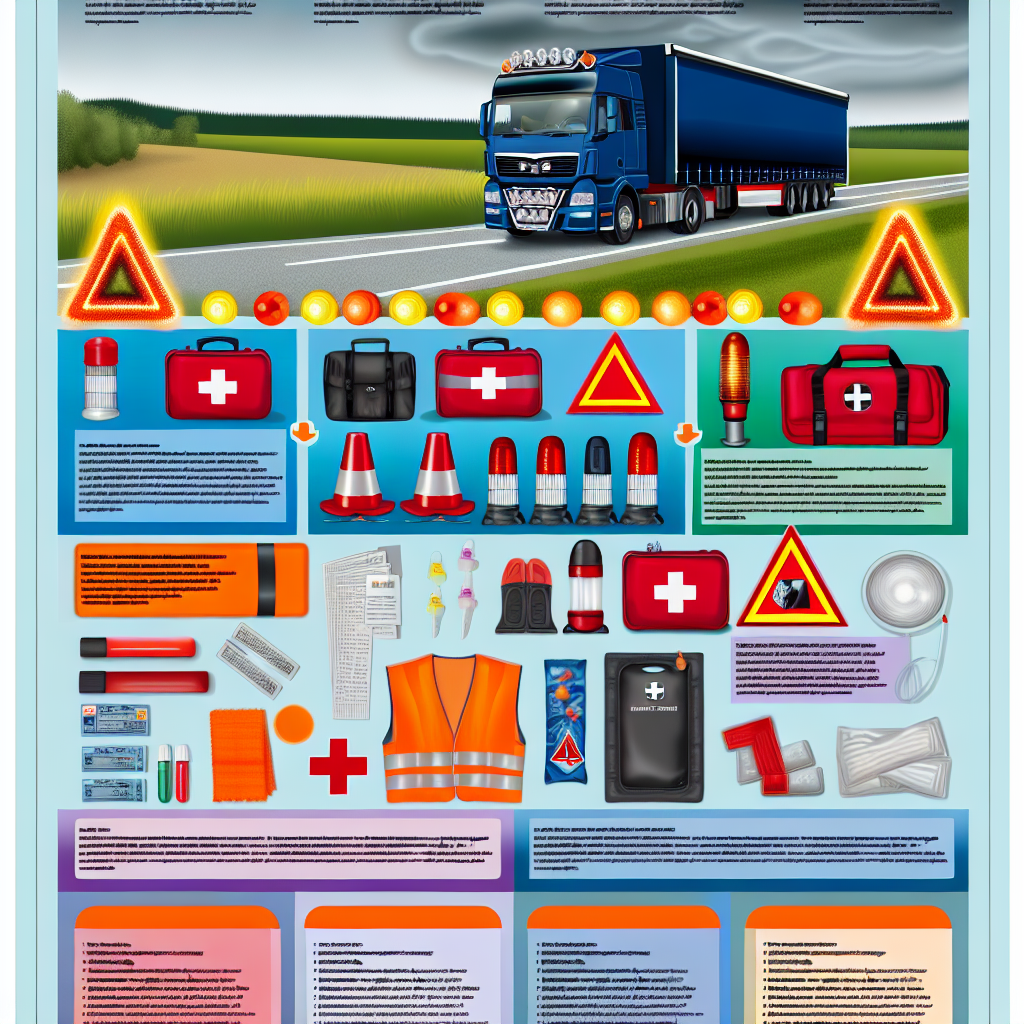
This image illustrates essential emergency equipment for truck drivers, including flares, warning triangles, and first aid kits, serving as a visual checklist for roadside emergencies.
In conclusion, the stories of Travis Braun and John Bradley serve as poignant reminders of the critical importance of preparedness and quick response techniques for all drivers on the road. Each account illustrates how a moment of decisive action can transform a tragic situation into one of hope and survival. As we reflect on these personal journeys, it becomes evident that the responsibility for safety extends beyond regulations and training; it lies firmly in the hands of every driver.
Being ready to act in a roadside emergency can mean the difference between life and death. Whether it is assisting a fellow driver in distress or intervening during an accident, these personal actions highlight the inherent power that each individual possesses to save lives. Therefore, it is vital for all drivers to recognize the significance of preparedness, as their instinctive responses can foster a culture of safety on our highways. When faced with an emergency, every second counts, and through preparedness, we can all become the heroes our roads desperately need.
Final Call to Action
As we wrap up our exploration of roadside emergencies and the heroic responses that often save lives, we want to hear from you. Have you ever been in a situation where you needed to act quickly, or have you been a witness to someone else’s bravery during a roadside emergency? Whether you have a story of your own or have seen others rise to the occasion, please share your experiences in the comments below.
Moreover, consider getting involved with local community safety initiatives. There is a pressing need for vigilance on our roads, and every effort counts. Whether it’s participating in safety workshops, advocating for better roadside assistance programs, or simply educating fellow drivers about emergency preparedness, you can make a significant impact.
Let’s foster a community that prioritizes safety and preparedness. Together, we can ensure that we are all ready to take action when it matters most. Remember, being vigilant and prepared could mean the difference between life and death on our roads.
Key Statistics on Roadside Emergencies
- 130 commercial drivers were arrested in a three-day enforcement blitz in Oklahoma, highlighting the urgent need for safety awareness.
- 5.6 million trucks (Class 5 or higher) entered Oklahoma in FY 2025, showcasing the volume of commercial traffic.
- 1.4 million trucks crossed the Beckham County Port of Entry from July 1, 2024, to June 30, 2025, indicating high levels of transport activity.
- Approximately 2,307 Volvo trucks and 156 Mack trucks were affected by a trailer lighting recall, emphasizing the need for regular maintenance and safety checks.
- 4,040 Volvo VN trucks were recalled due to a door latch issue, further indicating the importance of manufacturer accountability and vehicle safety protocols.
Evidence of Importance of Quick Reactions in Roadside Emergencies
Quick response times in roadside emergencies are critical for reducing fatalities, minimizing injury severity, and alleviating traffic congestion. Several studies and reports highlight the importance of rapid intervention, pointing out the need for emergency preparedness:
-
Association Between Emergency Medical Service Response Time and Motor Vehicle Crash Mortality in the United States
Source: PubMed
Date: 2019
Summary: This study analyzed data from 2,268 U.S. counties and found a significant association between EMS response times and motor vehicle crash mortality rates. Counties with longer median EMS response times exhibited higher mortality rates, emphasizing the critical role of prompt emergency management training in improving survival outcomes.
[pubmed.ncbi.nlm.nih.gov] -
Effect of Emergency Medical Service Response Time on Fatality Risk of Freeway Crashes: Bayesian Random Parameters Spatial Logistic Approach
Source: Frontiers in Public Health
Date: 2024
Summary: Research conducted on freeway crashes in China demonstrated that for each additional minute in EMS response time, the odds of a fatality increased by 2.6%. This underscores the importance of reducing response times and having effective emergency preparedness plans to enhance survival rates. -
Next Generation Traffic Incident Management | ITS Deployment Evaluation
Source: U.S. Department of Transportation
Date: 2023
Summary: The implementation of advanced traffic incident management training technologies has led to significant improvements in incident response and clearance times. For instance, the Oro Valley, Arizona Police Department reported a 32% reduction in incident clearance after adopting a Computer-Aided Dispatch (CAD) system. The enhancement of traffic safety education via technological advancements proves essential.
[itskrs.its.dot.gov] -
Influential Factors in Freeway Crash Response and Clearance Times by Emergency Management Services in Peak Periods
Source: PubMed
Date: 2005
Summary: An analysis of Ohio’s peak-period traffic crash data revealed that crashes involving injuries or fatalities had up to 20% shorter EMS response times compared to property-damage-only crashes. This indicates that the severity of an incident influences response times, necessitating comprehensive emergency preparedness across sectors.
[pubmed.ncbi.nlm.nih.gov] -
Police Response Time and Injury Outcomes
Source: The Economic Journal
Date: 2023
Summary: A study examining police response times found that a 10% increase in response time led to a 1.3 percentage point increase in the likelihood of an incident resulting in injury. This highlights the direct correlation between rapid response and reduced injury rates, reinforcing the need for road safety training and emergency preparedness awareness for drivers.
These findings collectively emphasize that reducing response times in roadside emergencies is vital for improving survival rates, decreasing injury severity, and mitigating traffic congestion.
Discuss Organizational Roles
Organizations such as the Immigration and Customs Enforcement (ICE) and the Oklahoma Corporation Commission (OCC) play pivotal roles in ensuring the safety and compliance of truck drivers on our roadways, particularly through fostering emergency preparedness and enforcing road safety training among commercial trucks and CDL drivers. The ICE focuses on regulatory enforcement, especially concerning the legal status of the workforce, which can sometimes intersect with safety compliance efforts. Their actions ensure that all drivers, including those from immigrant backgrounds, adhere to the legal frameworks set forth to promote road safety. On the other hand, the OCC actively engages in monitoring, enforcing, and developing regulations governing commercial motor vehicles in Oklahoma. This includes conducting inspections and audits, ensuring drivers possess valid Commercial Driver’s Licenses (CDLs), and maintaining vehicle safety standards. Together, these organizations contribute to reducing the prevalence of unsafe driving practices and ensuring that all commercial trucking operations comply with state and federal laws, thereby enhancing public safety and confidence on the road.
Roadside Emergency Response Times
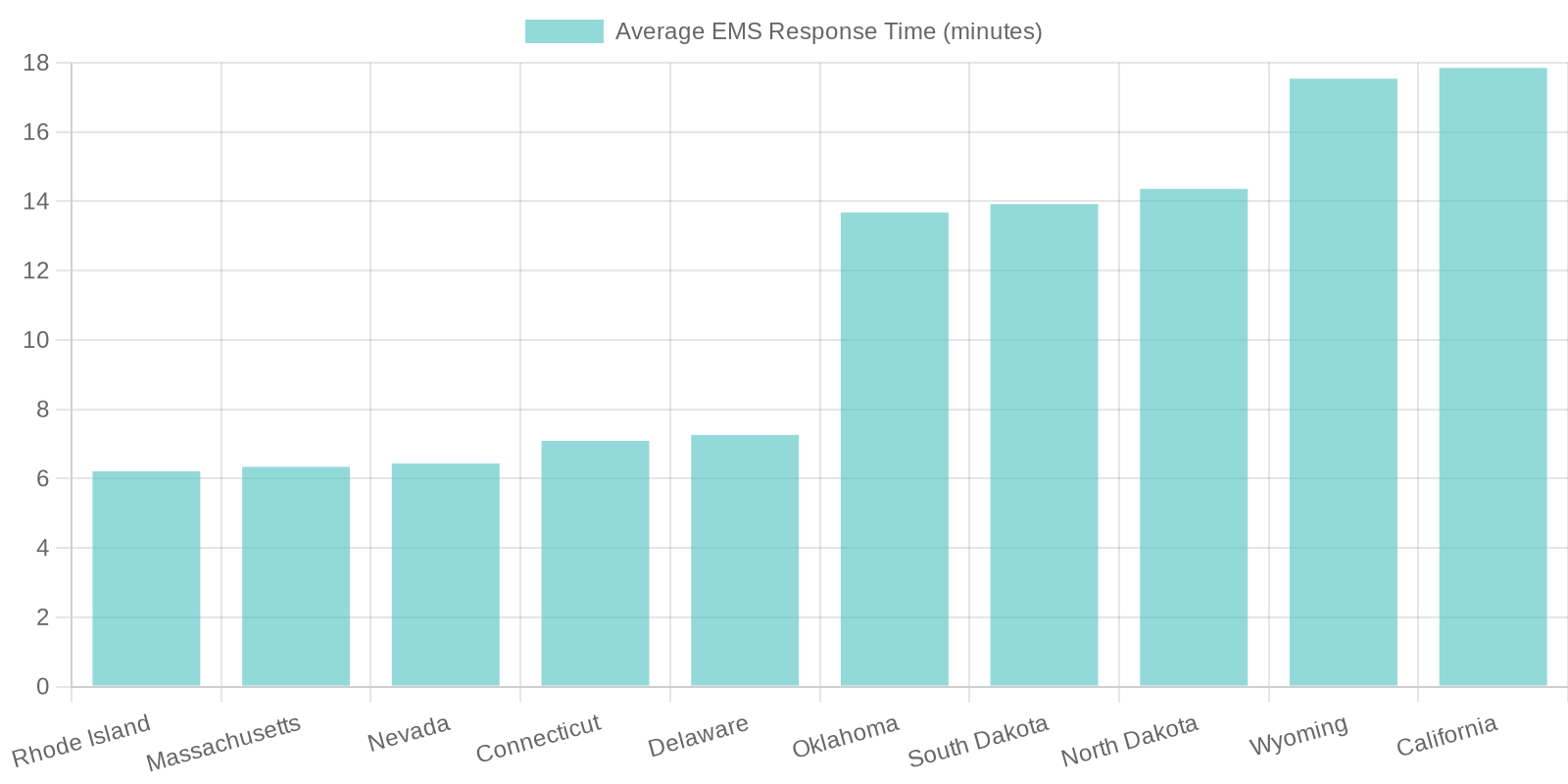
This graph illustrates the average emergency medical services (EMS) response times by state, highlighting the critical differences across the United States. It emphasizes the need for rapid response in emergencies and the influence this has on survival rates.