Navigating the world of auto repair and roadside assistance on our beautiful islands often presents unique challenges, especially concerning the expectations of tipping tow truck drivers. While tipping might be a common practice in certain service industries, the rules can be ambiguous when it comes to tow truck services. This article will clarify whether you should tip, delve into the quality of service provided by these professionals, explore the regional differences in tipping culture, consider situational factors that influence your decision, and wrap up with some final reflections. Each chapter will equip you with a comprehensive understanding to confidently engage with tow truck drivers in your local community.
Tipping Tow Truck Drivers: Reading Norms, Timing, and Gentle Appreciation
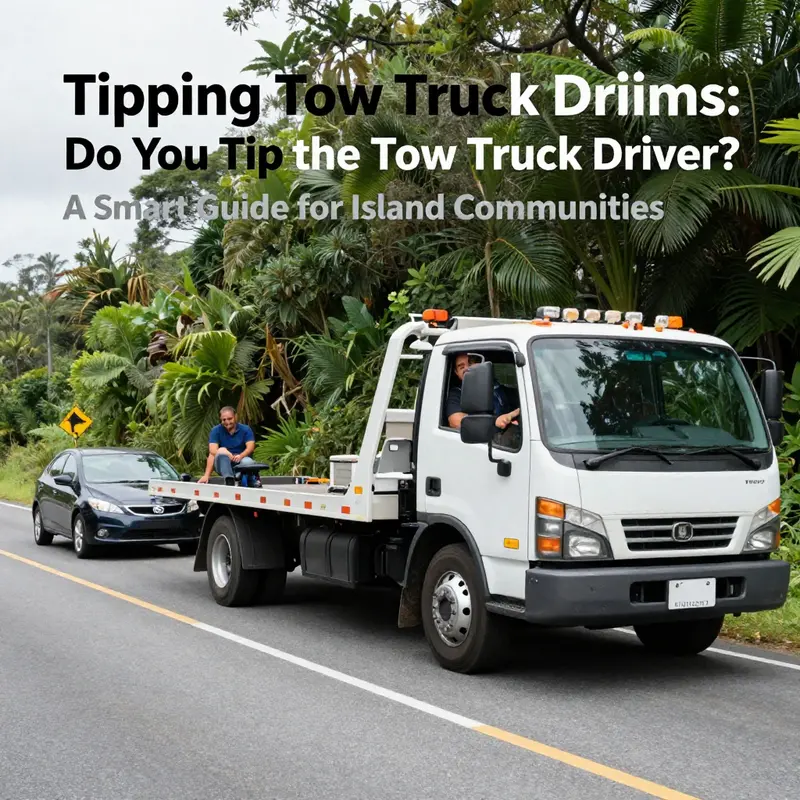
When you are stranded on the shoulder with hazard lights blinking and traffic nearby tipping a tow truck driver can feel like a big question. The practice is usually optional and depends on local norms. The driver’s wage comes from the towing company, not from tips, so a tip is not income in the same way as with other service roles. Yet tipping can be a thoughtful signal of appreciation when the driver goes above and beyond. A helpful approach is to consider the quality of service in the moment and to tip if the driver communicates clearly, answers questions patiently, and explains what they are doing and why without rushing you. A common range used in guidance is roughly ten to twenty dollars, but the exact amount depends on location, the complexity of the job, and the extra effort involved. Norms vary by country; in the United States tipping is often viewed as optional and expected in some contexts, while in the United Kingdom and other regions tipping may be less expected or standardized. If in doubt, asking the dispatcher or company in advance can prevent awkward moments and respects the company policy. In emergencies where the driver is called urgently, the gesture can feel more warranted. Other practical notes include how the tip is presented. Cash remains the simplest method, but many drivers also accept card payments if allowed. If you have no cash, a brief but sincere expression of thanks or a small gesture such as offering a cold drink can be meaningful, though it should not be seen as payment for time. If others are present, coordinate to deliver the tip discreetly after the service is completed and paperwork is signed. The aim is to avoid making tipping feel mandatory or like a bargaining chip. Local context matters too. For straightforward tows with prompt service, a modest tip or none at all may be appropriate. For longer tows or recoveries that involve risk or difficult conditions, a larger tip can reflect that extra effort and care. Some regions see tipping patterns tied to service cost, but the core idea remains voluntary recognition of good work. Beyond money, a note of appreciation to the company or a quick positive review can also reinforce good service. Planning for emergencies can help. If you work with fleets or island operations, you may want to include tipping guidelines in preparedness materials to ensure consistency and fairness. Keeping a small amount on hand for this purpose can be practical, while respecting company policies. The most important point is to tip, or not, in a way that feels fair, respectful, and appropriate to the circumstances.
Beyond the Flat Fee: Navigating Service Quality and the Subtle Etiquette of Tipping Tow Truck Drivers
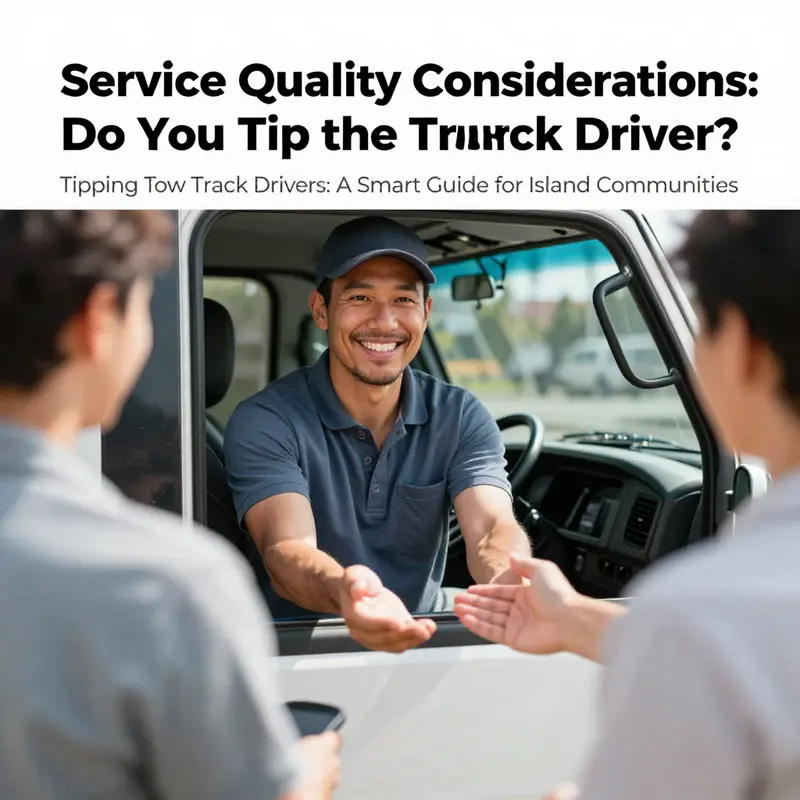
Towing is one of those roadside services that people encounter at moments of stress, urgency, or inconvenience. The scene often unfolds in a narrow window of time—an accident, a broken-down vehicle, a sudden weather turn—and the question of tipping lands squarely in the middle of how we judge service. The common advice across many reputable sources is simple: tipping a tow truck driver is not expected or required in most places. The fee charged by the towing company usually compensates the driver, and unlike a waiter or a ride-hail driver, the tow truck operator’s income isn’t typically built on tips. Yet even when tipping isn’t obligatory, gesture still has power. A small token of appreciation can acknowledge good work, reinforce trust, and encourage careful, courteous performance in situations that are, by their nature, unpredictable and stressful. The key is to understand when a tip feels appropriate, how to navigate company policies, and how to express gratitude in a way that respects both the driver and the business behind the service. In short, tipping becomes less about rules and more about recognizing service quality when it stands out.
The conversation about tipping a tow truck driver is best understood through the lens of service quality. Tow companies generally operate on fixed fees or hourly rates, with compensation built into the contract for the job. Drivers are trained to secure your safety, handle your vehicle with care, and communicate clearly under pressure. When the service aligns with or exceeds these expectations, a tip can be a meaningful acknowledgment. The moment to consider generosity often arrives when the driver goes beyond the bare minimum: arriving quickly in an emergency, guiding you calmly through challenging conditions, or offering practical advice that helps you manage the situation after the tow. If a driver arrives promptly—perhaps in poor visibility, on a snowy road, or during a time when every minute matters—this swift response can transform a stressful scenario into a manageable one. Likewise, when the driver treats your vehicle with care, avoids jostling or damage, and explains the process in plain language, you feel a measurable difference in the level of service. In these cases, a small gratuity—typically around $10 to $20—can serve as a tangible thank-you for a job well done. It is important, however, to stress that this should never be expected or demanded. A tip is a voluntary gesture, not a mandate, and it should reflect your own sense of appreciation rather than a performance metric.
A crucial nuance in this conversation is the question of policy. Many towing companies have policies that discourage or restrict accepting tips. These rules can stem from legal considerations, internal compliance frameworks, or the desire to keep the service experience uniform for customers. If the company has a no-tipping policy, the kindest response is to honor that stance and express gratitude verbally or through a positive review. When a policy exists, it is often best to ask about tipping at the outset of the service, especially if a driver is performing tasks that fall into a gray area—like extra wait time, additional directions, or assistance with securing a complex load. A quick, respectful question can prevent awkward moments and ensure you remain aligned with company expectations. If a driver insists or you sense the policy is being bent in a way that makes you uncomfortable, it is perfectly acceptable to decline the tip politely and still acknowledge the quality of the service. This balance—recognition without crossing policy lines—speaks to responsible customer behavior and helps maintain a professional relationship that benefits both parties in the long run.
Even when tipping isn’t the norm, the sign of thoughtful service can take shape in other meaningful forms. A sincere compliment to the driver, a brief note to the dispatcher, or a positive online review can reinforce the same sentiment a cash tip would, without complicating company policy. In addition, many customers find value in leaving a tip for future emergencies, recognizing that a dependable driver who demonstrates consistent reliability becomes a trusted part of the community’s roadside safety net. If you decide to express thanks beyond words, consider how your action reflects the situation: was the driver patient while you sorted out documentation, or did they stay with you through a difficult decision about where to tow or how to secure a load? These reflections help you tailor any gesture to fit the moment, making it feel earned and appropriate rather than performative.
Recognizing the practical realities that drivers face is also essential. Tow truck work can involve long hours, variable weather, and the physical demands of lifting, winching, or maneuvering heavy equipment. It is reasonable to consider how the service delivered safety, efficiency, and respect during a moment when those factors matter most. A tip, when given, should be discreet and respectful of the driver’s dignity. Handing cash at the end of the service is a common approach, but in some contexts, acknowledging the gesture verbally or tipping through an agreed-upon process with the company may be preferable. The overarching principle is simple: let the driver’s conduct, not the expectation of compensation, guide your choice.
For readers who want a practical framework, it helps to separate the service moments into emergency and non-emergency contexts. In emergencies—think a vehicle stranded on a highway at night, in rain or ice—the driver’s ability to maintain composure, communicate clearly about what happens next, and navigate a potentially hazardous environment becomes especially important. In these scenarios, a gesture of appreciation can recognize the driver’s composure under pressure, their adherence to safety protocols, and their willingness to stay with you until you reach a secure destination. A modest tip is appropriate if you feel the service went beyond the call of duty, but even then it remains optional. In routine tow services—a vehicle breakdown on a quiet street or a scheduled tow to a repair shop—the incidence of tipping tends to be lower, and many drivers rely less on tips for income stability. If your budget allows and you want to show gratitude for excellent service, a tip can still be fitting, but the driver’s courtesy, clear explanations, and careful handling of your vehicle should remain the first metrics by which you judge quality.
From a customer’s perspective, the etiquette of tipping also depends on how you value the relationship with the provider after the call. When a driver demonstrates reliability, follows your preferences for how the vehicle is handled, and offers practical, non-technical advice—such as how to avoid common breakdowns, what to watch for in the next few days, or how to prepare for a potential recurring issue—you may find it natural to acknowledge that level of service with a small tip. This is not an obligation but a chance to reinforce positive behavior that benefits you and others in the future. Across many service industries, including tow services, the act of tipping can also signal to the driver that their discretionary effort is noticed and appreciated, which in turn can encourage ongoing attentiveness and care in future interactions. The nuance matters: a tip given in the right spirit can fortify a culture of customer-centered care, while a mis-match between gesture and experience can feel forced or inappropriate.
If you are curious about the broader conversation surrounding tipping norms in towing, a credible resource that discusses general guidance and practical scenarios is worth consulting. It outlines the typical consensus—that tipping is not standard practice, but a gesture of appreciation may be appropriate in specific cases—while highlighting practical considerations such as company policies, emergency context, and the quality of interaction. For readers who want a grounded perspective backed by consumer-focused analysis, this external reference provides a thoughtful framework to inform your judgment and avoids turning a routine service into an uncomfortable negotiation. You can read more about this topic in industry coverage and consumer guidance, which echo the same themes of optional tipping and service-quality recognition. https://www.consumerreports.org/towing-and-automotive-services/should-you-tip-a-tow-truck-driver-3458796/
Throughout all of this, the underlying message remains consistent: tipping is a discretionary tool, not a universal rule. It should reflect your experience of service quality, the driver’s conduct, and the specific circumstances in which the tow occurred. The best practice is to evaluate the interaction as a whole, rather than fixating on the dollar amount. If the service was straightforward and professional, a firm handshake or a clear verbal compliment may suffice. If the driver took extra steps—helping you navigate a complex parking situation, waiting during a process you needed to complete, or offering additional safety guidance—you may choose to acknowledge that extra effort with a small amount. And if a company policy prohibits tipping, respect that policy and still communicate your appreciation through a positive word or a constructive online review. The aim is to foster a norm of respect and reliability, not to turn tipping into a transactional expectation that could complicate future encounters.
For readers who want a practical pathway to the information embedded in this chapter, you can explore additional perspectives in related industry discussions. The Island Tow Truck’s blog offers ongoing insights into roadside assistance, safety considerations, and field experiences that shape how drivers deliver value on the road. A quick reference point for broader context is to visit their resources and consider how attitudes toward service, policy, and customer feedback interconnect across different tow operations. The Island Tow Truck blog. This link provides a broader sense of how operators think about service standards, compliance, and customer engagement in everyday practice, supplementing the specific tipping guidance discussed here.
In the end, the decision to tip a tow truck driver rests with you, guided by service quality, policy, and personal judgment. The act, when it happens, should feel like a sincere acknowledgment of the driver’s care and competence rather than a compliance checkbox. The goal is not to create a tipping culture where none is necessary but to preserve a framework in which excellence is noticed and rewarded in a way that respects the human dynamics of roadside assistance. Towing is about getting you back on the road safely, and when the experience demonstrates genuine care, a small gesture at the finish line can be a natural, humane way to close the loop. As you reflect on your next tow, carry with you a sense of what felt right in your particular moment—whether that means offering a tip, providing a verbal thank-you, or simply sharing positive feedback—that honors both the driver and the service that helped you reclaim control of your day.
External references and further reading can deepen your understanding. The Consumer Reports article mentioned above offers a broad, practical view of tipping within towing services, while internal resources from industry blogs provide context-specific examples and policies that influence day-to-day decisions on the road.
Regional Differences in Tow-Tip Etiquette: When a Small Gesture Speaks Loudly on the Road
A sudden turn of misfortune can leave you stranded in a way you hadn’t planned. The moment a tow truck roars into view, the world slows to a more practical rhythm: headlights, the hum of the engine, the creak of a door, and the driver’s steady, no-nonsense assessment of what needs to be done. In those moments, the question of tipping often surfaces not as a strict rule but as a quiet test of etiquette and situational judgment. The broad truth remains consistent across borders and backyards: tipping a tow truck driver is usually optional rather than mandatory. The driver is typically paid through the towing company’s fee, and unlike waitstaff or ride-hail operators in some places, tow operators are not universally reliant on tips for their income. That said, regional norms do flicker in the margins, and a small gesture can carry real meaning when the service has gone beyond the routine. The decision to tip, and how much, depends on circumstance, local custom, and the small details of how the driver handled the moment you needed them most.
The practical reality is that in many parts of the United States, tipping a tow truck driver is not a standard expectation. You won’t be singled out as stingy if you don’t tip, nor should you feel you must stretch your budget to cover a gratuity that isn’t customary in that locale. The driver’s compensation comes from the company’s rate, and the service itself is categorized differently from other paid, customer-facing industries where tipping is a long-standing norm. Yet even within this general framework, there is room for discretion. When a tow operator delivers a level of service that goes beyond the call of duty—arriving quickly in an emergency, offering practical guidance about what to do next, or taking extra steps to assist you with a difficult situation—the gesture of a tip becomes a personal acknowledgment. A small amount, such as five to ten dollars, can feel like a sincere thank-you without implying any obligation or expectation on future calls.
The regional difference aspect becomes most visible not in a single city or state but in the aggregate sense of how communities value promptness, courtesy, and helpfulness in roadside moments. In some areas, residents prize speed and efficiency in crisis moments; in others, there is a greater emphasis on the driver’s willingness to explain options, walk you through the paperwork, or stay with you until you are safely connected with follow-up help. These nuances can temper how people think about tipping. What may feel like an appropriate nod of gratitude in one county can feel unnecessary in another, especially where towing fees are higher or where a company has clear, published guidelines about tips. The essential point is to read the situation. If the driver has made a difficult situation smoother and less stressful—perhaps by communicating clearly, ensuring your safety, or protecting your property—your gratitude, whether verbal, symbolic, or monetary, becomes a meaningful exchange rather than a procedural afterthought.
To sharpen this understanding, consider the broader etiquette around tipping: it is often framed as recognizing exceptional service rather than paying for basic competence. The rule of thumb remains: tipping is optional, not obligatory. In situations that feel routine or businesslike, a tip is unnecessary. In moments that feel emergency-driven or exceptionally thoughtful—when the driver reassures you, locates the best route to safety, or helps you coordinate with a repair shop or a family member—many people feel compelled to offer a modest gratuity as a sign of appreciation. The amounts people choose vary, but the prevailing guidance across communities tends toward a modest gesture rather than a substantial sum. Some might give five or ten dollars; others may round up the fare in small increments if the driver has shown notable care and professionalism. It’s important to remember that even when you decide not to tip, a sincere verbal thank-you can carry its own weight. A constructor of goodwill is built not only with coins but with explicit appreciation and respectful handling of the driver’s time and expertise.
One reason regional differences matter is that tow services are a different kind of professional relationship than many other services that rely heavily on tips. Tow truck drivers perform a physically demanding, often time-sensitive job. They may be the first professional you encounter during a moment of crisis, and their actions can affect your safety and your ability to recover from a setback. In some locales, the tradition of tipping is more accepted or expected in the face of urgency; in others, a driver’s professional fee and the company’s policy may be viewed as the entire transaction. The best approach is context-aware: assess how the driver behaved under pressure, whether they offered practical help beyond the minimum, and how clearly they communicated about the next steps. If you feel the driver went above and beyond, a small tip can signal that you recognize the extra effort. If the service was straightforward and efficient but unremarkable beyond meeting expectations, a simple word of thanks may suffice.
Guidance from broader tipping frameworks can help anchor your decision in a consistent framework you can apply anywhere. The U.S. Department of Labor provides guidelines that outline when gratuities are customary and when they are not. While those guidelines are broad and intended to cover many service contexts, they remind consumers that tipping is often discretionary and largely dependent on the value you place on the service received, the burden on the worker, and local norms. In practice, many people look to a simplified scale: if the driver arrived promptly in an emergency and demonstrated consideration for your safety and property, a five- to ten-dollar tip is a reasonable acknowledgment. If the driver spent extra time explaining options or arranging onward support, a few extra dollars could be appropriate. If you are in a place where tipping is less common for towing, your verbal appreciation may carry as much weight as a tip. The driver is unlikely to press you for more, especially if the company policy emphasizes paying for the base service rather than rewarding with tips.
Beyond the mechanics of what to tip, there is a broader cultural grain to this question. Tipping in the United States is influenced by local culture and the expectations of the service industry in a given region. In some regions, people are more inclined to see gratuities as a direct incentive for service quality, while in others the tipping culture is more conservative, with gratuities reserved for moments of exceptional effort rather than routine transactions. This variability mirrors the diversity of the road network itself—from urban corridors where tow services are frequent and regulated, to rural stretches where drivers may juggle multiple calls with limited time and greater physical demands. In those contexts, a tip may reflect not only gratitude but also an acknowledgment of the driver’s endurance and professionalism under pressure.
If you decide to tip, the way you present it matters. A tip is a private gesture that should not place the driver in an awkward position or create a sense of obligation. Handing cash discreetly or including a note of thanks can convey the sentiment without turning the encounter into a bargaining moment. It is also wise to consider safety: do not place cash in a hand or create a situation where the driver feels pressured to stay longer than necessary. A brief, calm expression of gratitude, followed by the tip if you choose to give it, keeps the exchange respectful and focused on assistive service rather than compensation. In many cases, a driver will appreciate knowing that you recognize the effort with a simple, genuine thank-you rather than a ritualized exchange that could feel transactional.
For readers seeking more context on regional nuances and practical steps, there is value in tapping into a broader community discussion. Online resources offer perspectives from people who have navigated similar situations across different regions. A concise, practical overview can help you calibrate your expectations before you ever need a tow. If you want a more in-depth view that blends personal experience with practical guidance, you can visit the related discussion on The Island Tow Truck blog, which collects scenarios and guidance from real-world towing experiences. theislandtowtruck.com/blog. In this way, the information you gather feels less abstract and more grounded in what has actually happened in communities similar to yours.
As we widen the lens, the tipping question remains a lens through which you view the service relationship as a whole. Towing is not simply a transaction; it is a moment where training, safety, and courtesy intersect at an inconvenient hour. The decision to tip, and how much to give, should be guided by the driver’s behavior, the urgency of the situation, and the local norms you trust. In places where tipping is not expected, a straightforward acknowledgment of good service—whether through words, a note of thanks, or, if you feel strongly, a small gratuity—still communicates that you value the driver’s effort. In places where tipping has a stronger foothold, a modest gratuity can reinforce positive experiences and encourage a standard of care that benefits drivers and customers alike. The key is to balance generosity with practicality, to avoid making tipping a burden, and to honor the moment with respect for both the service and the person delivering it.
In the end, the question “Do you tip the tow truck driver?” does not demand a universal answer. It invites a thoughtful response shaped by the region you are in, the specifics of the service provided, and your own values about courtesy and fairness on the road. Whether you choose to give a little cash, offer a sincere thank-you, or simply acknowledge the driver’s help with calm appreciation, the gesture can carry weight precisely because it is discretionary and earned. The road is a shared space, and the etiquette on it—like the road itself—moves with the miles you travel and the people you meet along the way. If you want more detailed guidelines and regional perspectives, you can explore resources that collate practical advice and real-world experiences across different communities, and you can also consult broader tipping guidelines that apply to service professionals across the United States. For further reading, see The Balance’s practical article on tipping a tow truck driver: Should You Tip a Tow Truck Driver?.
Tipping Tow Truck Drivers: When It’s Appropriate
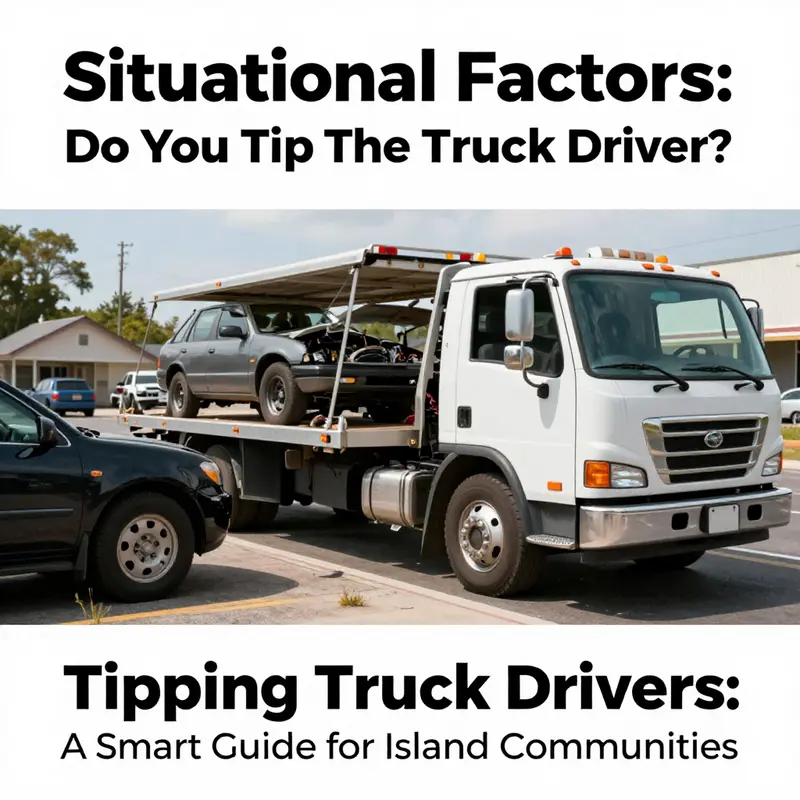
On the roadside, deciding whether to tip a tow truck driver can feel awkward, but it is not a universal rule. Tipping is generally not required because many tow services are paid through a company’s fee or through an insurance or roadside assistance program. However, if the driver goes beyond what was expected, offers extra help, or handles a stressful situation with care, a small tip can express appreciation. Typical ranges are modest, such as ten to twenty dollars, depending on the complexity of the job and your means. If the service is covered by an insurer or a contracted program, tipping may be less common, but you can still show gratitude in a discreet way such as a thank you note or a courtesy gesture. In direct hire situations, you may choose to tip after a well managed tow, especially if the driver navigates a difficult parking or weather scenario. The key is to read the moment and respect local norms. If you are unsure, a quick check with the driver or company is reasonable. Tipping should be a reflection of value received rather than obligation, and it can be an appropriate final gesture after a safe and smooth rescue or transportation.
Tipping on the Road: Practical Etiquette for Tow Truck Encounters
The moment a tow truck appears on a foggy highway, or in a crowded city street, a quiet question tends to surface: should I tip the tow truck driver? The answer is not a simple yes or no, because tipping etiquette for tow services shifts with local custom, the specific circumstances of the call, and the policies of the company you are dealing with. What remains consistent is this: tipping is not a rigid rule, and in many places it is not expected. Yet it would be shortsighted to dismiss a tip as merely optional when a driver has gone above and beyond. The practical rightness of tipping hinges on how the service unfolds, how the driver communicates, and how safely the work is performed under pressure. Across the United States and the United Kingdom, the standard practice is that drivers are paid through the company’s fee system, and that the base charge is designed to cover the labor and the dispatch logistics. This means that, in most everyday tow scenarios, a tip should be seen as a gesture of generosity rather than a requirement. The absence of an expectation does not erase the value of courtesy, though, and recognizing good service with a small tip can reinforce professional behavior in a field that often moves quickly and under stress.
When a tip feels appropriate, it almost always grows out of something specific: an exceptional arrival time during a roadside emergency; the driver’s ability to explain options in clear, calm terms; careful handling of your vehicle when loading or unloading; or extra help with practical tasks that go beyond mere towing. If a driver takes the time to troubleshoot on the spot, offers a practical recommendation about where to tow or how to proceed with insurance, or calmly coordinates with you through a complicated situation, many people instinctively want to acknowledge that effort with a tip. In these moments, a modest tip in the range of about ten to twenty dollars often seems proportional. It signals appreciation without implying that every future call should come with the same expectation. The exact amount is less important than the sentiment behind it and the fairness of the gesture given the service provided.
Despite the potential for generosity, it is important to stay grounded in the realities of the industry. Towing firms typically set their own price structures, and the service fee embedded in the bill is intended to cover the labor costs and the logistics of moving a vehicle. That means tipping is not a universal obligation, and in many situations it is simply unnecessary. Roadside assistance programs and memberships complicate the picture further. Some programs advise against tipping, or even prohibit it, because the relationship is managed through a contract with the service provider rather than a direct consumer-to-driver payment model. In those cases, attempting to tip could be misread as bypassing policy or creating friction within the service network. The practical upshot is straightforward: before you tip, if possible, check the policy of any roadside program you belong to. A quick confirmation can save you momentary confusion and keep the interaction smooth for everyone involved.
Guidance in the heat of a moment follows a simple principle: reward genuine effort, not routine behavior. If the driver has demonstrated care and professionalism, and if the situation demanded a bit extra—such as rapid response during an urgent incident, clear and patient communication, careful vehicle handling, or thoughtful guidance about the next steps—then a tip makes sense as a token of appreciation. The amount is not a universal standard but rather a reflection of the service quality and the context. If the tow involves an extended distance, several stops, or a complicated recover that required extra time and attention, you might consider adjusting the tip to acknowledge the greater effort. The bottom line is that the tip should feel like a natural extension of the service, not a coercive add-on, and it should be offered with discretion and gratitude rather than as a demand.
It is also essential to consider how you prefer to handle the transaction. Cash remains the most common method for tipping in many situations, but digital options are increasingly accepted by service professionals who want to avoid handling cash during stressful moments. If you choose to tip, do so at the end of the encounter, in a private and respectful manner, so the driver can stay focused on safety and the next customer if needed. If you cannot tip because of policy or personal circumstances, you can still express appreciation through a sincere thank you, a brief note of commendation, or a positive online review that recognizes the driver’s competence and courtesy. These gestures are meaningful and carry weight with the broader company ecosystem, especially in professions where reputation is built on consistent, high-quality service.
Non-monetary expressions of gratitude can be just as impactful as cash tips. A few kind words at the end of the interaction can help reinforce a culture of professionalism. If you have the opportunity, leaving a positive review or sending a brief message to the dispatcher about the driver’s helpfulness contributes to the driver’s ongoing professional visibility. To readers seeking a practical sense of how industry conversations around tipping unfold, there are ongoing discussions in related industry spaces, including resources and blogs that cover real-world scenarios and norms. For readers who want to explore related perspectives, you can visit a towing industry blog for further context here: theislandtowtruck.com/blog/. This link provides a space to see how drivers and companies discuss service expectations, etiquette, and best practices in everyday operations, especially in environments where service calls can be highly variable.
Another important consideration is to check the terms you have with your specific program. Some roadside memberships and insurance-backed services have explicit guidelines about tipping. If tipping is discouraged or restricted, honoring those rules demonstrates respect for the system that funds and coordinates the service, which is designed to keep everyone safe and ensure service continuity for future needs. In practice, this means you should be ready to navigate the moment with flexibility. If the policy is unclear, you can politely ask the driver whether tipping is appropriate given the circumstances or whether you should direct any gratuity to a different component of the process, such as a tip to the dispatcher who facilitated the call. In most cases, a straightforward, respectful approach will help you avoid awkwardness and preserve a positive relationship with the service network.
The tipping question is not just about money; it is a reflection of the social norms we bring to moments of vulnerability. When a vehicle breaks down, time becomes both a scarce resource and a gauge of stress. A driver who remains calm under pressure and communicates clearly about what is happening can transform a potentially tense experience into a manageable one. In such moments, a tip—if you choose to give one—becomes a private acknowledgment that someone contributed to your comfort and safety. It is not a guarantee of future service nor a ticket to special treatment; rather, it is a voluntary, humane gesture that reinforces trust between customer and technician. If you decide not to tip, your courtesy can still be expressed through a clear description of the service you received and through fair compensation that reflects the posted price and any service fees. The key is to avoid implying obligation where none exists and to maintain courtesy for the work that made the resolution possible.
In sum, do you tip the tow truck driver? The honest answer is that tipping is not required, but it can be a thoughtful, context-driven gesture when the service demonstrates exceptional effort, care, and professionalism. The most sound approach is to base your decision on the specifics of the encounter, the policy of any roadside program involved, and your own capacity to show appreciation. If you can tip, and you feel the driver deserves it, a modest amount in the ten-to-twenty-dollar range is a sensible starting point. If tipping is discouraged or not feasible, you can still convey gratitude through words, a positive review, or a note to the dispatcher, which helps sustain a culture of reliability and respect in an industry that is, in essence, about safely getting people back on the road. The overarching message is simple: tipping is a voluntary acknowledgment of good service, rooted in fairness and courtesy rather than obligation. In the end, your gesture—whether monetary or otherwise—should align with the service you received and the norms of the area, while always prioritizing safety and clear communication during an already stressful moment. External reference for further nuance on general tipping expectations in tow services can be found here: https://www.aaa.com/automotive/articles/do-i-need-to-tip-a-tow-truck-driver
Final thoughts
Understanding when and why to tip a tow truck driver enhances the connection between consumers and service providers in our island communities. While tipping generally isn’t expected, exceptional service should always be recognized through a thoughtful gesture, primarily when it helps create a seamless experience during trying times. By being informed of the local customs, quality of service, and situational dynamics, you can make empowered decisions that reflect gratitude for tireless help. Always remember that driving on island roads comes with its unique challenges, and acknowledging exceptional support can help foster a culture of appreciation.