In the midst of unexpected breakdowns and roadside emergencies, the question often arises: Do you tip AAA tow truck drivers? This topic holds significance across various sectors, including local auto repair shops, car dealerships, property management, resort operations, and commercial fleet management. Understanding the nuances of tipping can enhance your interactions with roadside assistance services. This article will delve into AAA’s no-tipping policy, the influencing factors behind tipping decisions, and the cultural perspectives on tipping within these professional contexts. Each chapter provides razor-sharp insights to inform your practices and elevate your service standards.
Gratitude on the Road: Do You Tip AAA Tow Truck Drivers? Understanding Policy, Practice, and Practical Kindness
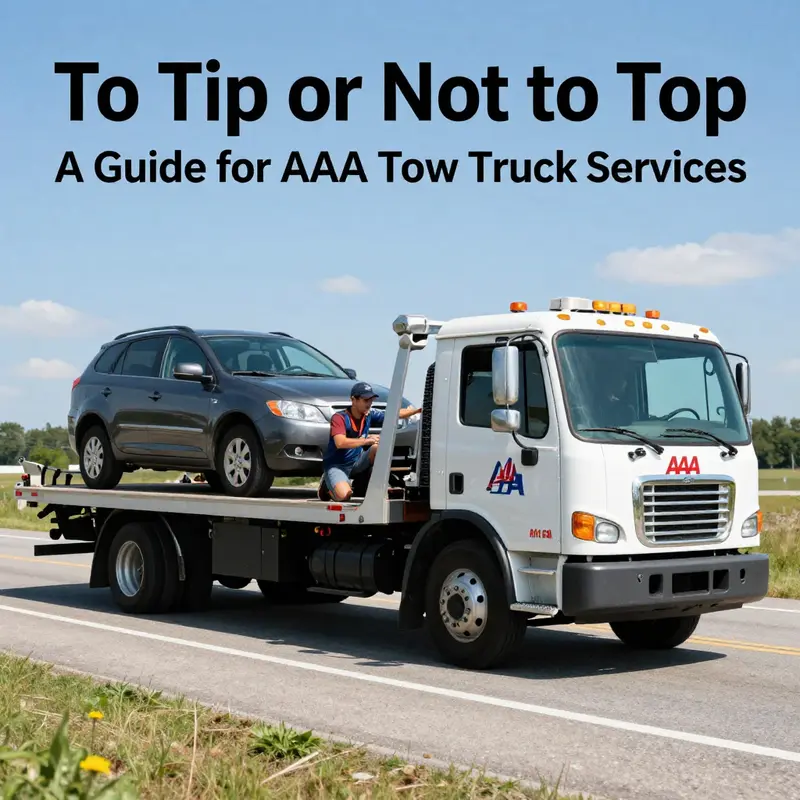
When the road bites back and a tow truck arrives, the moment can feel chaotic, tense, and almost surreal. A phone call or a roadside warning sign has turned into a highly visible helper in a flashing vest, a driver who surveys the scene, attaches chains or a winch, and steadies the situation so you can regain control of what comes next. In that moment, a lingering question often surfaces: do you tip AAA tow truck drivers? The simplest, most accurate answer is that tipping is not expected. AAA’s roadside assistance is a membership benefit, and the cost of towing is included as part of the membership package. The drivers themselves are employees who receive a salary and benefits, and tipping does not figure into the official policy. This is not merely a rule tucked away in a customer service FAQ; it reflects the way the service is designed to function as a member-centered program. Tipping simply hasn’t become a customary practice within this specific system, and most members encounter the policy as part of their overall experience.
Yet policy rarely captures the full texture of human interaction on a roadside, where fear and frustration can blur judgments and needs. A policy may declare that tips are unnecessary, but a driver who goes beyond the call of duty can leave a lasting impression that feels like a different kind of currency—the relief of knowing someone showed up with competence, patience, and calm in a rough moment. In such moments, the question shifts from whether tipping is appropriate to how one can express genuine gratitude without complicating the professional relationship or the organizational norms. It is here, in the space between clear policy and personal appreciation, that many travelers find guidance that feels both ethical and practical.
If the service experience stands out—if the driver was mindful of your safety, explained the options clearly, or worked with unusual coordination in a difficult scenario—appreciation becomes a personal gesture rather than a transaction. Acknowledging good service can take several forms that align with the spirit of the policy while honoring the human effort behind the work. A sincere, direct thank you, spoken with specificity about what made a difference, can be meaningful. A brief note sent to the organization through official channels to commend the driver’s professionalism has a place as well. In some cases, a small token like a drink or a light snack, offered with a cheerful “thank you,” may feel appropriate when you are in a position to share food or a beverage without pressuring the situation. The key distinction is that such gestures are not expected or required, but they can be courteous signals of appreciation when offered without expectation or obligation.
There is a quiet discipline in choosing how to show appreciation in a way that respects both the service model and the individual effort. If you’re confronted with a moment where you want to honor exceptional performance, consider moving beyond the tipping instinct and toward feedback that helps the organization recognize outstanding work. AAA, like many service organizations, maintains formal channels for customer feedback, and a well-placed compliment can travel from the driver to supervision and into recognition programs. The effect can be twofold: it reassures the driver that their extra effort did not go unnoticed and it signals to the company where exemplary service is occurring, potentially contributing to performance recognitions or team-wide standards that elevate the experience for future members. In this sense, praise becomes a currency that can influence service quality in a systemic way, without altering the financial mechanics of the employee’s compensation.
For readers who want practical guidance on how to handle the moment in real time, a few deliberate steps can make the situation smoother for everyone involved. First, acknowledge the driver’s expertise and the care they extend. A calm, concise explanation of what happened, what you need, and how you plan to move forward helps maintain a predictable workflow in a tense environment. Second, consider whether a small, voluntary gesture aligns with the moment and your own comfort level. If you are a long-time member and feel compelled to show gratitude beyond words, an immediate verbal thanks paired with a brief note later to the company can be more meaningful—and less risky—than anything intimate about money changing hands. Third, remember that the policy exists to maintain consistency; deviations should be rare, and when they occur, they should reflect a genuine sense of appreciation rather than a transactional mindset.
The emotional texture of roadside emergencies is not uniform. Some encounters happen in daylight, with predictable traffic patterns and visible hazards; others unfold after hours on poorly lit shoulders, in heavy rain, or in subzero temperatures that sting exposed skin. In calmer moments, the policy appears straightforward: tipping is not standard practice because the organization funds the service through membership dues and employs the drivers directly. In harsher moments, however, appreciation can have a tactile, human presence that makes the experience feel less isolating. A driver may stand by your vehicle while you call for a repair shop, or they may help you gather belongings when the vehicle cannot be immediately moved. In those cases, a gentle, respectful acknowledgment can affirm a job well done without creating a burden for the person performing essential work.
To go beyond mere sentiment, it is worth noting that policy is not a closed box. The structure of membership-based roadside assistance means that the primary relationship is between the member and the organization, not simply the driver and the customer at the curb. This framing matters because it clarifies why tipping is not the norm: the provider’s compensation is structured into the membership model, and the ongoing improvement of service is meant to come through internal evaluation, customer feedback, and equity across the service network. When a driver handles a difficult tow in a way that embodies both technical skill and empathetic communication, the most constructive response may be to share the experience through the proper channels. Compliments and constructive feedback can filter up through the organization, where they contribute to training, recognition, and the reinforcement of standards. In turn, these actions reinforce the central premise: the service is a member value, not a transactional exchange at the roadside.
For those seeking more practical context on how to navigate roadside assistance in complex environments, there is value in engaging with the broader ecosystem of information about response strategies and best practices. The Island Tow Truck Blog, for example, provides a broader lens on emergency responsiveness and the logistics of road-service operations. Readers can explore additional perspectives and scenarios that complement the core question of tipping with a deeper understanding of how responders coordinate, communicate, and operate under pressure. The Island Tow Truck Blog. This resource helps situate the tipping debate within a wider framework of preparedness, safety, and professional conduct on the road.
Even with policies that clearly state tipping is not required, the spirit of the service remains—support when you need it most. The moment you reach out to AAA for help is a moment built on trust: the trust that a trained professional will arrive promptly, assess the situation, provide options, and implement the best path forward given the constraints. It is a trust that is reinforced when drivers communicate clearly, respect the pace of your decision-making, and carry out their duties with a steady, nonjudgmental demeanor. In such moments, gratitude is not a financial instrument; it is a human acknowledgment of competence, care, and calm under pressure.
As with many questions of etiquette in service encounters, the context matters as much as the policy. A calm, respectful environment makes it easier for everyone involved to navigate the situation. The member’s expectations should be aligned with the organization’s norms, not shaped by ad hoc impulses or external pressures. The driver’s perspective—their training, the risk they accept, the physical strain of assisting in challenging conditions—deserves consideration as well. The best outcome is a moment that preserves the integrity of the service relationship while allowing genuine appreciation to be expressed in ways that are comfortable for both parties.
In sum, you do not have to tip AAA tow truck drivers, and tipping remains outside the standard practice for this particular service. The membership model and the driver’s employment status underpin that policy. Yet people remember the moments when service feels personal and protective, when someone on the roadside treats a feared situation with respect and expertise. In those moments, a thoughtful gesture—delivered with restraint, without implying obligation—can feel appropriate. And if there is an opportunity to recognize outstanding performance through official channels, that path preserves the policy while ensuring that exceptional care does not go unacknowledged. If you want to explore more about how to handle emergencies with foresight and practicality, the related resources linked above can offer further guidance. For broader policy reference, see the official site of the organization: https://www.aaa.com
External resource: https://www.aaa.com
Beyond the Tow: Why Tipping AAA Tow Truck Drivers Isn’t Standard—and How Gratitude Still Shapes the Experience
When you find yourself stranded on the side of the road, the arrival of a tow truck can feel like a lifeline. The door opens, the engine hums, and a calm, practiced voice asks for your location, your basic details, and a plan for getting you safely to the next step. If you are a member of a national tow service network, that moment carries its own weight: you’re not just paying for a ride, you’re exercising a promise that help will be there when the lights flash red or the gas gauge hits zero. In this situation, tipping is not a standard expectation. The service is structured as a membership benefit, a prepaid arrangement that finance ministers of everyday life call it a safeguard against sudden costs and unpredictable emergencies. Because the contractual relationship is clear — you’ve paid for coverage, you’ve called for help, and the driver arrives to perform a service that is part of that coverage — there is no formal tipping protocol within the approved guidelines. Yet, like any human interaction in a high-stress moment, the decision to give or withhold a tip becomes a nuanced, personal calculus shaped by experience, perception, and context.
This is not a story about greed or generosity in the abstract. It is an invitation to understand the layers that influence a driver’s reception of a small token of thanks, and to recognize the values that guide a customer’s choices in a moment that is often equal parts practical and emotional. The literature and industry observations converge on a simple premise: tipping, when it happens in this particular service scenario, is driven less by obligation and more by the quality of the interaction and the perceived effort behind the service. The road side is a place where time slows down, risk rises, and the human elements—empathy, efficiency, and clear communication—carry more weight than the bill itself. The chapter that follows traces these factors with the care of a seasoned observer, weaving together observations from service norms, consumer behavior, and the practical realities of a membership-based towing ecosystem. It also offers practical guidance for readers who want to navigate the moment with integrity, whether they choose to honor the service with a small gesture or simply acknowledge it with a sincere note of thanks. For readers who want a broader sense of how towing operations translate in real-world settings, the island tow truck blog offers practical insights into the daily realities of this industry. the island tow truck blog.
The first thread in this tapestry is service quality and attitude. In the high-stakes environment of a roadside emergency, the driver’s demeanor matters as much as technical competence. A professional, focused approach—clear explanations about what is happening, a calm voice that steadies nerves, and a respectful treatment of both the vehicle and the owner—creates a positive impression that can make the difference between a routine tow and a moment that feels overwhelming. When a driver arrives during a foul weather event, in a tight or precarious location, or in the aftermath of a breakdown that has left you shaken, the human touch becomes the bridge from confusion to clarity. A driver who demonstrates patience, offers practical options rather than insisting on a single path, and takes the time to answer questions in a noncondescending way earns more goodwill than any courtesy gesture ever could. In these moments, the decision to tip is less a calculation of cost and more a response to care and competence. The act of tipping, when it occurs under these circumstances, functions as a personal acknowledgment that someone has transformed a stressful episode into a safer, more manageable one. It honors a job well done the way a compliment does in a conversation: brief, sincere, and meaningful.
Yet the complexity of a tow operation means that the next influence can tilt the decision in a different direction: task difficulty and time. A routine tow in calm conditions is, in a sense, the baseline expectation. When the job expands beyond the ordinary—pulling a vehicle from a snowbank, negotiating a narrow alley, handling a vehicle that’s badly damaged, or doing the lift and tow under pressure from traffic and a ticking clock—the perceived effort increases. In those cases, customers might feel a natural impulse to acknowledge the extra mile with a gesture of gratitude. A driver who navigates a chaotic scene with safety first, who keeps you informed about progress while managing the practical realities of the situation, can evoke a sense of appreciation that translates into a discretionary tip. The same logic applies to situations where time becomes the enemy: a long, slow process due to road congestion or mechanical complexity can leave customers with a feeling that the driver has expended more personal energy, and a small token may feel like a proportional thank-you for the extra hours on the road.
Then there is the question of urgency and safety—the vehicle’s condition and the immediacy of the risk. When a breakdown occurs in a remote area at night, or on a busy interstate, the driver’s role shifts from service provider to guardian. They stabilize a situation, explain options for getting back on the road, and often coordinate with dispatchers to arrange the best next steps. In those moments, the sense of relief is real, and many customers report that they feel a strong impulse to show appreciation beyond the standard courtesy due. A tip, a small snack, or a cooling drink can feel like a practical and human way to acknowledge the driver’s quick thinking and effective action. But it’s crucial to remember that these gestures should align with the policies of the service network and the norms of the local culture and industry. Some professional networks discourage tipping to avoid conflicts of interest or perceived favoritism, while others accept it as a personal show of gratitude. The key is to know what is appropriate for the specific network you’re using, and to act with integrity and respect for the driver’s role and the company’s guidelines.
Culture and personal habit also shape the tipping decision in subtle but powerful ways. People raised in communities where tipping is customary may instinctively extend a tip as part of their social script, while others may see tipping as unnecessary or even inappropriate in a prepaid service arrangement. The regional context matters as well. In some places, a small gratuity is considered a normal courtesy for service workers in any setting, while in others, it’s less common and may even feel extraneous when a service has already been prepaid or included in a membership. For a customer navigating this gray area, the crucial step is to separate personal habit from the policy framework. If you are in a context where tipping is not standard, a well-timed verbal thanks and a note of appreciation directed to the driver or the dispatcher can carry meaningful weight without crossing policy lines. If you choose to provide a tip, it should be modest, proportionate to the service quality, and clearly optional. A large tip in a context where it’s explicitly discouraged can create discomfort for the driver or the company, and it can even complicate future interactions. The best approach is to evaluate your own cultural norms and your perception of the service, then decide in light of those values, rather than following a reflex or a trend.
Perceived cost and brand trust form another important axis in this decision-making matrix. If a customer believes the towing service carries a high price tag, they might rationalize that a tip is unnecessary, given that the membership or service fee has already covered the primary expense. Conversely, if the customer perceives value in the service—especially when the driver has demonstrated efficiency and reliability—an additional gesture can feel like a personal investment in ongoing trust. Brand perception matters because it informs expectations. Large, trusted networks often cultivate a sense of responsibility and accountability among their drivers; customers may feel that tipping would be redundant or inappropriate within a network known for standardized service and professional conduct. However, trust also means customers feel comfortable acknowledging excellence when it occurs. In practice, this translates into a careful balancing act: the customer weighs the driver’s performance against the formal policy and internal guidance from the network. When the balance tips toward a genuine sense of extraordinary service, a small token of appreciation can be a humane, courteous gesture rather than a breach of policy.
Policy clarity is a practical consideration that cannot be ignored. Many legitimate automotive service providers operating within membership programs do, in fact, discourage or prohibit tipping. The rationale ranges from avoiding conflicts of interest to maintaining consistent compensation practices across a large network of independent contractors. In such settings, the customer’s instinct to tip could place the driver in an uncomfortable position or even create a perception of favoritism or coercion. The prudent approach is to know the policy before a need arises. If you are unsure whether tipping is permitted, a quick, respectful inquiry with the dispatcher or a glance at the membership guidelines can save awkward moments on the roadside. The driver, who is focused on safety and service, benefits when the policy is clear and transparently communicated. Even when tipping is discouraged, there are ways to show appreciation that align with policy and still honor the human effort involved. A verbal compliment, a thank-you note to the company, or a positive online review that highlights the driver’s professionalism can be just as meaningful as a tip in many cases. And if the policy explicitly restricts tips, exercising that restraint consistently demonstrates respect for the guidelines and for the customer experience you expect from the network.
In practice, the way forward for most customers leans toward a simple, principled approach: assess the service experience, know the policy, and choose a form of appreciation that respects both. If the driver has offered outstanding service, if the situation was dangerous and the driver acted with calm efficiency, and if the network’s guidelines permit it, a small tip alongside a brief acknowledgment can feel appropriate. If the policy forbids tips, or if the moment is one of routine service with no extraordinary elements, a warm expression of thanks or a heartfelt note to the company can convey gratitude without crossing any lines. The important thing is that gratitude feels authentic rather than performative, grounded in direct observations about the driver’s conduct rather than generalized politeness paired with a financial gesture. In this sense, tipping becomes less a universal rule and more a personal judgment about the value delivered in a particular moment.
For readers seeking further practical guidance on navigating these moments, a few simple strategies can help. First, ask about policy upfront when possible. If you’re planning a maintenance trip or touring plan that might involve roadside assistance, a quick call to confirm tipping guidelines can prevent missteps when you need help most. Second, document your experience in a constructive way. A clear, respectful note that describes what the driver did well can be incredibly valuable to the company and to the driver, and it reinforces a culture of accountability and pride in service. Third, consider non-monetary tokens of appreciation. A bottle of water, a snack, or a small, neatly packaged treat can be a thoughtful gesture that remains within policy boundaries and is widely understood as a sign of gratitude without complicating compensation structures. And finally, remember that words can be as powerful as coins. A genuine compliment to the dispatcher or supervisor, shared in a respectful way, can help the network recognize exceptional performance and reinforce the importance of professional standards across the roadside service ecosystem.
The broader takeaway is straightforward: tipping a tow truck driver from a national or membership-based network is not a routine expectation, and the appropriateness of doing so hinges on service quality, task difficulty, urgency, personal culture, cost perception, and policy. The best practice for consumers is to enter the interaction with awareness of these factors and with a readiness to respond in a way that aligns with policy and with the values that guide responsible, respectful consumer behavior. If the service feels extraordinary, and the network’s guidelines allow, a modest tip can be a meaningful expression of gratitude. If not, a sincere verbal thanks, a written note, or a well-placed online review can carry the same message of appreciation while honoring the framework that makes this kind of help reliably available when one needs it most. In either case, the consumer remains in control of the choice, guided by a combination of experience, policy, and personal values—an interplay that speaks to the larger question at the heart of this chapter: how do we honor excellent service in a world where the cost is prepaid, the risk is real, and the human element remains the essential heartbeat of roadside assistance? For readers who want more context on the realities behind service standards, explore deeper into practical industry perspectives at the island tow truck blog. the island tow truck blog.
External reference: For a formal policy perspective and to compare how tipping is viewed within broader roadside assistance frameworks, you can review the official guidance provided by the major national provider at https://www.aaa.com.
Beyond the Shoulder: Cultural Nuances and Practical Etiquette for Tipping AAA Tow Truck Drivers
When a vehicle breaks down and the road becomes a narrow window to safety, the question that lingers after the driver arrives is not only about the mechanics of the car but about the etiquette of gratitude. Do you tip AAA tow truck drivers? The straightforward answer is simple: tipping is not required. AAA tow services are built into a membership model, and the fees associated with towing are typically covered by the membership benefits. Yet as with many acts of service that punctuate moments of stress, nuance matters. The broader conversation about tipping sits at the intersection of culture, expectation, and the practical realities of the roadside industry. What follows is a cohesive exploration of why tipping is uncommon in this context, when it might be appropriate, and how travelers and regular customers alike can navigate the question with respect and clarity, without losing sight of safety and fairness on the road.
From the vantage point of the United States, tipping is a long-standing convention that channels appreciation into the service economy. It is a social script many people learn early and carry into moments of emergency. Yet the world of tow truck services, especially those tied to membership organizations, complicates that script. The pricing framework for AAA tow calls is typically standardized, regulated by state laws and the terms of the membership itself. In most cases, drivers are not conditioned to expect tips, and the industry as a whole does not assume gratuities as part of compensation. This is not to suggest that a driver who has arrived promptly in hazardous weather or who has provided clear, careful guidance about next steps should be left unrewarded. Rather, it points to an important distinction: the service cost and the service mindset are separated from the act of tipping in a way that makes tipping not mandatory, yet not wholly unthinkable when exceptional effort is observed.
In practice, many drivers value safety, efficiency, and clear communication over a cash gesture. A polite expression of thanks, a nod to the driver’s professionalism, and a brief acknowledgment that their assistance was crucial can be meaningful. If the moment is truly extraordinary—when the driver not only retrieves the vehicle but also offers additional guidance, inventories options for transport or repair, or calmly manages a stressful roadside scenario—some customers choose a small token of appreciation. In that sense, a handful of thoughtful gestures can serve as a bridge between cultural expectations and the operational realities of towing services. To keep the focus on safety, it is often best to present any token discreetly and after the driver has completed the essential tasks, so as not to distract from the immediate needs on the scene.
This is not a matter of a single culture’s manners alone. The landscape shifts as soon as you move beyond domestic borders. In Canada, tipping practices run closely parallel to those in the United States. There is no formal expectation for tow truck drivers in most circumstances, though a modest gratuity may be offered for service that surpasses the norm. Much like the United States, Canadian travelers often weigh the driver’s attentiveness, the clarity of explanations about what the tow entails, and the overall experience when deciding whether to offer something extra. The same threads run through Europe, where many service charges are already embedded in the price through value-added taxes or fixed fees. In many European contexts, tipping can be seen as unnecessary or even inappropriate if service charges are understood to be included. The social weight of tipping in these settings is not that tipping is wrong; rather, it reflects a different baseline for customer feedback and compensation, one that expects quality service to be included in the posted rate rather than layered on top as a reward.
Across Asia, the norms are equally nuanced. In countries renowned for professional and meticulous service, customers often expect high standards without the incentive of tips. The cultural ethos emphasizes duty and efficiency over spectacular acts of gratitude through monetary gestures. It is not unusual for service workers to be compensated through formal wage structures, with tips playing a less central role in day-to-day remuneration than in North America. For travelers, the takeaway is clear: before any roadside incident in a foreign country, it pays to learn the local tipping etiquette. Missteps in etiquette can turn a high-stress moment into a social minefield, even when the service rendered is exemplary and the driver has gone above and beyond in ways that make a difference to safety and mobility.
In the middle ground between universal practice and local custom lies the practical advice that travels well. If you are uncertain about tipping norms, a straightforward and respectful approach helps. Before you reach for cash or an electronic payment, consider the context: did the driver simply perform the standard duties of helping tow and ensure safety, or did they extend a level of service that felt distinctly out of the ordinary? If the latter, a modest tip may be appropriate and appreciated. If the former, a sincere thank you and perhaps a note to the company about the driver’s professionalism can be equally meaningful. Knowing how to read the room—and the situation—takes practice, but with experience you can navigate this aspect of roadside service with greater ease.
It is also important to understand the official stance of organizations that oversee such services. AAA, a prominent membership-based organization in the United States, offers guidelines that shape expectations without enforcing rigid rules. The core message is that tipping is not required. Yet when service quality stands out, a tip may be appropriate as a sign of appreciation. In practical terms, a tip in the range of five to twenty dollars is commonly cited as a reasonable gesture for exceptional service by roadside professionals. This guidance reflects a balanced approach: it recognizes merit without pressuring customers in situations where the cost structure is already set and the driver’s responsibilities are clearly defined by the scope of the membership package.
For readers seeking to anchor their understanding in authoritative guidance, the decision to tip—or not to tip—often boils down to the interaction you have with the driver and the information you receive about the service plan. If the driver explains the steps involved, shares repair options, or provides helpful recommendations that empower you to move forward, those moments can elevate the encounter beyond routine assistance. If the interaction centers on safety—the driver managing traffic, securing the vehicle, and ensuring that you and your passengers are out of harm’s way—the same standard of appreciation holds. In those moments, a small, thoughtful token may be appropriate, but it should never feel like a requirement or a test of your goodwill.
Travelers and locals alike can benefit from a broader frame. The knowledge that tipping norms differ by region can reduce stress during roadside emergencies. When you are in unfamiliar territory, a quick check with the tow company or a look at reputable consumer protection resources can illuminate the expected etiquette. The aim is to avoid awkwardness while honoring the driver’s professionalism and the value of reliable assistance. In practice, the most reliable sources for guidance are the tow company itself and official tourism or consumer protection websites. With a bit of preparation, you can approach any roadside incident with a calm, informed mindset that respects both local norms and the practical realities of service work.
There is also value in linking this discussion to broader preparedness. Roadside emergence is not an isolated event; it often occurs in contexts where planning and contingency thinking matter. Whether you are on a local road or far from home, carrying a small pool of cash, a bottle of water, and a few ready-to-use gestures of thanks can smooth the moment, while you focus on safety and the technical steps needed to get back on the road. For readers who manage fleets or travel in challenging environments, the etiquette surrounding tipping becomes part of a larger conversation about how we value essential services and support the professionals who keep vehicles moving in emergencies. This is not merely a matter of politeness; it reflects a mutual respect for the work that makes travel possible in adverse conditions. To explore related themes that touch on emergency readiness and organizational resilience in more detail, see the resource on emergency preparedness for island fleets.
Emergency preparedness for island fleets
The practical implications of tipping culture intersect with broader questions about how service industries are structured and how customers can engage with them ethically and effectively. Towing, in particular, sits at a crossroads where private enterprise and public safety converge. A tow may be a simple step from a stalled car to a repair shop, or it may be a doorway to a broader set of decisions about vehicle maintenance, insurance coverage, and transportation options in the days ahead. In all cases, the driver’s conduct—punctuality, transparency about charges, safety-mindedness, and willingness to provide information—often matters more than whether a tip is given. The most meaningful tokens of appreciation are those that emphasize gratitude for safe, competent service and encourage ongoing excellence among professionals who operate in high-stress environments.
On the topic of generosity, it is helpful to remember that tipping is a personal choice, shaped by circumstance and values. If you decide to offer a tip, consider the impact of your gesture: a small amount distributed with a clear explanation of why you are grateful can reinforce positive service standards. If you decide against tipping, a well-considered thanks or a testimonial to the company can still reinforce that the driver’s work is recognized and valued. The key is to remain respectful of local norms and to avoid creating a sense of obligation that could feel coercive in moments of stress. The roadside is no place for performative etiquette; it is a space where practical support and humane courtesy should prevail. And while the specifics of tipping may vary, the underlying principle remains universal: gratitude, expressed thoughtfully, strengthens the bond between customers and those who serve them when it matters most.
In closing, the question of tipping AAA tow truck drivers does not yield a uniform yes or no. It yields a nuanced answer that respects the structure of membership-based services, acknowledges regional and cross-cultural differences, and values the driver’s conduct in emergencies more than the mere presence of a monetary gesture. The guidance from AAA and similar organizations leans toward non-obligation, balanced by appreciation when service exceeds expectations. For readers who seek to align their practices with both local norms and best practices in roadside assistance, the path is clear: be prepared, be respectful, and be generous when warranted, but never at the expense of safety or the integrity of the service interaction. And when in doubt, lean on the driver’s professional guidance and the organization’s published guidelines as your compass. For readers navigating emergency contexts specific to island environments or fleets, the linked resource on emergency preparedness can provide further clarity and actionable strategies for effective, respectful engagement with roadside professionals.
External resource: for broader guidelines on towing etiquette and practices, see AAA towing tips.
Final thoughts
In conclusion, the question of whether to tip AAA tow truck drivers encompasses a mix of organizational policy, personal judgment, and cultural values. While AAA’s guidelines indicate that tipping is generally not expected, recognizing exceptional service can still reflect your appreciation and may foster positive relationships in diverse professional settings. Engaging with your local automotive support teams thoughtfully can lead to a more connected and effective service experience.