For local auto repair shops, car dealerships, property managers, resort operators, and commercial fleet operators, understanding the regulations around Commercial Driver’s Licenses (CDL) is essential for smooth operations. Whether you’re considering the operation of a flatbed tow truck or are already involved in towing services, knowing when you need a CDL can impact your business. This article explores the complex world of licensing requirements, weight limitations, distinctions between commercial and non-commercial uses, the nuances of state regulations, and the importance of the right endorsements and licenses. Each chapter is designed to provide you with concrete information to guide your decisions and ensure compliance, ultimately supporting the growth and effectiveness of your operations in the towing industry.
The 26,001-Pound Benchmark: Decoding CDL Requirements for Flatbed Tow Trucks
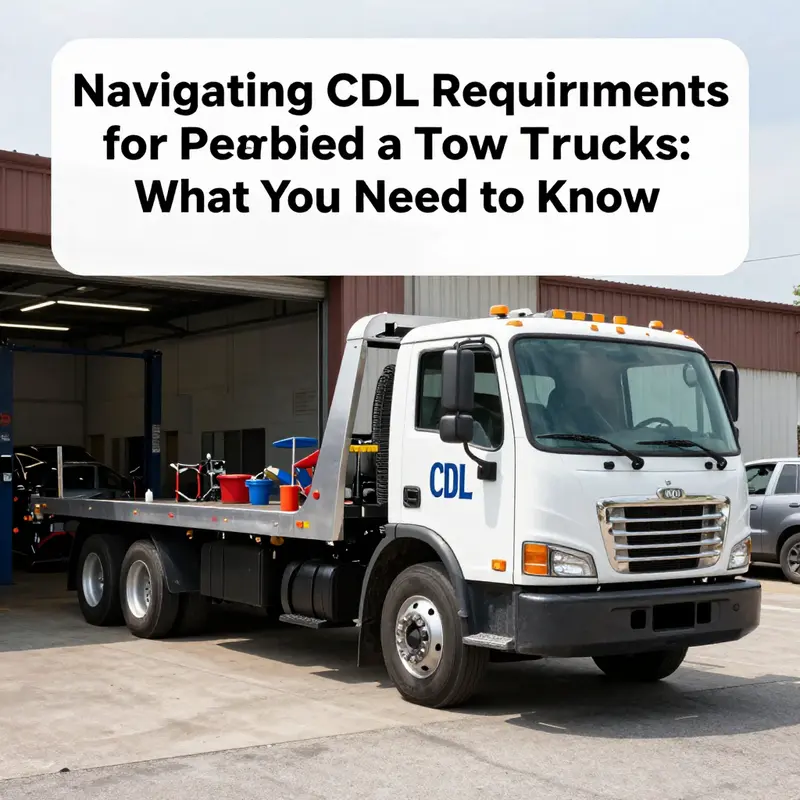
The 26,001-pound benchmark is more than a number on a spec sheet. It marks the line between private driving and federally regulated commercial operation. For flatbed tow trucks, the rule hinges on the vehicle’s weight combined with whatever it is pulling. That total is called the gross combination weight rating, or GCWR. The tow truck’s own weight rating is the GVWR, the gross vehicle weight rating, which comes from the manufacturer. When you attach a vehicle to a flatbed, you don’t just add weight in a casual way. You create a single, load-bearing system whose capacity is defined by the GCWR. If that combined weight pushes past 26,001 pounds, you generally enter the realm of federal commercial motor vehicle regulations. In practice, this means a CDL is typically required, even if the tow truck itself isn’t a “commercial” vehicle in isolation. The key idea is not the truck alone but the weight of the entire towing operation when you consider what is being moved and how it is being moved.
To visualize how this plays out, think of a standard flatbed tow truck that sits in a weight class just over the 26,000-pound line. The GVWR of the truck itself might be on the lower side—common for many non-truck-specific builds—but when you add a mid-size car or a light truck on the bed, the GCWR can quickly rise above the threshold. It is entirely possible for the truck to be legally versioned as a heavy vehicle for some uses while still being operated under a CDL in others if the weight calculations cross the limit. The practical takeaway is simple: always calculate the GCWR for the specific combination you intend to tow, not just the truck’s isolated GVWR. If the combined weight exceeds 26,001 pounds, you’re probably looking at CDL requirements.
Another factor to weigh is how you use the vehicle. If your flatbed operations are performed as part of a business—towing cars for repair shops, moving services, or any arrangement where you are transporting vehicles for hire—this commercial use typically triggers CDL requirements, even if the actual weight in a single instance would seem modest. In other words, the commercial activity itself matters as much as the weight in the algebra of regulation. The same logic applies when the operation is for a fleet that bills customers for towing work; once money changes hands for the service, the activity is treated as commercial transportation under federal guidelines, and the CDL becomes a requirement when the GCWR meets or exceeds the threshold.
When we talk about the CDL class, the flatbed scenario mostly signals Class B. A Class B CDL covers most single-unit tow trucks whose GVWR exceeds 26,000 pounds. It is the standard path for the majority of flatbed operators who tow vehicles that add to the weight of the truck, pushing the GCWR past the line. A Class A CDL, by contrast, is associated with combination vehicles—think tractor-trailers. While Class A is essential for certain configurations, it is far less common for typical flatbed operations where the truck and its payload do not form a true tractor-trailer pairing. The nuance here is not a rigid label but a practical decision based on the actual rig you drive and the kind of loads you haul.
Alongside the license class, testing is not optional. CDL holders must pass both written and practical driving exams. The written portion tests knowledge of safety regulations, proper vehicle operation, and hazardous materials considerations if those endorsements apply to your route. The practical test typically includes a thorough assessment of a driver’s ability to maneuver the vehicle, perform basic pre-trip checks, and demonstrate securement and loading procedures. For flatbed operators, the practical portion often stresses the specifics of securing vehicles on a bed, using winches, and coordinating with hydraulic systems safely. In many jurisdictions, you will also be tested on how to handle emergencies and how to respond to incidents on the road. These elements reflect the core safety responsibilities that come with operating a heavy towing vehicle in public traffic.
Beyond the license itself, the training programs for flatbed operators delve into the mechanics that make the job possible and safer. Trainees learn the language of the hydraulic system—how the bed extends, lowers, and locks into place, and how to operate the winch with precision. They study winching techniques that minimize load shifts and protect both the operator and the towed vehicle. A robust program also covers securement practices: selecting appropriate tie-downs, lashings, and beaming strategies that hold a vehicle steady during transport. The process emphasizes the margins of safety: keeping loads within the weight rating, avoiding sudden maneuvers, and checking for any movement during transit. The emphasis is practical competence, not just theoretical knowledge, because the consequences of errors can be severe on a busy highway.
If you’re calibrating your operation against the law, remember that regulations can vary slightly by state. The federal standard provides a baseline, but state DMVs and the FMCSA offer the detailed rules that govern what counts as a CDL, which endorsements are required, and how often testing occurs. The safest path is to consult both the FMCSA’s official guidance and your state’s DMV. The FMCSA site outlines eligibility criteria and the process to obtain a CDL and endorsements, including any state-specific steps. This approach helps ensure you aren’t surprised by a local interpretation of the rules when you’re ready to register the vehicle or apply for licensure.
For operators who want to place safety and preparedness at the center of their practice, the weight question becomes part of a broader risk management mindset. It’s not only about meeting legal requirements but about ensuring that every towed vehicle is secured correctly and every operator understands the limits of the equipment. A lawful operator also plans for contingencies—inspections, maintenance of hydraulic components, and timely updates to training as regulations evolve. In that sense, the CDL decision is a doorway to professional stewardship rather than a barrier to service. If your work involves fleet management or coordination of multiple drivers, you may find value in resources that discuss emergency readiness and safety culture as part of daily operations. For further reading on fleet safety and preparedness, you can explore related insights at Emergency preparedness for island fleets.
To weave these strands into your everyday practice, start with a careful calculation of GCWR for any planned towing scenario. Gather the GVWR from the tow truck’s manufacturer plate and estimate the weight of the towed vehicle, including any payload or equipment on the bed. If the total crosses 26,001 pounds, plan for a CDL and the appropriate endorsement, which will almost certainly include the “T” (Tow Truck) endorsement in most jurisdictions. If you remain under the threshold, you may still decide to pursue CDL qualifications for broader career flexibility, insurance benefits, and improved safety accountability. The choice is not merely about compliance; it is about operational resilience, driver competency, and providing reliable service to customers who depend on you during emergencies and day-to-day needs alike. For the official guidelines, see the FMCSA CDL information: https://www.transportation.gov/vehicle-safety/cdl
Weight as the Deciding Factor: Navigating CDL Requirements for Flatbed Tow Trucks
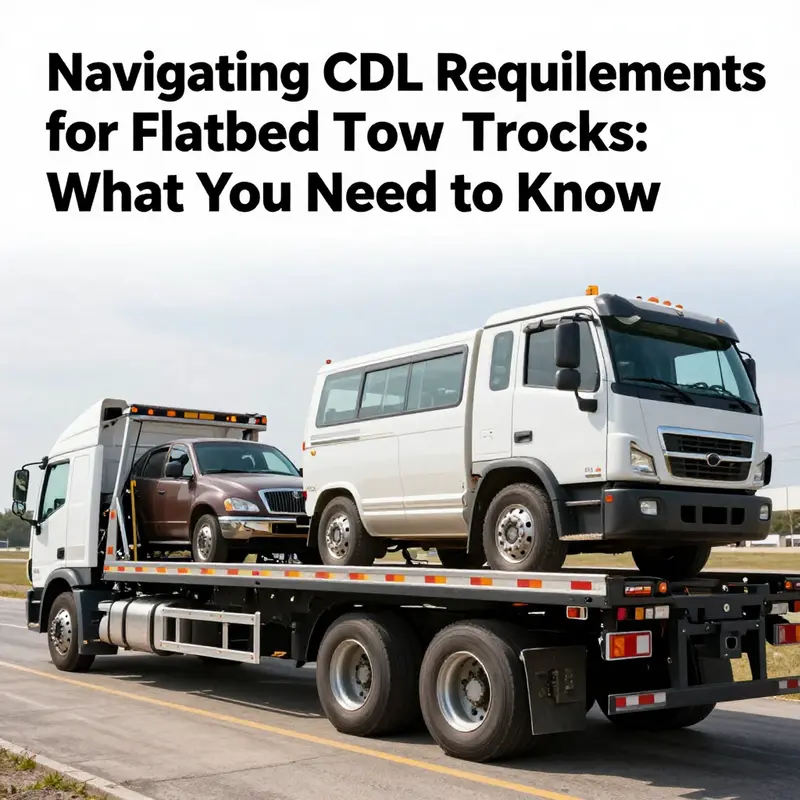
Weight is more than a number on a plate when you run a flatbed tow business. It is the hinge point between routine operations and the regulatory framework that governs who may drive, what license they must hold, and how the job gets documented and billed. In the United States, the decisive threshold hinges on the combined weight of the tow vehicle and the load it carries. This is the vehicle combination that determines whether a Commercial Driver’s License (CDL) is required and what class of CDL qualifies for the work. The Federal Motor Carrier Safety Administration (FMCSA) sets the baseline rules, and state departments of motor vehicles add their own refinements. The practical upshot is simple in principle, but it demands careful calculation: if the total weight of the flatbed tow truck plus the towed vehicle exceeds 26,001 pounds, a CDL is usually required. If the weight stays below that line, the operation may not trigger CDL rules, at least at the federal level. Yet the picture is nuanced. GVWR, GCWR, the way the truck is used, and even local regulations can tilt the decision one way or the other, so operators must check both federal guidance and their own state rules before pulling a single car.
At the core is the relationship between GVWR and GCWR. The GVWR, or gross vehicle weight rating, tells you how much the tow truck itself is certified to weigh when fully loaded. A flatbed that has a GVWR under the 26,001-pound mark might seem non-commercial at first glance. But the critical test is not the truck in isolation; it is the weight of the truck plus the vehicle it is actively towing. When that combined total crosses the 26,001-pound threshold, a CDL typically becomes a requirement. It is not just a theoretical line on a government sheet. It translates into practical consequences for staffing, training, insurance, and daily operations. A small, seemingly non-commercial flatbed can become a CDL-driven operation the moment it hauls a heavier car, a disabled sport utility, or a larger pickup. The towing configuration matters—whether you’re transporting stowed vehicles for repair facilities, wrecking yards, or other commercial clients can shift the classification and obligations.
Consider the typical fleet scenario. A flatbed with a GVWR around 14,000 to 26,000 pounds might be used for everyday towing without a CDL in some jurisdictions, provided the towed vehicle’s weight keeps the GCWR under the 26,001-pound limit. But add a mid-size SUV or a pickup truck as the load, and the total can quickly ascend beyond the threshold. The math is straightforward on paper, yet it has real-world consequences: a driver without a CDL found operating a vehicle that legally requires one can face fines, penalties, and elevated insurance costs. The risk is not merely legal; it expands into practicals like training, hours-of-service compliance, and even scheduling and dispatching workflows that assume CDL-capable drivers.
The weight question becomes more complex when you factor in non-vehicle equipment on the tow truck. Winches, offload ramps, stabilizers, and even mounting hardware all contribute to the vehicle’s effective weight. These components may push a truck that already tows heavy loads over the GCWR, triggering CDL requirements that would not apply to lighter configurations. In other words, the busier your operation—more tows, bigger towed loads, more gear on the bed—the more crucial accurate weight accounting becomes. The same logic applies when you think about the use of the vehicle. If you’re pulling as part of a business, for hire, or in a commercial setting, federal rules treat the activity itself as commercial use. That status often elevates the responsibility to hold a CDL, regardless of the truck’s nominal GVWR. It is a reminder that the line between personal use and business use is a meaningful legal distinction in this arena.
For those who do require a CDL, the practical path typically points to a Class B license with a “T” endorsement for tow trucks. Class B enables drivers to operate single vehicles with high GVWR or certain combination arrangements, while the “T” endorsement specifically covers towing or recovery operations. This combination is often the standard in many jurisdictions for flatbed operators who move disabled vehicles, call-to-call recoveries, and commercial towing work. It is not a universal guarantee, however. Some states impose stricter interpretations, and a few may require a CDL at GVWR thresholds lower than 26,001 pounds when used in commercial operations. These nuances underscore the importance of starting with federal guidance and then confirming with the state DMV to get a precise, current requirement for a given operation.
To make the weight story concrete, it helps to approach it as a planning exercise rather than a reactive check. Begin by identifying the GVWR on the tow truck’s door jamb plate. Then determine the weight of the typical load you haul—keep in mind that the towed vehicle’s weight adds directly to the GCWR. If the two numbers sum to more than 26,001 pounds, you are likely in CDL territory, and you should plan for a Class B CDL with a Tow Truck endorsement. If the calculation stays below the line, your operation may not require a CDL at the federal level, but you should still verify any state-specific rules that might apply, especially if you sometimes operate in neighboring states with different regulations. In this budgeting exercise, it’s prudent to assume the more conservative path—prepare for CDL requirements if there is even a reasonable chance that your weight calculations could cross the threshold during routine jobs.
The weight calculus is not merely about compliance; it also informs the operational planning, training, and safety culture of a tow business. When a CDL is in play, you have to align the entire fleet with regulatory expectations: driver qualifications, medical cards, hours-of-service compliance, vehicle inspection regimes, and record-keeping standards all come under a CDL framework. This often means investing in driver training, acquiring the correct endorsements, and ensuring that the dispatch system can differentiate between qualified CDL drivers and non-CDL operators. It also influences risk management and insurance cost structures, since carriers often price premiums with the driver’s licensing status and the vehicle’s GCWR in mind. In short, the weight question branches into every facet of daily operations—from staffing mix to risk controls to financial forecasting.
For operators seeking practical perspectives beyond the letter of the law, community resources can offer context. The Island Tow Truck blog provides fleet-facing insights, practical workflows, and scenario-based discussions that illuminate how weight calculations translate into real-world decisions on the road. It can be a helpful companion as you review your own fleet’s configuration and staffing plans. The Island Tow Truck blog offers a useful vantage point, especially when you’re balancing rapid-response towing demands with the longer-term compliance roadmap. While the blog is not a substitute for official regulations, it can help you frame questions to ask your state DMV and to scrutinize your own operation’s weight and use profile with greater clarity.
The overarching message is clear: weight matters, but it is only one piece of a broader regulatory mosaic. The GCWR framework ensures that the combination of your tow truck and its load is fit for purpose under national rules, while state variations can introduce additional layers of compliance. The consequences of non-compliance—fines, penalties, and higher insurance costs—make it worth investing the time to verify the exact requirements for your operation. When you prepare, you may discover that the line isn’t just about a license type. It is about establishing a lawful, safe, and economically sustainable towing practice that can scale as your business grows. In most cases, erring on the side of CDL readiness is the prudent path if you frequently move heavier loads or operate commercially on a recurring basis. This approach protects workers, clients, and your bottom line, and it aligns with a professional standard that supports reliable service delivery across the fleet.
For those who want to confirm federal guidance directly, FMCSA maintains clear criteria on vehicle combinations and CDL requirements. This resource is essential for anyone who needs to translate weight figures into licensing decisions. See the FMCSA page for authoritative guidance on how GCWR and GVWR interact with CDL thresholds and endorsements. https://www.fmcsa.dot.gov/regulations/vehicle-combinations-and-cdl-requirements
Weighing the Line: CDL Implications for Flatbed Tow Trucks Across Commercial and Personal Use
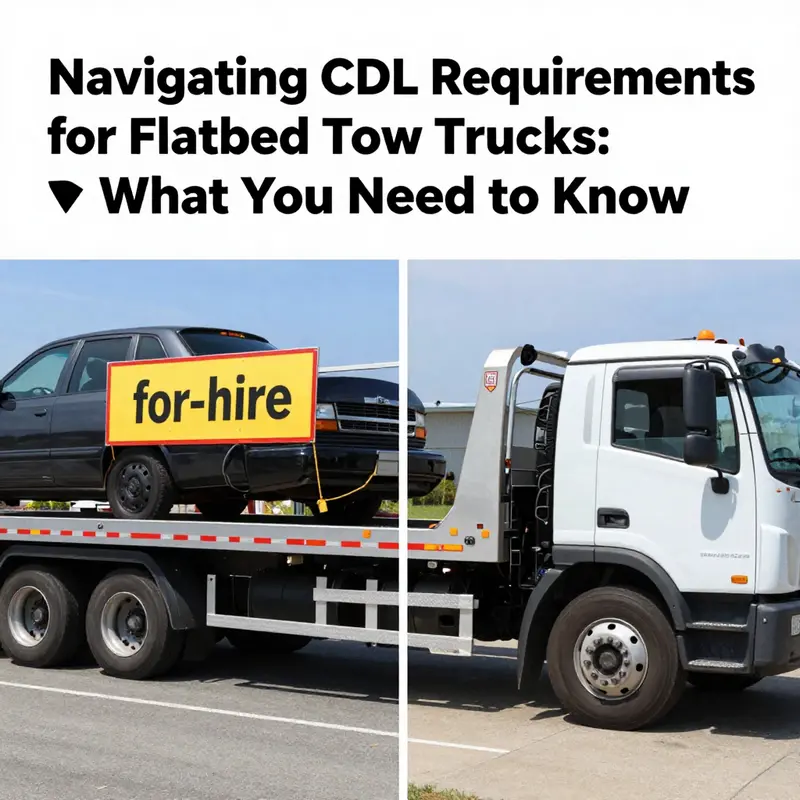
A flatbed tow truck is not just a tool; it is a weighing equation. In the lanes where heavy vehicles ride behind a flatbed, the question of whether you need a CDL hinges on how much total weight you handle and the purpose behind the work. The pivotal number in this calculation is the threshold that separates private towing from regulated commercial motor carrier operations. In practical terms, when the combined weight of the tow truck and the vehicle it hauls exceeds 26,001 pounds, federal regulations typically come into play, and a CDL becomes the standard path to legal operation. This is not a mystery of shop talk, but a practical definition that matters for daily work, insurance, liability, and safety standards. The distinction sits at the crossroads of vehicle ratings and use: GVWR, GCWR, and the intent behind the tow.
To understand the rules, it helps to distinguish two key concepts: GVWR and GCWR. The GVWR, or gross vehicle weight rating, is the truck’s own ceiling. It tells you how heavy the truck can be when empty and loaded without tipping into unsafe territory. The GCWR, or gross combined weight rating, on the other hand, is a sum—the maximum weight of the tow truck plus the weight of the vehicle being towed. When the GCWR crosses the 26,001 pound line, the operation is typically treated as a commercial motor vehicle operation, and the driver is usually expected to hold a CDL appropriate to the vehicle class and its duties. This distinction matters even if the tow truck by itself would not be labeled as a heavy commercial vehicle. The weight is a function of the entire hauling pair, not the chassis alone.
In practical terms, a small flatbed that can move cars within a local city may have aGVWR well under the CDL threshold. Yet, if that same truck is used to haul a vehicle for hire, or as part of a business that moves cars for customers, the operation acquires a commercial character. The towed vehicle adds directly to the GCWR, so a heavier towed car can push the total into the CDL required territory even when the tow truck itself remains modest in size. That is a critical point for fleet managers and sole operators alike: the business model and the weight combination determine licensing needs, not the truck appearance or the label on the door alone.
A common intuition mistake is to think that a flatbed weight alone dictates CDL requirements. But the field reality is more nuanced. If the state considers the activity as commercial services offered to the public whether you tow for a repair shop, a rental fleet, or roadside assistance, the operation generally falls under commercial use. In those contexts, CDL requirements follow the same broad rule: if the GCWR surpasses the 26,001 pound threshold, a Class B CDL is typically required, sometimes with a specialized endorsement for towing. If the vehicle you operate is heavier than the limit, or if your duties include long haul or interstate transport, the licensing implications become more pronounced, and the safety and regulatory expectations rise accordingly.
It is equally important to grapple with the non commercial side of the equation. Non commercial use includes personal towing, internal fleet maintenance, or emergency recovery performed by individuals or small organizations without a business purpose. In such scenarios, many lighter flatbeds may remain under the weight line, making a CDL unnecessary by weight alone. Yet weight is not the sole test. The manner of operation whether you are moving vehicles for personal reasons or for a business that charges for the service still matters. If personal use remains purely casual and the GCWR stays below the threshold, a CDL may not be required, at least at the federal level. At the same time, state regulations can diverge, and local authorities may impose additional requirements or interpretations based on the nature of the towing activity and the vehicle ratings. This is why the prudent path is to verify with the state DMV and when relevant the FMCSA guidelines, which outline eligibility and class structure for CDL holders.
For operators who do fall into the commercial category, licensing is more than a badge. A CDL Class B license is commonly the baseline for drivers operating heavy flatbed wreckers and similar equipment, especially when carrying the additional burden of a towed vehicle. In many cases, fleets will seek endorsements that specifically address towing, often labeled as a T endorsement, to cover the cab axle realities of securing and transporting a vehicle on a flatbed. The presence of reflective safety markings, warning lights, and other regulatory safety features on the equipment underscores the required compliance mindset. These are not cosmetic touches; they are part of a broader framework that governs hours of service, routine vehicle inspections, and safety protocols designed to minimize risk during loading, transport, and unloading.
The broader regulatory landscape is navigated most effectively by aligning with official guidance. The governing principle is straightforward: determine whether the operation is commercial and then verify the weight status of the combination. If the vehicle exceeds the 26,000 pound GCWR, a CDL is generally required, with the appropriate class based on GVWR and the nature of the towed load. If youre operating within a private, non commercial context and your weight calculations stay under the limit, you may not need a CDL, but you should still check with the state DMV or the FMCSA page on CDL eligibility to confirm class endorsements and any state specific nuances.
On a practical level, operators and business owners can approach this decision with a simple framework. Start by identifying the GVWR of the tow vehicle and the approximate weight of the loads you typically haul. If the sum is close to or exceeds 26,001 pounds, plan for a CDL and the necessary endorsements. Consider how your use might shift in the future a small fleet expanding into longer distance or commercial to customer services will typically transition to CDL compliance even if today you only handle local occasional tows. If your use remains personal or internal to your own business and the GCWR stays well below the threshold, you may operate without a CDL, but you should still maintain robust safety practices and comply with general vehicle transport guidelines.
For those who want to explore the broader strategic side of compliance, practical resources on fleet readiness and safety planning can be valuable. For example, planning a compliant fleet response and emergency strategy can help ensure that licensing training and safety protocols stay aligned with the vehicle duties. You can read about essential fleet emergency response strategies here the essential fleet emergency response strategies link.
Ultimately, the decision rests on a combination of weight math business model and regulatory interpretation. The weight based rule is clear enough the GCWR governs when a CDL is needed and the intended use often determines the exact class and endorsements required. The safest posture is to approach each operation with a conservative assumption if you are providing towing services to the public or moving vehicles as part of a business, treat it as commercial and verify your licensing requirements before hitting the road. When in doubt consult the DMV or FMCSA review the weight calculations for your specific truck and towed load and document the decision so you and your clients are protected. For federal framework and eligibility criteria see the FMCSA page on CDL eligibility the FMCSA eligibility page link
Navigating Weight, Laws, and Loops: How State Rules Shape Flatbed Tow Truck CDL Requirements
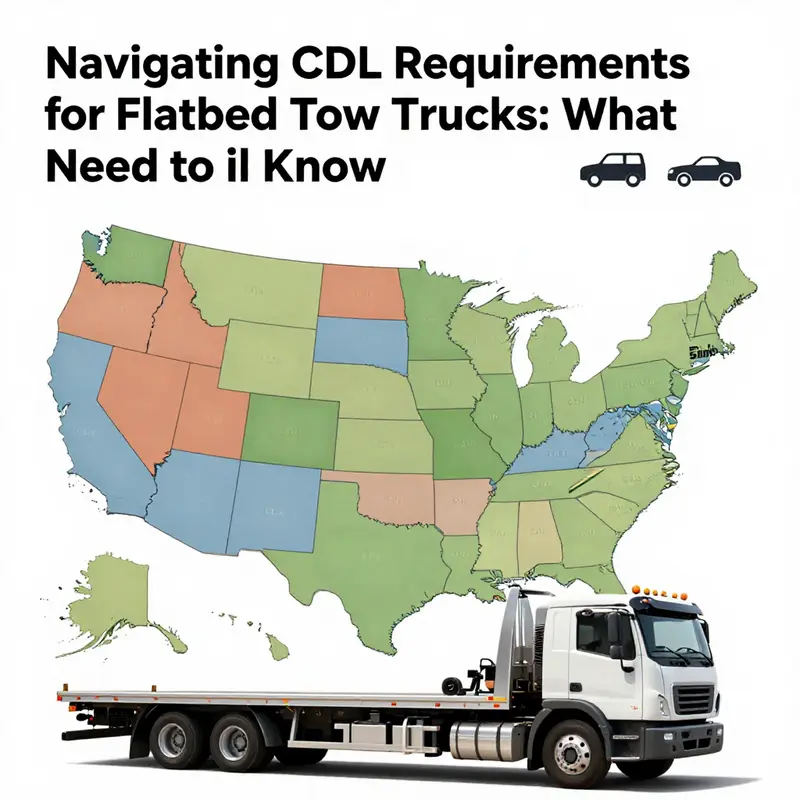
When a flatbed tow truck rolls into a shop or onto a stretch of highway, the real challenge isn’t just loading a car onto a bed. It’s understanding how weight interacts with law, and how those rules shift from one state line to another even though the federal baseline remains constant. For operators, the question “Do I need a CDL?” is not a single answer but a careful calculation, followed by a careful check of the jurisdiction in which you operate. The central hinge is simple in theory: once the truck and its payload cross a weight threshold, most commercial driving rules come into play. In the United States, that threshold is anchored around twenty-six thousand pounds and change, but the way states apply and augment that rule varies enough to matter in daily practice. Flatbed tow trucks, with their extended frames and hydraulic beds, can disguise weight in a way that makes this topic feel less intuitive than it looks on paper. A tow rig may seem modest when standing still, yet the moment you couple it with a towed vehicle, the combined weight can push you past the line where a CDL becomes necessary. In practical terms, the combined gross vehicle weight rating, the GCWR, is the number you must monitor. If the GCWR climbs beyond twenty-six thousand pounds, the federal framework typically requires a CDL. If the vehicle or the combination tips over that mark, the operator’s license requirement is triggered under federal guidelines, and the state you operate within will map that framework to its own licensing rules and endorsements. The rules are designed to ensure that drivers have the training, medical clearance, and safety knowledge to manage large, heavy, and sometimes awkward loads on public roads. The weight calculus thus becomes a daily part of how a tow business plans its operations, schedules its personnel, and maintains compliance with both state and federal expectations. This is not merely about paperwork; it’s about the safety of responders, customers, and motorists who share the road with heavy recovery operations. A typical flatbed is not a one-size-fits-all device. The bed, the truck frame, the powertrain, and even the auxiliary equipment contribute to the GVWR—and when you add a vehicle onto that bed, you alter the GCWR in real time. Even if the tow truck itself would not be classified as a commercial vehicle in isolation, the act of towing a vehicle for hire, or as part of a business, crosses into commercial territory. The line between private use and commercial hauling can blur quickly when a tow operator is performing fleet work, responding to accidents, or transporting vehicles for a shop or repair service. The practical ramification is that state DMVs often examine both the vehicle configuration and the intended use when determining CDL requirements. It is this dynamic where operators encounter variations from one state to the next. Some states look strictly at the weight: if the GVWR of the tow truck and the towed vehicle together surpasses twenty-six thousand pounds, a CDL is typically required, noting that the vehicle may still be used for transportation tasks not strictly for hire. Other states adopt a more aggressive posture, mandating a CDL for any flatbed over a specified GVWR threshold, even if the operation is framed as non-commercial within narrow boundaries or within a limited geographic radius. Then there are endorsements that can transform the licensing landscape. Even when the base weight threshold is not met, certain specialized towing operations may demand additional endorsements—such as those associated with hazardous materials or passenger transport—if the operation touches on those domains. The promise of a flatbed, with its ability to cradle operable or stranded vehicles without wheel contact, is a strong one for efficiency and safety. It makes sense on a practical level: loading can be accomplished with care and precision, reducing the risk of further damage to the vehicle or injury to bystanders. Yet the same design features that favor safe loading can contribute to the perception that these vehicles are inherently more capable than they are, which reinforces the need for precise regulatory alignment with weight and use. In practice, this means an operator must stay vigilant about three core variables: the GVWR of the tow truck, the weight of the towed vehicle, and the intended use of the service. The GVWR sets the baseline for the truck itself. The weight of the towed vehicle adds directly to the GCWR and is the lever that pushes many operators into CDL territory. The use of the vehicle—whether for personal tasks, non-commercial towing, or commercial hauling—can tilt legal expectations, especially in states that impose stricter rules for commercial operations or require specific endorsements for the nature of the work. The process of compliance then becomes a careful audit: know your vehicle, know your load, and know your jurisdiction. For operators who want a grounded sense of where to begin, the first stop is to verify the vehicle’s current specifications in its manual and on the vehicle’s data plate. The second is to determine the typical loads you expect to carry and the routes you will cover. The third is to consult both the state DMV and FMCSA guidelines to confirm whether your operation crosses any thresholds. The FMCSA maintains the federal baseline—an indispensable reference point—but states can layer on requirements. The best practice is to approach compliance proactively: map out your typical loads, calculate GCWR for these scenarios, and then compare them against the licensing prerequisites in your operating state. It isn’t only about passing a test; it’s about training for the specific duties you perform, from managing secured loads on a busy freeway to navigating narrow streets in a dense commercial district. If you want a broader sense of how this plays out in real life and to see how other operators interpret these rules in varying contexts, you can explore a broader discussion on the Island Tow Truck blog, which offers insights on fleet management, emergency response, and regulatory considerations for island-based operations. the Island Tow Truck blog. While the core weight threshold remains the same at the federal level, the state-by-state landscape requires careful, ongoing attention. Operators should routinely check the DMV in their jurisdiction and review FMCSA guidance to stay up to date, since rules evolve with new safety standards and truck configurations. In practice, this means maintaining updated license classifications, ensuring your endorsements cover the work you perform, and documenting your operations so that audits or inspections can be navigated smoothly. The differences among states are rarely dramatic in isolation, but they add up in daily planning, risk management, and cost control. A CDL with the appropriate endorsements is not merely a compliance touchpoint; it is a credential that reflects a driver’s readiness to handle large, potentially hazardous, and high-stakes towing tasks with appropriate training and accountability. For operators pursuing this path, the journey begins with clear data on the vehicle, a realistic view of typical workloads, and a disciplined process for verifying regulatory expectations across the jurisdictions in which you work. In the long run, the alignment of weight calculations, licensing, and operational practice builds a safer, more reliable service that protects drivers, customers, and the public. For those who want direct links to official references, the Federal Motor Carrier Safety Administration’s site remains the authoritative resource, while your state DMV will provide the precise licensing path, testing requirements, and any local endorsements that may apply to your specific flatbed configuration and service model. External resource: https://www.fmcsa.dot.gov
null
null
Final thoughts
Navigating the complexities of CDL requirements for flatbed tow trucks is crucial for ensuring compliance and safe operation. By understanding the weight limits, commercial versus non-commercial distinctions, and the varying state regulations, businesses can better position themselves in the towing industry. Holding a Class B license and obtaining the necessary endorsements will not only ensure legal compliance but also enhance the professional reputation of your operations. By staying informed and proactive about these requirements, you can focus on providing safe and effective towing services, whether for personal uses or commercial purposes.