Navigating the complexities of vehicle towing can be daunting, especially when it involves the logistics of riding with the tow truck driver. For local auto repair shops, car dealerships, property managers, resort operators, and commercial fleet operators, understanding the regulations and practices surrounding passenger rides with AAA tow truck drivers is crucial. This article explores various facets of towing passenger policies, highlighting safety regulations, situations that may allow for passenger rides, design limitations of tow trucks, and effective ways to communicate with service providers for clarity. Each of these chapters builds a comprehensive view, serving both consumers and businesses in island communities that might require such services.
Riding Along with AAA Tow: Understanding Passenger Policies and Practical Realities
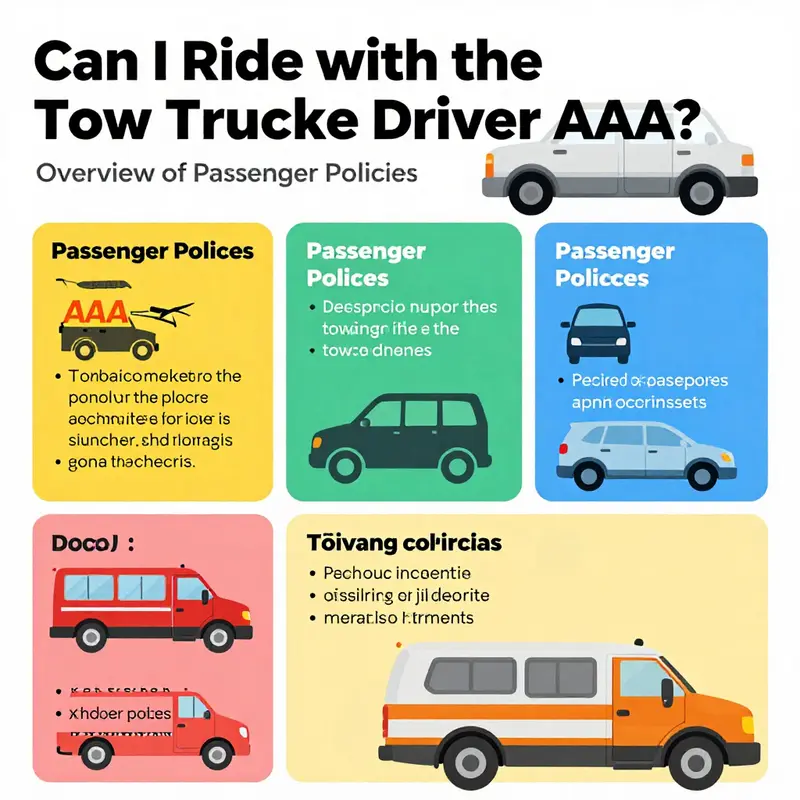
When your car stalls on a quiet roadside or after a collision, the moment the tow truck pulls up can feel like a strange cross between relief and curiosity. Relief because help has arrived, and curiosity because you might wonder whether you can ride along with the driver to the next stop. This question taps into a larger conversation about what happens inside a tow truck cab, who is allowed to be there, and how policies are shaped by safety, liability, and the realities of moving a vehicle through traffic. The short answer, as a rule of thumb for AAA dispatches, is that riding with the tow truck driver is generally not allowed for passengers other than the driver and the vehicle being towed. But the story behind that line is more nuanced than a single policy statement can capture. Tow trucks are specialized vehicles. They are designed first and foremost to secure, immobilize, and transport a car from point A to point B with a focus on safety during movement, not comfort for additional riders. The cab is built to accommodate the driver and the necessary controls, and in most designs, the seating and restraints reflect that single-occupant purpose. The gear, the seating layout, and the very structure of the interior are chosen to minimize distraction, ensure rapid deployment, and maintain a clear line of sight for navigation and road safety. From this engineering perspective, adding a passenger in the cab can introduce a host of considerations: how to safely seat a non-driver, whether seatbelts and anchor points exist for an extra person, and how to manage the distribution of weight and space when the vehicle being towed takes up a portion of the bed or the trailer. As a result, the default stance becomes a cautious one, prioritizing the operator’s ability to perform a precise and uninterrupted tow without the added variables that a passenger might introduce. This is not merely about personal comfort; it is about maintaining a controlled environment where the tow operator can monitor speed, braking, and the vehicle being transported. In the glow of emergency roadside work or a high-stress breakdown, the risk calculus shifts toward ensuring that the driver’s attention remains on safety-critical tasks rather than managing passengers. The tow truck driver must secure the disabled vehicle with chains, winches, or straps, verify lights and signaling, and maintain direct communication with the dispatcher and, if necessary, with responding law enforcement or emergency services. Any shift in attention, even momentary, can complicate these essential steps. Within that framework, the question of passengers often becomes a matter of policy rather than personal preference. AAA, a fixture in roadside assistance, emphasizes safety and liability considerations in its standard operating procedures. The company’s dispatch instructions typically restrict the cab to the driver and the towed vehicle, reserving space and safety measures for the task at hand. This is not a line drawn to punish or exclude individuals; it is a precaution designed to minimize risk for everyone involved, including the non-driving passenger who might not fully grasp the dynamics of a moving tow truck. The policy is also aligned with insurance constraints, which tend to favor clear and limited occupancy in high-risk environments. From a risk management perspective, keeping the cab to essential personnel reduces exposure to potential injuries, falls, or sudden stops that could cause harm to anyone riding along. Understanding these factors helps set realistic expectations. If you anticipate needing to accompany the tow, the best route is to discuss it proactively with the dispatcher at the time of the call and, when appropriate, with the driver on scene. The reality is that even when a passenger might be technically feasible in some situations, many drivers adhere to the standard safety practice of transporting only themselves and the vehicle. The absence of a dedicated passenger seat, the lack of appropriate restraints, and the potential for entanglement with straps and tie-downs are practical barriers that reinforce the default policy. This is not merely institutional rigidity; it is a reflection of the job’s physical realities. On the other hand, there are nuances worth noting. Local variations do exist. Some smaller or locally operated towing outfits may be more flexible about passengers in certain circumstances, such as when a family member needs to accompany a towed vehicle to a shop or when a driver is moving a personal vehicle a short distance and there is space available in the cab. These instances are exceptions rather than the rule, and they depend on the specific company’s rules, the driver’s assessment of risk, and the layout of the truck. To navigate these nuances, one of the most reliable steps is to reach out directly to the service provider and ask about their current policies. Policies can and do evolve, and the crew on the ground will have the most up-to-date guidance for that particular call. In many cases, the dispatcher will be able to tell you whether an exception can be made, or whether a different arrangement might satisfy your needs. For example, if you need to be present for the tow to coordinate a handoff at a shop, the driver may arrange to text updates or communicate via phone while you wait at a safe nearby location. If you are insistent about being in the vehicle for a short stretch, you might consider following the tow in your own vehicle, assuming it is legal and safe to do so, and only if the driver approves and coordinates the handoff with the shop. This possibility, while not universally available, has been discussed in practical guidance within the broader towing community. A useful resource for broad industry perspectives on these scenarios is the community-driven discussion found on industry blogs, which sometimes explore case-by-case solutions for roadside concerns. Readers who want to understand the spectrum of approaches can consult sources like The Island Tow Truck Blog for scenario-based discussions and reflections on how different operators handle passenger questions. It is worthwhile to review such discussions, not as a substitute for official policy, but as a way to prepare for conversations with dispatchers and drivers. When it comes to translating policy into practical action, the takeaways are straightforward but important. First, do not assume that a passenger can ride in the cab; verify with the dispatcher and with the driver if possible. Second, prepare to wait at a safe location near the roadside if riding along is not an option, and consider following in your own vehicle if that is permitted and safe. Third, understand that the cab’s design prioritizes the operator’s control and the secure transport of the vehicle, which is essential for minimizing risk during towing operations. For official guidance and the most current policy details, consult the towing services information provided by the service provider. If you need a definitive reference, you can review AAA’s official towing services information, which outlines their standard practices and any situational exceptions. For more specifics, see AAA’s towing services page. And for broader industry perspectives and scenarios, you can explore the discussions found at The Island Tow Truck Blog. This combination of official policy and on-the-ground insights can help you approach the situation with clarity, preparing you to navigate the moment when a tow arrives with the right questions and a calm, pragmatic plan. For readers seeking authoritative policy at a glance, the official resources are the most reliable starting point, as they will reflect the most current rules and any jurisdictional variations that may apply to your region. In the end, the most important outcome is safety: ensuring the tow operator can perform a precise, distraction-free operation while you and your vehicle are secured and protected. If riding along would simply add risk without clear benefit, waiting at a safe location or coordinating a follow in your own vehicle often proves the wiser course. The road is unpredictable enough; the goal is to minimize additional risk while ensuring you reach the next point in the process—whether that is a shop, a repair facility, or a safe roadside stop—efficiently and with confidence. For official policy details, see the authoritative source on towing services here: https://www.aaa.com/automotive/towing-services/.
null
null
Riding Along in Tow: When a Passenger Can Share the Ride with a Tow Truck Operator
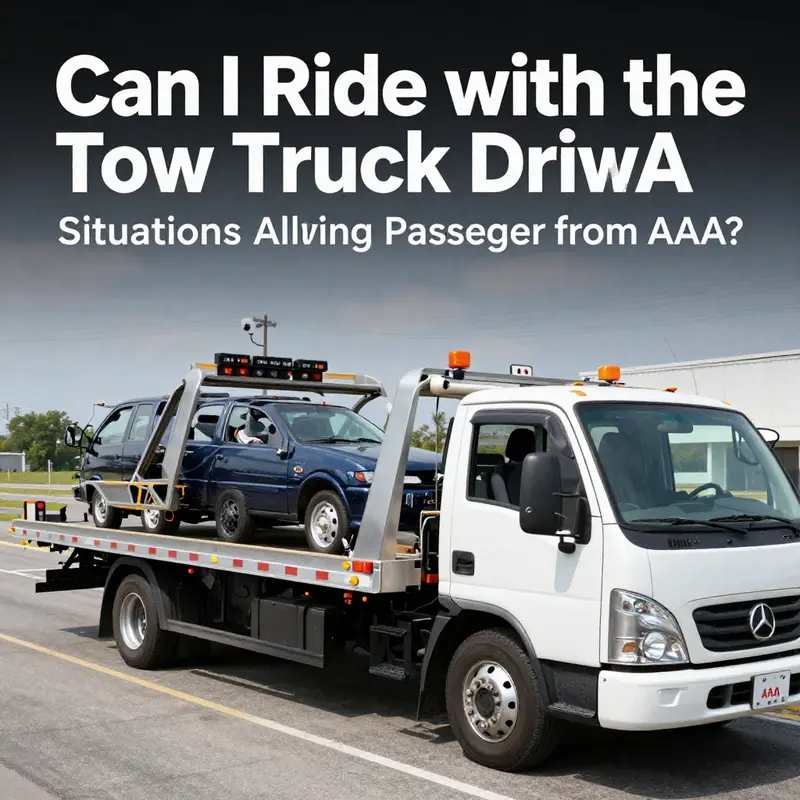
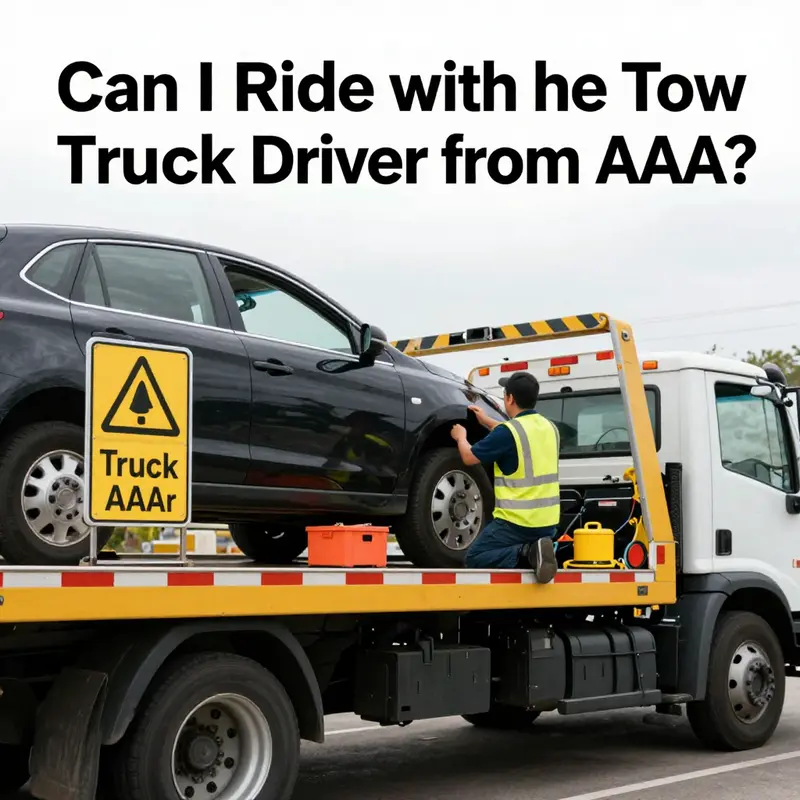
When you find yourself stranded and the tow truck arrives, a tempting question may surface: can I ride along with the driver to the destination? The answer is not absolute, but it is nuanced and very much dependent on the service provider, the circumstances of the tow, and safety priorities. Tow trucks exist primarily to recover stalled, disabled, or wrecked vehicles and to move them to a repair shop or safe location. Passengers are not the primary consideration in most daily operations, and the driver must balance providing assistance with keeping everyone safe on the road. Yet in practice, policies can vary, and some providers allow a passenger under specific conditions. Understanding those conditions can help you decide whether riding along is appropriate in your case and how to approach the situation with respect for the driver and the equipment involved. For broader context on how tow services operate and how to navigate roadside support, you can explore industry perspectives at the island tow truck blog, which offers practical insights into fleet operations and emergency response. theislandtowtruck.com/blog
In situations where a tow is requested, the driver will assess several factors before allowing a passenger to ride along. Safety is the overarching concern. The cab space on a tow truck is designed to keep the operator in full control of the vehicle and its heavy, sometimes unwieldy load. A passenger seat may exist, but it is often limited in a truck that must accommodate towing gear, chains, winches, and other equipment. If the truck is carrying a full load for a long haul, there may simply not be room enough to seat a passenger without compromising the driver space or the load securement. Even when a seat is available, the passenger must meet basic safety requirements such as remaining seated, buckling up, keeping limbs inside the cabin, and avoiding any attempt to assist the driver in handling the tow operation while the vehicle is in motion. These are not mere formalities; they are essential practices designed to prevent injuries during rapid acceleration, lane changes, or shifts in terrain that can occur on the move.
Beyond space and safety, the driver retains the final say in whether a passenger can ride along. Road conditions and traffic volume are dynamic, and an operator may determine that a stop and go, a busy highway, or a difficult maneuver makes passenger riding inadvisable at that moment. The driver has to prioritize handling the tow securely and efficiently, which may mean asking you to wait or to transport yourself in your own vehicle if it is safe to do so. This discretion is not a reflection on you but a practical response to the realities of roadside towing. When in doubt, approach the question with courtesy and readiness to adapt to the driver s assessment. The goal remains safety above all else, and that perspective should guide any request to ride along.
If you are curious about how to navigate this choice without adding confusion to the situation, consider the process as a collaborative one. Before the tow occurs, contact the service provider to clarify their policy on passenger rides. Some providers will outline the policy clearly, stating that passengers are allowed if they do not interfere with operations, while others may indicate that no nonessential passengers are permitted due to safety or operational considerations. In many cases, the same decision applies whether the tow is local or long distance, whether the vehicle is being moved to a shop across town or to a facility down the road. The driver s judgment, informed by the specifics of the tow and the current traffic environment, remains central. This is not a one size fits all rule; it is a practical framework that prioritizes safety and efficiency.
For readers who want a broader sense of how such policies evolve and why they differ between providers, the industry often highlights that tow services are trained to manage risk in real time. The operator s experience matters, as does the particular setup of the vehicle being towed. As with any professional service, what may be permissible in one situation could be off limits in another. The best approach is to engage in a short conversation with the dispatcher or driver up front. A simple question along the lines of Is there room for a passenger and are there any safety concerns we should consider? can set a cooperative tone that helps everyone stay safe. If you receive a clear yes, then proceed with the safety steps and obey the driver s instructions at all times. If you receive a no, respect that decision and make arrangements to travel separately to the destination. Clarifying this in advance can save stress and prevent last minute misunderstandings on a busy roadside.
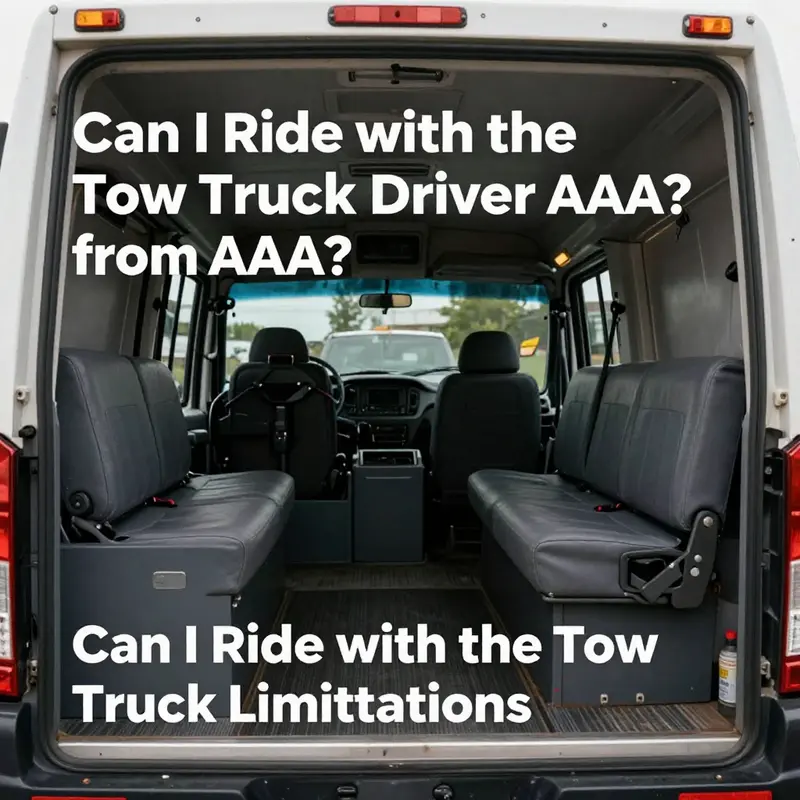
As you weigh whether to ride, you should also consider the practical realities of the vehicle and the route. Tow trucks are compact conveyances designed for rapid response, not for passenger comfort or long trips. The interior layout is optimized for securing a vehicle and managing the tow, not for extra seating or leisurely travel. Even when there is a seat, it may be close to gear that moves during transit or requires space for straps and hooks that keep the towed car in place. The ride can be noisier, bumpier, and more intense than a normal passenger vehicle. In addition, the driver may need to keep attention on road signs, traffic patterns, wind, and the behavior of other drivers around a large, loaded vehicle. If you are not accustomed to being in a work vehicle under these conditions, the ride could be more stressful than comforting. These practical factors reinforce the idea that riding along is sometimes possible but rarely ideal.
If you decide to request a ride along, prepare for a quick but respectful exchange. Have your identification ready, confirm space availability, and acknowledge that the final decision rests with the driver. Do not attempt to ride in the back or in positions that are not designed for passengers, and never interfere with the towing operation. The driver’s focus must stay on securing the load and navigating the route, especially in high traffic or complex environments. If you have valuables in the vehicle or urgent reasons to ride, communicate them calmly and trust the professional judgment of the driver. Remember that safety protocols may restrict even a willing rider in bad weather, on icy roads, or in areas with steep grades. In these moments, patience and cooperation are rewarded with a smoother experience for everyone involved.
If your aim is to understand the policy for your specific case, the most reliable path is to contact the service provider directly and request explicit confirmation. Providers typically publish towing guidelines that cover passenger access in plain language. Reviewing those guidelines can help you prepare for the encounter and avoid surprises when the tow arrives. When the letters on the policy align with your expectations, bring any necessary documents, keep seat belts fastened, and stay attentive to the driver s cues. In some dramatic moments, a simple question about space now can prevent a tense moment later. And as you reflect on the experience afterward, you may find that the ride along was more about reassurance and timely assistance than about convenience alone.
From a broader planning perspective, it is helpful to view passenger rides as a potential, not a guarantee. The overall aim of roadside assistance is to restore mobility safely and as quickly as possible. If a ride along is not feasible, there are still constructive options to minimize downtime: arranging alternate transport for you, coordinating with the shop ahead of time, or planning a quick follow behind in your own vehicle if conditions permit. Understanding that policy will vary by provider allows you to approach each incident with a calm, informed mindset. For those who want deeper insights into how towing operations manage emergencies and coordinate with fleets during critical moments, the referenced industry resources and blogs offer a window into the operations behind the scenes. theislandtowtruck.com/blog provides a sense of how fleets respond and how emergency preparedness links into everyday towing tasks.
In the end, the question can be answered with a qualified yes or no depending on context. A passenger ride is possible when space exists, safety is assured, and the driver judges that it will not hinder the tow operation. It is not a guarantee, and it is not a standard expectation for every tow scenario. The respectful approach—ask early, listen to the driver, and adapt to the situation—helps ensure that whatever choice you make, the priority remains the safe return to normal travel. For readers looking to crosscheck official policies after this narrative, an external reference to a widely cited towing policy is available: https://www.aaa.com/automotive/towing. This link provides detailed guidance on towing procedures and safety considerations that reflect the industry norms behind passenger access questions.
null
null
null
null
Final thoughts
Whether you are a driver or a business owner seeking clarity on passenger policies during towing operations, understanding the nuances involved can significantly enhance your experience. The insights provided in this article serve as an invaluable resource for all stakeholders, ensuring that safe and efficient practices are upheld. Remember, contacting service providers for your specific needs can make a world of difference in your towing experience.