Tow trucks are integral to vehicle recovery across various industries, from local auto repair shops to fleet management. Understanding how these trucks operate not only highlights their significance but also sheds light on the sophisticated technologies and safety mechanisms they employ. In the subsequent chapters, we’ll delve into the core mechanisms of tow trucks, explore the different types available and their specific functionalities, highlight the essential role of hydraulic systems in their operations, and discuss the latest safety innovations that enhance their performance. This comprehensive overview aims to equip service providers, property managers, and commercial operators with the knowledge they need to effectively utilize tow truck services.
From Hydraulics to High-Tech: A Deep Dive into How Tow Trucks Work
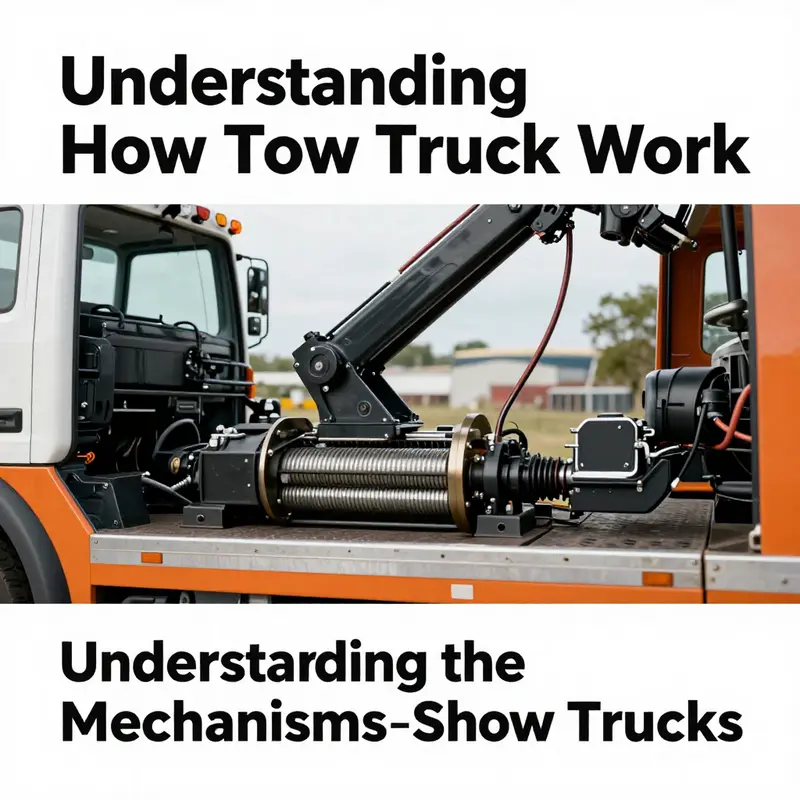
Tow trucks are not just brute force machines; they are carefully engineered systems where mechanical design, hydraulics, and electronic control converge to recover, lift, and transport vehicles safely. The heart of most modern tow trucks is a hydraulic system that powers the core functions: the boom or lift arm, the winch, and, in more capable setups, a rotator. These hydraulic circuits create the high torque and precise control necessary to manipulate heavy loads with confidence, especially in roadside and scene-recovery scenarios where every movement must be predictable. A single well-tuned hydraulic circuit can deliver smooth, controlled lifting, pulling, and rotating that would be impractical or unsafe with purely mechanical or electric means. In practical terms, the system relies on pressurized fluid flowing through hoses and valves to drive pistons and cylinders. The hydraulic pump, driven by the engine or, on some configurations, by a power take-off from the transmission, pushes fluid from a reservoir into high-pressure lines. When the operator commands a movement, valve manifolds route the fluid to the appropriate cylinder or winch drum. The return fluid travels back through the system, cooling as needed, and the cycle repeats with each control input. This combination of hydraulic pressure and precise valve control allows tow operators to apply immense force in a controlled fashion, reducing the strain on the vehicle’s own structure and enabling recovery actions that would otherwise be dangerous or impossible from the cab alone.
The power behind the hydraulics is only part of the story. The overall capability of a tow truck rests on a well-integrated relationship between engine performance, transmission dynamics, hydraulic pumps, and robust mechanical linkages. The pump type matters: gear pumps and vane pumps are common in heavy-duty applications, chosen for their reliability and steady flow characteristics under high pressures. The pump’s capacity, measured in gallons per minute or liters per minute, determines how quickly the system can respond to operator inputs. The hydraulic fluid itself plays a crucial role, not just as a medium to transmit force but as a thermal manager and lubricant that protects seals, cylinders, and hoses from wear and heat. Keeping the fluid clean and within the right temperature range is essential to maintaining consistent performance over long shifts in demanding environments.
No discussion of tow trucks would be complete without acknowledging how the engine and drivetrain support hydraulic performance. The pump is typically driven by the truck’s engine, either directly or through a PTO, and the engine’s torque curve influences how quickly the system can reach full force. In practice, operators learn to balance hydraulic demand with vehicle speed and stability. For instance, when lifting from a tight shoulder or traffic lane, the operator might favor smoother, slower movements to maintain control, whereas during a stacked incident involving multiple vehicles, the system may be tasked with rapid, repeated cycles. In all cases, the operator relies on feedback from hydraulic pressure, cylinder position, and, increasingly, onboard diagnostics to tune each operation for safety and efficiency.
Different tow truck types organize these hydraulics around particular tasks, and each type emphasizes different combinations of lift, reach, and stability. Wheel-lift trucks rely on a boom mechanism to hoist one end of the vehicle off the ground, typically by attaching and pulling on the front or rear wheels. This approach keeps the rest of the vehicle on the road or supported by the truck’s frame while the other wheels remain in contact with the surface. The technique is efficient for standard roadside recoveries, especially when space is limited or when minor damage makes a full bed transfer unnecessary. Flatbed trucks, in contrast, use a hydraulically actuated bed that tilts and slides so the entire vehicle can be driven onto the platform. A secure tie-down system holds the car in place once it is aboard, and then the bed is raised and/or inclined to transport the vehicle without dragging it across a surface. This method provides maximum protection for delicate or severely damaged automobiles because there is no direct contact with the truck’s own frame or winch lines during transport.
Rotator tow trucks extend the capabilities of lifting by adding a rotating turret or mechanism that can swivel the load. The combination of lift, pull, and rotation proves invaluable at complicated accident scenes where vehicles must be repositioned for safe roadside clearance, winching out of ditches, or reorientation to allow working space for other responders. Modern rotators rely on advanced hydraulic control to perform multi-axis movements with precision, often under high load. The muscular strength of hydraulics is complemented by a robust counterweight system and stabilizing outriggers, which spread the vehicle’s weight and prevent tipping during aggressive maneuvers. A rotator’s capacity—commonly described in tons—translates into a practical limit on the load it can safely handle, including dynamic factors like angle of lift and the vehicle’s center of gravity. In practice, the operator must continually interpret the combination of hydraulic pressure, boom angle, and stabilizer position to keep the scene safe and the equipment within its design limits.
Across these configurations, the structural design of the boom, the reach of the arm, and the geometry of the winch all influence how a tow truck behaves in the field. Boom systems are engineered to meet stringent safety and durability standards, with careful attention to weight distribution, load path, and stress concentration. The geometry of the lift arm, the placement of outriggers, and the strength of the chassis all contribute to how stable the vehicle remains when lifting a victim car from the roadway or mud. While standard boom configurations may have limitations in reach or capacity, they still enable efficient recovery of passenger cars and light commercial vehicles when used by skilled operators.
Even within the same category, newer designs emphasize driver comfort and safety through ergonomic cabins, better fuel economy, and integrated safety features. Modern fleets increasingly incorporate driver-assistance technologies, such as stability control, adaptive cruise, and tire pressure monitoring, which support safer operations across shifting road conditions and high-traffic scenes. These advancements often translate into real-world benefits: reduced operator fatigue on long shifts, fewer equipment-related incidents, and faster response times due to improved confidence in the vehicle’s responsiveness. In urban or congested areas, integrated tow trucks emerge as a distinct option. They combine compact dimensions with stable weight distribution and a nimble chassis, offering the stability required for powerful pulls while maintaining agility in tight spaces. The result is a vehicle that can contract within crowded streets to reach a disabled car, then extend its reach to place a vehicle on a flatbed or grip it securely with wheel-lift attachments.
From a technical perspective, ongoing advances in hydraulics and control systems further deepen the capabilities of tow trucks. Real-time data collection, predictive maintenance, and telemetry enable operators and maintenance teams to monitor hydraulic pressure, temperature, hose integrity, and component wear. This data-driven approach helps anticipate failures before they disrupt a recovery operation, ensuring that on-road service remains reliable and safe for responders and the public alike. The integration of diagnostics into the operator’s cockpit supports quicker troubleshooting and more informed decisions when a scene presents unusual loads or unpredictable vehicle behavior. In essence, the tool becomes smarter without losing the core advantage of hydraulic force: steady, controllable power that translates to reliable vehicle recovery.
The practical implications of these technologies extend beyond the immediate scene. A tow truck’s ability to perform efficiently in varied environments—highways, urban streets, or remote locations—depends on how well the system is integrated with the surrounding fleet. Maintenance routines, inspection regimes, and proper load management strategies all play a role in preserving the equipment’s performance over time. A well-maintained hydraulic system releases its full potential in the most challenging recoveries: the pressure stays within safe limits, hoses remain intact, and the operator maintains a clear line of sight and control path to the vehicle under recovery. This is where the human element becomes central. Operators must understand not only the mechanical and hydraulic functions but also the dynamic risks of a scene—changing lighting, other vehicles, weather conditions, and the unpredictable behavior of the disabled vehicle itself.
In some regions, fleets emphasize the operational ecosystem surrounding tow trucks rather than the machine alone. Training programs, standard operating procedures, and coordinated emergency responses ensure a smooth transition from incident detection to vehicle safekeeping and removal. A key element of these programs is the careful staging of equipment and personnel to create stable, controlled recovery zones. For fleets, preparing for such operations involves more than knowing how to connect a winch line or deploy outriggers. It requires an understanding of how hydraulic power translates into safe, repeatable results across a range of scenarios. This emphasis on procedure mirrors broader trends in fleet management, where the best equipment is paired with disciplined practice and continuous learning.
The practical, real-world outcome of these design choices is a tow truck that can respond quickly to a disabled vehicle, stabilize the scene, and move the car to a safe location with minimal additional risk. The combination of robust mechanical structure, precise hydraulic actuation, and smart control systems makes it possible to perform complex recoveries in challenging conditions—whether it’s a single-vehicle incident on a highway shoulder or a multi-car pileup that demands coordinated, multi-step extraction. In this sense, tow trucks are more than just vehicles with powerful levers and cables; they are purpose-built systems that harmonize force, control, and situational awareness to restore mobility in the wake of breakdowns and accidents.
As technology continues to evolve, the potential for even smarter and safer operations grows. The industry is moving toward greater use of real-time data, predictive maintenance, and enhanced connectivity that ties the tow truck to the wider service ecosystem. Operators can benefit from faster diagnosis of hydraulic or structural issues, better route planning, and more efficient deployment in response to demand fluctuations. This ongoing integration of data and hydraulics is transforming how tow trucks work, enabling them to perform more reliably under a wider range of conditions while keeping people safer on the road. In sum, modern tow trucks succeed because they fuse high-torque hydraulics with carefully engineered mechanics and increasingly intelligent control systems. The result is a class of recovery vehicles that can meet the demands of today’s roads, from routine roadside assistance to complex, high-stakes operations at accident scenes. For readers seeking more technical depth on hydraulic systems and mechanisms, an external resource provides detailed explanations of how these components come together to deliver the power and precision described here: https://www.towtrucksolutions.com/hydraulic-systems-tow-trucks/. And for practical planning and fleet deployment guidance, fleets can explore related industry guidance through trusted operational resources such as essential-fleet-emergency-response-strategies.
Lifters on the Road: A Cohesive Look at How Flatbeds, Wheel-Lifts, Rotators, and More Power Tow Trucks
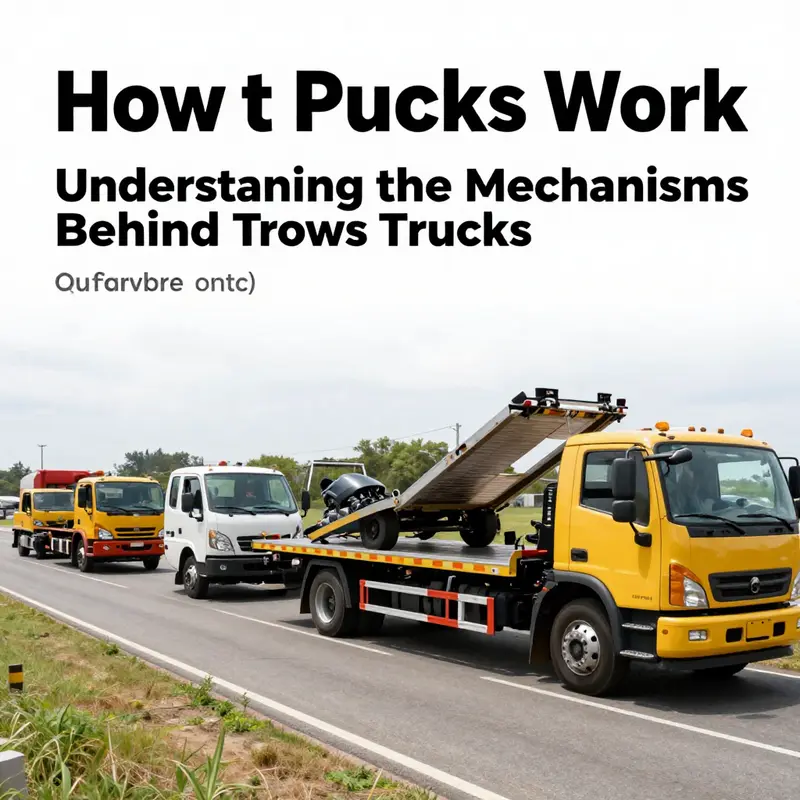
Tow trucks function as practical laboratories on wheels, where power, hydraulics, and careful engineering converge to unlock recoveries that would otherwise require far more time, space, and risk. The heart of modern tow trucks is a hydraulic system that translates the energy of a diesel engine or electric motor into precise, controllable force. A robust pump pushes fluid into a network of valves and cylinders, lifting booms, extending winches, tilting beds, and, in the most capable machines, rotating the entire assembly. This hydraulic backbone is complemented by a dizzying array of attachments and safety features, all designed to perform specific tasks while protecting the damaged vehicle, the operator, and the surrounding scene. It is within this integrated design—engine, hydraulics, controls, and attachments—that the variety among tow trucks finds its purpose and its reason for existing, turning a roadside breakdown into a controlled recovery that preserves value and minimizes further harm.
Flatbed tow trucks, often the most recognizable, center their reputation on the hydraulically operated tilting and retractable bed. The process begins with the bed lowering toward ground level, a deliberate maneuver that allows the disabled vehicle to be driven or winched directly onto the platform. Once the vehicle is aboard, the bed rises and slides back into a locked position, bringing the entire car off the ground so there is no contact between the tires and the road surface. This approach is especially valuable for AWD or low-clearance vehicles, where even a small ground-contact mishap can cause suspension or drivetrain concerns. The absence of tire-on-road contact mitigates wear and tear and enables safer long-distance towing, preserving alignment and avoiding post-accident aggravation. The flatbed’s versatility also shines in delicate operations, such as recovering a luxury car with sensitive undercarriage components or lifting a vehicle from uneven terrain where a conventional tow bar would struggle.
Yet a flatbed is not simply a single mechanical act; it is a coordinated sequence of hydraulic actions, chassis stability measures, and securement procedures. As the bed tilts, outriggers or stabilizers may deploy to anchor the truck and prevent sway while the bed pivots. The operator’s hands work within a control panel that translates intent into movement, often through joystick-like devices that command individual hydraulic circuits for the bed, the winch, and the vehicle restraint systems. The winch, if needed, doubles as a backup for loading or securing a vehicle whose tires are flat or mired. Chains, straps, and progressive anchor points ensure the towed vehicle remains stationary relative to the bed. The logic is simple in principle but exacting in execution: move with the yard, secure with redundancy, and transport with the vehicle locked and protected from shifting or snagging during transit. The safety calculus grows more complex as the bed’s length increases or when it must interface with a vehicle that is crooked, damaged, or partially off the roadway. In such cases, the operator may rely on additional stabilizing features and careful weight distribution to keep the truck himself stable while the recovery completes.
Wheel-lift tow trucks, sometimes known informally as boom or wheel-lift units, present a contrasting approach that emphasizes speed and accessibility over the absolute protection of a flatbed. Instead of sliding the entire vehicle onto a bed, these trucks employ a hydraulic boom mounted at the front of the chassis to lift one or both front wheels off the ground. The disabled vehicle is then pulled forward, with the rear wheels continuing to bear load and drag along the pavement. The wheel-lift method excels in roadside scenarios where time is of the essence and space is constrained—urban streets, highway shoulders, and cramped driveway recoveries. With a quick attachment and a straightforward lift, responders can reposition a vehicle and clear lanes rapidly, often in the same response window. The speed advantage comes with tradeoffs. Ground contact with tires and wheels remains during transport, which can introduce scuffing, tire wear, or suspensions stress on certain vehicles. Road debris, potholes, or aggressive steering maneuvers can amplify those risks, making wheel-lift less suitable for high-end or sensitive vehicles. Nonetheless, for many everyday recoveries, the wheel-lift’s balance of speed, reach, and flexibility makes it a workhorse in the field.
In a wheel-lift setup, the hydraulic system powers the front or rear lifting yoke, a robust cradle that clamps around a wheel or wheels. The operator maneuvers the truck so that the wheels rest securely on a dolly or other support, then pulls the vehicle toward the bed or away from danger. This arrangement requires careful monitoring of the vehicle’s brake lines, steering linkage, and suspension during travel. The operator must anticipate the shifting mass as the vehicle is dragged, making steadiness and planning essential components of a successful tow. The wheel-lift’s practicality extends beyond quick roadside help; it is well-suited to containment tasks where a driver needs to secure a vehicle quickly before maneuvering it into a garage or lot. It also serves as a bridge to more complex operations when combined with other equipment on a fleet, allowing responders to stage a recovery before a full bed load is prepared.
Rotator tow trucks represent the apex of capability, where lifting, extending, and rotating occur in a seamless, often multi-axis sequence. The rotating boom is the signature feature that truly sets rotators apart. This apparatus gives operators nearly unlimited reach and control, enabling them to lift a vehicle from awkward spots, right it after an overturn, or reposition a damaged car so it can be escorted from a precarious location. The 360-degree rotation allows a recovery to be staged from multiple angles, offering access around obstacles like traffic barriers, ditches, or uneven terrain. The complexity of the rotator is matched by its cost and maintenance demands. The hydraulic circuits are more intricate, the control systems more sophisticated, and the stabilized base—often with outriggers—needs precise calibration to prevent any shift of weight during rotation. Rotators require seasoned operators who can manage the load in real time, balancing speed with safety and ensuring that the vehicle remains secure while being repositioned. The benefits, however, are undeniable when the scenario involves heavy or awkwardly situated wreckage, overturned cars, or vehicles wedged in challenging locations. In such cases, a rotator can transform what would otherwise be a hazardous, multi-day operation into a single, carefully orchestrated maneuver.
Self-loader tow trucks take a different path altogether, prioritizing autonomy and the ability to load without external assistance. These units are designed for heavy-duty industrial applications where efficiency and independence are paramount. A built-in winch and hydraulic lift mechanism work in concert to pull a vehicle onto the truck without requiring a separate hoist or crane. Self-loaders are common in mining, construction, and large-scale logistics where oversized or heavily damaged vehicles demand rapid, self-contained recovery. The internal loading systems reduce the need for extra equipment and manpower, enabling a single operator to complete complex tasks with a compact yet powerful machine. The trade-offs here revolve around space, maneuverability, and the sheer gravitational force required to move large objects. Self-loading units are heavier, less nimble in tight urban environments, and require a higher degree of skill to operate safely. Yet they stand as a crucial option when conventional trucks would struggle to reach or lift a particular load, making autonomy a decisive advantage in specific settings.
Integrated tow trucks, often referred to as small wreckers, strike a balance between size, maneuverability, and functional capability. They combine the essential elements of towing and wrecker functions within a compact, lightweight chassis. Their size and chassis design make them ideal for city centers, parking lots, and other congested spaces where larger trailers cannot safely operate. Integrated wreckers provide stability and agile handling, allowing responders to perform routine recoveries or short-distance transports without the bulk of a full-size flatbed or rotator. While they sacrifice some raw lifting capacity compared to larger units, they excel in environments where precision, speed, and parking feasibility matter most. The operator benefits from a straightforward control layout and a reliable feed of hydraulic power to the winch and arm assembly, which is sufficient for most everyday incidents while preserving capacity for more challenging scenarios should they arise.
Across these different configurations, a common thread runs through the entire fleet: hydraulic power is what makes modern tow trucks capable of turning a potentially chaotic scene into a controlled operation. The engine drives a hydraulic pump that pressurizes fluid, which then travels through valve banks to the lift arms, winches, and booms. The result is a predictable force vector that the operator can guide with precision. Controls—whether they are a set of toggles, joysticks, or a computerized interface—translate intent into movement, and the operator’s experience becomes the crucial link between raw power and a safe, efficient recovery. Added to this are safety systems that protect both people and machines. Load-sensing features adjust hydraulic pressure to avoid overloading and to protect the integrity of the vehicle and its surroundings. Outriggers and stabilizers increase the base area and reduce the risk of tipping during heavy lifts or rotations. Interlocks prevent certain movements while other systems are not in their proper state, ensuring that, for example, the bed cannot move while stabilizers are not deployed.
The decision of which type to deploy is not arbitrary. It hinges on task specifics—the vehicle’s condition, the environment, and the ultimate destination of the recovery. For a routine roadside assist where time and space are at a premium, a wheel-lift might be the most practical first choice. If the vehicle needs to be moved to a shop with minimal disturbance to its drivetrain, a flatbed becomes the safer option. The most challenging scenes—vehicles overturned on a slope, or cars wedged in a ditch—will push a crew toward a rotator, with its ability to maneuver the vehicle into a recoverable position from multiple angles. In industrial settings where speed and autonomy are essential, a self-loader can reduce operational complexity; in tight urban spaces, an integrated small wrecker may be the only feasible option. The logic behind selecting the equipment is not just about power; it is about risk, efficiency, and the likelihood of preserving the vehicle’s value after the incident. This is why, in professional practice, the choice of tow truck is almost as important as the choice of towing method itself.
For readers seeking practical perspectives on how these machines operate in real-life conditions, the industry has long documented case studies and field notes that illuminate decisions under pressure. The Island Tow Truck blog offers a window into urban recoveries, sharing insights into how fleets manage peak-hour incidents, coordinate with roadside assistance networks, and maintain safety while moving a wide range of vehicle types. The Island Tow Truck blog provides more than technical descriptions; it captures the judgment calls, the choreography of positioning, and the subtle art of making a complex operation look routine. While the chapter focuses on the mechanics and classifications of tow trucks, this blog speaks to the practical realities that operators encounter day after day, highlighting how theory translates into on-the-ground action.
As with any specialized field, standards and best practices evolve with experience and technology. The industry organizes its guidelines around safety, efficiency, and accountability, hosting official resources that detail performance benchmarks, maintenance schedules, and training requirements. To readers who want a consolidated reference point, the Towing Industry Association offers a framework for understanding what constitutes a well-designed recovery operation and how operators are expected to perform under a broad range of circumstances. These standards reinforce the idea that the hardware—the bed, the boom, the winch, and the hydraulics—is only part of what makes tow trucks effective. Training, procedure, and disciplined teamwork complete the picture, turning powerful machines into reliable partners in restoring order after a breakdown or crash. For further exploration of official guidelines and safety benchmarks, see the organization’s resources provided by industry associations and regulatory bodies.
In sum, the diverse landscape of tow trucks is a reflection of the varied challenges that highways, city streets, and industrial sites present. Flatbeds emphasize protection and long-distance transport; wheel-lifts prioritize speed and accessibility; rotators deliver unmatched reach and maneuverability for difficult recoveries; self-loaders enable autonomous, heavy-duty work; and integrated wreckers offer nimble performance in tight spaces. Each type harnesses the same fundamental principle: hydraulic systems converting energy into controlled force, guided by skilled operators who read scenes, anticipate risks, and execute plans with precision. The result is a fleet of tools that can adapt to almost any vehicle, almost any terrain, almost any setback—a critical capability for keeping roads open, accidents contained, and communities moving forward.
For readers who want to explore the wider context of how these machines are deployed in different settings, the discussion above provides a framework that links mechanical design to field practice. It moves beyond mere descriptions of hardware to reveal how equipment choice shapes the sequence of steps that clear a roadway, recover a stranded car, or reposition a damaged vehicle with minimum disruption. The next section will broaden the lens even further, looking at how these recovery tools fit into coordinated emergency-response strategies, the role of fleet readiness, and how operators balance rapid action with the careful, methodical routines that protect people and property on every rescue mission.
External resources offer further context and validation of these principles. For an overview of official guidelines and performance benchmarks related to wreckers and recovery operations, consult the industry association’s materials available online at https://www.tia.org/.
Fluid Power at the Front Lines: How Hydraulics Drive Tow Trucks from Lift to Rotation
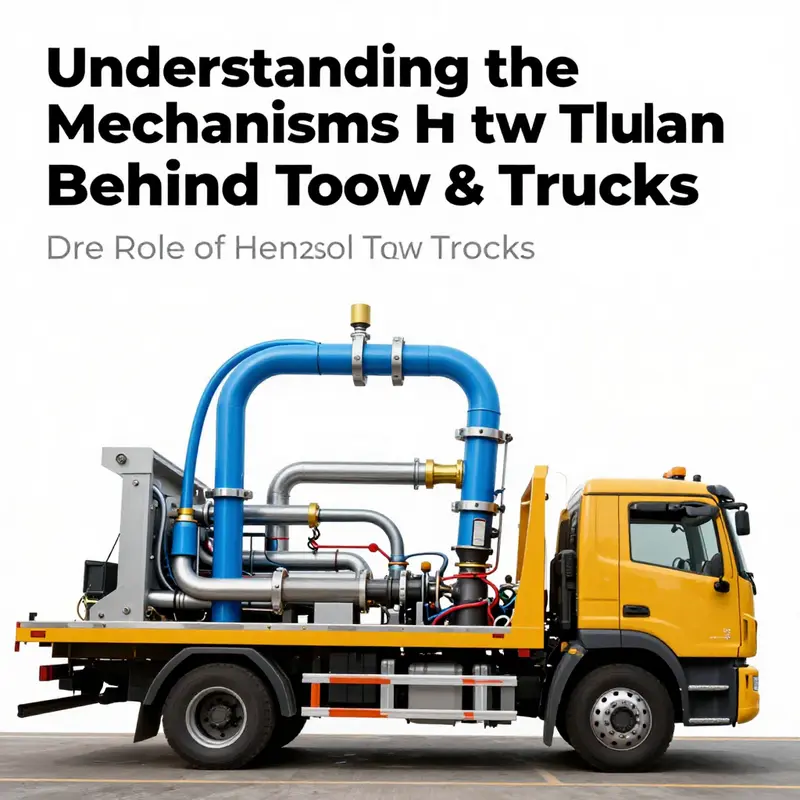
Hydraulic systems sit at the core of modern tow trucks, quietly converting heat and pressure into the concentrated force needed to lift, tilt, winch, and rotate vehicles in a way that preserves both the towed car and the recovery equipment. In the simplest terms, hydraulics rely on a sealed network of fluid-filled components that translate small inputs into large, controllable outputs. The basic science is timeless: when a pump pushes incompressible fluid through valves and hoses, the pressure rises and forces on cylinders or motors generate motion. In a tow truck, that flow becomes the engine of capability. It powers not just the obvious actions—raising a bed or lifting a car off the ground—but also the nuanced, almost choreography-like movements that recover a vehicle from a ditch, a ditch, or a stubborn side-slope. Across the fleet, hydraulics provide a common language of power that is both simple in principle and profound in practice. The most visible evidence of this power is the way a single hydraulic circuit can be allocated to multiple attachments: a tilting flatbed, a wheel-lift yoke, a rotating boom, and sometimes a separate winch that can be deployed in tight spots. Even though each tow truck type emphasizes different tasks, they share a hydraulic backbone that delivers the raw force with proportional control. A well-tuned hydraulic system uses variables—pressure, flow, and speed—to match the task at hand. When the operator commands a move, a pump sends pressurized fluid through a network of controlled channels. Valves, often integrated into a single hydraulic block or distributed along a manifold, determine which cylinder or motor receives fluid and in what sequence. The result is a precise, predictable movement. This reliability is crucial when a vehicle sits inches from a live lane or a cliff edge, and seconds count. The hydraulic heart of a tow truck is complemented by a sturdy mechanical frame, a robust powertrain, and a sophisticated operator’s cockpit. But it is the hydraulic actuation—the ability to smoothly extend a ram, tilt a bed, or rotate a heavy load—that makes the other systems possible. The fluid itself matters as much as the components surrounding it. The choice of hydraulic fluid—viscosity, temperature stability, and cleanliness—determines how quickly and cleanly a system responds under varying weather and road conditions. Cleanliness cannot be overstated. Contaminants in the fluid can lead to scoring inside cylinders, accelerated wear on seals, and erratic valve behavior that makes a task feel imprecise or dangerous. For this reason, maintenance routines emphasize regular reservoir checks, filter changes, and a disciplined approach to diagnosing leaks or foam in the reservoir. The aim is not just to fix what breaks but to preserve the subtle precision that sets professional recoveries apart from hurried, improvised moves. As with any highly specialized machine, hydraulic systems are only as good as their integration with the truck’s overall design. Cylinders, hoses, and fittings must be sized to the expected loads; hoses need to be routed to avoid heat buildup or pinching during dynamic angles; and the control strategies need to balance speed with safety. Control valves can be simple or highly sophisticated, providing proportional, pressure-compensated, or pilot-operated capability. Some systems feature load-sensing capabilities that sense the demand placed on the hydraulics and adjust the pump’s output accordingly. This prevents wasteful energy use and reduces heat buildup, extending the service life of components. It is in the details that hydraulics show their value: the way a bed’s lift cylinder responds to a driver’s command with a deliberate, almost graceful, perseverance; the way a wheel-lift system gently slides the yoke under a tire and lifts with a steady, controllable rise; the way a rotator’s hydraulic motors deliver smooth, continuous rotation without jerkiness even when the vehicle’s center of gravity shifts during a lift. On a modern job, these details translate into safer recoveries, faster task completion, and less strain on the truck’s structure. To appreciate how these systems function across different tow truck configurations, it helps to look at the core patterns of hydraulic use in the three principal types. Flatbed tow trucks center their work on a hydraulically operated deck. The bed tilts or slides, allowing an injured or disabled vehicle to be loaded without dragging on the ground. The operator ramps the car onto the platform, secures it with restraints, and then redraws the bed to its flat, carrying position. The hydraulic system must manage not only the weight transfer but also the subtle squaring of the deck as it returns to level. The load, the deck, and the vehicle all respond in a synchronized motion, requiring a pump capable of delivering steady flow and a control scheme that prevents sudden, destabilizing movements. Wheel-lift trucks, by contrast, rely on a fork-like yoke or cradling mechanism that slides under the vehicle’s wheels. Hydraulics raise the yoke, tilting and lifting the vehicle from one end. The precise grip on the wheel area is essential; any misalignment can cause the car to slip or shift during the lift, potentially damaging tires or suspension. Here, the hydraulics prioritize stability and finesse over the dramatic motion of a flatbed. Rotator trucks add another layer of complexity. Their hydraulics not only lift but also power a rotating platform or boom. This capability makes it possible to reposition a wrecked vehicle without extricating it into open space, which is especially valuable at accident scenes where space is constrained or safety considerations demand controlled maneuvering. The hydraulic circuitry for a rotator tends to be more advanced, with dedicated circuits for rotation and lift, tighter tolerances, and careful attention to torque transmission. Even with the best components, the human operator remains essential. The control in a hydraulic system is rarely sensational; it is measured, deliberate, and highly trained judgment expressed through small, well-timed inputs. The operator’s hands translate intention into pressure and flow, and the system responds with the precise motion that keeps a vehicle from being dropped, dragged, or wedged in a compromise position. This is where the practice of safety and procedural discipline becomes inseparable from hydraulics. In this context, the role of ergonomics and driver assistance technologies is increasingly important. Modern cabins are designed to reduce operator fatigue and to provide real-time diagnostics. They often feature improved visibility, better seating, and controls that reduce accidental jerks or mis-timings. Diagnostics help crews predict when seals are nearing fatigue, when fluid is overheating, or when a line might be approaching wear life. In the larger picture, hydraulics do more than move metal. They enable fleet operators to respond to emergencies with agility, to perform delicate recoveries that minimize damage to the towed vehicle, and to do so in ways that keep the operation compliant with road rules and safety guidelines. For readers seeking practical context on how these systems shape day-to-day fleet operations, the Island Tow Truck Blog offers accessible, real-world discussions about recovery work and equipment behavior. The Island Tow Truck Blog
Beyond the mechanics, the hydraulic backbone influences how a crew plans each recovery. Assessment begins with a quick, critical look at the vehicle’s position, its gravity vector, and potential points of restraint. The hydraulic system provides the power to respond to those assessments in real time: the ability to raise a bed just enough to clear a curb, to pivot a vehicle away from a shoulder, or to secure a heavy unit in a way that avoids twisting or bending the frame. The design intent is to deliver controlled, repeatable performance under a broad range of conditions. In practice, that means engineers specify cylinder bore sizes and stroke lengths that can lift the heaviest likely loads, while the pump’s displacement and the valve’s responsiveness ensure that the operator never feels like they are fighting inertia. The hydraulic network also has to survive the harsh environments that recovery work often introduces: dirt, moisture, road salt, and variable weather can accelerate wear. As a result, hoses and fittings are designed to resist abrasion and to cradle high-pressure lines without chafing. Heat management becomes a real concern when a system runs at high capacity for extended periods, so some configurations include cooling loops or heat exchangers to maintain performance and prevent breakdowns from thermal stress. In many ways, the hydraulic system sets the tempo of a rescue. When a scene demands a quick lift to free a vehicle from a sloped position, hydraulics enable speed without sacrificing precision. When delicate handling is required to reposition a damaged car onto a flatbed without further damage, hydraulics deliver the slow, controlled movement needed to keep everything aligned. The same system that allows a heavy boom to swivel into place can provide the torque and torque feedback to ensure the load remains balanced during rotation. The result is a versatile, resilient platform that can respond to a wide spectrum of challenges with a single, coherent mechanism. The relationship between hydraulics and safety in tow trucks runs deeper than the mechanical. Stability is not an afterthought but a design criterion. Outriggers, stabilizing legs, and load-bearing frames all work in concert with hydraulic pressure to anchor the vehicle during a lift or rotation. Pressure relief valves protect the system from overextension, while position sensors help the operator maintain awareness of the apparatus’ status. The combination of hardware and software creates a feedback loop: the more accurate the sensors, the more predictable the movement, which in turn reduces the risk of crosswinds, shifting loads, or sudden, violent motions that could endanger people nearby or cause further damage to the vehicle being recovered. The discipline of maintenance completes the picture. Operators rely on regularly scheduled checks of fluid levels, filter integrity, and hose condition. Any sign of contamination can compromise performance, leading to erratic movements or slower responses. A small leak might be invisible until it manifests as a slow, steady drop in the tool’s reliability, while a swollen hose can indicate internal damage that needs replacement before a failure occurs. Routine testing of hydraulic reach, lift limits, and rotation range helps identify misalignments or wear in the cylinders and joints. A well-maintained hydraulic system does not merely survive—it performs with a consistency that gives crews confidence during high-stakes recoveries. And as fleets evolve, so do the opportunities to refine hydraulic performance. Variable displacement pumps, servo-controlled valves, and improved filtration can reduce energy consumption, extend component life, and provide crisper control. Energy efficiency matters not only for the driver’s fuel bill but also for reducing heat generation that can shorten the life of seals and lubricants. In some modern configurations, electric drives or hybrid systems supplement the traditional engine-driven pump, delivering precise hydraulic power while keeping idle emissions down. While these advances promise clearer advantages, the fundamentals remain. A tow truck works because hydraulics deliver the force, the control, and the reliability needed to move a heavy, sometimes only partially accessible, vehicle without compromising safety. The operator translates intent into action, and the hydraulics translate action into steadiness, lift, and rotation. The result is a recovery operation that can be completed with assurance, even in the most challenging roadside or on-scene environments. For those who want a more technical deep dive into the hydraulics that underpin these capabilities, a thorough external resource provides an expert, detailed exploration of hydraulic system design, performance characteristics, and common uses. External reference: https://www.towtruckguide.com/hydraulic-systems-tow-trucks
Tow Truck Safety and Innovation: The Safety Layers Behind Effective Recovery
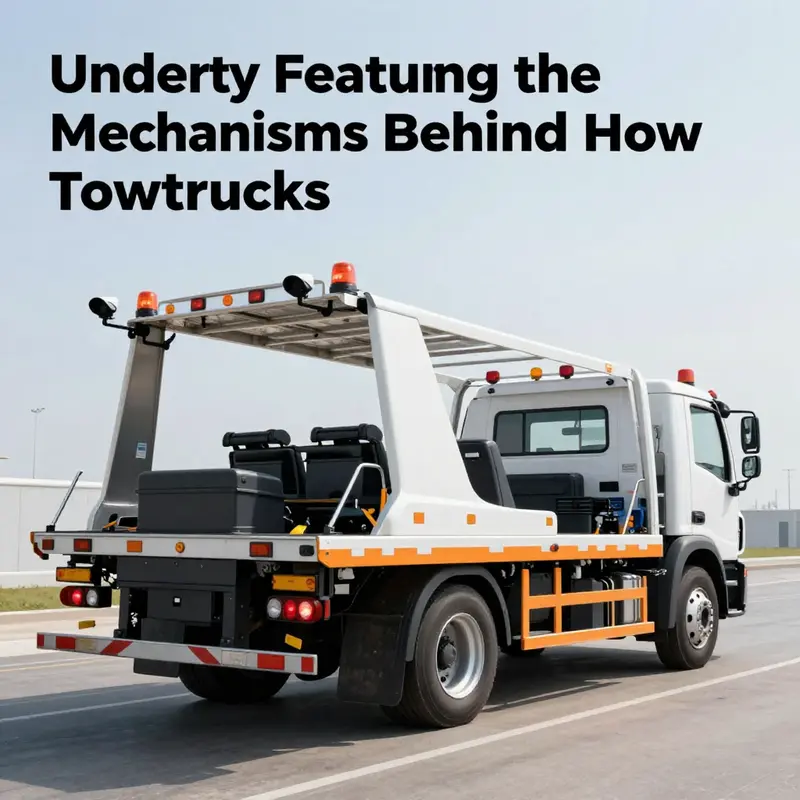
Tow trucks operate at the intersection of power, precision, and protection. Modern recovery vehicles integrate engine, hydraulics, cranes, winches, and stabilizers into a cohesive system designed for controlled motion and minimal risk. Safety features are embedded into the design from the first sketches through testing, enabling operators to carry out demanding recoveries with confidence and situational awareness. This chapter examines how safety innovations amplify capability without compromising people or the vehicle.
High-visibility safety begins before a wheel turns. Active lighting, reflective markings, and conspicuous silhouettes communicate intent to passing drivers. In poor light or adverse weather, coordinated beacons and running lights reduce the likelihood of secondary incidents and help the crew monitor reach, offset, and proximity during the recovery.
At the heart of lifting operations are the underlift and flatbed concepts. An underlift cradles the vehicle from beneath, enabling a controlled lift with minimal abrasion to the tires and drivetrain. A flatbed keeps the entire vehicle supported during transport, preventing drivetrain loading and reducing ground contact. Both approaches rely on precise hydraulics, smooth motion profiles, and secure attachment to manage load paths safely.
Safety interlocks and load sensors act as guardians for each sequence. Interlocks ensure steps are fully engaged before a machine advances, while load sensors provide real-time feedback to stop or slow motion if limits are approached. This reduces accidental bed movement and guards against overextension of booms and slides.
Modern winches add a layer of controlled force. Automatic braking and overload protection prevent abrupt jerks and help maintain a steady line of pull. The system works with stabilizers and the crane to keep a recovered vehicle stable across uneven terrain or awkward angles.
Diagnostics and telematics monitor the health of the truck from engine temperature to hydraulic pressures. Early warnings enable proactive maintenance and safer operations, translating to fewer roadside failures and more reliable performance on every call.
Operator ergonomics, driver assist features, and camera systems broaden awareness and reduce fatigue. Enhanced visibility, proximity sensing, and guided sequences support safe-to-perform actions, especially in constrained spaces or heavy traffic.
Finally, a safety-first mindset—rooted in training, pre-operation checks, and standardized procedures—binds hardware and human practice. When fleets embrace proactive risk assessment and continuous learning, the result is longer service life, fewer incidents, and a culture that treats safety as an enabler of faster, more confident recoveries.
For deeper context on engineering choices and safety margins across tow-truck architectures, consider exploring external resources that discuss system interactions, material durability, and performance characteristics in detail.
Final thoughts
Understanding how tow trucks work is essential for anyone involved in vehicle recovery or fleet management. From the mechanics and types of tow trucks to the importance of hydraulics and the latest safety innovations, these insights can help optimize operations, ensure safety, and enhance service efficiency. As auto repair shops, dealerships, property managers, and commercial fleet operators engage with these indispensable vehicles, embracing this knowledge can lead to improved service delivery and greater customer trust.