Navigating the licensing landscape for tow truck operations can be complex. Understanding whether tow truck drivers need a Commercial Driver’s License (CDL) is essential for fleet managers, towing companies, auto repair shops, car dealerships, and property managers. This article covers federal guidelines, state variations, vehicle weight classifications, employment implications, and safety requirements to help you stay compliant and operate more efficiently.
Heavy Hauls, Clear Credentials: Navigating CDL Requirements for Tow Truck Drivers
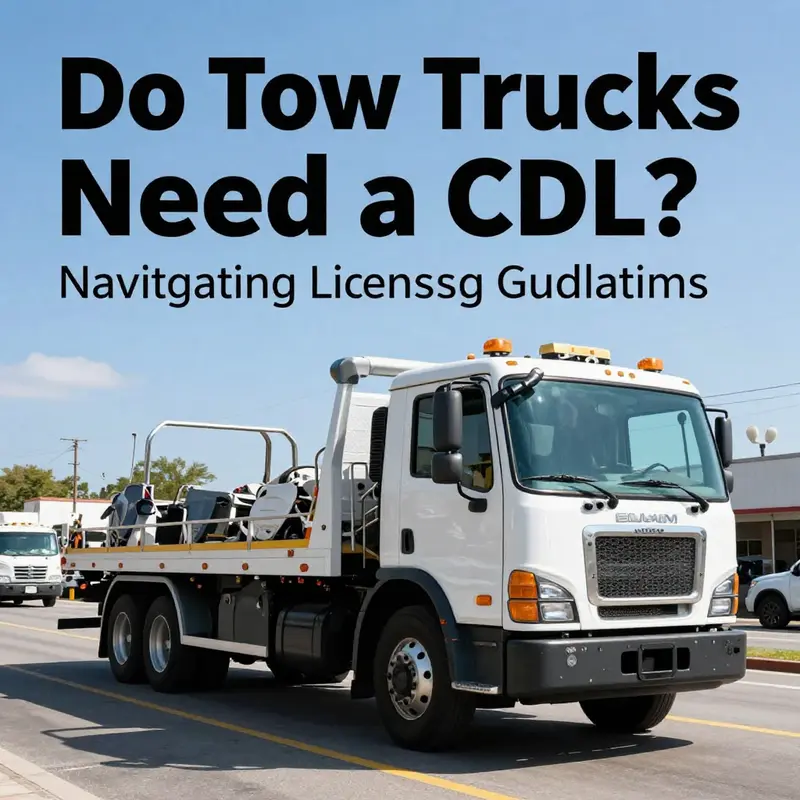
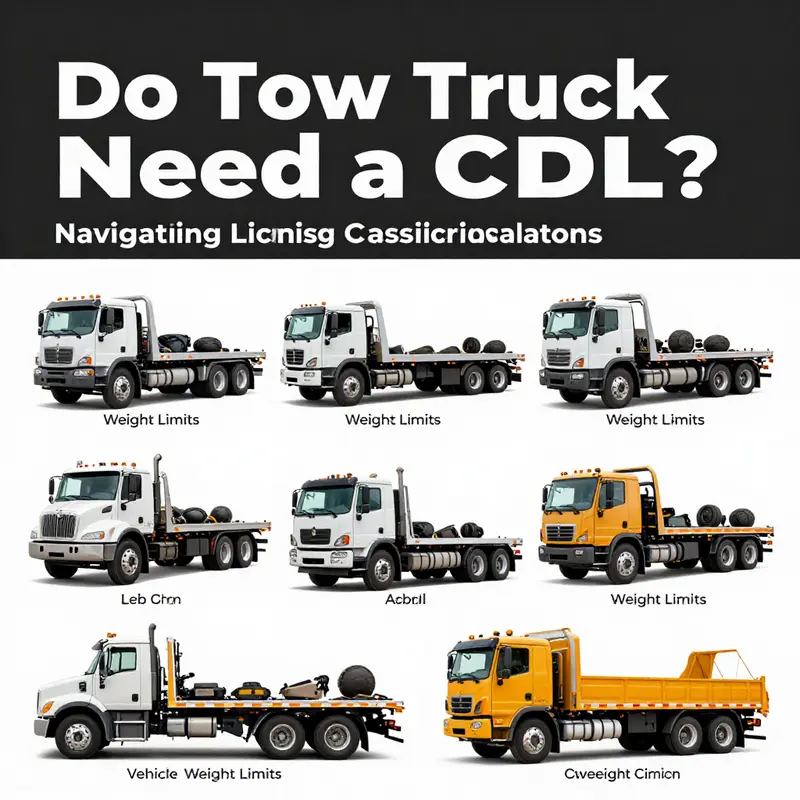
When people ask whether tow truck drivers need a CDL, the short answer is not a simple yes or no. The truth sits in the details of federal rules that define which commercial motor vehicles require a commercial driver’s license. The governing standard is the Gross Vehicle Weight Rating, or GVWR, of the vehicle a driver operates. Under federal guidelines, if a vehicle weighs 26,001 pounds or more on GVWR, a CDL is required. If the weight stays below that threshold, a license may not be mandatory. Tow trucks sit squarely in that gray zone, because their weight can swing widely depending on the design, the equipment on board, and any attached recovery gear. In practice, this means many heavy-duty tow trucks operate with a CDL, while smaller, lighter units often do not. The nuance matters, and it matters for consistency across fleets, for insurance, for driver training, and for the safety of the operators and everyone they share the road with. To understand how these rules apply in the real world, it helps to anchor the discussion in the FMCSA framework and to stay aware that state regulations can add layers on top of the federal baseline. For a broader discussion of tow truck operations and licensing considerations, see The Island Tow Truck Blog. The Island Tow Truck Blog https://theislandtowtruck.com/blog. At the heart of the FMCSA framework are classes of commercial driver Licenses. The DMV and federal agencies align on two primary categories that most tow operators will encounter in their day-to-day duties. First is the Class B CDL, which is required to operate any single vehicle with a GVWR of 26,001 pounds or more. This category also covers vehicles designed to transport 16 or more passengers, including the driver. In the us, tow trucks that conventionally meet or exceed that GVWR will typically require a Class B CDL to legally operate on public roads during regular business. The second category is Class C, which comes into play for vehicles that carry hazardous materials or transport 16 or more passengers, even if their GVWR falls below 26,001 pounds. In the context of tow work, Class C is far less common unless the vehicle is configured to haul hazardous materials or if a crew vehicle doubles as a transport for a large group of personnel. These distinctions matter for hiring decisions, fleet composition, and the kind of training drivers receive before they ever roll onto the street. For tow trucks, the practical implication is straightforward yet occasionally overlooked. If a tow truck’s GVWR is 26,001 pounds or more, the operator should hold a Class B CDL. This ensures the operator is tested and certified to handle a heavier, more complex vehicle on public roadways. If the GVWR remains below that threshold, a CDL may not be required by federal law, but the story does not end there. States frequently impose their own rules that complement or even tighten federal guidelines. Some states require CDL endorsements for specific towing configurations, or for commercial operations that regularly haul heavy loads, regardless of the GVWR of a single vehicle. The variance across states means a driver who moves between jurisdictions must be prepared to adjust to local rules, documentation demands, and training expectations. The fact that regulatory landscapes can differ from one state to the next underscores why drivers, fleet managers, and business owners must consult state departments of transportation or motor vehicle agencies for precise guidance. The transmission question is another important dimension that comes up in CDL discussions. A CDL issued after passing a skills test in an automatic transmission vehicle carries an E restriction, which prohibits the operator from driving a vehicle with a manual transmission unless the driver takes a separate test in a manual. In the world of tow trucks, this nuance matters more than a casual glance might suggest. Modern tow trucks are increasingly equipped with automatic transmissions for reliability and ease of operation in high-demand recovery scenarios. However, many fleets still rely on or retain manual transmission models for various reasons, including durability, control in difficult terrain, or the specific demands of certain recovery jobs. When a driver receives a CDL in an automatic, the E restriction is a tangible limiter on what they can legally operate without additional testing. If a technique or operation requires a manual gearshift, the driver must qualify for that capability through a separate, manual-transmission skills test. This dynamic can influence hiring decisions, fleet diversification, and even career progression for drivers who start with an automatic-trained credential but later transition to manual transmission vehicles. Beyond the weight and the transmission issue, the federal framework also nudges operators toward broader compliance practices that shape daily work. CDL status signals a baseline of training and evaluation. It implies that a driver has demonstrated the ability to operate a heavy vehicle safely, to handle the complexities of vehicle control, and to comply with hours-of-service rules, vehicle inspection standards, and safe loading practices. For owners and managers, a CDL-leaning approach can influence insurance premiums, risk management strategies, and the kinds of contracts the fleet can pursue. The driver’s license, in other words, is more than a credential; it is a gateway to certain kinds of work, a standard for safety, and a marker of professional capacity on busy highways, city streets, and rural corridors where tow operations often occur. Despite the clarity of the GVWR threshold, the real-world picture is rarely a straight line. The federal rulebook provides a robust baseline, but it does not exist in isolation. State-level enforcement, interpretation, and additions can tilt the balance toward CDL requirements even when the truck’s weight sits just underneath 26,001 pounds. Conversely, some states may grant more leeway for smaller fleets or for operations that stay within intrastate borders. This is where diligent due diligence becomes essential: fleets should map out the exact vehicle configurations they own or operate, verify the GVWR on each chassis, and confirm whether any attachments or equipment push the overall weight into a CDL-required category. A prudent operator does not rely on a memory or a generic rule; they reference the current, official guidelines and confirm with local authorities when in doubt. That diligence also extends to the practicalities of licensing. Obtaining a CDL is not a single leap but a process that involves demonstrations of knowledge and handling skill, a medical certificate, and compliance with federal and state testing requirements. The knowledge tests cover safe driving practices, regulations, and the specific operational considerations for CMVs. The skills test, conducted behind the wheel, validates a driver’s ability to maneuver, brake, and manage the vehicle under typical tow scenarios. Given the size and weight involved in a heavy tow truck, this testing is designed to mirror real-world conditions—from complex recoveries on busy highways to precise maneuvering in tight spaces at accident scenes or on busy commercial lots. And because health and fitness are integral to safe driving, the medical certification required for CDL holders ensures drivers are physically capable of handling the demands of the job, including long hours on the road, fluctuating temperatures, and the stress of emergency recoveries. The intersection of federal guidelines and state policies means every tow operator benefits from a proactive, layered compliance mindset. Fleets that maintain a clear inventory of vehicle GVWRs, stay current on any state amendments, and document driver qualifications with precision position themselves to avoid missteps that could delay a service call or complicate a regulatory audit. For drivers, awareness of the E restriction, the possibility of needing a manual-transmission test, and the understanding that a CDL is tied to the vehicle’s weight all contribute to a more predictable and safer career path. The professional implications extend to day-to-day operations: who can drive what vehicle, how shifts are configured, and how teams are organized to maximize safety and efficiency in demanding tow scenarios. The end result is a workforce that can respond swiftly and safely, regardless of whether a call comes from a roadside immobilization, an accident scene, or a complex recovery operation on a city street. Within this framework, it is useful to think of the CDL decision as a spectrum rather than a binary choice. On one end sits the small, light-duty tow vehicle that may not require a CDL, depending on GVWR and state rules. On the other end sits the heavy-duty tow truck whose GVWR clearly crosses 26,001 pounds and requires a Class B CDL. In many fleets, the distinction guides everything from maintenance planning and driver recruitment to insurance coverage and compliance audits. It can also influence a driver’s onboarding path. A prospective tow operator who anticipates working on heavier trucks will pursue CDL eligibility from the start, while someone focused on lighter gear may head into the industry with different training priorities. And because regulations evolve, ongoing education becomes integral to maintaining compliance, not merely a one-time certification event. The FMCSA remains the most authoritative source on these rules, and it is wise to consult their current guidelines when planning staffing, equipment purchases, or expansion into heavier towing operations. The guidance emphasizes the weight-based approach and the accompanying restrictions, while also acknowledging the practical realities of tow work and the need for flexibility within state frameworks. In other words, the CDL question is not a static checkbox; it is a dynamic decision shaped by vehicle specifications, job requirements, and the regulatory environment in which a tow business operates. For readers seeking the formal reference, the official FMCSA portal is the essential touchpoint for the latest CDL classifications, endorsements, and testing prerequisites. The essential touchpoints: https://www.fmcsa.dot.gov/ As you consider a career in towing or the licensing choices for a fleet, remember that the weight threshold is the anchor. A vehicle with a GVWR of 26,001 pounds or more typically triggers the Class B CDL requirement, while Class C applies when hazardous materials or large passenger transport are involved. The automatic-versus-manual transmission nuance adds a practical layer to licensing decisions, with an automatic-tested CDL carrying an E restriction that can shape the kinds of tow trucks a driver is authorized to operate without further testing. And because state rules can shift, the most reliable approach is to verify with the relevant state agency and to maintain ongoing compliance documentation. In the end, the CDL decision is a marker of professional capability, safety accountability, and readiness to meet the demanding, high-stakes demands of tow work across the United States.
Weight, Law, and the Wheel: How CDL Rules Shape Tow Truck Operations Across State Lines
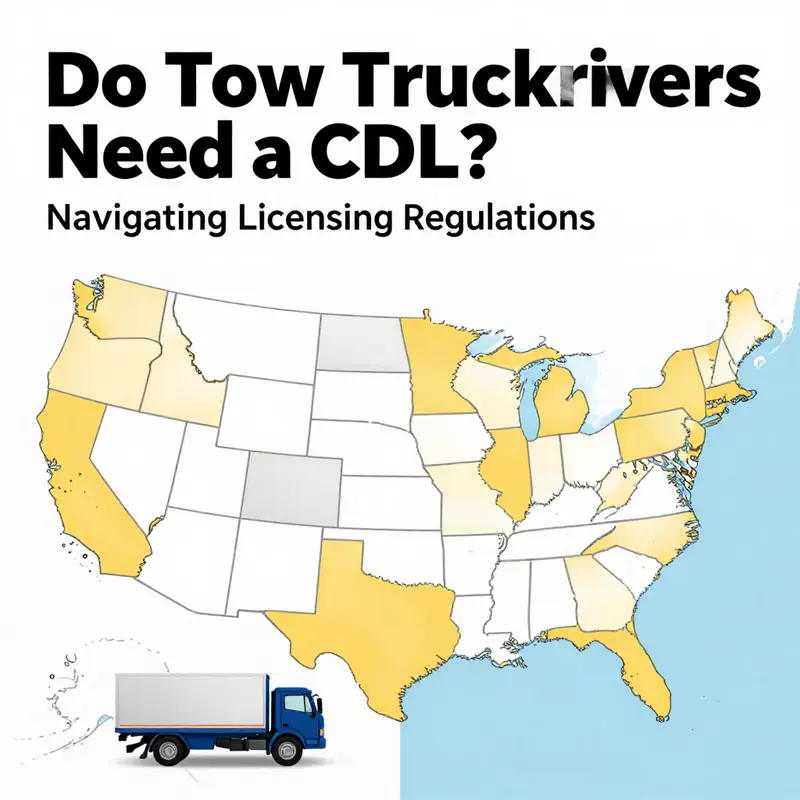
The question of whether tow truck drivers need a commercial driver’s license (CDL) is not a simple yes-or-no decision. It rests on a careful reading of weight thresholds, vehicle configurations, and the particular rules that each state enforces. At the heart of the matter is the federal standard: if a vehicle has a gross vehicle weight rating (GVWR) over 26,000 pounds, a CDL is typically required. This rule also becomes more nuanced when a tow truck is operating in a specific towing configuration, or when the load includes hazardous materials, which can trigger additional endorsements. The consequence is that the same heavy tow truck might demand a CDL in one state and be treated more leniently in another. Operators and drivers who anticipate movement across state lines or who manage a fleet that spans multiple jurisdictions must understand not only the letter of the law but also how it is interpreted at the state level. In practice, this means that a garage or dispatch office cannot rely on a single, nationwide standard; instead, it must map the GVWR of every vehicle in its fleet to the licensing rules in each state where the vehicle will operate. The emphasis on GVWR rather than mere vehicle size is essential. GVWR is the rating set by the manufacturer, reflecting the maximum combined weight of the vehicle and its payload, including fuel, passengers, and cargo. When that rating crosses the 26,000-pound line, the federal baseline typically comes into play and prompts a CDL requirement. But states implement and enforce that baseline in their own ways, and they may incorporate additional factors such as the tow truck’s configuration, purpose, and the kind of load it hauls. This is why an operator’s compliance program needs to be state-aware, not just federally informed.
In states where the law is explicit, the practical impact is straightforward: heavy-duty tow trucks commonly fall into CDL territory, while lighter, lighter-duty configurations may ride under the threshold. Yet the nuance lies in the kinds of operations that a tow truck performs. A wrecker used for heavy-duty recovery may be subject to CDL requirements not merely because of the vehicle’s GVWR, but because the work involves moving vehicles loaded with potentially hazardous materials, or because the towing operation requires special endorsements or extra training. The presence of a towed vehicle also matters. When a combination of vehicles results in a combination GVWR that exceeds 26,000 pounds, a CDL is generally required. In contrast, a single vehicle—such as a heavy tow truck used to recover vehicles—may require a CDL depending on how it is classified in a given state’s licensing framework. This is one of the reasons why state regulators emphasize vehicle classification and the precise operation of the vehicle, not just its physical heft.
California, a large and complex state for transportation rules, illustrates how nuanced this issue can be. In California, a standard driver’s license covers many tow-truck operations, particularly those that stay within GVWR lower than the CDL threshold. However, if the tow truck exceeds the specified weight or is used to transport hazardous materials, a CDL becomes mandatory. Even in California, there are gray areas: certain specialized towing operations—such as wreckers or heavy-duty recovery vehicles—may require a CDL even if the vehicle itself does not exceed the weight limit, depending on the load or equipment employed. The state thus sets a baseline that favors practical oversight: for routine light-to-moderate towing tasks, a regular license is often enough; for high-risk or heavy-duty scenarios, the CDL’s rigorous standards apply. The result is a tiered approach that rewards clarity for everyday tasks while maintaining strict controls where the stakes are highest. In this light, California’s framework encourages tow operators to conduct a careful inventory of fleet capabilities and intended work profiles before assuming a license is unnecessary.
Across Texas and New York, the landscape shifts in a more stringent direction. In these states, CDL requirements tend to apply more broadly to larger tow trucks, regardless of the precise cargo carried at any given moment. The practical effect is that a vehicle that might be considered a “light-duty” tow truck by one state could be treated as CDL-requiring in another if it meets the state’s criteria for large vehicles or for specialized towing tasks. This divergence reflects broader regional approaches to road safety and commercial vehicle oversight, where enforcement patterns, traffic density, and incident history influence how strictly the rules are applied. The imbalance among states is not accidental; it mirrors different transportation priorities and regulatory philosophies. For drivers operating in or between these jurisdictions, the difference is real: the same vehicle can be legal one day and require a CDL the next, simply because the state where the operation takes place classifies the vehicle differently.
Smaller states add another layer of complexity. In some jurisdictions, non-CDL operation remains permissible for light-duty tow trucks, but under specific conditions. Those conditions typically involve the vehicle’s GVWR, the nature of the cargo, and the driver’s qualifications. Where this flexibility exists, it is often accompanied by a stronger emphasis on safety training, clean driving records, and documented experience. In practice, this means that even when a CDL is not legally mandatory, employers frequently prefer applicants who hold a CDL or who have demonstrated professional commitment through endorsements, certifications, or a history of safe operation. The result is a talent landscape where state rules and employer expectations converge. The best-informed drivers routinely pursue credentialing not only to meet minimum legal requirements but to gain a competitive edge in a tight labor market and to project reliability to clients who rely on timely, safe, and compliant towing services.
Given this patchwork of rules, the most responsible course for any tow-truck operator is to verify the precise requirements with the state’s driving authority, typically the DMV or an equivalent transportation department. The official guidance from state authorities forms the backbone of daily practice. It clarifies whether a CDL is needed for a particular vehicle, what classes or endorsements apply, and what documentation must accompany operation in specific situations. Even with general guidelines in hand, a prudent operator creates an internal checklist: first, identify the vehicle’s GVWR; second, confirm the intended use and towing configuration; third, review any hazardous materials or passenger-carrying considerations; and fourth, consult the state’s licensing database to confirm current requirements. This proactive approach reduces the risk of penalties, insurance complications, or downtime due to regulatory misinterpretation. It also helps fleets maintain consistent standards as they expand into new markets or adapt to evolving state laws, a scenario increasingly common in an industry that moves with the pace of roadways and emergency responses.
From a practical standpoint, many hiring managers and fleet operators also weigh non-legal factors when deciding whether to require a CDL. Even if the law does not mandate a CDL for a given operation, an employer may prefer a driver with a clean driving record, documented on-the-job training, or familiarity with industry best practices. Regulatory compliance and risk management go hand in hand with customer assurance; fleets often consider licensing status as a proxy for reliability. In addition to the CDL decision, endorsements may come into play. Tank vehicle endorsements (N) or tank-and-hazmat combinations (X) could become relevant if a tow operation involves transporting hazardous liquids or other regulated materials. Passenger endorsements (P) might enter the picture if a tow truck is designed to carry multiple crew members or is used in roadside emergency response scenarios that involve public safety roles. In every case, the central message remains constant: licensing is a signal of capability and accountability, and it becomes more valuable when a driver’s duties extend beyond basic vehicle movement into more complex, higher-stakes tasks.
The cumulative takeaway from this state-by-state look is that the question “Do tow truck drivers need a CDL?” does not admit a single universal answer. It requires a careful synthesis of the vehicle’s GVWR, the configuration of the towing system, the nature of the towed load, and the regulatory posture of the state in which the work occurs. Operators who plan for cross-state operations, or who intend to adapt to more demanding workloads, will find it prudent to align their fleets with CDL requirements as a precautionary strategy. Doing so not only mitigates legal risk but also expands the pool of qualified drivers and enhances overall fleet credibility with clients and insurers. In short, the weight of the vehicle often points toward a CDL, but the law in each state adds its own weight to that conclusion. The sensible path is to treat CDL status as a core part of fleet planning, not as an afterthought.
For readers seeking practical next steps, a quick, targeted familiarity with state-specific rules can go a long way. Start by identifying each vehicle’s GVWR and the exact towing configuration. Then verify, in writing, whether the state requires a CDL for that configuration and whether endorsements might be needed. If a vehicle operates across multiple states, construct a state-by-state matrix that captures the relevant classifications and endorsements. It is equally important to maintain updated records of license statuses and any changes in the law that could affect the operation. The dynamic nature of transportation regulation means that periodic reviews should be built into company processes, ideally with a scheduled annual compliance check. When the matter concerns public safety and professional responsibility, a proactive compliance culture yields dividends in safety, reliability, and customer trust. For the broader reader exploring how this topic fits into the industry landscape, this chapter connects with the ongoing conversations about safety standards, training, and fleet readiness that appear across tow-recovery forums and professional networks, including ongoing discussions at industry resources like the Island Tow Truck community, which offer broader perspectives on how to manage equipment and crews in demanding environments. See the dedicated blog for further context on industry practices and evolving standards: theislandtowtruck.com/blog/.
As regulations evolve and as fleets expand to meet the demands of road coverage and emergency response, the CDL question remains a pivotal anchor for planning and operations. The road ahead for tow-truck professionals hinges on a clear understanding of weight classifications, a disciplined approach to licensing, and a readiness to adapt to state-by-state variations. In embracing that approach, operators can ensure not only compliance but also the confidence of customers who rely on timely, capable, and safe roadside assistance—and that is the key to sustaining trust in a service that people depend on when every moment counts. External resources and updates, including state DMV guidelines and federal guidance, should be consulted regularly to keep the fleet aligned with current requirements and best practices. For further reading on how this landscape plays out for California specifically, see industry insights and career guidance at the external resource linked below.
External resource: https://www.indeed.com/career-advice/finding-a-job/how-to-become-a-tow-truck-driver-in-california
null
null
Steering Toward Opportunity: CDL Requirements, Weight Limits, and Career Growth for Tow Truck Drivers
Tow truck work sits at a crossroads of mechanical skill, quick decision making, and regulatory navigation. A question that surfaces frequently among newcomers and even seasoned operators is whether a Commercial Driver’s License (CDL) is necessary to do the job. The honest answer is nuanced: it hinges on the size and weight of the tow truck, the kind of towing operation, and the specific rules that govern a driver’s jurisdiction. Yet within that nuance lies a straightforward reality—CDL status can dramatically broaden or narrow a tow driver’s opportunities, shaping everything from daily assignments to long-term career trajectories. This chapter follows that logic, tracing how weight thresholds translate into licensing requirements, and how those requirements ripple through hiring, training, earnings, and the broader arc of a tow truck career.
Federal law centers the CDL question on the Gross Vehicle Weight Rating (GVWR) of the vehicle a driver operates. In general terms, any commercial motor vehicle with a GVWR of 26,001 pounds or more falls under CDL requirements. In practical terms, that means many heavy wreckers, rotators, and multi-vehicle recovery units used by large towing operations are CDL-bound equipment. Operators who routinely haul heavy machinery, big construction trucks, or large commercial trailers will likely need a Class A or Class B CDL, depending on the exact configuration and combinations of vehicles involved. The weight threshold is a blunt, high-stakes bar: cross it, and the foundation of your licensing changes, along with the script of jobs you can legally perform.
But the border lines aren’t painted in one color for every operator. Lighter or medium-duty tow trucks—those with GVWR below 26,001 pounds—often fall outside the CDL requirement. In these cases, a standard state driver’s license may suffice, provided the operator doesn’t exceed the GVWR in routine work. This distinction matters not just for legality, but for the speed and affordability of entering the field. For many people, a non-CDL path means quicker entry into local towing companies or roadside assistance services. It’s a practical doorway that keeps unemployment write-offs and barriers to industry entry relatively low, at least initially. Yet that doorway can swing shut just as quickly if the operator’s role expands to heavier gear or broader geographic coverage. The same truck that helps stranded motorists on a quiet urban street may, on a different day, require the heavier lifting of a CDL-compliant operation.
The correlation between truck size and licensing extends beyond mere weight. The types of duties a tow driver performs often map onto CDL classifications. A Class B CDL is typically required for a single vehicle with a GVWR of 26,001 pounds or more, while a Class A CDL covers combination vehicles where the total weight exceeds 26,001 pounds. In the towing world, that means a standard single-wrecker might fall under a Class B, whereas a tractor-trailer combination, or a large flatbed paired with a separate transport unit, could necessitate Class A credentials. These classifications unlock different career lanes. With a Class B, a driver can pursue heavy-duty heavy wreckers, single-vehicle recoveries, and specialized local services. A Class A opens doors to long-haul work, multi-vehicle recoveries, fleet maintenance roles, and more complex logistics operations that move across state lines and into national networks.
The practical implications extend to how fleets evaluate candidates. In many districts, hiring managers look for CDL status as a signal of readiness to handle heavy loads, comply with hours-of-service rules, and manage the safety complexities that accompany heavier equipment. Even in markets where the law doesn’t mandate a CDL for certain weights, many employers require CDL or serious progress toward it. They want drivers who can demonstrate a level of discipline, training, and safety planning that aligns with operating heavy machinery in traffic, during night shifts, and under the pressure of roadside emergencies. That preference is why many aspiring tow truck operators see obtaining a CDL as a strategic investment in their longer-term prospects, not merely a regulatory checkbox.
Another layer to consider is the restricted operation that can accompany a CDL, particularly when a driver has earned the license but trained on an automatic transmission vehicle. If a driver completes the CDL skills test in an automatic transmission vehicle, the license may carry an “E” restriction, which prohibits operation of manual transmission trucks. That restriction can erode job opportunities in fleets that still rely on manual transmissions—especially in rural or older equipment inventories where mechanics have kept manual units in service longer. For someone planning a broad career path in towing, the mitigation is simple in theory and practical in practice: train on both automatic and manual transmissions when possible, or at least recognize that a future employer could prefer or require manual-capable operators.
Beyond mere licensing, the CDL journey often opens doors to more advanced roles that offer greater responsibility and higher pay. CDL holders frequently qualify for long-haul towing assignments, safety and compliance oversight within fleets, or specialized recovery operations that demand careful load securement, weight distribution expertise, and knowledge of transport regulations across state lines. Even within local and regional work, the additional credential can translate into higher wages, more consistent shifts, and a broader set of job opportunities, including night and on-call rotations that are essential in emergency response scenarios. The credential’s value compounds when a driver seeks career mobility—wanting to move from a small-town service into a larger regional operation or to pivot into fleet maintenance oversight after years behind the wheel.
Keep in mind that the licensing landscape is not uniform. States can and do adapt their rules in response to evolving safety concerns, driver shortages, and the needs of local industries. The essential takeaway is this: a driver should verify the exact requirements with the state’s department of motor vehicles or equivalent agency, and assess how those rules align with the kinds of towing work they want to pursue. For many, the impetus to obtain a CDL grows when looking at the broader ecosystem of work—auto repair yards, insurance-backed recovery teams, municipal fleets, and private fleet services—where the weight of the trucks and the complexity of the recoveries demand higher compliance standards and more formal training. In those contexts, a CDL is less a hurdle and more a gateway to consistent employment and career continuity.
The path to credentialing typically includes training programs that cover more than driving skill alone. Aspiring tow truck drivers must often pass medical examinations, obtain a commercial learner’s permit, complete a rigorous knowledge test, and perform a road test that demonstrates both practical driving capability and vehicle control under challenging conditions. Training emphasizes not only maneuvering a heavy machine but also the critical safety aspects: proper hook-up and load securement, understanding of payload limits, brake and tire inspections, and the nuanced rules governing highway and municipal operations. The more comprehensive a driver’s training, the better prepared they will be to handle the unpredictable demands of the road, the accident scene, and the roadside. In the long run, investing in training is an investment in reliability—both for the driver and the fleet that hires them.
Cost and time are practical considerations that can influence when and whether someone pursues a CDL. Training programs range from community college courses to private CDL academies, often priced to reflect length, location, and the breadth of behind-the-wheel time offered. Timeframes can stretch from a few weeks to several months, depending on the schedule, the driver’s prior experience, and the readiness to pass the required medical, knowledge, and skills tests. While the upfront investment can seem daunting, the payoff frequently appears in subsequent job offers, wages, and the ability to move between roles that require different weight capacities. For many drivers, the CDL becomes a professional asset that remains valuable across multiple employers, locations, and types of recovery work.
The decision to pursue a CDL is also tied to the broader realities of the towing industry. Regulatory expectations, insurance premiums, and fleet safety programs often create incentives for CDL holders to maintain current credentials and participate in ongoing safety training. Fleets may favor drivers who bring both compliance discipline and hands-on expertise to complex recoveries. In a market where accidents, weather, and high-stakes roadside incidents drive demand, the CDL’s promise of safety and predictability becomes a critical differentiator. For a driver weighing local convenience against long-range opportunity, the CDL can tilt the balance toward a more durable, portable career—one that travels with the driver wherever heavy-duty towing needs arise, whether in a bustling city corridor or along interstates carved through rural landscapes.
As you consider your own path, it helps to reflect on where you want to grow. If your goal is to stay within local, smaller-tow operations, a non-CDL track may suit you for the early years, provided you’re comfortable with a narrower range of duties. If, however, you see yourself moving into larger fleets, cross-state work, or more complex recoveries, a CDL—especially Class B or Class A—will widen your horizon and deepen your market value. Even if you begin with a lighter unit, the confidence and competence you gain through CDL training can position you for promotions into fleet supervision, safety coordination, or shop-based roles that support operations and maintenance. The bottom line is this: the CDL changes your candidacy from “one of many” to “a driver with proven capacity for heavier work, higher safety standards, and a broader range of assignments,” and that shift matters when competition for jobs grows tighter.
For readers seeking practical next steps, the practical guidance is to verify state requirements, seek reputable CDL training programs, and consider how the license will align with your desired career arc. You can also explore broader fleet-management and emergency-response perspectives to build a more resilient skill set. One useful starting point for broader industry context is the Island Tow Truck Blog, which offers insights into fleet operations and emergency-response strategies from a towing perspective. You can visit it at theislandtowtruck.com/blog.
In summary, the CDL decision is less about a universal rule and more about a strategic alignment between the weight of the equipment you operate and the career path you want to pursue. Light-duty tows may proceed with a standard license, while heavy-duty operations almost always require a CDL. The classes of CDL—Class B for many single heavy vehicles and Class A for combinations—map onto distinct job opportunities and earning potential. Restrictions such as transmission type can further influence which employers hire you, reinforcing the value of broad, hands-on training across different transmission systems. Ultimately, the CDL is a powerful lever for career growth in towing. It signals a commitment to safety, regulatory compliance, and professional versatility—three attributes that every fleet seeks in a driver who will respond to emergencies, protect lives, and keep commercial operations moving forward across diverse roadways and markets.
External resource: Indeed: A Complete Guide To Becoming a Tow Truck Driver
Weights, Licenses, and the Road Ahead: A Deep Dive into CDL Needs for Tow Truck Operators
The question of whether tow truck drivers need a CDL sits at the intersection of weight, responsibility, and the many rules that govern the road. It is not a simple yes or no, because the answer shifts with the specifics of the vehicle you drive, the load you tow, and the state in which you operate. For many operators, the deciding line is the GVWR of the power unit and, in some cases, the combined weight of the tow truck and the towed vehicle. Federal regulations set a baseline that makes this topic a safety matter as much as a compliance issue. Any driver operating a vehicle with a GVWR above 26,000 pounds is generally required to hold a CDL. This threshold creates a broad baseline that encompasses many heavy duty tow trucks, especially those used in wrecking, recovery, or long-distance tows where the equipment is substantial.
Yet many smaller tow trucks, designed to lift and tow within lighter weight limits, operate under state thresholds that may not mandate a CDL. The practical implication is that tow operators must know their truck’s weight and understand the rules where they drive, which often requires consulting local regulations and official guidance.
The range of tow trucks ranges from light/medium-duty rollback to heavy-duty wheel lift units. Operators perform everything from roadside assistance to complex accident scene management, which demands scene control, coordination with responders, and load security. The license that enables this work is a credential earned through training, medical certification, and safety standards.
State laws govern CDL eligibility, with a federal framework providing a baseline that states tailor. This means the same operator may be CDL-optional in one state and CDL-mandatory in another depending on the exact vehicle and load. A prudent operator reviews every vehicle’s GVWR, tracks the fleet’s combinations, and stays current with regulatory updates to anticipate whether a CDL is required. The aim is to minimize risk and avoid regulatory friction in assignments.
Concrete examples: in California, a CDL is typically required if the tow truck weighs more than 26,001 pounds, or if the combined weight with the towed vehicle exceeds that limit. The picture becomes more nuanced if hazardous materials are transported or passengers are carried. In those cases, CDL requirements can apply even where weight thresholds are not crossed. In practice, weight plus use matters most, and both the DMV and FMCSA set expectations for training, certification, and day-to-day duties.
Beyond the license class, a CDL carries responsibilities like vehicle inspections, hours-of-service compliance, medical certification, and ongoing training to maintain readiness for high-pressure tows and rescue scenarios. Adherence to regulations supports safer roadside operations and smoother audits. The reality for many tow operations is practical: if workloads stay within weight limits, a CDL may not be required, but a proactive safety program still matters. If new services or heavier equipment enter the fleet, CDL considerations often follow.
To stay prepared, operators should: identify the actual GVWR of every unit, confirm whether the combined weight with regular tows crosses 26,000 pounds, and recognize that use (hazmat or passengers) can trigger CDL needs regardless of weight. Stay informed about state-specific rules while following federal standards, and treat licensing as an ongoing component of safety planning rather than a one-time task. Regular inspections, updated training, and proactive fleet planning help ensure compliance and safety across the operation.
For those seeking guidance, official sources such as the state DMV and FMCSA provide the definitive requirements. A practical resource for safety-focused fleet planning can complement licensing considerations without replacing regulatory guidance. External links may be consulted as part of a broader safety program, but the primary authority remains the relevant state DMV portal and the FMCSA standards.
In short, licensing is a key element of safety but not the sole driver of capability. A CDL holder who follows medical, hours-of-service, and load-securement rules can handle high-risk tasks with greater confidence, while a qualified operator without a CDL can also perform well within weight limits when following regulations and best practices. The safest path is to review each vehicle and load in the fleet and verify the licensing requirements for your home state. This practice reduces regulatory risk and supports safe, reliable towing in all situations.
External resource for authoritative guidance: https://www.dmv.ca.gov/portal/
Final thoughts
Understanding when a CDL is required for tow truck drivers helps ensure compliance and informs hiring, scheduling, and safety practices. By recognizing federal guidelines, state variations, weight classifications, and the impact on employment, fleet operators can manage risk, improve operations, and maintain regulatory readiness as regulations evolve.