Stepping into the role of a tow truck driver is more than just handling vehicles; it’s about being a reliable lifeline for those in need, especially within our island community. As our local auto repair shops, car dealerships, property managers, resort operators, and commercial fleet operators heavily rely on this service, understanding how to become a tow truck driver is paramount. This article will guide you through critical steps including meeting age and licensing requirements, obtaining a commercial driver’s license (CDL), training and certification processes, and finally, exploring employment opportunities and essential skills needed. The future of safe and efficient towing starts with the right foundation.
Clear Road to the Cab: Age and Licensing Essentials for Aspiring Tow Truck Drivers
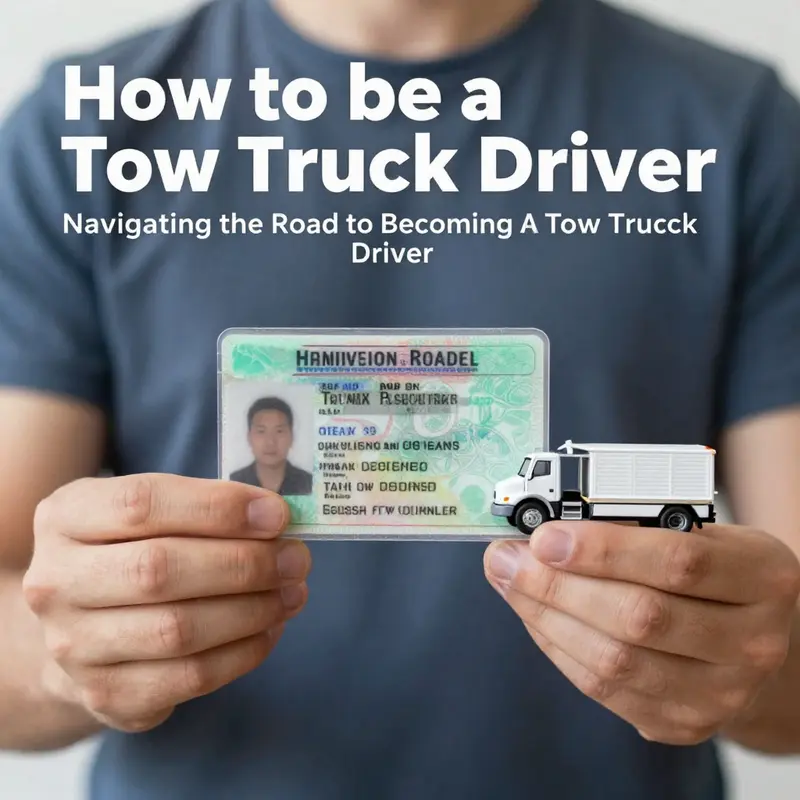
Becoming a tow truck driver starts with meeting simple but non-negotiable legal standards. These early requirements shape everything that follows: what vehicles you may operate, which employers will consider you, and whether you can work across county or state lines. This chapter walks through the age, license, medical, and background expectations you must satisfy before you can safely and legally earn a living towing vehicles.
Most places set a minimum age for commercial driving. Typically, that age is 18 years old for local, intrastate towing. If you want to cross state lines or haul certain types of freight, the bar is higher—21 years old. These thresholds are important because they determine the scope of your work from day one. If you’re 18 and eager to start, you can often drive within a single state, respond to local breakdowns, and tow lighter vehicles. Waiting until 21 expands your options to interstate jobs and roles that involve hazardous materials or larger, heavier rigs.
Before pursuing any tow-specific license, you must hold a valid state driver’s license. This is the foundational credential that a licensing office will expect. It’s a non-negotiable proof that you understand basic road rules and have demonstrated safe operation of a non-commercial vehicle. If your state license is suspended or revoked, you’ll be ineligible for commercial endorsements until your driving privileges are fully restored.
The next step is the Commercial Driver’s License, or CDL. Tow trucks are commercial vehicles, and in many cases they require a CDL because of their weight, configuration, or the nature of the work. CDLs come in classes—Class A, B, and C—each corresponding to different vehicle types and weight thresholds. Class B typically covers single vehicles with a gross vehicle weight rating (GVWR) over 26,000 pounds, which includes many single-unit heavy tow trucks. Class A covers combinations of vehicles where the towing unit exceeds that GVWR and the towed unit pushes the combined weight beyond the Class B limits. Class C is for smaller commercial vehicles or vehicles carrying hazardous materials or more than a fixed number of passengers. The class you need depends on your employer’s equipment and the vehicles you expect to tow.
Obtaining a CDL is a multi-part process. It begins with studying for and passing a knowledge test. This exam covers traffic laws, safe operation practices, and basic vehicle inspection procedures. Many state motor vehicle departments publish handbooks that summarize what you must know. After passing the knowledge test, you’ll get a permit that allows you to practice driving the larger vehicle under supervision.
Next is the skills test. It typically includes three components: a pre-trip inspection, basic control skills, and an on-road driving exam. In the pre-trip inspection, you’ll demonstrate your ability to recognize safety hazards and confirm the vehicle is safe to operate. Basic control skills may include backing, turning, and maneuvering through cones or other obstacles. The on-road test evaluates your ability to handle real traffic conditions while driving a commercial vehicle. Passing all three earns you the CDL class for which you tested.
Some tow trucks are equipped with specialized winches, wheel-lift systems, and heavy-duty recovery gear. Operating these safely can carry separate licensing implications. If your tow truck’s configuration or weight requires it, you may need a Class B CDL rather than a Class C. Employers will often specify which class they require during recruitment. If you plan to operate a rotator or a heavy recovery unit, expect to need higher class endorsements and more rigorous training.
In addition to a CDL, some jurisdictions maintain separate licensing for tow truck operators. Cities and counties may require a tow truck driver license or permit that focuses on local ordinances, business rules, and consumer protections. These local licenses verify that drivers understand area-specific regulations and that their operators are registered to work within the municipality. Always check municipal requirements when you plan to work in a specific city or county.
Medical fitness is another common requirement. Commercial drivers typically must pass a medical examination conducted by a qualified medical professional. The exam screens for conditions that could impair safe driving: vision, hearing, cardiovascular health, and neurological conditions, among others. You’ll receive a medical certificate if you pass, and employers usually require an up-to-date certificate on file. Maintaining medical fitness is ongoing; many states require periodic renewals to ensure continued ability to perform safely behind the wheel.
A clean driving record matters more than you might expect. Employers review your motor vehicle record to gauge your risk profile. Serious violations like DUIs, reckless driving, and multiple at-fault accidents can disqualify you from getting or keeping a CDL. Insurance companies consider driving records when underwriting coverage for towing operations, so employers often have strict criteria for the driving histories they accept. Even minor infractions can raise your insurance costs and narrow your job prospects.
Background checks and drug screening are standard. Towing companies frequently run criminal background checks and verify identity and residency. A history of convictions involving dishonesty or violent crimes can be disqualifying, especially for roles that involve customer interactions or access to private property. Drug and alcohol screening is commonly required before hire and may continue periodically. Because tow truck drivers often respond to roadside emergencies, employers need confidence that operators will remain sober and alert while on duty.
Beyond legal and medical qualifications, certain endorsements and certifications can expand your opportunities. For example, if you will transport hazardous materials while towing, a hazardous materials endorsement may be required. Some regions also require a local tow operator exam or a business registration for the vehicle. In jurisdictions with heavy tourism or island-based operations, specialized training in emergency response and marine-adjacent recovery techniques may be valuable. If you want to work in environments with unique constraints, seek out training that reflects those challenges—employers value candidates who bring relevant, specialized knowledge.
On-the-job training often fills gaps in formal licensing. Many towing companies provide in-house training covering equipment operation, vehicle recovery techniques, scene safety, and customer service. These programs pair new drivers with experienced operators who demonstrate best practices for winching, flatbed loading, wheel-lift use, and securing vehicles for transport. Even with a CDL, practical experience handling a tow truck’s controls and recovery gear is essential for both safety and efficiency.
If you’re preparing now, start with the basics: keep your driver’s license current, maintain a clean driving record, and ensure you meet your state’s age requirements for the scope of work you want. Check your state motor vehicle department for CDL testing and endorsement details. Then, reach out to local towing companies to learn what they expect from entry-level drivers—some offer apprenticeships or training programs that pair certification with hands-on experience.
Local resources are especially important. Municipal sites often list additional requirements for city towing lists or for permits to operate within city limits. For example, municipal agencies may provide application checklists and details on towing ordinances. These local steps ensure you meet consumer protection rules and local registration requirements.
If you plan to work in specialized environments or under unique local conditions, consider reading about emergency readiness and fleet response strategies to round out your preparation. For operations that must respond quickly and reliably in constrained settings, guidance on fleet emergency preparedness can be useful: Emergency preparedness for island fleets.
For precise, official information about CDL rules, testing procedures, and federal standards that affect tow truck drivers, consult the relevant regulatory authorities. In many cases, the municipal licensing office and your state’s motor vehicle department are the first stops. For detailed federal guidance on commercial driving standards and CDL requirements, refer to the municipal and state resources first; for example, see the New York City Department of Consumer and Worker Protection’s tow truck license checklist for a clear example of local requirements and steps: https://www1.nyc.gov/site/dcp/permits/tow-truck-driver-licenses.page
Meeting these age and licensing requirements is the foundation of a professional towing career. Once you satisfy them, you can focus on hands-on skills, safety practices, and the specialized training that turns a licensed operator into a trusted, effective tow truck driver.
Earning Your CDL: The Practical Path to Becoming a Professional Tow Truck Driver
Earning Your CDL: The Practical Path to Becoming a Professional Tow Truck Driver
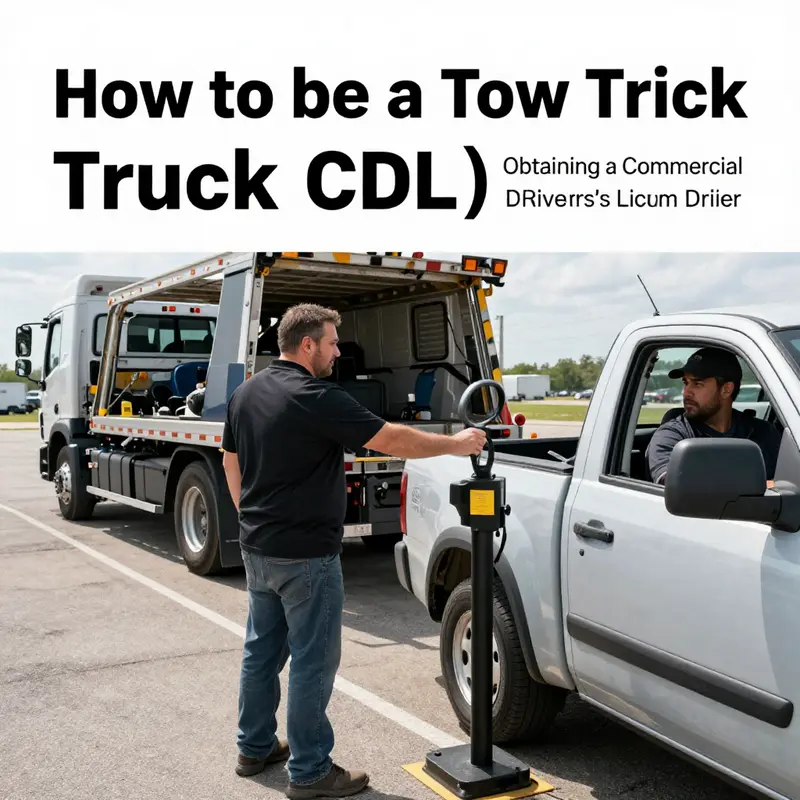
Becoming a tow truck driver hinges on one central credential for most commercial operations: the Commercial Driver’s License, or CDL. The CDL is more than a permit; it is proof you can handle the size, weight, and responsibility of a commercial vehicle, manage complex maneuvers, and follow safety and regulatory standards. For aspiring tow operators, understanding which CDL class you need, how to prepare, and what comes after the test is essential. This chapter walks through that process with practical detail so you can move from civilian driver to certified professional.
Choosing the right CDL class starts with the vehicle. Tow trucks range from light-duty rollback trucks to heavy-duty rotators. For many recovery and medium-duty towing jobs, a Class B CDL is the most common requirement. Class B covers single vehicles with a gross vehicle weight rating (GVWR) of 26,001 pounds or more, which includes many standard wreckers and heavy tow rigs. If you plan to pull combinations like truck and trailer where the trailer exceeds 10,000 pounds, you may need a Class A CDL. Know the GVWR of the equipment you want to operate and check state rules before registering for tests.
Age and legal status are straightforward but absolute prerequisites. You usually must be at least 18 to hold a CDL for in-state work. To cross state lines, which many tow companies require, you must be 21. Non-citizens need legal work authorization. You cannot move forward with CDL testing or employment without proper documentation confirming your right to work.
A clean driving record matters more than you might expect. Beyond the licensing agency’s criteria, insurers and employers routinely screen for serious violations, multiple at-fault accidents, or DUIs. These marks can block CDL issuance or keep you from being hired. If your record has blemishes, consult your state DMV about eligibility windows and consider corrective steps such as driving safety courses to demonstrate improvement.
Medical fitness is another non-negotiable. Commercial drivers must meet federal and state medical standards to protect themselves and other road users. You will likely need a Department of Transportation (DOT) medical exam and a Medical Examiner’s Certificate. Common disqualifying conditions include uncontrolled seizures and certain visual impairments. If you have health concerns, get a professional evaluation early so you can address issues or gather supporting documentation before applying.
Finding the right training program speeds the process and makes you a competitive candidate. Look for accredited schools that combine classroom instruction with hands-on experience. A quality program will cover commercial driving regulations, vehicle systems, load securement, and towing-specific skills like safe winching, vehicle stabilization, and recovery strategies. It will also prepare you for the knowledge tests and the skills test, which includes pre-trip inspection, basic control maneuvers, and on-road evaluation. Practical time behind a tow truck under an instructor’s guidance is invaluable; it builds habit, muscle memory, and confidence.
The testing process itself has three main parts. First is the written knowledge exam. It checks your understanding of traffic laws, towing-specific rules, and commercial vehicle safety. Study the commercial driver manual for your state and focus on sections about vehicle inspection, air brake systems if applicable, and cargo securement for towed loads. Many schools provide sample tests and practice questions that mirror the real exam.
Next is the skills test. You will demonstrate a pre-trip inspection, basic control skills such as straight-line backing, offset backing, and parallel parking, and an on-road driving assessment. Treat the pre-trip inspection as a scripted demonstration: name components, point out defects, and explain corrective steps. Inspectors look for a methodical approach as much as for mechanical knowledge. For control skills, keep movements precise and deliberate. Tow trucks handle differently—longer turning radiuses, higher centers of gravity, and sometimes limited rear visibility—so practice slow, controlled inputs.
Finally, the on-road drive puts everything together. Inspectors evaluate your lane management, speed control, braking, signaling, and interaction with traffic. They also look for safe behavior during more complex tasks like negotiating intersections or merging. Maintain situational awareness and verbalize your intentions when appropriate; that demonstrates professional thinking.
State-specific endorsements and certifications may be required beyond the basic CDL. Some jurisdictions require a separate tow truck operator certificate or a light- versus heavy-duty endorsement. If your work will involve hazardous materials—for instance, towing vehicles carrying dangerous cargo—you will need the HAZMAT endorsement, which involves a federal background check and additional testing. Always check with your state licensing authority for local requirements. These can vary, and employers often expect you to meet or exceed them.
Passing the CDL tests is a milestone, but compliance is ongoing. Employers and regulators expect you to maintain a clean driving record. Periodic drug testing is common. Many companies require random or scheduled screenings as part of DOT regulations. Additionally, commercial drivers often need to pass regular medical exams to ensure continued fitness for duty. Treat these ongoing requirements as part of the job, not an afterthought.
Beyond licensing, practical skills and additional certifications increase your value. Vehicle recovery often involves mechanical knowledge: winch operation, recovery rigging, using straps and chains safely, and choosing anchor points. Learning basic vehicle troubleshooting and emergency roadside repairs gives you an edge and speeds service calls. First aid and emergency response training are also highly useful. Tow truck drivers frequently work at accident scenes; knowing how to secure a scene and provide basic care until emergency services arrive helps everyone involved and reduces liability.
Insurance and employer expectations shape daily practice. Commercial driving exposes you to liability risks, so insurers pay close attention to driver history and training. Employers will often maintain their own training standards above legal minimums. Expect to participate in company-led safety briefings, on-the-job coaching, and simulated recovery scenarios. Showing initiative by learning and practicing company protocols will help you move from trainee to trusted operator.
Job hunting after certification benefits from a clear plan. Target towing companies, roadside assistance services, municipal fleets, and insurance-recovery operations. Smaller operators often prefer versatile drivers who can perform multiple tasks: towing, roadside assistance, and customer communication. Larger fleets may offer structured career paths with specialized roles for heavy recovery or fleet maintenance. When you apply, highlight your CDL class, endorsements, training hours, and hands-on experience. Include references from instructors or employers who can attest to your competency.
Safety culture is central to success. Towing professionals must balance speed with caution. You will work in high-stress conditions: night recoveries, inclement weather, and congested highways. Adopt a routine: check your truck and equipment at the start of every shift, plan routes and staging areas, and brief passengers or stakeholders clearly. Use PPE, set up warning devices properly, and avoid shortcuts with rigging. These habits protect you, your crew, and the vehicles you handle.
Finally, keep learning. The tow truck industry changes with vehicle technology, traffic patterns, and regulatory updates. Attend refresher courses, participate in industry workshops, and read technical guides. Local resources and industry blogs can help you stay current; for operator-focused reading and company perspectives, see The Island Tow Truck blog for practical field insights. When in doubt about legal specifics or testing procedures, consult your state DMV or licensing authority for the most accurate and current guidance: https://www.dmv.org/us-ca/tow-truck-driver.php
Earning a CDL is a structured process. It requires preparation, training, and the discipline to meet ongoing standards. For tow truck drivers, the CDL is the foundation for a professional career. Combine it with mechanical skills, safety practices, and an eagerness to learn, and you will be well-positioned for a stable, respected role in roadside assistance and vehicle recovery.
Training Ground for the Road: Mastering the Path to Becoming a Tow Truck Driver
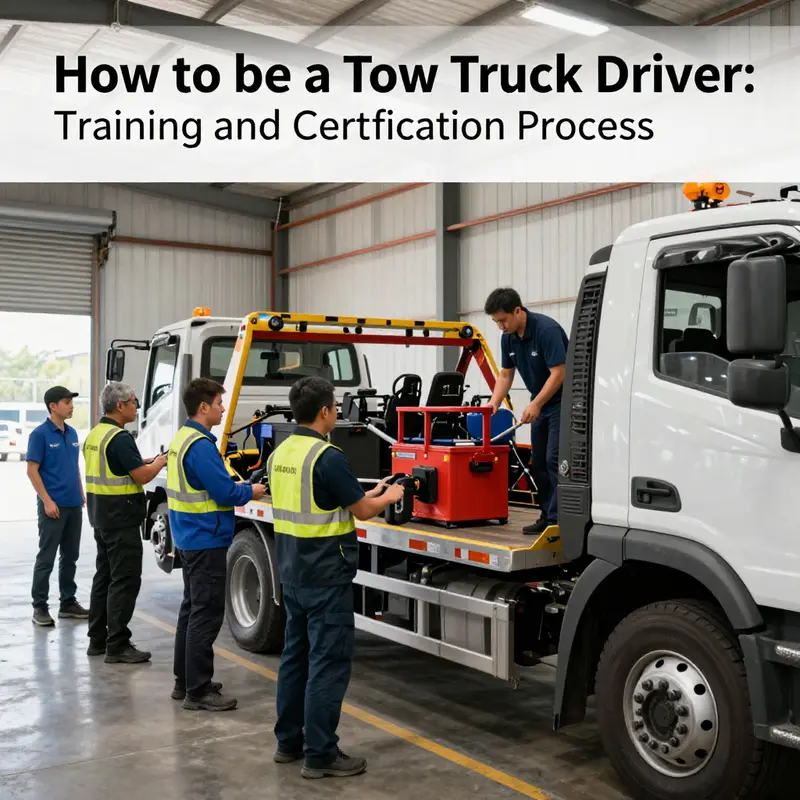
When people picture a tow truck driver they often imagine dramatic rescues. The real work is steadier and more disciplined: a blend of technical skill, regulatory knowledge, and calm judgment. Training and certification are foundations for a career built on safety, reliability, and service.
The journey begins with eligibility and licensing. Basic requirements typically include a minimum age, a valid driver license, and a clean driving record. Many roles require a Commercial Driver’s License (CDL), which is earned through written and practical exams covering vehicle inspection, control skills, and on-road performance. Heavier rigs or specialized towing configurations may require Class B or Class A CDLs and additional endorsements.
A clean record, background checks, and drug testing are commonly part of hiring. Employers emphasize safety and reliability because towing often places the operator, the public, and vehicles in potentially risky situations. Preparing for these screenings and maintaining professional standards is essential.
Practical, hands-on training follows licensing. Structured on-the-job programs, vocational schools, and towing academies teach vehicle recovery, winching, rigging, load securement, and scene management. Training covers legal and safety practices for operating near traffic, using warning devices, and coordinating with emergency responders. Customer service and communication skills are also central, since many calls involve assisting motorists in distress.
Industry certifications, such as those offered by trade organizations, can further validate expertise. Certifications typically require coursework, exams, and continuing education. They help distinguish operators in the job market and demonstrate a commitment to best practices and ongoing professional development.
Trainees learn to assess scenes, calculate weight and balance, and choose appropriate towing methods to prevent damage and protect bystanders. Familiarity with equipment types and methods, from wheel-lift to dolly and flatbed, reduces mistakes and improves safety. Routine habits such as thorough pre-trip inspections and detailed record keeping are emphasized.
Transitioning to professional work usually means starting with supervised, entry-level assignments. Reliable performance, attention to maintenance, and accurate documentation lead to advancement into specialized roles like heavy-duty towing or recovery. Mentorships, field guides, and real-world experience accelerate learning and build confidence.
Training and certification are not a final endpoint but a foundation for a career of continual learning. Each milestone contributes to competence and credibility: completing inspections, mastering techniques, earning endorsements, and keeping a clean record all matter. For supplemental practical insights and industry perspectives, practitioners often consult trade resources and blogs such as the Island Tow Truck blog at https://theislandtowtruck.com/blog.
For readers who want a broader view of occupation trends, responsibilities, and expected growth, the U.S. Bureau of Labor Statistics provides an overview at https://www.bls.gov/ooh/transportation-and-utilities/tow-truck-driver.htm.
From Skillset to Shift Work: Employment Paths and Core Competencies for Tow Truck Drivers
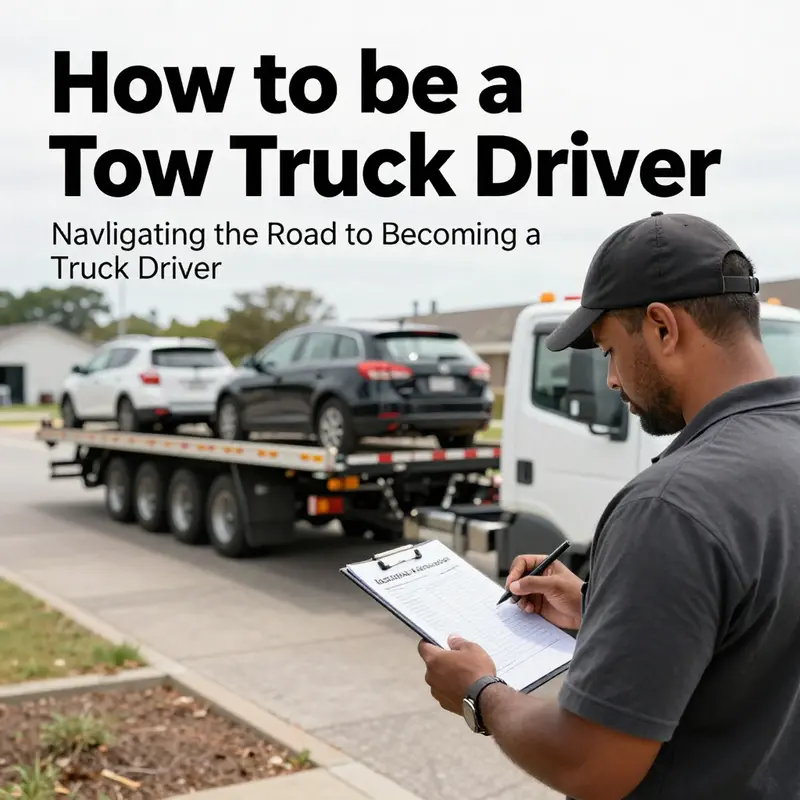
Core competencies that create employability
Becoming a dependable tow truck driver requires more than a license and willingness to work nights. Employers look for a blend of technical ability, steady judgment, and people skills. At the foundation lies proficient vehicle operation and equipment handling. Tow trucks come in many configurations: flatbeds, wheel-lifts, integrated wreckers, and heavy-duty rotators. Each demands a specific set of controls, winch techniques, and load-securing methods. Learning to inspect attachments, check hydraulic systems, and operate winches smoothly protects both the towed vehicle and your rig. Practical competence in these areas usually comes from a combination of classroom instruction and hands-on practice during employer training or vocational programs.
Mechanical literacy further strengthens a candidate. A tow operator does not need to be an expert mechanic, but knowing how engines, drivetrains, and brake systems behave helps when diagnosing a disabled vehicle at the roadside. This understanding informs decisions such as whether a vehicle can be rolled onto a flatbed, whether a wheel-lift will damage a specialty rim, or whether a winch pull might cause further harm. Employers appreciate candidates who can assess damage, communicate repair needs, and perform simple repairs or stabilizations when appropriate.
Communication is as essential as mechanical skill. Tow work is often coordinated through dispatch, assisted by call-center staff, law enforcement, roadside customers, and workshop teams. Clear, concise updates reduce delays and confusion. That includes giving exact locations, describing vehicle conditions, and communicating arrival windows. Equally important is customer interaction. Many calls come from drivers in stressful situations. Calm, respectful language and a step-by-step explanation of what you will do reassure customers and reduce conflict. Professionalism during these moments protects your company’s reputation and can influence tips and future work.
On-the-job safety and situational awareness are non-negotiable traits. Tow drivers work on busy roads, in poor weather, and during night hours. They must set up safe work zones, deploy warning devices, and move efficiently while protecting themselves and other road users. Good spatial awareness helps you position a heavy vehicle in tight areas. Good decision-making helps you evaluate hazards and call for backup or specialized equipment when needed. Employers will favour drivers who demonstrate consistent, safe judgement.
Beyond hard and soft skills, certain personal traits help you thrive. Reliability and punctuality are key. Tow companies operate around the clock, and a late arrival disrupts service and damages relationships with partners like insurers and municipalities. A clean driving record signals responsibility and reduces employer risk. Employers also value flexibility: accepting variable shifts, on-call rotations, and emergency overtime increases your chances of steady employment and advancement.
Where tow truck skills translate into work
Tow operators find roles across a range of workplaces. Roadside assistance companies run 24/7 fleets that require quick-response drivers capable of basic mechanical troubleshooting and strong customer service. Private towing firms often handle repossessions, private property impounds, and commercial contracts. These jobs may require rigid adherence to paperwork and property-owner instructions. Municipal and police-contracted towing positions require familiarity with impound procedures and legal documentation. Auto repair shops employ drivers to transport customer vehicles to and from the shop and to perform recovery of inoperable cars. Insurance companies sometimes contract tow services for claims support, requiring excellent documentation and communication between adjusters and repair shops.
Each environment emphasizes a slightly different skill mix. Roadside assistance prioritizes speed and interpersonal skills. Heavy-duty recovery work emphasizes technical recovery skills and teamwork. Municipal towing stresses compliance with regulations and meticulous paperwork handling. Understanding the expectations of each sector helps tailor your resume and interview responses.
Job types vary as well. Full-time driving jobs offer steady pay and benefits but often include overnight shifts and on-call duties. Part-time and seasonal roles can supplement income for drivers who prefer daytime work. Some drivers work as independent contractors, leasing their tow trucks or renting space from a company. Independent roles require business skills such as invoicing, client management, and compliance with local licensing. New drivers should carefully compare the stability of employee roles with the autonomy of contract work before deciding.
Licensing, certifications, and training pathways
Holding the correct license is the baseline requirement. A standard driver’s license may allow light towing, but heavier rigs require a Commercial Driver’s License (CDL). Many companies expect at least a Class B CDL for medium and heavy tow trucks. The CDL process includes written testing, skills demonstrations, and a pre-trip vehicle inspection portion that mirrors real-world towing tasks. Clean driving records and successful completion of background checks and drug screenings are common prerequisites.
Employers often provide supplemental training. This training refines skills such as complex winching, master the use of outriggers on heavy trucks, and sharpen load-securing techniques. Some jurisdictions require a tow-operator certification or endorsement beyond the CDL. Additional credentials related to hazardous materials or specialized towing may expand your job options and pay scale, especially for recovery of commercial trucks or vehicles carrying dangerous goods.
Vocational schools and community colleges sometimes offer programs tailored to towing and heavy-vehicle operation. These programs blend classroom study with practical labs. They also teach documentation practices and customer service approaches relevant to the industry. New drivers should seek programs that include real-world simulations and partnerships with local towing firms for apprenticeships.
Practical tips for getting hired and advancing
Prepare a driving-focused resume that highlights relevant licenses, endorsements, and hands-on recovery experience. Include specifics: types of tow trucks you’ve operated, average size of vehicles towed, and any recovery scenarios you’ve handled, such as rollovers or heavy-equipment recovery. Document soft skills too: mention experience working with dispatch systems, payment processing, or property management protocols.
During interviews, emphasise safety examples. Describe a time you created a safe work zone on a busy highway or how you de-escalated a tense customer situation. Employers want concrete evidence that you prioritize safety and professionalism over speed alone. Be ready to discuss your familiarity with vehicle documentation, such as towing manifests, chain-of-custody for impounds, and damage reports required by insurers.
Consider cross-training in related areas to increase value. Basic first aid and CPR certification can be decisive on accident scenes. Training in basic electrical diagnostics or battery services improves roadside assistance capabilities. Even modest mechanical skills reduce the time spent on simple jobs and increase customer satisfaction.
Networking within the industry helps. Attend local towing association meetings or trade shows when possible. Many jobs are filled through word-of-mouth and referrals. If you are already familiar with local repair shops or fleet managers, let them know you are available for towing assignments. Reliable drivers who build strong relationships with dispatchers and shop owners often receive the best runs and more consistent hours.
Work-life realities and long-term career outlook
Tow driving often involves irregular hours. Night shifts, weekends, and holiday work are common. If you prefer a predictable daytime schedule, target shop-based roles or municipal positions that offer set hours. Keep in mind that accepting on-call shifts typically leads to higher pay and more assignments.
Physical demands cannot be overlooked. The work includes lifting chains, handling heavy straps, and spending long hours behind the wheel. Good physical conditioning and sensible ergonomics reduce injury risk. Use gloves, back protection, and proper lifting techniques.
Career growth is achievable. Experienced operators move into dispatcher roles, fleet management, or training positions within larger firms. Some drivers specialize in heavy recovery, which commands higher pay. Others start small towing businesses once they understand the market and regulatory requirements.
The industry outlook remains stable. Vehicle ownership and commercial transport continue to support demand for towing services. Learn local regulations and maintain certifications to stay competitive.
For an overview of the occupation, including median pay and job outlook, consult the Bureau of Labor Statistics article on tow truck drivers: https://www.bls.gov/ooh/transportation/tow-truck-drivers.htm
For practical guidance on managing fleet risks and emergency response tactics relevant to operators working with larger fleets, see this resource on essential fleet emergency response strategies: https://theislandtowtruck.com/essential-fleet-emergency-response-strategies/
By focusing on equipment mastery, clear communication, safety, and reliable service, you position yourself as the kind of tow driver employers want to hire and retain. These elements form the core of a professional towing career and guide advancement into supervisory or specialized recovery roles.
Final thoughts
Becoming a tow truck driver is a fulfilling journey that requires dedication and the right training. This career is not just about driving; it’s about being part of a community that helps others navigate difficult situations. By understanding the prerequisites of age and licensing, following the steps to obtain a CDL, completing the necessary training, and recognizing the diverse employment opportunities, aspiring drivers can setup themselves for success in the towing industry. Your commitment to becoming a reliable figure on our roads can make all the difference for those who find themselves in need of assistance.