Tipping practices can vary widely across different communities and industries. When it comes to tow truck drivers, understanding whether to tip can sometimes feel ambiguous. However, recognizing the nuanced context—considering the role of local customs, instances when extra service merits a gesture of gratitude, corporate policies, and regional differences—can provide clarity. This article dives deep into the tipping etiquette for tow truck drivers, offering insights tailored for local auto repair shops, car dealerships, property managers, resort operators, and commercial fleet operators. Join us as we navigate the expectations and best practices in offering tips or showing appreciation to these essential service providers.
Tow Worth and Timing: Understanding When to Tip a Tow Truck Driver
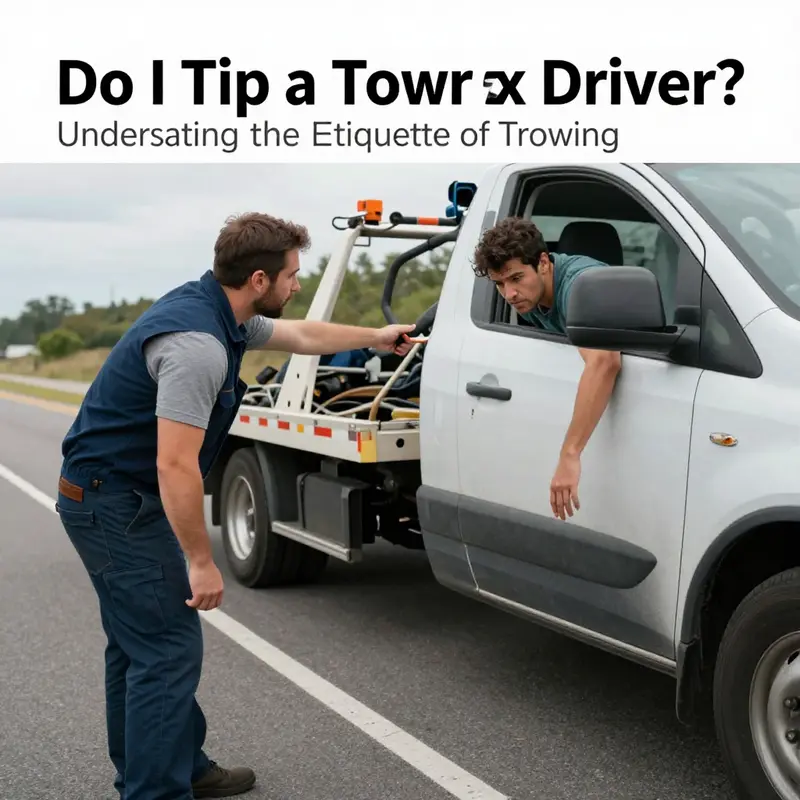
When a tow truck arrives on the scene, the situation is rarely simple. A breakdown on a busy highway, a hook-up in a snowstorm, or a night spent waiting in a dim parking lot can all magnify stress and uncertainty. In those moments, a small gesture of gratitude can feel meaningful, but the question of tipping a tow truck driver is nuanced. The short answer that many people discover is that tipping is not universally required or expected for standard towing services. Fees are typically established by distance, the type of vehicle, and the complexity of the task, and many professional outfits incorporate those costs in advance. Still, the reality on the ground varies by region, by company policy, and by the level of service the driver provides. The right approach is to understand the broader expectations while paying attention to the specifics of the moment in front of you. This awareness helps you respond with courtesy without feeling obligated to tip when it isn’t warranted, and it also makes room for a generous gesture when a driver truly goes above and beyond.
The practical logic behind the common stance on tips is straightforward. Most tow operators are paid by the job, and the posted or quoted price already compensates for the core service. This setup is true whether you are calling a large national outfit or a small, independent operator who arrives with a familiar toolkit and a sense of local know-how. In many cases, tipping is viewed as a thank-you for remarkable effort rather than a required component of compensation. Yet the human element matters. When a driver arrives under pressure, demonstrates careful technique, or offers practical guidance that reduces risk or confusion, gratitude can feel well earned. The essence of tipping, in this light, is less about the math of a percent and more about the clarity of the value you received in a stressful moment.
To navigate this with confidence, consider the service context. If a tow is routine—hook, haul, and drop you a short distance—the driver has performed the standard expectation. In such scenarios, tipping is less common, and many customers simply settle the bill and move on. If the service involves unusual hazards or additional tasks—winter weather removal, winching through a tricky spot, or helping with a jump-start when the car is immobilized—your sense of the driver’s effort may justify a token of appreciation. A guideline that many people find helpful is to think in terms of a range rather than a fixed rule. If the total service cost is substantial, a tip closer to 10 percent is reasonable when the extra effort is evident; if the cost is modest, a 10 to 20 dollar gesture can be a practical expression of thanks. For instance, a tow that costs around 150 dollars might invite a tip of roughly 15 to 30 dollars if the driver handles a difficult maneuver, explains what to do next, and keeps everyone safe in the process. If the interaction veers toward unusually helpful actions—like clearing debris from around the vehicle or offering concise safety tips for getting to a shop—those moments can push tipping from optional to appropriate.
Of course, personal judgment remains the core driver of any tipping decision. The choice is optional, and you should not feel compelled to tip simply because you are asked to do so. A sincere and specific expression of gratitude can be just as valuable as a monetary gesture. A brief acknowledgement of the driver’s calm demeanor, careful handling, or clear explanations about what is happening next can ease tensions and reinforce that their professional approach was noticed. In many cases, a quick thank-you, either on the spot or via a message afterward to the company, can be well received and may be more appropriate than an immediate monetary tip in a highly stressful or hazardous setting. Some clients also choose to recognize excellent service with a written review or a note to the dispatcher, which helps the driver and the company understand the impact of their work from a customer’s perspective.
Regional and company differences do shape tipping expectations in meaningful ways. In some regions and among private, independent operators, tips are more customary and can reflect a culture of personal service and direct client rapport. In contrast, larger commercial fleets often have standardized pay structures and may discourage tipping to maintain fairness across crews and to avoid conflicts of interest. The same tow job can feel different depending on whether you are dealing with a neighborhood operator who carries a long history of local relationships or a truck from a nationwide network that emphasizes efficiency and policy. In light of these variations, it is prudent to review the company’s policy whenever possible. A clear policy not only guides your actions but also helps you avoid awkward moments that may arise if tips are discouraged or if there is confusion about whether tipping is appropriate.
To deepen your understanding of how these norms operate in practice, you can explore practical scenarios through industry-focused resources. For example, resources that discuss how professionals balance policy, client expectations, and courtesy in real-world settings can offer valuable perspectives. For further reading and context, you might find it helpful to consult the insights shared on industry blogs that reflect on day-to-day experiences of tow operators and their customers. If you are curious about how policies shape decisions in real life, you can explore practical scenarios through industry-focused resources such as The Island Tow Truck Blog.
Even with a general framework in mind, your personal judgment remains essential. When deciding whether to tip, assess the quality of service you received rather than the difficulty of the situation alone. Consider whether the driver offered substantive help beyond the basic task, such as providing safe and efficient handling under pressure, taking the time to explain what was happening, or offering useful guidance about next steps, including where to tow, what paperwork might be needed, and how to prevent future issues. In emergencies, safety takes center stage, and a gesture of thanks should reflect not only the moment but also the driver’s role in restoring a sense of control for you and your family or passengers.
If you do choose to tip, there are practical options that respect both your resources and the driver’s effort. A cash tip handed directly to the driver is straightforward and immediate. Some customers prefer to add a tip to a digital payment if the company accepts that method. A tip in the 10 to 20 percent range can be appropriate for a higher-cost tow that involved additional tasks or careful handling, while fixed amounts in the 10 to 20 dollar range are often appreciated when the driver provides meaningful help in a difficult situation. In every case, the tip is an optional gesture, not a requirement, and it should reflect your overall sense of how well the service met your needs under pressure. When in doubt, a sincere thank you and a brief note about what helped most can convey gratitude without complicating the financial side of the encounter.
As you consider tipping or not tipping, keep in mind the broader message you want to send. The end goal is not to reinforce a transactional dynamic but to acknowledge professional care, emphasize safety, and reinforce the value of service that prioritizes your well-being in moments of vulnerability. If you feel moved to express appreciation, do so in a way that aligns with your values and financial circumstances, while staying mindful of the company’s stated policies. If you want a concise framework for making this choice across various towing scenarios, remember that tipping is a personal decision rooted in the quality of service, the complexity of the task, and the context in which the driver works. The aim is to recognize genuine effort and to support the people who spend their days helping others when transportation becomes a challenge.
For a concise overview of tipping norms and considerations, you can consult reputable guidance from industry resources. This external reference provides a broader look at expectations and best practices, offering a useful counterpoint to anecdotal advice and common myths about tipping a tow truck driver: The Spruce guide.
Tipping Tow Trucks: Reading Local Customs and Honoring Service When Your Vehicle Needs a Lift
Tow trucks arrive in moments of high stress, when every decision feels weighed and time seems scarce. In those moments, tipping can feel like a muddied line between gratitude and expectation. The practical truth is simple: tipping a tow truck driver is not universally required, and many companies price their work to reflect the service as a whole. Drivers are typically paid by the job, with fees calibrated for distance, vehicle type, and the complexity of the operation. Within that framework, a tip becomes a voluntary gesture—an optional extra that recognizes exceptional care rather than a mandatory ritual. Understanding this nuance matters, because it honors the work of drivers without muddying the boundaries of a professional transaction. The best approach is to treat tipping as situational, guided by local norms, the specifics of the service, and your own capacity to show appreciation at a tense moment.
Local customs shape what feels appropriate. In some regions, tipping culture runs deeply through everyday service industries, so a small gratuity may be a natural part of the exchange. In other areas, tipping for towing is modest or even discouraged by company policy, aimed at keeping pricing straightforward and avoiding any appearance of impropriety. When you’re in an unfamiliar place, a quick check can spare confusion in the moment—the driver or dispatcher can confirm whether tips are accepted and whether they align with the company’s rules. This is not about rule-keeping for its own sake; it’s about aligning your actions with what the service framework expects in that locale. The broader etiquette landscape is echoed in official guidance, which notes that tipping is voluntary and varies by service and region.
A closer look at real-world scenarios helps bring this into focus. Picture a tow in a sudden storm, where the driver arrives promptly, secures the vehicle, and explains each step with calm precision. They might help you with a safe move away from traffic, lay out options for getting the car to a shop, and coordinate with you about storage or alternate arrangements. In that moment, the service is more than simply transporting a vehicle—it’s about clear communication, risk management, and reducing your anxiety in a hazardous situation. In another scenario, a driver may navigate a tricky recovery—perhaps a vehicle on a slope, or one that requires careful winching to avoid damage. When the driver offers practical safety tips, keeps you informed about timing, and handles the vehicle with meticulous care, the additional effort often feels worthy of acknowledgment. A tip in such cases can be a tangible expression of gratitude for the driver’s skill and attentiveness.
The decision to tip is rarely a matter of a single action; it’s a reflection of the entire service experience and the local culture around it. If the driver goes above and beyond—staying in contact, explaining equipment choices, coordinating with nearby hazards, or providing directions for follow-up care—a tip becomes a meaningful signal of appreciation. In regions with a robust tipping culture, a simple 10 to 15 percent of the total towing charge may be a natural extension of good service. In other contexts, a smaller flat amount, such as 10–20 dollars, can acknowledge outstanding effort without inflating expectations. When weather, terrain, or the need for specialized equipment drives up complexity, a tip that acknowledges the extra care may be especially appropriate.
Policy and practice split along the line between large fleets and independent operators. Many large commercial towing companies establish policies that discourage tipping to preserve a transparent pricing structure and minimize potential conflicts of interest. Independent operators or smaller outfits, by contrast, may welcome a modest gratuity as direct feedback on a job well done. The contrast isn’t a moral judgment; it’s a practical one, rooted in how the driver is compensated and how the business presents itself to customers. If you’re dealing with a one-person operation or a small team, your tip can reinforce a positive relationship and encourage reliable service in the future, a benefit when you’re likely to need help again in the same region.
For those who cannot or choose not to tip, there are respectful alternatives that still recognize good service. A sincere thank-you, a clear positive review, or a referral to friends and colleagues who might need roadside assistance can carry real weight. A driver who feels seen and valued through these gestures often remembers the interaction, which can influence their approach with future customers. Whenever possible, verify the company’s tipping policy in advance; this avoids awkward moments and ensures your gratitude aligns with what the business accepts. When you evaluate whether to tip, consider the driver’s communication style, punctuality, and how well they managed safety and efficiency. The sum you offer should feel proportionate to the effort expended and the context of the service, delivered discreetly and with respect.
The broader conversation about tipping etiquette continues to evolve as communities exchange stories about roadside service. Reading the room matters: a driver who responds with patience, explains the process without jargon, and minimizes disruption to your day deserves recognition for their expertise and empathy under pressure. In some places, tipping signals gratitude for skill and care in a high-stakes moment; in others, it’s a routine component of the service unless a policy says otherwise. The aim is to show appreciation without creating discomfort or awkwardness for either party. If you decide to tip, a modest, thoughtful amount is often the most appropriate, accompanied by a brief note of thanks that underscores what stood out—clear communication, careful handling of your car, or the driver’s calm demeanor in a chaotic situation.
For readers seeking additional practical guidance beyond personal judgment, there are resources that consolidate driver experiences with consumer expectations. The Island Tow Truck blog, for instance, compiles reflections from drivers and customers about emergency responses on the road, offering context on pricing, standards, and the quality of service you can anticipate when you call for help. If you’d like to explore more about how roadside professionals approach emergencies and customer communication, the Island Tow Truck blog is a good starting point.
Ultimately, the choice to tip—or not to tip—rests on local norms, the quality of service you received, and your personal budget. A tip is not a universal obligation, but a flexible tool that can reward skill, care, and courtesy when used thoughtfully. If you take away one point, let it be this: tipping should reflect gratitude for excellent, safe, and communicative service, while respecting company policies and regional expectations. The decision is inherently personal, situational, and best made in the moment after you’ve weighed the service’s outcomes against the policies that govern the transaction. If you’re unsure, a brief courtesy question to the driver or dispatcher can clear up expectations and prevent misunderstandings in what’s often a tense and time-sensitive scenario. For a broader, official frame of reference on tipping, you can consult government guidance on tipping etiquette, which recognizes the variability of norms across industries and geographies. See the U.S. Department of Labor’s tipping guidelines for an authoritative overview: https://www.dol.gov/general/topic/wages/tipping.
null
null
Tipping Tow Trucks: Why Company Policy Outweighs a Gratuity
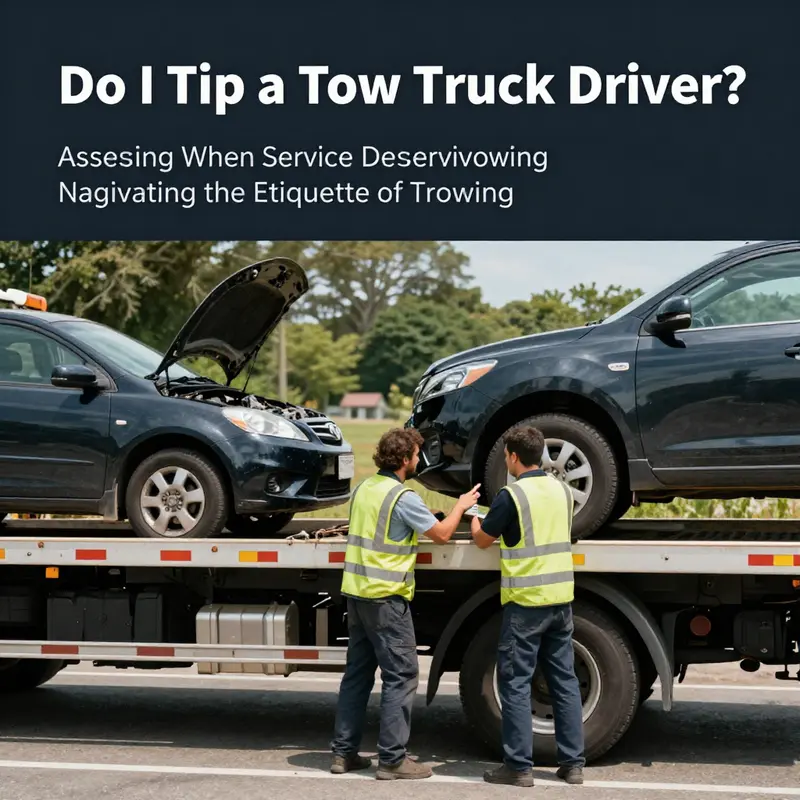
In the moment of a roadside emergency, when a tow truck arrives and light spills across a dark street, the impulse to thank the driver with a tip can feel natural. You want to acknowledge someone who has helped you navigate a stressful situation, move a stubborn vehicle, or coordinate with a dispatch team while you focus on safety. Yet the most consistent thread running through industry guidance is clear: tipping a tow truck driver is not customary, expected, or recommended. Understanding why this is so requires more than a quick judgment about generosity. It rests on how towing work is structured, governed, and supervised, and on the safeguards that keep a difficult situation from becoming more complicated than it already is. When you grasp the policy underpinnings, your actions in the moment can reflect appreciation without risking unintended consequences for the driver, the company, or your own legal and financial standing.
Tow operators are typically employed by companies that price their services to reflect the full scope of work ahead. The bill you receive is built around distance, vehicle type, and the specific service required whether it is a standard tow, a winch out, or a recovery on a precarious surface. In that sense, gratuities would be a second form of compensation layered on top of an already itemized charge. But professional towing companies often enforce strict policies against accepting tips. There are practical reasons behind this stance. First is safety. A tip could create a perception of impropriety or favoritism, potentially prompting questions about how swiftly or how thoroughly a driver completes a job. In the chaotic environment of a roadside breakdown, quick judgments can be mistaken for bias, and the last thing a dispatcher or the operator wants is any appearance of personal incentives guiding a critical service. The goal is to keep the driver’s decisions focused on safety, compliance, and procedural correctness, not on the possibility of a bonus from a customer who might expect special treatment because of the tip.
Second, the professional boundaries set by these policies help maintain consistent standards. When drivers are restricted from accepting gratuities, companies preserve a uniform approach to customer service that isn’t influenced by the generosity of a single encounter. This helps avoid conflicts of interest and prevents disputes that could arise if a driver’s gratuity were to be perceived as favoring one customer over another. It also simplifies the billing process. A tip would complicate the straightforward, upfront pricing model that customers rely on when budgeting for a tow, especially in the stressful context of an emergency. The company policy acts as a shield against potential disputes and misunderstandings after the fact, when emotions and expenses are already high.
Finally, the compensation structure itself often makes tipping redundant. Drivers are paid either a salary, an hourly wage, or a per job rate that is designed to reflect the work they perform. In most cases, the service fee already built into the bill is intended to compensate labor, expertise, truck maintenance, fuel, and the operational overhead that keeps a towing company functioning at scale. A gratuity would then be a separate, discretionary payment with unclear implications for tax reporting and payroll integrity. In regulated environments, where driver compensation and company practices are carefully managed, tips could even blur accountability and complicate compliance with wage laws and safety requirements. In short, the professional framework is designed so that a customer’s generosity does not become a variable in the safety dependent, highly regulated space in which tow operators operate.
That is not to imply that appreciation never manifests in meaningful ways. The practice is subtle, not punitive. It is possible for customers to express gratitude to a driver without crossing the line into a tip that violates company policy. Some alternatives carry a different, but equally valuable, signaling of appreciation. A bright, specific compliment to the dispatcher about the driver’s professionalism can circulate through the company’s internal review process, reinforcing a culture of safety-focused service. Likewise, leaving a positive online review mentioning the driver’s clear communication, careful handling of the vehicle, or calm guidance during a stressful moment can be incredibly helpful to a driver’s professional reputation and to a company’s ongoing ability to attract customers. These forms of feedback are easy to implement in the moment and do not carry the same potential conflicts as accepting cash or a tip at the scene.
Regional differences may color the perception of tipping. In some places, private, independent operators who run lean, small-scale outfits might be more familiar with informal gratuities as a personal gesture. Yet even in those contexts, the standard practice described by most national associations and industry groups remains that tipping is not the expected norm. The presence of a policy against tipping is not a reflection of a driver’s worth or the value of the service; it is a deliberate approach to safeguarding safety, consistency, and ethical practices across a diverse network of operators who serve a wide array of customers with varying needs and risk profiles. When you encounter a tow crew in the field, the best approach is to honor the policy while expressing gratitude in ways that reinforce the driver’s professionalism rather than the idea of tipping as a supplementary payment.
For anyone facing this question in real time, the first step is their own due diligence. If you are dealing with a well-known, large commercial company, the policy is likely explicit: tips are discouraged or prohibited. If you are dealing with a smaller, independent operator, there may be variations, though many still fall in line with established industry standards that discourage gratuities. In any case, it is prudent to ask clearly, as soon as possible without disrupting the flow of service or distracting the driver from safety-critical tasks whether tips are accepted. A simple question can save confusion and set expectations for everyone involved. If the company has a no-tipping policy, a respectful acknowledgment of the policy with thanks for the service will suffice, paired with your follow-through on any post-service steps review the company, sharing a kind note with the driver, or telling others about the experience. If you are allowed to show appreciation in a non-monetary way, consider offering a written or online commendation that speaks to the driver’s skill and care. The power of a well-phrased praise can travel far and endure well beyond the moment when the tow is completed.
The guidance presented here aligns with a broader professional standard in the towing industry and is echoed by several respected organizations that emphasize consistent service, safety, and compliance. It is helpful to consult these guidelines when you are unsure how to proceed in a specific situation. If you want to explore more about towing practices and the expectations set for customers, you can refer to industry guidance such as that provided by national associations. This broader context helps situate the decision in a framework that values safety and uniform practice over personalized gratuities. For readers who want a deeper dive into ongoing industry standards and customer expectations, the National Towing Association offers resources and guidance that can shed light on why tipping is not a customary part of towing services. National Towing Association https://www.towing.org
In the end, the question about tipping is one of policy, safety, and professionalism more than generosity. The conclusion many industry voices reach is straightforward: tipping is not customary, and it is not expected. The reasons are practical and protective, guarding against conflicts of interest, preserving uniform service standards, and keeping the financial and legal aspects of towing clear and straightforward for everyone involved. When you are in a jam on a lonely road, the last thing you want is ambiguity about what is and is not permitted. By centering your actions on the policy, you acknowledge the driver’s skill and the company’s responsibility to manage risk, while still expressing genuine gratitude through the right channels: clear feedback, public praise, and recommendations that help other motorists find reliable, professional service. If you are looking for additional context specific to your community or region, you may find it helpful to read more about towing practices in your locale or to explore related materials on the industry’s broader standards. For those curious readers, the following resource from a respected trade association provides robust guidance on expectations, safety, and professional conduct in towing service delivery. https://www.towing.org
To further contextualize how these norms play out in everyday practice, consider a hypothetical but representative scenario. A driver arrives during a snowstorm, completes a careful hookup on a slope, communicates clearly about what will happen next, and coordinates with a dispatcher to ensure the vehicle is secured and transported to a safe location. In such a moment, the driver’s priority is clearly safety and efficiency, not a potential gratuity. A customer who understands the policy will still express appreciation through praise, constructive feedback, and by sharing a positive experience with others, while keeping the integrity of the service intact. That combination of professional respect and practical gratitude creates a pathway for recognition that aligns with industry standards and keeps roadside assistance a trustworthy, dependable resource for everyone who depends on it. The goal is not to withhold thanks where thanks is due, but to acknowledge the service in a way that preserves safety, fairness, and the integrity of the industry as a whole, ensuring that those who rely on towing services can do so with confidence every time they need help.
Tipping Tow Truck Drivers: Regional Norms, Policy, and Thoughtful Gratitude
Tow emergencies blend urgency with service. When a tow truck arrives, a calm, professional routine unfolds as the driver secures the vehicle, coordinates with traffic, and explains the next steps. A common question: should you tip a tow truck driver? The answer is nuanced. Tipping is not universally required and is not a standard part of every tow bill. Many companies price by the job, and gratuities are not expected to fill wage gaps, and some firms even discourage tips to keep the transaction clear. Yet tipping remains possible as a discretionary gesture for extra care, good communication, or safer handling that goes beyond the basics.
In practice, tipping is more likely when the service goes beyond the basics. Quick arrival, careful vehicle handling, clear safety guidance, or help navigating a tricky location can justify a small gratuity. The tip should recognize effort and service quality rather than act as payment for the tow itself. The decision to tip should reflect the value of the service and your own budget, not a policy mandate.
Regional differences matter. In some urban areas tipping for roadside help is common, while in rural areas it may be less expected or discouraged by company policies. The best approach is to read the room, check the company policy, and weigh the experience against your circumstances and local norms.
Company policy is the practical compass. Many outfits do not rely on tips as income and may post guidelines against gratuities. If you are unsure, asking the dispatcher or reviewing posted policies before the tow begins can prevent awkward moments and ensure respectful handling.
What counts as exceptional service? Quick arrival, careful protection of the vehicle, clear guidance about next steps, and calm communication all justify a gesture of appreciation. The amount should be proportional to the service level and your means, with five to twenty dollars cited by many as a typical range for extra efforts.
Practical considerations include how to tip, when to tip, and alternative expressions of thanks. Cash is convenient, but many drivers also accept digital payments. Tip at the end of service to avoid distractions, and if tipping feels uncomfortable, a kind word, a positive online review, or a written compliment can carry weight. The overall aim is to be respectful, discreet, and mindful of policy.
For broader guidance, remember that tipping for towing is discretionary. The American Automobile Association notes that tipping is not standard, but a small gratuity may be appropriate for exceptional performance. Local norms vary, so consult local resources and the company policy. If roadside assistance is a frequent need, you might budget for tips on standout service while prioritizing safety and clear communication.
Final thoughts
Understanding when and how to tip a tow truck driver involves a blend of local customs, the exceptional nature of service, and corporate policies. While direct tipping may not be the standard expectation, recognizing outstanding service through tips is a meaningful gesture that reflects appreciation. The nuances of tipping practices in the towing industry reveal the importance of context and regional differences, allowing us to be both empathetic customers and informed decision-makers in surprising roadside situations.